
Blog

Mt Edgecombe Interchange bags a construction excellence award

South Africa’s largest interchange project has been recognised for technical expertise and quality weeks before the project has been finished. 
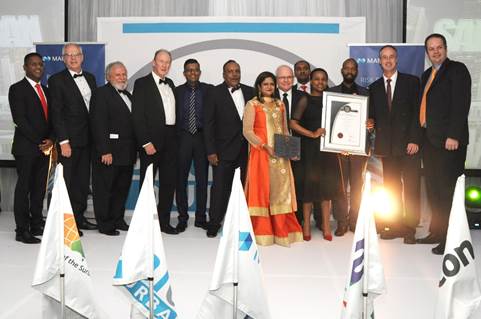
Representatives of SANRAL, SMEC engineering consultants and SAICE Durban Branch with the award that went to the Mt Edgecombe Interchange for Technical Excellence in Construction.

Even before construction has been fully completed on the iconic Mt Edgecombe Interchange north of Durban, it has already won a prestigious award from the South African Institution of Civil Engineering (SAICE). 

The SAICE Durban Branch Award for Technical Excellence in Construction was given because the interchange is considered to be “an outstanding example of technical expertise and quality, which has contributed substantially to the transportation experience of the public and the economy of the region”. 

The entry will now be submitted to the SAICE National Awards for Technical Excellence in Construction. 

Aesthetically complementing the surroundings 

Currently the largest interchange project in South Africa, the Mt Edgecombe Interchange is also located in one of the fastest developing areas in the country, a factor that played a major role in the conceptual design of this upgrade to ensure that the interchange would aesthetically complement its fast-paced modern surroundings, stand the test of time in terms of life-span and deal with ever-growing traffic demands. 

It is estimated that the interchange, which is being upgraded by the South African National Roads Agency (SOC) Limited (SANRAL), will reduce travel time from 25 minutes to one minute on average. 

The project, which started in April 2013, is within weeks of completion. In total nine bridges and 11km of ramps were built. 

A total of 480 piles were used and 1.8km of mechanically stabilised earth walls were erected. The state-of-the-art lighting incorporates 400 light bulbs. 

To improve the safety of pedestrians, a 432m-long pedestrian bridge has been constructed over the N2 and connects to new footways. 

Corné Roux, SANRAL Eastern Region Project Manager: Pavement Design Support, said the multiple engineering achievements behind this mammoth project are testimony to the exceptional skill and abilities of the entire construction team. 

The project engaged 80 designers at the peak of the design phase. Not a single road was closed permanently during construction. 

Facts about the interchange 

The Incrementally Launched Method of bridge building was used, to ensure as little disruption to road users as possible. 

A defining feature of this project is that it was one of the longest bridge viaducts ever constructed in South Africa.  

This viaduct, referred to as B0215, has a deck length of 947m, which also makes it one of the longest incrementally launched bridges in the Southern Hemisphere. 

The total cost of the project was set at just over R800-million but with escalation, the total contract expenditure is estimated at R1,136-billion, including VAT. 

The maximum number of persons employed at a time by the contractor and sub-contractors was 803, of which 724 were from the eThekwini target area, with a total of R240-million spent on wages thus far. 

R684,770.00 has been spent on training 461 people on skills such as steel-fixing, scaffolding erecting, operating construction equipment and various safety, engineering and entrepreneurial-related training. 

A total of 31 sub-contractors have been employed with work to the value of R59-million performed by 21 SMMEs to date. 
Countries “revolve around civil engineering”

The South African Institution of Civil Engineering visited agency to engage with a broader spectrum of its members.

SAICE President Errol Kerst, left, and Dumisani Nkabinde, SANRAL Eastern Region regional manager, right, with some of the professional engineers at SANRAL Eastern region.

Top executives of the South African Institution of Civil Engineering (SAICE) recently paid a courtesy visit to meet with professional engineers at the Eastern Region offices of the South African National Roads Agency (SOC) Limited (SANRAL) in Pietermaritzburg.

Dumisani Nkabinde, SANRAL Eastern Region regional manager, warmly welcomed SAICE president Errol Kerst, SAICE CEO Manglin Pillay and Nadeena Le’ Tang, the institution’s public relations officer.

SAICE’s mission statement declares that it aims “to advance professional knowledge and improve the practice of civil engineering. The body strives to be a learned society for all those associated with civil engineering and to enable its members, through consultation and accountability, to provide the community with environmentally and economically sustainable infrastructure.”

‘Red letter day’

During its 20-year history, SANRAL has received numerous SAICE awards for excellence in various categories of civil engineering.

These include awards for its Intelligent Transportation System (ITS) in KwaZulu-Natal; the Dr Chota Motala Interchange in Pietermaritzburg, the Tshelimnyama and Blackburn Pedestrian Bridges and the Mt Edgecombe Interchange north of Durban.

Referring to the visit by the SAICE executives, Nkabinde said it was a “red letter day” for SANRAL Eastern Region as it was the first time SAICE had met with the team of engineers. He hoped this would be first of many meetings.

Civil engineering club

Kerst said SAICE was on a drive to engage with a broader spectrum of its members and encourage them to attend SAICE events.

“We want to get the whole civil engineering club going again. Any country revolves around civil engineering and we are there to serve the public through roads, bridges storm water drains and sewerage systems.”

Pillay said SAICE was home to more than 10 000 civil engineering practitioners from all avenues of the built environment, including lecturers at all universities and places of learning that offer civil engineering.

“Our members work in the private sector, mainly in consulting and construction, and in parastatals including Eskom, Transnet, SANRAL, PRASA and others.”

He said more than 45% of SAICE’s membership is black.

Considering South Africa’s history before 1994, Pillay said: “A more accurate measure of transformation is found in that almost 70% of SAICE’s membership under the age of 36 is black.

“The engineering sector still has more work to do on racial transformation, but the current actual numbers show remarkable progress in the built environment.”

Pillay added that it must be considered that it takes on average eight years, not including the 12 years of basic education, for any individual to accumulate the necessary education and training before they are ready to register as professionals.

“There is no quick-fix solution, but we can build on the existing successes,” he said.

SANRAL lauded for its vision at annual awards

Accolade is commendation for the agency’s commitment and hard work in fulfilling its long-term strategy. 

The roads agency enters its third decade with a fresh strategy and a clear vision on how to deliver a safe, efficient, reliable and resilient road transport system for the benefit of all South Africans. 

In an evening dedicated to honouring legends and excellence in engineering, the South African National Roads Agency (SOC) Limited (SANRAL) was awarded Visionary Client of the year. 

SANRAL received the award at the CESA Aon Engineering Excellence Awards 2018 held at Vodaworld in Midrand recently. 

Every year, Consulting Engineers South Africa (CESA) celebrates and showcases innovation, quality, outstanding workmanship and professionalism in the industry.  

In the year commemorating Nelson Mandela’s centenary, engineers were celebrated for creating legacies for future generations. 

The CESA Awards focus on consulting engineers and their clients who participate in projects that promote the advancement of South Africa as well as recognise the contributions of young professionals and mentors to the engineering profession. 

Hard work and commitment 

SANRAL CEO, Skhumbuzo Macozoma, was grateful to his team for all their hard work and commitment to change the face of engineering. 

“This is a direct commendation for our long-term strategy (also known as Horizon 2030), our vision and trajectory for the next 12 years.  

“It is a vindication of our internal capability as this strategy was developed in-house. We will now bring this vision to life through our commitment, hard work and steadfastness,” said Macozoma. 

This year is key in SANRAL’s growth as a visionary organisation within the broader South African engineering and construction sector.  

The roads agency enters its third decade with a fresh strategy and a clear vision on how to deliver a safe, efficient, reliable and resilient road transport system for the benefit of all South Africans. 

A challenging time for the industry 

The awards come at a time when the industry is most challenged with several large construction companies facing financial difficulties. 

SANRAL also received a special mention for the award of “Projects with a value greater than R250-million” undertaken by HHO consulting engineers for completed work on the N11 Section 10 – Mpumalanga to Loskop Dam – in Mpumalanga. 

The project was started in 2015 to rehabilitate the section of the N11 from Middleburg to Loskopdam, improving access to the Loskop Dam Nature Reserve, among other things.  

The project delivered a high-quality infrastructure that integrates perfectly with the surroundings and provides the traveller with a safer passage. 

“We’d like to congratulate all nominees, winners and special mentions – we are proud to be mentioned in your company,” said Macozoma. 

SANRAL honours Mama Albertina Nontsikelelo Sisulu

Struggle stalwart Mama Sisulu remembered for her immense contribution to the emancipation of South Africans. 

Deputy Minister of Transport, Sindisiwe Chikungu, delivered the keynote address at SANRAL’s fifth annual Women’s Month seminar held in Queenstown.

The South African National Roads Agency (SOC) Limited (SANRAL) recently honoured struggle stalwart Mama Albertina Nontsikelelo Sisulu at the fifth annual Women’s Month seminar in Queenstown at the Roydon Nature Reserve. 

The seminar was held to observe Mama Sisulu’s centenary year and to honour her legacy.  

The event was dedicated to her immense contribution to the emancipation of South Africans in general, and women in particular.   

Mama Sisulu’s grandson, Vuyolwethu Sisulu, said the family appreciated the gesture by SANRAL to honour his grandmother.  

“She was blessed with many grandchildren but had the wisdom of making each one of us feel special, like we were all her favourites. She taught us about the importance of hard work and earning one’s way, rather than expecting privileges that come with the Sisulu name,” he said. 

A liberation icon 

Speaking at the event, Deputy Minister of Transport Sindisiwe Chikungu, said: “Through her leadership she dedicated her home to emancipate all our people. She was central to the emancipation of women. Today we are in the birth province of this liberation icon, this revolutionary.

“Women have experienced oppression in the past in terms of gender, race and class. We need true leaders like Ma Sisulu. Leaders with an unwavering commitment to serve the people of South Africa with no expectation of personal benefit. We need true leaders who always demonstrate a sustained determination, who conduct themselves in an ethical manner and not betray their ethical standards.”

Chikungu said that SANRAL was changing for the better in terms of empowerment of women and black people.  

“I congratulate SANRAL. When we speak about our road network in South Africa, these are the best roads that we have in the country. We are number 18 in the world in terms of quality of road and number 10 in the world in terms of route kilometres. Our roads are the best,” Chikungu said.

The Acting Mayor of Chris Hani District Municipality, Noncedo September, said: “Mama Sisulu is a woman that will never be forgotten in the history of the struggle.”

Eastern Cape-based entrepreneur Lungiswa Moko told guests “women are governing, both in the workplace and in our homes.  

“I am a registered professional construction project manager. My job is a very difficult job. I sit at the head of the table, heading meetings attended mainly by men and tell them where to go,” Moko said. 

‘Beyond Inclusion’

SANRAL has held Women’s Month seminars over the past four years and has seen a growth from around 60 guests in 2014 to more than 150 this year.

This year’s theme was “Beyond Inclusion” and was aimed at tackling the challenges that women face when it comes to inclusion, ensuring that women are not just included economically and politically, but that they become equal partners with men in the industries SANRAL operates in.

The seminar took place in the form of a moderated panel discussion with focus on issues such as the role of women in advancing themselves and other women; the role of men in advancing women; the role of business and government in ensuring more women have access to opportunities; as well as the inclusion of women in the construction industry through SANRAL’s new Transformation Policy.

Panellist, Bruce Ndlela, the Public Affairs Director at Bell Equipment, said they had signed an MOU with SANRAL to ensure that women in construction gain access to equipment as this was one of the main barriers to access.  

“Women, if you don’t ask and demand, it is not going to happen. You have to sit us down and take us through your demands,” he advised.

Inge Mulder, CFO at SANRAL, said: “Over and above subcontracting women-owned SMMEs, SANRAL extends its support to women throughout its areas of operation through its programmes, i.e. bursaries and scholarships; internships; candidates accepted into the SANRAL Technical Excellence Academy; and a range of skills development and training programmes.”

SANRAL has a good story to tell when it comes to gender equality and empowerment.  

In the 2014/15 financial year, SANRAL spent R2.9-billion nationally on contracts with small businesses and 4 064 people were trained in aspects of road building, of whom 694 were women.

In the 2015/16 financial year, SANRAL spent R3.56-billion on contracts with Small Medium to Micro Enterprises (SMMEs), R1.9-billion of which was earned by 1 004 black-owned enterprises. The agency trained 4 120 people (including 1 531 women) in road-building and other skills through 6 237 courses at an investment of R12.9-million.

During the 2016/17 financial year SANRAL awarded 172 contracts worth R16-billion for new works, rehabilitation and road maintenance projects.  

SMMEs earned a total of R4-billion through contracts with SANRAL, in addition, the roads agency trained 4 257 people (including 1 690 women) in road-building and other skills through 8 604 courses at a cost of R16.9-million.

SANRAL created the equivalent of 19 047 full-time jobs, 11 242 of which were taken up by youth. Additional opportunities for sub-contracting, employment and training were generated by the SANRAL community development programme.

Mulder said: “The agency’s commitment to promote the growth of small and medium-sized businesses, which reduces unemployment and helps build a skilled workforce, is reflected in the growing value of contracts allocated to black-owned companies, and enterprises owned by women and the youth.

“Through this approach the agency is contributing to the transformation of the South African economy and the empowerment of emerging contractors – many of whom receive their first experience in the construction and engineering sectors by working on SANRAL projects.” 

Gauteng’s Freeway Management System makes for less stressful travel

System allows road users to plan and navigate their way through traffic with real-time information. 

The FMS system deals with an average of 3?000 traffic-related incidents per month with the majority of these being stationary vehicles on the freeways.  

Travelling between Pretoria and Johannesburg has become safer since the implementation of the intelligent Freeway Management System (FMS) in Gauteng over the last few years. 

The FMS assists motorists to plan and better navigate their way through traffic with the provision of real-time information on travel times and incidents on SANRAL freeways in the province. 

Medical, mechanical and law enforcement teams can now respond to an incident in between six and 18 minutes. 

FMS is active on about 251km of freeways in Gauteng and currently includes 10 incident response units, 10 towing recovery units, eight units for heavy recovery and six motorcycle medical response units stationed at strategic points on the freeways. All these units have highly trained first responders with specialized equipment and are operational 24 hours every day. 

Innovative technologies 

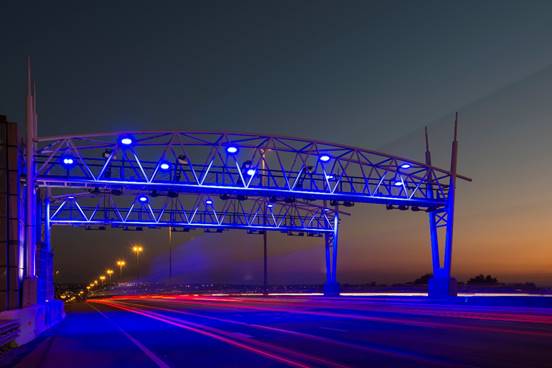
The FMS system makes use of Intelligent Transport Systems (ITS) technologies which involve the integrated deployment of communications technologies, traffic management software and control devices such as closed-circuit television cameras (CCTV), variable message signs (VMS) and traffic detectors to manage and monitor the freeways. 

Using these technologies, the system feeds live footage to SANRAL’s Central Operations Centre, which allows the roads agency to continually improve its management of the road network.  

Working with metro police departments and roads agencies in Tshwane, Johannesburg and Ekurhuleni, it also contributes to effective routine road maintenance, ensuring the removal of road obstructions and hazards. 

Progress Hlahla, Regional Manager in Gauteng, Mpumalanga, North West and Limpopo for SANRAL, said: “Travelling between Tshwane and Johannesburg can take up to one-hour-and-30-minutes in peak morning and afternoon traffic. Our system is built for quick responses to various incidents so that users of our roads have less to worry about after a long day at work.” 

Commuters and traffic 

According to reports, commuters in Johannesburg and Pretoria spent an average of around 46 and 26 hours in congested traffic during the respective peak periods in 2017.  

Further to this, Johannesburg motorists spend more time in congestion than commuters in large European cities such as Berlin, Manchester and Rome. 

“We understand how our roads impact the lives of ordinary South Africans and are cognisant of the fact that we need well-managed roads to meet the economic goals of our country,” said Hlahla. 

In addition to the time saving, the FMS also presents fuel savings benefits for road users if they can factor in the real-time updated information from SANRAL’s VMS communications or i-traffic (www.i-traffic.co.za / @itrafficgp on Twitter) into their trip. 

The FMS system deals with an average of 3?000 traffic-related incidents per month with the majority of these being stationary vehicles on the freeways.  

Crashes make up around 15% of the total incidents on the Gauteng freeway network. 

“With the success of the initial system in Gauteng, we aim to expand the existing footprint with the hope that we will make roads in the region safer,” said Hlahla. 

The FMS system has also been implemented in KwaZulu-Natal and the Western Cape. 

Community development that is relevant and accessible

Thirty-five percent of SANRAL’s training programmes have taken place in rural Eastern Cape in the past two years. 

SANRAL CEO Skhumbuzo Macozoma said more than 800 local community members benefited from various forms of training opportunities.

SMME training and development forms an essential component of most the South African National Roads Agency (SOC) Limited (SANRAL) projects.  

We are aware of the challenges facing some rural Eastern Cape communities.  

We have put a lot of time and many resources into ensuring that our community development programmes are both relevant and accessible. 

Projects in the Eastern Cape 

Over the past two years, 35% of our training programmes took place in the Eastern Cape.  

The recent projects on the R61 Mthatha to Nqgeleni, Komgha River to Grahamstown and Keiskamma Pass to Keiskamma River, each had very successful training and development programmes attached to them.  

More than 800 local community members benefited from various forms of training opportunities.  

This year, 71% of training and development programmes will be concentrated in the Eastern Cape. SANRAL Southern Region has a comprehensive set of infrastructure development projects underway in the region.  

Many of these are tied to a master plan for other long-term mega projects that are focused on bringing socioeconomic growth and greater prosperity to the region.  

N2 Wild Coast flagship project 

One of our flagship projects for the Eastern Cape is the much anticipated N2 Wild Coast Road (N2WCR).  

Construction on the first mega-bridge, the Mtentu, began in January this year.  

The tender for the R1.63-billion-bridge was awarded to the Aveng Strabag Joint Venture, who are expecting to complete construction in May 2021.  

The second tender, for the Msikaba Bridge, went out in late 2017. Construction is expected to commence later this year.  

These two bridges will form the backbone of the N2WC road, which will open the Eastern Cape up to a range of economic and social development possibilities.  

In addition, SANRAL is finalising designs for the new section of the N2 that will run from Port Edward to Port St Johns.  

This greenfields project will also have a significant training and development component that will benefit local SMMEs and communities.  

Road safety is a key priority for SANRAL, and we are always looking at ways to improve and advance the safety of our road users.  

As part of our safety strategy we have a consistent routine road maintenance programme in place across the country to ensure that our roads are well maintained. 

This is an opinion piece by SANRAL CEO Skhumbuzo Macozoma. 

Bringing opportunities to people and people to opportunities

SANRAL is making a difference to community development through its projects. 

Roads exist to connect communities, to open new horizons, to bring people to opportunities and opportunities to people.

SANRAL’s positive impact on the broader South African society through community development is becoming entrenched and more appreciated as its responsibilities for the management of the national and provincial road network continue to grow.  

Deep in northern KwaZulu-Natal, the daily lives of communities have been enhanced with the sidewalks, bus and taxi lay byes, retaining walls and access roads to schools that have been built by SANRAL.  

12km of concrete walkways have been built on both sides of a section of Route R22 between Manguzi town and the Mozambique border.  

The project started in November 2015 and was completed in June 2017, with an expenditure of R14.42-million. 

Pedestrians at risk  

Ridhwaan Mahomed, SANRAL Eastern Region Project Manager, said before work had commenced on the project, several vehicle and pedestrian accidents had been recorded in the area.  

He said: “Pedestrians, mostly young pupils on their way to and from school, would be seen walking within the motorised vehicle lanes.  

“This was highly risky, especially because many of the pedestrians were young children. Thus, it was decided to construct safe and proper pedestrian traffic facilities.”  

Connecting communities 

Mahomed said the project area was rural, with limited opportunities for income for families to sustain themselves.  

This project was therefore a valuable source of opportunities.  

There was job creation – R2.5-million was paid in salaries towards local labour, of which R736 011 each was paid to youth and women. 

Four local subcontractors were employed and were paid a total of R1.3-million.  

Since there are a high number of unskilled individuals in rural areas, SANRAL ensured that people were trained, and a total of 60 skills-training certificates were issued with R277 241 having been invested in training.  

Mahomed said: “Roads exist to connect communities, to open new horizons, to bring people to opportunities and opportunities to people.  

“SANRAL has always strived to support the efforts by the government to push back the frontiers of poverty and improve the lives of South African citizens in general by promoting community development through all its projects.”  

Thokozani Mbuyisa, owner of Mgadla Trading, one of the SMMEs involved in the project, said he was grateful to SANRAL for the opportunity to work on the project. 

Call for motorists to obey rules on the ‘Road of Death’

Some motorists are disobeying traffic-calming measures around constructions sites, endangering workers and themselves. 

Motorists are urged to follow road rules during construction on Moloto Road.

The South African National Roads Agency (SOC) Limited (SANRAL) is appealing to motorists to adhere to the rules of the road in and around construction sites along the Moloto Road (R573) in Mpumalanga and Limpopo.  

Lawrence Chauke, SANRAL Project Manager for the Moloto Road Upgrades, said: “We’ve noted with concern that some motorists disobey traffic-calming measures, including speed-limit signage and flagmen. Some drive straight through without stopping and we’ve had several close-call collisions on the construction sites.  

“We urge motorists to cooperate during the upgrade, obey the rules of the road and exercise patience.” 

The ‘Road of Death’ 

Dubbed ‘The Road of Death’ due to the high number of accidents, the R573 Moloto Road is one of the busiest routes in the country, connecting Gauteng, Mpumalanga and Limpopo.  

It has had to cope with increasing traffic in recent years due to the growth of peri-urban communities along the Moloto corridor. 

The upgrade, undertaken by SANRAL, aims to increase safety and reduce the death and accident toll.  

Work has started with the construction of traffic circles in major intersections in Mpumalanga.  

The upgrades will also include closing off dangerous illegal accesses, reducing conflicted movements on service roads, installing and replacing street lights, and moving informal traders to safer areas.  

The upgrade will take five years to complete and will bring some 6000 job opportunities to community members who live along the Mpumalanga and Limpopo stretches of the road.  

The estimated total cost for the upgrading of the 92km stretch in Mpumalanga and Limpopo is R2-billion and will positively influence socio-economic development in the area.  

Thirty percent of the total project cost will create opportunities for small, black-owned businesses. The project also offers across-the-board economic benefits, ranging from unlocking the mineral belt to improved transportation.  

Education is the great equaliser

Empowered, inspired and developed women and youth are critical to South Africa’s global competitiveness. 

Dr Blade Nzimande believes our economy is characterised by vast racial and gender inequalities in the distribution of and access to productive assets, wealth, income, skills and employment. He said education is a key equaliser.

Since 1994, South Africa has made significant progress by putting in place legislation and policy frameworks for advancing the equality and empowerment of women, children and people with disabilities.  

The South African Parliament adopted without reservation the Convention on the Elimination of All Forms of Discrimination against Women.  

Parliament further passed the Women’s Empowerment and Gender Equality Bill, which strongly called for equal participation of women in the economy and for equal representation of women in decision-making structures, in both the private and public sectors.  

More than ever, we need to increase our efforts to ensure we continue to strive towards true equality. One such way is through the National Development Plan, which promotes gender equality and greater opportunities for young people.  

Empowered, inspired and developed women and youth are critical to South Africa’s global competitiveness. In efforts to assist in the emancipation of women, the government has established a Ministry of Women aimed at encouraging and providing opportunities for women to participate in the economy.  

In the words of the late Nelson Mandela, whose centenary we celebrate this year: “If we want to build the better life for all of which we so often speak and dream, we will have to ensure that we have a highly educated and skilled population.”  

The development of women 

SANRAL’s skills development programmes last year benefited 4257 people, 1690 of whom were women. Above that, SANRAL is focused on developing female engineers, as well providing skills development and education for the women within the organisation. 

The South African Network for Women in Transport has been established. The concept was born of a need to break existing barriers of entry into the sector.  

This umbrella body was established as a strategic vehicle to engage business and the government on issues that impact women in the transport sector, including entrepreneurship.  

This was an important milestone. It gave women a voice in this important industry. When we talk about emancipation and equality, we also must address the question of participation of black people in the economy.  

Our economy is characterised by vast racial and gender inequalities in the distribution of and access to productive assets, wealth, income, skills and employment. Education is a key equaliser.  

Economic participation 

This, however, must be juxtaposed with economic participation. Little progress has been made in achieving greater operational participation and control in the economy by Africans.  

One way we can contribute in this regard is by transforming our SOEs, with a view to their becoming the key instruments of the developmental state.  

All these efforts are aligned with the ideals of Nelson Mandela, who said: “The power of education extends beyond the development of skills we need for economic success. It can contribute to nation-building and reconciliation. Our previous system emphasised the physical and other differences of South Africans, with devastating effects. We are steadily but surely introducing education that enables our children to exploit their similarities and common goals, while appreciating the strength in their diversity.” 

We must do this so that we do not limit our ability to expand the productive base, sustain economic development, eradicate poverty and contribute to a better life for all. Effectively, the black majority had been excluded from economic ownership and control, fundamentally undermining their ability to accumulate capital. 

Research is vital 

Research remains the key to solving current challenges and mitigating future ones. The appointment of Keith Nare, a PhD candidate at Nelson Mandela University, as Research Associate at SANRAL’s materials lab in Port Elizabeth bodes well.  

More researchers must come onboard and help the country move forward. We must laud SANRAL for its commitment to investment in training and education, as well as in identifying and nurturing the skills of the next generation of engineers and scientists through its bursaries and scholarships.  

This is reflected by the 133 students it is funding at institutions of higher education and training throughout the country. 

This is an opinion piece by Dr Blade Nzimande, Minister of Transport. 

Sharing knowledge benefits the continent economically

SANRAL has a duty to empower and support other African countries in their quest to improve infrastructure. 

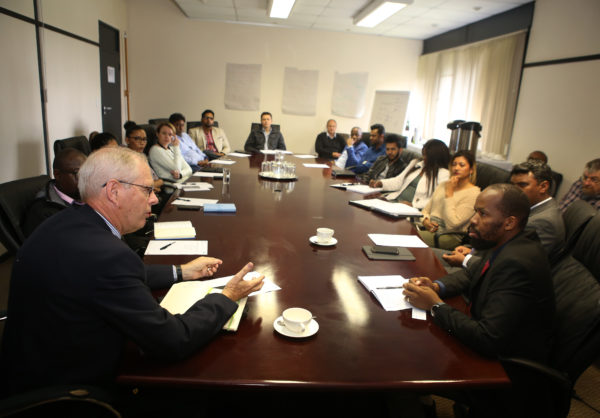
The Uganda National Roads Authority came out to compare their existing infrastructure and systems with those of SANRAL, to take lessons from successfully implemented construction projects in South Africa and to benchmark against industry best practice.

SANRAL recognises the value of building our country and our continent’s knowledge economy by creating platforms for knowledge sharing and skills transfer.  

Last year, the agency’s Western Region hosted a delegation from the Uganda National Roads Authority (Unra) in the Western Cape.  

This group came out to compare their existing infrastructure and systems with those of SANRAL, to take lessons from successfully implemented construction projects in South Africa and to benchmark against industry best practice as they endeavour to improve their systems and upgrade their national road network. 

While the magnitude of the respective agencies’ road network is very similar (22197km under SANRAL jurisdiction versus 20540km under Unra jurisdiction), there were stark differences in the way the network is maintained, managed and developed. 

SANRAL does not maintain any gravel roads, while Unra still must maintain 16000km of gravel roads.  

SANRAL allocates 54% of its total budget to maintenance, while Unra sets aside only 8% of their total budget for maintenance and upkeep.  

An urgent need to implement a Road Incident Management System was also identified, as was the need to refine procurement policies to counter corruption and ensure compliance to treasury regulations.  

SANRAL’s former Western Region Manager, Kobus van der Walt, said: “Several other issues were identified, and we committed to support and continuous knowledge sharing with Unra beyond what we shared with them for the week they were in Cape Town. 

“We are industry leaders in Africa and as such it is our duty to empower and support other developing African countries in their quest to improve infrastructure. It only serves to benefit our entire continent economically if road infrastructure is prioritised and developed to its maximum potential.”  

Though the post of Western Region Manager has more recently been filled by Randall Cable, SANRAL remains committed to knowledge sharing with sister agencies across the continent.