
Blog

Upgrading of N6 route on track

Work on the road will be completed on time despite challenges from natural elements. 

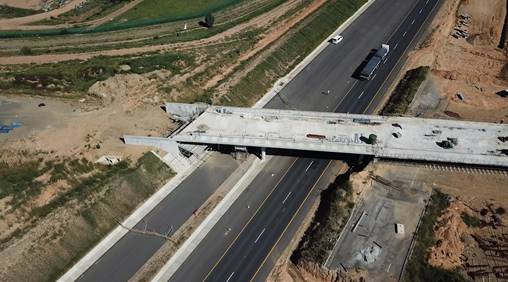
The three-year project valued at R450-million commenced in May 2017 and includes the rehabilitation of the Caledon bridge. This involves widening the piers, bases and the deck. 

The upgrading of the N6 route between Smithfield and Rouxville by the South African National Roads Agency (SOC) Limited (SANRAL) is well underway and on track to be timely completed. 

The upgrades entail improving road alignment to improve safety as well as capacity. 

The three-year project valued at R450-million commenced in May 2017 and includes the rehabilitation of the Caledon bridge. This involves widening the piers, bases and the deck. 

Nthabiseng Sekabate, a site agent whose company is tasked with overseeing the extension of the Caledon bridge, said: “We first installed pilings on the eight piers and extended the base of the piers. 

“Our main challenge has been natural elements. When it rains heavily, we get flooding and production slows down on site. This has a financial impact as the site team needs to be paid even we’re not generating income.” 

She said her team has learnt a lot while working on the project and her goal is to get exposure to more and bigger projects. 

SANRAL committed to the empowerment of SMMEs

SANRAL’s policy to advance the broad participation of black-owned enterprises epitomised in work being carried out on the R573.  

SANRAL constantly looks for ways to empower local communities to enjoy the long-term economic benefits from its projects, especially in Routine Road Maintenance (RRM) contracts.

The upgrading of the R573 Moloto Road north of Pretoria is the living embodiment of the broad development strategy of the South African National Roads Agency (SOC) Limited (SANRAL). 

SANRAL constantly looks for ways to empower local communities to enjoy the long-term economic benefits from its projects, especially in Routine Road Maintenance (RRM) contracts. 

According to Vusi Mona, SANRAL General Manager of Communications, the development of SMMEs as part of the maintenance of national roads is one of the agency’s main priorities. 

“The RRM programme was established on the national road network to offer various opportunities for the development of SMMEs, including training, mentoring, counselling and advice,” he said. 

RRM refers to work or contracts awarded for the general preservation and maintenance of the road infrastructure. SANRAL manages 22 197km of roads in the country and every metre must be maintained, which provides opportunities for more SMME participation. 

SMMEs given extensive training  

Mona said: “SMMEs are key drivers of economic growth and job creation. It is a condition of SANRAL tenders that a major portion of the works is set aside for SMMEs.  

“The proportion of works (either 80% or 60%) to be set aside for SMMEs is dependent on the size of the Broad Based Black Economic Empowerment participation of the main contractor. Ninety percent of the works set aside for SMMEs is carried out by black-owned companies.” 

On the upgrading of the R573 Moloto Road, which is one the major projects currently underway, a total of 203 SMMEs have received training to better equip them when bidding for tenders. 

SANRAL identified that local SMMEs have little exposure to the tendering process and this disadvantages them when responding to bids.  

The training included quality in construction, contracting and documentation, team management, precast concrete kerbs, brick paving, basic tendering processes, construction contracts and entrepreneurial skills. 

Thus far, the feedback has been extremely positive for both the accredited and non-credited training conducted, and SANRAL will continue to champion this initiative to empower more local businesses, said Mona. 

All interested SMMEs can visit the SANRAL website www.nra.co.za for more information regarding available opportunities with the agency. 

Upgraded Mount Edgecombe Interchange has forever changed the landscape

Interchange will resemble a massive cruise ship at night with state-of-the-art lighting spectacularly illuminating the concrete ramps 

A defining feature of this project is that it has one of the longest bridge viaducts ever constructed in South Africa.  

The Mount Edgecombe Interchange is an impressive and thrilling structure, and the multiple engineering achievements behind this mammoth project are testament to the exceptional skill and abilities of the entire construction team. 

The project engaged 80 designers at the peak of the design phase and not a single road was closed permanently during construction. 

The Incrementally Launched Method of bridge building was used to create as little disruption to road users. 

Project will increase capacity of interchange 

A defining feature of this project is that it has one of the longest bridge viaducts ever constructed in South Africa.  

This viaduct, referred to as B0215, has a deck length of 947 meters, which also makes it one of the longest incrementally launched bridges in the Southern Hemisphere. 

This upgrade has forever changed the landscape, and will no doubt become a landmark. 

Resident engineer Henk Kaal said although there was a lot of scepticism about the project ever getting completed, motorists are now beginning to smile as they start enjoying the improved flow of traffic. 

Henk said the initial completion time line for the project was three years. However, it stretched into a fifth year due to several factors, including torrential rainfall, which led to long stoppages on the project. 

The project which started in April 2013 with a budget of R800-million has risen to just under R900-million and was expected to be substantially complete by June 2018.  

Assistant Resident Engineer Thabo Morolo said the project will increase the capacity of the interchange. 

“As we progressed we had to do certain additional work to improve the project. We anticipate the final figure to be just under R900 million,” said Morolo. 

Twenty-one SMMEs were allocated subcontracting work to an estimated value of just under R60-million. 

The site office adjacent to the M41 has played host to over 1200 visiting students eager to align themselves with this world-class project. 

LED lighting technology 

The Mount Edgecombe interchange will resemble a massive cruise ship at night once hundreds of lights spectacularly illuminate the various concrete ramps. 

Riaaz Goga, project manager for High Voltage Technology, said the electrical reticulation for the interchange includes a distribution substation as well as six mini substations.  

In total there are 400 light fittings on the interchange and 20 000m of cable has been used. 

“The lighting system is state-of-the-art. The new LED technology consumes minimum electricity. Also, attention has been paid to the positioning of the lights to protect motorists and pedestrians from glare,” he said. 

The cable installation has been done in such a way that the wiring is concealed from public view using concrete sleeves. This is for the safety of motorists and to reduce the possibility of vandalism or theft. 

Overload control facility saves roads – and lives

Extensive overloading of trucks on the N2 restricted by dedicated staff who weigh and check trucks for road-worthiness. 

Damage to roads because of overloading leads to higher maintenance and repair costs and shortens the life of a road.

The Eteza Traffic Control Centre on the N2 in northern KwaZulu-Natal is helping curb the overloading of trucks that has resulted in a marked deterioration in the condition of the province’s road network. 

Damage to roads because of overloading leads to higher maintenance and repair costs and shortens the life of a road.  

This in turn places an additional burden on the state as well as law abiding road users who ultimately carry the costs of careless and inconsiderate overloading. 

At the overload control facility at Eteza, heavy vehicles of more than five tons gross mass are weighed. Drivers of heavy vehicles will be issued a fine if the vehicle exceeds the permissible mass on gross mass and/or axle unit mass. 

The overload control facility is also used to inspect the roadworthiness of vehicles on a 24-hour basis. 

Eteza processes 200 trucks a day 

Behind a large screen in the control room, Samkelisiwe Ndebele watches trucks awaiting their turn on the weigh-in scale. 

Satisfied that the next truck is now ready to be weighed, she speaks into the microphone: “Driver, please move forward.” 

The truck roars forward and stops on the scale where Ndebele and colleagues have an unobstructed view through a large glass window. 

Once she is satisfied with the reading on the computer, she clears the truck to proceed. This is one of the main duties performed at the centre, which processes an average of 200 trucks each day. 

“Weighing the trucks helps the community at large by taking over-loaded trucks off the roads as they often are the cause of accidents. That is how we are trying to limit the problem that we are faced with,” said Ndebele. 

Peter Phiri, a truck driver bound for Johannesburg from Richards Bay, said: “The facility at Eteza ensures that we comply and carry the permissible load. I don’t have any problem with the service here. They are quick to take your particulars and weigh your truck.” 

David Makhoba, manager of the traffic control centre, which employs 23 people, said apart from weighing trucks, the roadworthiness of vehicle was also checked. 

Steven Sipho Nkosi, superintendent of the traffic police in Mtubatuba, said they worked closely with the Eteza traffic control centre to help enforce the law on the roads, particularly the busy N2. 

“The common offences are speeding, drunken driving, operating unroadworthy and unlicensed motor vehicles. 

“The traffic centre has helped to reduce overloading of vehicles, which damages the roads. The humps on the roads caused by overloading lead to accidents because people lose control of the vehicles due to the bad road conditions.” 

SANRAL’s plan to transform construction sector ready for final approval

SANRAL’s policy aims to advance the broad participation of black-owned enterprises and drive economic development. 

SANRAL held roadshows and briefings in all nine provinces over a four-month period. Some of the constructive feedback and comments received were incorporated into the final version.  

The South African National Roads Agency (SOC) Limited (SANRAL) has submitted its final version of the transformation policy that intends to reshape the construction and engineering sectors to the National Cabinet for approval. 

When implemented, the new policy will set clearly-defined targets for the participation of black contractors, suppliers and professionals in all projects and procurement commissioned by SANRAL. 

Skhumbuzo Macozoma, SANRAL’s CEO, said: “The transformation policy underlines that SANRAL can help to build a capable and developmental state and drive economic development through the provision and maintenance of critical infrastructure. 

“Through our procurement and supply chain processes we can break down monopolies, transform the construction industry and advance the broad participation of black-owned enterprises.” 

Macozoma said the final version was presented to the Minister of Transport, Dr Blade Nzimande, following an extensive process of consultation with industry, contractors and professional bodies.  

SANRAL held roadshows and briefings in all nine provinces over a four-month period. Some of the constructive feedback and comments received were incorporated into the final version.  

“We addressed some of the concerns that were raised about how our policies would impact the broader construction sector – but also welcomed the broad acceptance of our commitment to transformation,” said Macozoma. 

All-encompassing transformation 

The transformation policy will be applicable to all aspects of SANRAL’s activities – from large construction projects, to road rehabilitation and maintenance, operations, and professional and consultancy services. 

“SANRAL has a wide footprint across the country,” said Macozoma. “Our policies and processes can really be catalysts for the emergence of businesses owned by women, black South Africans, military veterans and youth – to the point where they can compete on equal footings with the established contractors.” 

A key feature of the policy is SANRAL’s commitment to facilitate the training and development of emerging contractors to enable them to achieve higher gradings from the Construction Industry Development Board, thus expanding their ability to be participants in major tenders.  

Primary contractors who tender for SANRAL work will have to submit their own transformation and training policies as part of their tender submissions. 

Breaking down monopolies 

SANRAL will also help to level the playing field for emerging contractors through empowerment agreements with suppliers of construction materials and equipment.  

This will further help to break down monopolies in the supply chains of equipment, materials, technologies and services, while ensuring the broad-based participation of black South Africans. 

Macozoma said SANRAL remains committed to expand the participation of black-owned enterprises beyond the requirements set by existing legislation and industry charters and ensure that it is within what is legally allowed.  

The final version of the policy provides for the phasing in of black ownership requirements over four years – moving from an initial 35% ownership to 51% at the end of the period from the date of approval of the policy by the National Cabinet. 

The policy will also set limitations to the number of tenders that can be allocated to a single entity at both national and provincial levels. 

“We are confident that through our transformation policy and new long-term strategy – Horizon 2030 – SANRAL can contribute to economic growth, job creation, development and the empowerment of our citizens,” said Macozoma. 

Vandalism and theft of property on the N7 robs the entire community

Calls for Swartland residents to speak out against those tainting the image of the town

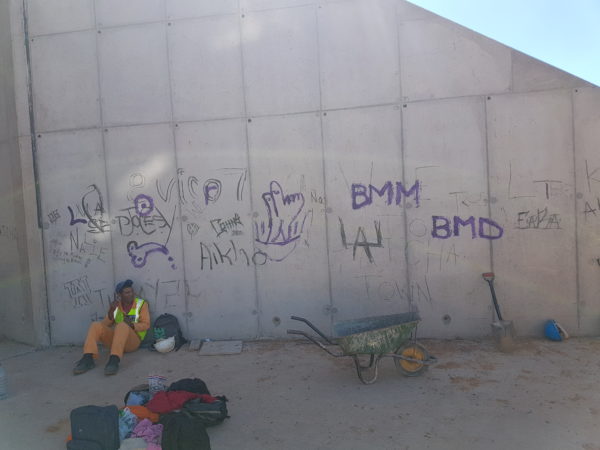
Unsightly graffiti on the walls, taint the image of our town and make it less desirable to visit according to Michelle Phillips-Liedeman, Project Liaison Officer on the construction project.

The continued vandalism, theft and destruction of property on the N7, is an assault on the entire Swartland community. 

Large parts of the communities along the N7 are rural, with many residents crossing the N7 on foot to access the industrial area, resulting in heavy pedestrian traffic all day.  

For this reason, the South African National Roads Agency (SOC) Limited (SANRAL) has invested extensively in pedestrian facilities, to accommodate the residents of Lingulethu, Saamstaan and Wesbank, who wish to reach the Schoonspruit industrial area on the opposite side of the N7.  

The existing pedestrian crossing at the Darling Road Interchange underpass has been significantly upgraded to prioritise safety and traffic flow, while a pedestrian walkway was created parallel to the N7 on the western side, from Saamstaan to the Darling Road Interchange. 

Theft of newly-erected fencing along the route directly puts both motorists and livestock at risk. It also has significant cost implications and ultimately robs the community of opportunities for further infrastructure upgrades and improvement. 

Michelle Phillips-Liedeman, Project Liaison Officer on the construction project, said: “Acts of vandalism and destruction or theft of property, as well as unsightly graffiti on the walls, taint the image of our town and make it less desirable to visit. As residents of the Swartland, we have a collective responsibility to protect and be proud of our community.” 

A child of the soil 

Phillips-Liedeman, who grew up in the Swartland, takes great pride in her community and the value that these infrastructure upgrades add to the region.  

She is actively encouraging community members to speak out against vandalism so that those responsible for defacing, damaging and even stealing public property can be brought to book. 

The overall upgrade of the N7 comes at a cost of R2.37-billion, of which R297-million is directly benefiting SMMEs, while the various construction projects currently provide employment for 600 locals. 

Randall Cable, SANRAL’s Western Region Manager, said: “This speaks to SANRAL’s commitment to the people we serve. We don’t build roads simply for cars to drive on.  

“Our construction projects are designed to directly benefit the communities through which we pass, with job creation, as well as skills development and training that will allow them to access further employment opportunities once current construction projects are completed.” 

Any acts of vandalism and theft of property can be anonymously reported to Crime Line by sending a SMS to 32211 (SMS charged at R1) or calling Crime Stop on 08600 10111. 

R75 Section 1 rehabilitation reaches half-way mark

Work on one of Nelson Mandela Bay’s primary arterial roads expected to be finished next year. 

The implementation of road safety measures and rehabilitation of the R75 Section 1 constitutes 13km and will create work for a minimum of 37 local SMMEs between 1CE PE and 6 CE PE CIDB grading within the Nelson Mandela Bay Metro.

The South African National Roads Agency (SOC) Limited (SANRAL) announced that the R75 Section 1 rehabilitation and safety measurement improvements project currently taking place between Port Elizabeth and Despatch, has reached its half-way mark. 

The R316-million project is on one of Nelson Mandela Bay’s primary arterial roads.  

The R75 connects some of the oldest suburbs and townships along the route and is a vital link between Port Elizabeth and the industrial areas of Uitenhage and Despatch.  

SANRAL took ownership of the R75 after it was declared a national road in April 2012. As part of its mandate, the roads agency is responsible for maintaining this important road infrastructure. 

Mbulelo Peterson, SANRAL Southern Region Manager, said: “Route R75, one of the major National Roads within the Eastern Cape interior, is the primary arterial road for Algoa Park, Zwide, Zinyoka (Govan Mbeki), Veeplaas, Missionvale, New Brighton, KwaDwesi, KwaDwesi Extension, KwaMagxaki, Joe Slovo and Despatch, acting as the public transport link between both ends.” 

The implementation of road safety measures and rehabilitation of the R75 Section 1 constitutes 13km and will create work for a minimum of 37 local SMMEs between 1CE PE and 6 CE PE CIDB grading within the Nelson Mandela Bay Metro. 

This two-year project should be completed in May 2019. 

Pedestrian facilities improved 

The average daily traffic on this road ranges from approximately 6100 to 7100 vehicles per day in the northbound direction, and between 5500 and 5900 vehicles each day in the southbound direction.  

The average percentage of heavy vehicles that make use of the road is around 8.5%. This means that around 500 trucks use this road in each direction every day. 

Current construction is focused on rehabilitating the previously poor condition of the road surface as well as improving pedestrian safety, specifically for scholars crossing the very busy route. 

There are more than 4598 (2659 adults and 1939 children) pedestrians making use of the road, 42% of them being school-going children attending the Khwezi Lomso High School (Zwide), Thyilulwazi Primary School (Zwide), Gareth Primary School (Zwide), KwaMagxaki High School (KwaMagxaki), Lungisa High School (KwaDwesi) and Nelson Mandela University (Missionvale Campus), which are situated on either side of the road. 

“The poor road condition prior to the rehabilitation required constant patchwork repairs. Pedestrian facility improvements are a major requirement of this project as pedestrian movements are largely uncontrolled and unsafe. In addition, this section of road has been recognised as having some of the highest pedestrian accident numbers in the Eastern Cape,” Peterson said. 

Construction divided into two phases 

Due to the nature of the safety improvements required – namely improvements to both the interchange and pedestrian bridge positions – and, to expedite construction, the project was sub-divided into two phases: 

  • Phase 1, which is currently in construction consists of road rehabilitation and minor safety measures to improve pedestrian mobility and safety along the R75 between residential and industrial areas. The Phase 2 project will deal with the major safety improvements on the project. 
  • Phase 2, will consist of an upgrade to the Commercial Road interchange and the construction of a pedestrian bridge. This phase is expected to be constructed in the next three years. 

The scope of work for the project entails road rehabilitation works, drainage infrastructure, pedestrian safety and fencing, and erecting guardrails.  

New asphalt surface 

Due to the poor condition of the road and the strategic importance of this road as a corridor between Uitenhage and Port Elizabeth, it was important to rehabilitate the road structure to ensure it would last for a further 20 years. This includes the recycling of the existing road substructure and applying a new asphalt surfacing. The asphalt surfacing is very durable, will improve the rideability of the road and reduce noise pollution. 

Drainage Infrastructure 

Drainage infrastructure along the entire route will be improved. Drainage infrastructure improvements includes: 

  • shaping or clearing of blocked drainage systems; 
  • installation of kerbs at all intersections and along the first 5km of the road; 
  • installation of subsurface drainage in cut areas; and 
  • installation of concrete side drains in cut areas. 

Pedestrian safety and fencing 

Dangerous conditions along the R75, including uncontrolled crossings of pedestrians, animals and vehicles, have been a major cause for concern. This rehabilitation and road safety project aims to prohibit these movements and crossing will only be allowed where it is safe and where deemed necessary. 

An anti-climb fence system is being constructed along the R75 road reserve where no fences are currently in place.  

This will help to prevent vehicles and pedestrians from gaining access to the busy R75 road at any point. Access to the road for pedestrians will be provided at intersections and at pre-defined intermediate pedestrian crossings. 

An assessment of the road in March 2016 revealed that the existing pedestrian walkways were substandard and in a very poor condition. Additionally, at many sections along the route there were no pedestrian walkways.  

Therefore, new walkways will be constructed along the length of the route. The walkways will generally be 2m wide, reduced to 1.5m where limited pedestrian traffic is expected, and space is restricted. 

Due to level changes to the road following rehabilitation, all existing guardrails will be removed and if re-usable, will be stored for re-erection. 

New and re-usable guardrails will be installed adjacent to both sides of the north and southbound carriageways to prevent vehicular traffic from making illegal crossings of the road and to prevent U-turn manoeuvres in the median. Openings will be provided in the median guardrails for emergency vehicle access and pedestrian crossings. 

Safety overhaul for R31 crossings

Significant upgrades are under way just outside Kimberley. 

SANRAL is committed to creating engineering solutions for safer roads. However, the buy-in of all road users, including pedestrians, is needed, so that road safety can become a way of life, and not just be a reaction to awareness campaigns in the aftermath of a tragedy.  

The South African National Roads Agency (SOC) Limited (SANRAL) has recently started construction on the upgrading of the three major intersections on the R31 Main Road, between Barkly West and Landbou Road.  

The intersections will be turned into traffic circles. The upgrade will also include a new access road, midway between the R31/R357 and N8/R31intersections. The objective is to improve not just the smoothness of the trip, but also road safety.  

In their current form the intersections experience regular traffic incidents caused by speeding vehicles. This has resulted in many serious injuries for drivers and passengers and, in some instances, deaths.  

Traffic circles safer 

An intersection has 24 pedestrian and 32 vehicle conflict points, where the paths of turning vehicles diverge, merge or cross each other.  

A traffic circle has only eight and, thus, clearly makes them a safer alternative.  

SANRAL’s Western Region Manager, Kobus van der Walt, said the upgrades will increase safety for pedestrians and night drivers.  

“This contract makes provision for surfaced sidewalks and pedestrian crossings, along with kerbed, surfaced median islands, within each roundabout approach. The installation of street lighting at each of the three roundabouts and their approaching roads has a significant safety benefit for drivers, pedestrians and cyclists during night-time conditions, as accidents frequently happen early in the morning or late at night, when visibility is compromised,” he said.  

Just short of R90-million has been earmarked for this project.  

SANRAL is committed to creating engineering solutions for safer roads. However, the buy-in of all road users, including pedestrians, is needed, so that road safety can become a way of life, and not just be a reaction to awareness campaigns in the aftermath of a tragedy.  

Last year, media reports indicated that the Northern Cape had the highest spike in road deaths over the Easter period – 175%.  

This is alarming. The conscious commitment of every road user is needed to put an end to the carnage.  

Though SANRAL is being proactive about saving Northern Cape road users’ time, trouble and injury with this project, it is aware that road works can cause disruptions.  

“Road works inevitably give rise to traffic delays, particularly in the absence of alternative routes,” said van der Walt. “The patience and cooperation of residents is deeply appreciated, and we cannot stress enough the importance of extra vigilance and awareness when travelling through the construction areas.”   

Positive responses to proposed N3 corridor upgrades

Public hearings show support for SANRAL’s proposed N3 capacity improvements between Durban and Pietermaritzburg. 

The hearings at Cato Ridge, Camperdown and Pietermaritzburg afforded the public the opportunity to learn about SANRAL’s proposals, to view graphic representations of what is proposed, to obtain further information and to engage directly with officials from SANRAL, as well as the design engineers and the environmental assessment practitioner. 

There has generally been positive response to the proposed N3 capacity improvements between Durban and Pietermaritzburg, following three days of public hearings. 

The widening – and realignment in sections – of the 84km N3 Corridor between EB Cloete Interchange in Durban and Twickenham Road in Pietermaritzburg is being undertaken by the South African National Roads Agency SOC limited (SANRAL) because the N3 is presently operating near full capacity. 

Ravi Ronny, SANRAL Eastern Region design and construction manager, said the road improvements are subject to the provisions of the National Environmental Management Act and require environmental authorisation from the National Department of Environmental Affairs. 

Public participation integral  

Ronny said an integral component of environmental assessment is public participation where interested and affected parties are encouraged to participate actively in proposed developments in which they have an interest, or which may affect them.   

The hearings at Cato Ridge, Camperdown and Pietermaritzburg afforded the public the opportunity to learn about SANRAL’s proposals, to view graphic representations of what is proposed, to obtain further information and to engage directly with officials from SANRAL, as well as the design engineers and the environmental assessment practitioner. 

Ronny said that according to information gathered by environmental consultants Acer (Africa), an estimated 150 interested and affected parties attended the information-sharing sessions over three days. 

“In general, the members of the public who attended are positive about the proposed improvements. Where people are directly affected in terms of their properties, they are obviously concerned. 

“There are some properties that are seriously affected by the land acquisition that will be required and these will need to be dealt with on a case-by-case basis by SANRAL’s property division,” said Ronny.    

Other common complaints/concerns/objections related to noise during construction and from the increased traffic after improvements and construction disruptions. 

How the upgrades will improve the N3 

The N3 Durban-Pietermaritzburg upgrade over the next six to eight years will provide for an additional two to three lanes per direction and substantial interchange reconfigurations to accommodate future traffic growth and improve safety. 

Widening will be accommodated as far as possible within the existing median and road reserve, but additional land will need to be acquired in some areas. 

The project will involve modification of existing bridges, crossroads and drainage, construction of some new infrastructure and demolition of redundant structures. 

Realignment/relocation of services in the existing road reserve will also be undertaken. 

Ronny said the N3 Corridor is essential if one of government’s strategic integrated projects linking the Port of Durban with Gauteng, South Africa’s economic heartland, is to succeed. 

Why upgrades are needed 

If the upgrades do not go ahead, it is estimated that users of the N3 will continue to suffer losses of nearly R800-million per annum due to accidents and time delays. R775 million can be attributed to time delays and between R250 000 and R295 000 per hour to accidents and road closures due to accidents. These estimates are already five years old. 

Ronny said the N3 carries more than 40 000 vehicles per day around Pietermaritzburg and consists of a mix of urban commuter traffic, long-distance traffic and substantial number heavy vehicles, with some sections experiencing more than 25% of heavy vehicles.  

“Over 75-million tons of freight per annum is carried on the N3 corridor, with approximately 9 000 heavy vehicles using the national road per day.  

“Durban is by far South Africa’s busiest port with over 80% of goods moving along this corridor by road.  

“Therefore, the need to consider the best economic solutions to ensure the seamless flow of freight is very important,” said Ronny, adding any blockage on the N3 that would cause its closure was tantamount to a national crisis

SANRAL helps tell a 360-million-year-old tale

SANRAL has played an integral part in the contribution to palaeontological knowledge and the preservation of natural heritage. 

Dr Robert Gess of the Albany Museum in Grahamstown, who is supported by the DST-NRF Centre of Excellence in Palaeosciences based at the University of the Witwatersrand, and the Millennium Trust, teamed up with Professor Per Ahlberg of Uppsala University in Sweden to describe the finds.

The South African National Roads Agency (SOC) Limited (SANRAL) continues to contribute to the body of palaeontological knowledge through their support of the discovery and preservation of the fossilised remains of life from a 360-million-year-old Eastern Cape marine ecosystem. 

SANRAL’s involvement with Late Devonian research goes back to 1999 when they assisted Dr Robert Gess to rescue 30 tons of fossiliferous shale ahead of roadworks at Waterloo Farm, 2km south of Grahamstown in the Eastern Cape. 

New fossil findings from gradual excavation of these 360-million-year-old shales belonging to the Waterloo Farm estuarine lagerstätte (exceptional fossil site) were published in Science 

Lead author, Dr Robert Gess of the Albany Museum in Grahamstown, who is supported by the DST-NRF Centre of Excellence in Palaeosciences based at the University of the Witwatersrand, and the Millennium Trust, teamed up with Professor Per Ahlberg of Uppsala University in Sweden to describe the finds. 

Highlighting Devonian Research 

Their research paper entitled, Tetrapods from the Devonian Antarctic Circle, helps to highlight the global significance of late Devonian research in the Eastern Cape. 

Gess explained: “Whereas all previously found Devonian tetrapods have come from localities that were in tropical regions during the Devonian Period, the Grahamstown specimens represent species that lived in the Antarctic Circle and thus force a major reassessment of the origin of four-legged vertebrates.” 

He added: “During the Devonian Period (360 to 420 million years ago) the ancestors of all land-living vertebrates evolved from lobe-finned fish. These creatures had traded their fins for four stubby legs but retained a tadpole like tail. About a metre long, they looked superficially like a cross between fish and alligators and lived in pools, lakes and lagoons where they probably inhabited the shallows. Shortly after the End Devonian Mass Extinction Event their descendants moved onto land and gave rise to land vertebrates – amphibians, reptiles, birds and mammals, including ourselves.”  

Thousands of unique fossils 

Rob Damhuis, geotechnologist and project manager at SANRAL Southern Region, said: “At SANRAL’s inception in 1998 it became a priority to make the N2 road between Grahamstown and the Fish River safe. Whilst surveying the geology through which the Waterloo Farm road cutting went, we were made aware that the area held elements of great importance to South Africa’s history.  

“Construction of the repairs was immediately halted and SANRAL brought in Dr Gess and his team to mine out 30 cubic metres of shale by hand. SANRAL then transported the shale to Bathurst where Dr Gess began to steadily work through it in search of fossils. 

“The results of the excavations were incredible, uncovering thousands of unique fossils which are of great international importance today. So far, the remains of an entire coastal estuarine ecosystem from 360 million years ago has been discovered.” 

A further 70 tons of shale was similarly rescued in 2008 and to further assist with the fossil finds and help to preserve the shale, SANRAL built a shed next to Dr Gess’s existing shed to store the shale blocks and protect the fossils from weather damage. 

A find he had always hoped for 

Dr Gess said he had always hoped to find remains of Devonian tetrapods at Waterloo Farm, even though the text books suggested it wasn’t at all likely.  

He said: “I read Dr Jenny Clack’s book Gaining Ground and familiarised myself with the skeletal transformations involved in the fish to tetrapod transition. I was splitting shale with my student, Chris Harris, when I found the cleithrum of Tutusius. I just knew that this was what I’d spent years looking for. I went all quiet and then abandoned what I was doing and went to fetch the literature just to double check. I’ll never forget that afternoon. 

“In South Africa we have a good evolutionary history preserved in the rocks, which now adds the emergence of animals with legs from fish, to a well-studied record of the evolution of mammals from reptile-like ancestors and development of the earliest humans. Our fossil heritage is world renowned. 

“The fact that the tetrapods were found at the Waterloo Farm site gives us a really good picture of the environmental setting in which they lived. Of all sites in the world that have tetrapod remains, Waterloo Farm has the best record of what plants and animals were around the ecosystem that the tetrapods were living in. 

“This is the only site in the world that has tetrapod remains but also has soft tissue preservation. The rock shed that SANRAL donated has almost certainly preserved more remains of the bony parts of the Devonian tetrapods, but it is possible that further excavations might also reveal evidence of the non-bony parts – which are yet unknown from anywhere.” 

A continuing relationship 

SANRAL has continued to be interested in Dr Gess’s Devonian research project and recently facilitated the discovery of further fossil sites.  

While monitoring controlled rock cutting explosions by SANRAL along the N2 between Grahamstown and the Fish River in 2016, Dr Gess and Harris discovered new Devonian river mouth sites 20 km east of Waterloo Farm.  

These sites help to fill out the picture of environments along the ancient high-latitude shoreline of Gondwana. 

“It is important that the public is aware of this collaboration and is aware of the agency’s support to preserve our natural heritage,” said Mbulelo Peterson, SANRAL Southern Region Manager. 

SANRAL’s standard management plans contain guidelines for project managers who may encounter similar cases of palaeontological heritage, especially in areas where experts believe the potential for finds is high. 

“In 2016, as part of a conservation plan for the N2 Wild Coast Road (N2WCR), we initiated our environmental management programme, which is aimed at protecting the biological diversity and natural heritage of the Eastern Cape. As part of this programme we have already conducted palaeontological training for environmental and other personnel, to sensitise them to the potential for and tell-tale signs of palaeontological finds as well as to iterate what to do if such findings should occur,” Peterson added.