
Blog

Community Development a priority

South Africa’s national roads agency continues to pioneer new models of community development through meaningful programmes, which address issues of income inequality, critical skills shortages and youth unemployment in the Eastern Cape.

One example illustrating SANRAL’s strategic ability to conceive and implement meaningful community development programmes alongside its conventional engineering projects for the country’s national road infrastructure is the Engcobo access roads community development project in the Chris Hani District Municipality.

This R37 million project, which commenced in July 2013 and concluded in June this year (2015), was a social and community development programme alongside SANRAL’s R209 million R61 national road upgrade project between Qumanco to Engcobo.

The surface of approximately 5,6km of existing community gravel access roads in four villages had to be upgraded to improve road safety operations of the R61.

To increase local job opportunities, SANRAL selected a labour intensive road construction engineering technique. A slurry bound macadam base pavement design was used for the gravel road upgrading which provided employment to 110 youth from four villages between 42km and 68km.
Article 1


Skills development was a critical component of the programme and SANRAL introduced a formal structured skills training programme concentrating on construction for youth from local communities.

This meant that individuals could be empowered with skills, making them employable for local, regional and national projects, especially when SANRAL road infrastructure upgrading and development comes to an end.

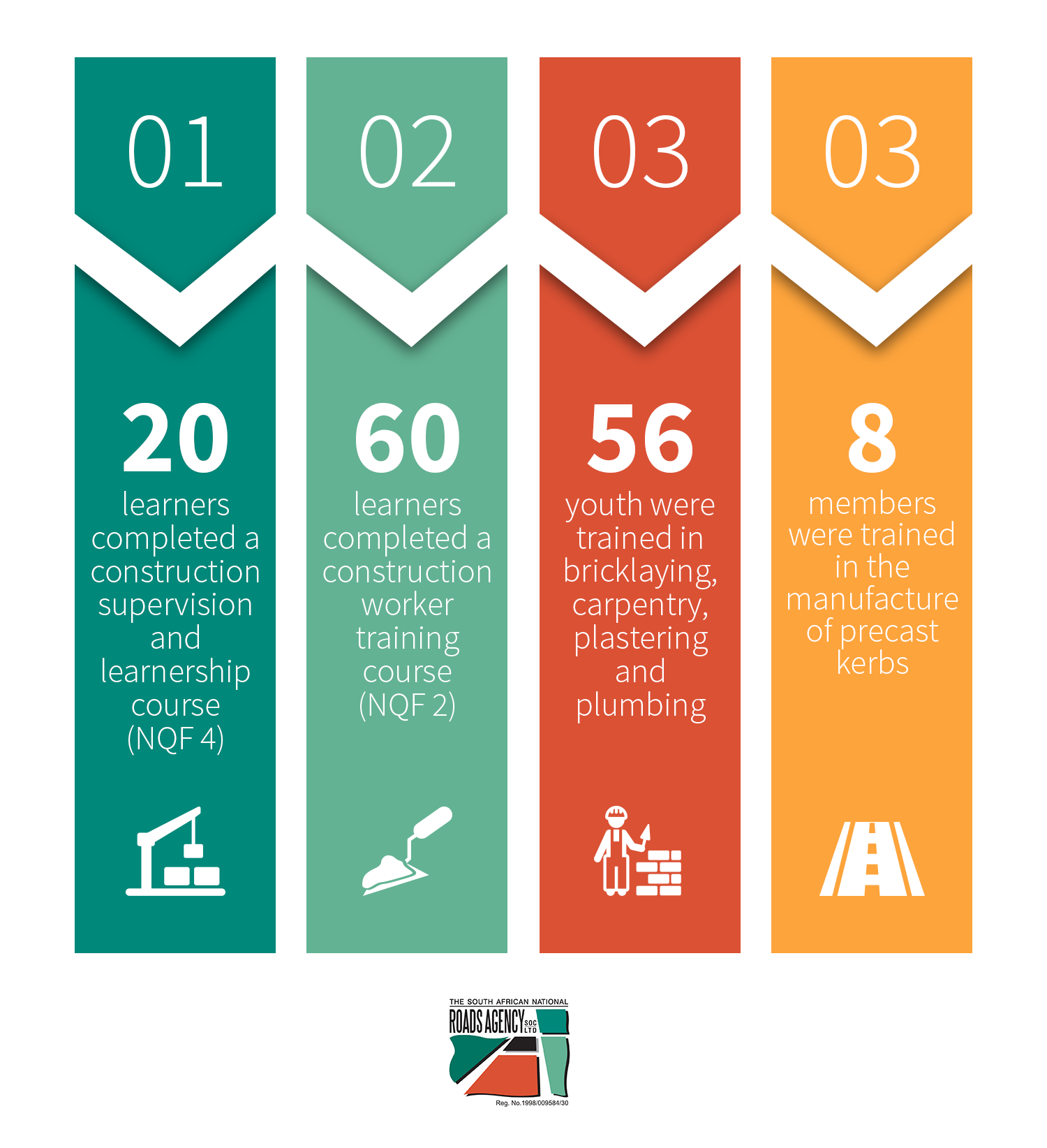
Eighty learners were enrolled in various infrastructure development training programmes after recruitment drives in the local and surrounding communities of Engcobo.
sanral_inforgraphic_25_sept_v001

To empower the public liaison committee (PLC), 12 members attended courses in interpersonal skills and business communication such as conflict resolution and managing meetings.

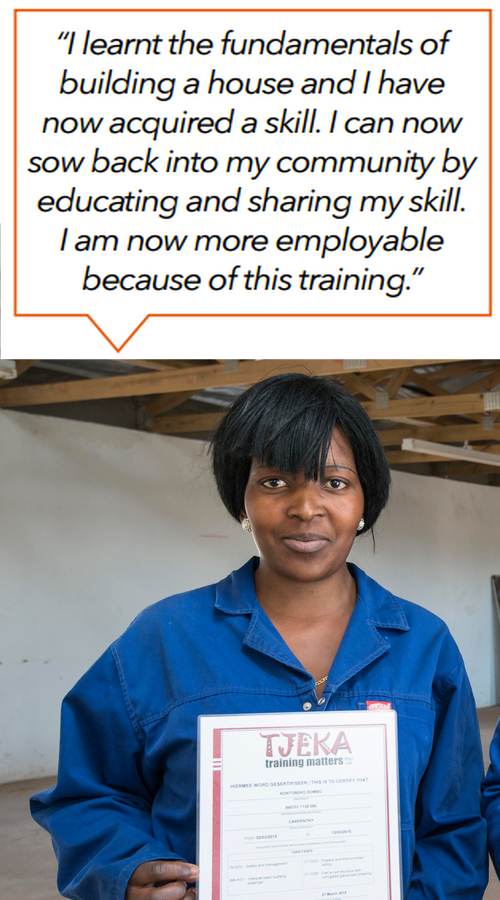
Khuliswa Victoria Somathube from Masowane recently received a certificate in brick laying at SANRAL’s certification ceremony.

“I learnt the fundamentals of building a house and I have now acquired a skill. I can now sow back into my community by educating and sharing my skill. I am now more employable because of this training.”

Nontobeko Sombongo from Engcobo’s New Rest suburb will use her new skills in carpentry starting a company and tendering for projects. Apart from human resources development, SANRAL also invested in local enterprise development through a material production base incubator project.

A local production base for concrete kerbs for the access roads and training was provided for the local manufacturing of concrete kerbs. SANRAL invested in the construction and development of a concrete casting yard and the operation currently provides employment to 12 individuals.

The PLC intends to establish a company to sustain this precast kerb business and develop it further to manufacture other precast products that are in demand within this community. SANRAL also constructed a training facility in the casting yard, and this will be handed over to the community.
We don’t just build bridges, we connect communities

Since 1998 we’ve proudly built over 8,000 bridges that safely connect communities together. These are just some of the projects that have enabled communities to unite and connect:


2008


Bridge over R300 in the Western Cape 

A vital pedestrian bridge over the busy R300 freeway in the Western Cape has saved many lives and improved the quality of life of communities in Kalkfontein, Belhar and surrounding areas.

More than 2,000 Kalkfontein residents crossed the busy road on a daily basis to reach facilities such as clinics, schools and police stations in Belhar.

The construction of the Kalkfontein pedestrian bridge significantly improved road safety in the area and provided residents with a safe and accessible alternative to cross the highway.


2010


Rehabilitation of R61 near Queenstwon

SANRAL came to the support of local hawkers in the Eastern Cape during the rehabilitation of a section of the R61 between Queenstown and Cofimvaba.

The project included the provision of paved footpaths and trading facilities for hawkers. A rest area and the hawker facility was constructed to provide food vendors and traders the opportunity to operate their business in a safe environement. The local municipality supported the project through the provision of stall facilities.


2011 


Road safety improvements in Mogalakwena 

Concerns about the safety of pedestrians, especially school children, led to an intervention on the N11 in the Mogalakwena municipality in Limpopo.

This section of the road, near the Tshamahansi village, was earlier incorporated into the national road network resulting in a growing number of pedestrians either walking along or crossing the road in dangerous circumstances.

In collaboration with mining group, Anglo Platinum, SANRAL embarked on a R11.5 million construction project which included a number of vital road safety improvements, including the upgrading of main road intersections, the closing of illegal road junctions, the fencing of roads to prevent direct access and the provision of pedestrian walkways and crossings and adequate road lighting.

In addition, the project created 189 jobs over a 12 month period and some 271 members of the community were trained.

Celebrating the end of tolling is premature, says SANRAL

The judgement handed down yesterday by the Western Cape High Court does not signal the death of tolling. To state this would be outright misleading to the public.

In its ruling on the review application brought by the City of Cape Town to challenge SANRAL’s decision to toll the N1/N2 Winelands Project, Judges Binns-Ward and Boqwana said:

“It is thus important at the outset of this judgment to emphasise that it is not the function of the courts to determine one way or the other whether the roads should be tolled.”

And further:

“Whether the roads should be tolled or not is a matter to be decided within the relevant statutory framework by SANRAL and the Minister of Transport, not by the courts.”

In fact, the court found against SANRAL only on a narrow, procedural point, i.e. that the intent to toll process was flawed. This means that the courts believed that the administrative requirements laid out in Section 27(4) of the SANRAL Act had not been correctly followed

The court remitted the decision to declare the N1/N2 Winelands roads as toll roads back to SANRAL for further consideration.  Consequently, should SANRAL still intend to toll the N1/N2 Winelands route, it may do so as long as it is done within the framework of the SANRAL Act.

Clearly, the court’s finding is that tolling remains an option for the funding of the Winelands Project and its long overdue and much-needed upgrades.

The City of Cape Town chose to take an adversarial position which, unfortunately, has been unhelpful in solving the issue. SANRAL had approached the City of Cape Town in July and does so now again.

The real issue is not only about to question whether to toll or not to toll – it is about finding solutions that will be in the interest of road users. It is a fact that the fuel levy is just not the answer – it is a regressive tax that hits the poor hardest.

Ultimately, it would be in the best interest of the road users, the economy and the poor for the City of Cape Town to take the olive branch that was extended to it by SANRAL before the Court process started.

SANRAL’s legal advisors will consider the judgement and assess the legal options available to SANRAL.

N1/N2 Winelands: SANRAL weighing its options

Cape Town, 30 September 2015

The Western Cape High Court handed down judgement today in the review application brought by the City of Cape Town regarding the N1/N2 Winelands Project. Decisions taken to implement the project, some of which were taken more than eight years ago, were the subject of the application.

Vusi Mona, spokesperson of the South African National Roads Agency SOC Ltd (SANRAL), said that although he was pleased that environmental authorisations regarding the implementation of the project were upheld, he is disappointed that the court set aside the decisions concerning the procedure of the declaration to toll.

 “The agency’s legal team is reviewing the details of the decision and will assess the legal options available to SANRAL.”

Mona added that it seems that the City’s real complaint with the N1/N2 Winelands Toll Project is about tolling as the funding choice. Cllr Brett Herron, Cape Town’s mayoral committee member for transport, conceded in a recent media statement that the litigation was the city’s last resort to prevent tolling.

Mona pointed out that the Constitutional Court had already ruled that it is not the judiciary that determines what kind of funding should be used and who should bear the brunt of that cost. The remedy lies in the political process.

The N1/N2 Winelands project is more than a decade in the making. It was conceived to improve the link between the Western Cape and the rest of the country. Substantial time, effort and investment have been put into its development.  It was earmarked to facilitate the movement of large volumes of export and import freight, business, tourism, recreational and commuter traffic. 

The court’s decision, Mona said, means that the realisation of the benefits of the project will either be delayed or may never eventuate. These include safety benefits to road users and the economic benefits to South Africa and the region.It will also prevent the direct and indirect  creation of  some 5 000 jobs for the initial construction  period over the first three years of the project and thereafter approximately 500 jobs per annum for the duration of the thirty-year concession period.

Infrastructure investment is critical to economic success. South Africa needs a project such as the N1/N2 Winelands which brings with it employment and stimulation of the economy which is particularly beneficial in the current economic climate.

“If SANRAL is not allowed to proceed with the project now, the province, the city and their constituents will not have the upgrades for at least the next 20 years, if at all.” 

There is just no money from Treasury to fund the project. The only option is to have it operated by a concessionaire who will finance the cost of upgrading and expanding the road through equity and borrowings, which have to be repaid through tolls.

Commenting on the matter, economist Dr Iraj Abedian said:

“One of the critical requirements is to ensure that economic growth and job creation are sustained, if not accelerated. To this end, accessing and mobilising private sector funding for infrastructure finance are vital.

 By so doing the developmental process is not held back by the lack of public finance, or by the absence of potential taxation capacity of the economy to finance long-term infrastructure projects.

 One of the key requirements of success in infrastructure planning and financing is the socio-economic value of time. In other words, not only timeous planning but also a timeous implementation of an infrastructure project, be it a power station or a roads network, is often the difference between success or failure, viability or otherwise.

In South Africa, the delayed completion of Eskom’s Medupi Power Station is a very instructive case in point. The delay of two years has cost the SA economy many jobs, a substantial reduction in GDP growth momentum, and a host of associated complications including reputational damage to the country’s investment brand.”

Huge N3 traffic volumes

High traffic volumes of up to 2,600 vehicles per hour passing through the Tugela and Mooi Plaza resulted in lane closures yesterday.

Road Traffic Inspectorate spokesperson Zinhle Mngomezulu said they had to reduce the number of open lanes at the Tugela Plaza about 1 pm to ease congestion at Van Reenen’s Pass.

“It has been busy throughout the day, but these are the most cars we’ve in an hour.”

Earlier in the morning N3 tolls concessions spokesperson, Andy Visser, had urged commuters to exercise caution and patience whilst travelling.

Mngomezulu said holidaymakers returning home appeared to have heeded the call.

“All we can ask is for people to remain patient especially in situations like this. Everyone wants to get home following a long, relaxing holiday.”

Between 1 pm – 2 pm, 2,606 vehicles passed through the Mooi Plaza southbound, without incident.

However, Neatcare911 spokesperson, Chris Botha, said there was a crash on the N2 North at the Tongaat Toll Plaza. Two people, believed to be husband and wife, were injured when a vehicle slammed into them with such force that it pushed them through the boom at the toll gate while they were paying.

“The female sustained serious injuries while the man escaped with minor injuries. The driver of the other vehicle was uninjured and was taken to the police station for investigation.”

Adapted from http://www.ornico.co.za/

Image of rich heritage reflected in modern bus station

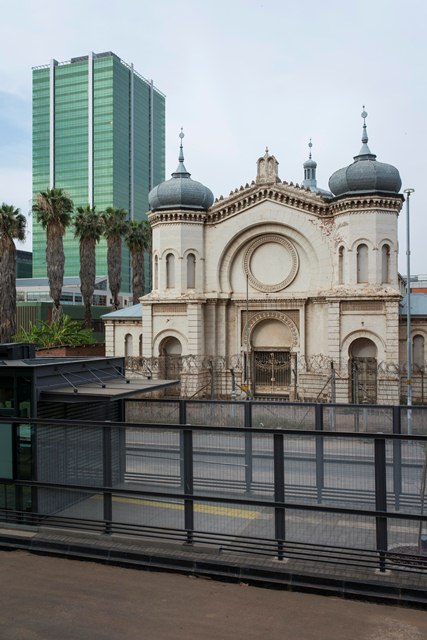
The design of new bus stations for the Tshwane Rapid Transit System blends the historic significance of buildings in the capital with needs for a modern transport system. SANRAL has managed the design and construction of the bus stations and a competition was held to select the most functional designs submitted by architects.
Tshwane Rapid Transit (TRT) Old Synagogue 'Memory Box' station; Paul Kruger St, Pretoria; 15 September 2015 - Photo by Brett Eloff.
One of the new stations is located next to the Old Synagogue in Paul Kruger Street, close to Church Square. The Old Synagogue is an important heritage building dating back to the first decade of the 20th Century. It was later converted into a makeshift court house and used as the venue for security-related trials during the apartheid years, including the Rivonia Trial, at which Nelson Mandela was sentenced to life imprisonment.

The modern “Memory Box” design by Mathews & Associates blends the requirements of a functional bus station for Tshwane’s A Re Yeng system with the backdrop of an important heritage site. The glass exterior blends in with the historical importance of the inner-city precinct and reflects the image of the Old Synagogue back to the viewer.

The station is one of 50 on the Tshwane Rapid Transit System. Hannes van der Merwe, the SANRAL project manager and architect, Pieter Mathews from Mathews & Associates visited the new station prior to its official opening later this year.

Building a new bridge, preserving the old one

Building, upgrading, maintaining roads is what SANRAL does – but it is always very careful to take the environment into account, as was done with the construction of a new bridge over the Vaal River near Warrenton in the Northern Cape and the consequent realignment of the N18 to Mafikeng and Botswana.

Roads are usually seen as being negative for environmental biodiversity by fragmenting natural habitats. Increasingly, though, roads are recognised as potential and crucial biodiversity corridors, linking islands of bio-diverse habitats formed as a result of agricultural and urban development.

“A comprehensive botanical specialist study is part of the essential planning. Frequently, innovation is required, which may include a realignment of the planned road upgrade.

That is what we do everywhere we build or upgrade a road or construct a bridge. We believe in a sustainable road network where there is a balance between the needs of the road user and the environmental and socio-economic interests.” – Vusi Mona, SANRAL’s communications manager.

This bridge over the Vaal is a prime example of this approach.

The original low-level bridge was frequently under water during the rainy season, posing a hazard to vehicles, pedestrians and cyclists crossing and resulting in costly diversion of traffic. It was decided that a new bridge is needed, which resulted in the re-alignment of the N18 with pedestrian sidewalks.

Many factors had to be taken into account. Where the bridge is constructed is also an important spawning area for several fish species and SANRAL ensured that the habitat is not significantly transformed by construction activities.

Also, soil erosion along the river banks was a possibility and measures to minimise or prevent this were necessary. Support pillars for the bridge were designed so that the potential for floating debris to be snagged is minimised while energy dissipaters and rock-packed mattresses were used to minimise any possible erosion. Silt fences were used on the riverbanks for the same purpose.

Odd as it may sound, says Mona, the rocks that were removed to accommodate the construction work have been retained and replaced with reference to the natural features during the rehabilitation phase. The aquatic habitat has been returned as close to its original state as possible to conserve aquatic fauna and flora.

Unnecessary clearing of vegetation was avoided and fishing and hunting of local fauna strictly prohibited. Some Aloe grandidentata were found on-site, relocated and transplanted during rehabilitation so that the ecosystem remains much as it was – this was done despite the fact this specific aloe is not on the endangered list.

As always, exotic vegetation is removed on an on-going basis. But what is unusual about the Warrenton project is that the old bridge was not demolished. It was opened in 1931 and has thus been a feature for over 80 years.

It could only be demolished with approval of the Heritage Resources Agency but during the assessment the community insisted on retaining it. SANRAL has preserved this landmark bridge following talks with the municipality.

Working on a road means land is transformed, water resources are affected, substances emitted, waste generated, there is interaction with local communities – and vegetation may be affected.

“We at the roads agency are very aware of all of this and we work hard at trying to reduce the impact on the natural environment and serve the local community better by providing improved roads.”

Discover the ancient city of Mapungubwe off the N1 this Heritage month

Mapungubwe in Limpopo is a UNESCO World Heritage Site that once was the capital of a country as large as Swaziland. Once an African Kingdom that reigned from Kingdom from about 1050 AD to 1270 AD, this ancient gem can be explored just off the N1.

Archaeologists from the University of Pretoria have slowly been discovering the tale that lies behind the dug up artifacts of the ancient city. Artifacts such as beads, ivory, animal bones and pots have been found alongside human skeletons lying in seated or foetal positions.

As legend has it, the once thriving Kingdom was brought down by a mini Ice Age that diminished many of their resources. The city is said to have had a commercial network that would make today’s globalised traders envious based on the beads found, said to be from India, Egypt, Southeast Asia and the Middle East.

The best time to explore Mapungubwe Hill is March through to October making this heritage month a perfect time to indulge in the heritage of a lost Kingdom.

Getting there is easy too! Drive north on the N1 to the Limpopo town of Musina and turn left (west) on the R572 for about 90-km till you reach the gates of the park.

For more information on this Heritage site contact Mapungubwe National Park on +27 (0)15 534 2014.

How the fuel levy works

People need roads but keeping up with demand is not easy. Since the 1990s, SANRAL’s budget from government has not been enough to start any road expansion or new road construction projects.

South Africa has the tenth largest road network in the world – 750 000 kilometres. Funding for the entire road infrastructure network will continue to be a challenge.

SANRAL is responsible for the national road network which is 21 403 km. Out of these, 18 283 km are non-toll roads and 3 120 are toll roads. The agency receives money to fund its work from the national fiscus for the maintenance of the national non-toll road network, but it is simply not enough.

Toll roads are self-funding through the toll fees collected.
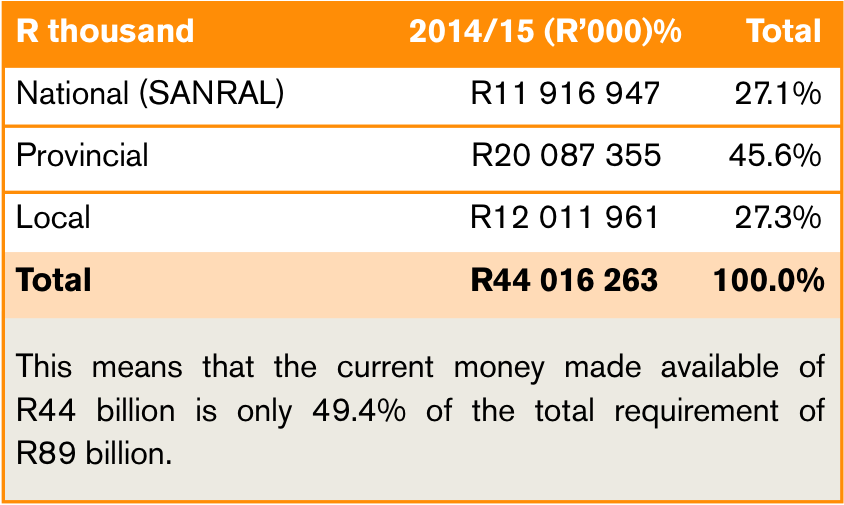
The latest available information (2014) indicates:

• +/- current road backlog of R197 billion, with an annual need of R23.2 billion to the address the backlog over 10 years.
• +/- requirement of R65.8 billion per year to just keep the roads as they are.
• A total need per year of R89 billion.
Backlog is the amount of investment the economy needs to catch up with society’s needs.

Spending on roads in the last year, across all levels of government was R44 billion.

Screenshot 2015-09-23 17.05.37

What is a fuel levy?
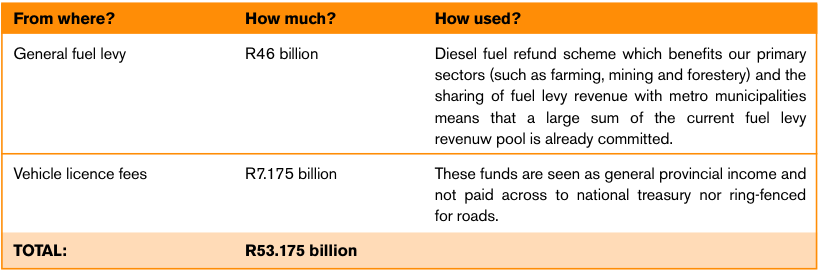
A fuel levy is a flat rate tax on petrol and diesel. If you don’t buy fuel, you don’t pay the fuel levy. The annual income collected from road users in the last year was:

Screenshot 2015-09-23 17.05.12

What this shows is that what is collected from road users is given back to them in full, so no additional money is available for allocation. Last year, SANRAL received R11.9 billion and this year it is R12.5 billion.

Building roads through bursaries

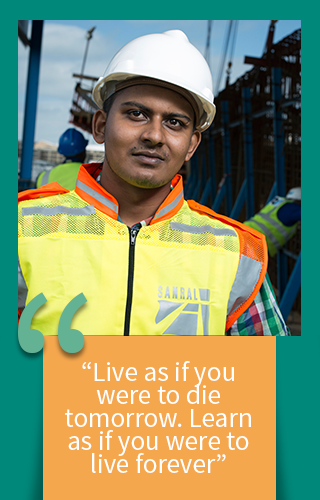
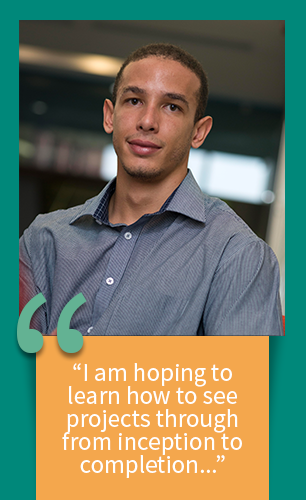
SANRAL is a proud sponsor of various educational and career-orientated programmes. Our bursary and intern programmes groom and train young beneficiaries to become skilled and employable engineers. Cornelius, Daniel and Lemuel are prime examples. Here are their stories.


sanral_blog_post_graphic_separate_01

From the time he was a child, Rustenburg native Cornelius has known that engineering was his future. Years later, Cornelius chose electronic engineering as his discipline and has since received a bursary from SANRAL, which has helped him realise his childhood dream. The bursary has provided him with funds to study at the University of Pretoria.

“The advantage the bursary gave me was that because I would have to work back my studies, I would gain work experience at the same time.”

Cornelius says that although he would ultimately like to branch off into software development and robotics, his work at SANRAL has provided him with a valuable career growth opportunity.

Cornelius believes that South Africa needs more innovators and be able to develop its products instead of being an exporter of raw materials.

“What I would like to do is use my knowledge to contribute to the development of our infrastructure as well as help in some way to improve our manufacturing capabilities.”


sanral_blog_post_graphic_separate_02

A high school outing to the longest bridge in South Africa, located on the John Ross Highway between Richards Bay and Empangeni is an experience that will always be etched in Daniel Govender’s memory.

Soon after the outing, a poster on the school notice board with a SANRAL bursary application guide caught his attention.

“This is one of the few professions where one can be involved in the entire project’s life cycle namely conceptual, feasibility and detailed design whilst still being able to partake in the construction phase.”

He said he derived much insight from the induction programmes and wishes to delve more into his duties as an engineer whilst also learning more about SANRAL’s organisational structure.

His long-term goals are to be registered as a professional engineer and further his studies.

“I have deep gratitude and appreciation for SANRAL. I would like to thank SANRAL for putting me in the best position possible for me to thrive in my career.”


sanral_blog_post_graphic_separate_03
In a limited space of time, Lemuel Short’s engineering career has taken him far beyond his hometown of Middelburg in Mpumalanga. He is currently working on various sites around the country as a SANRAL Trainee Project Manager.

The road to engineering proved not to be a smooth one for Lemuel, but hard work and perseverance paid off. Funding his studies was yet another challenge, but it was one that led to Lemuel’s first encounter with SANRAL.

“I was told about the SANRAL bursary advert by a family member and decided to apply. I went for the interview and got awarded a bursary. I was over the moon.”

Lemuel says that one of the things he hopes to learn at SANRAL is more about the tolling infrastructure in South Africa. Overall, Lemuel looks forward to contributing to the expansion of open road tolling which could pave the way to more untolled roads being maintained and upgraded.

“I would like to have my own successful consulting engineering company. Somewhere in between that, I would like to complete my honours, followed by my masters, and also complete a number of courses that would benefit my career.”