SANRAL opens doors into the construction industry through road projects.
Mncedisi Twantwa said Aveng, the company that sub-contracted Krweba Trading, have been very helpful with regards to providing his company with assistance and advice on the project.
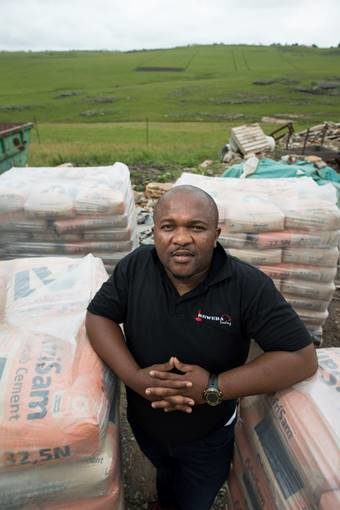
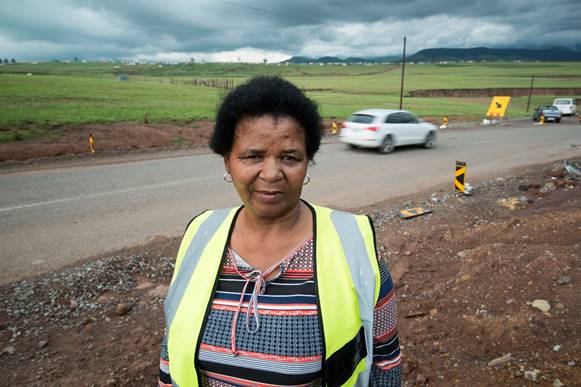
Mncedisi Twantwa is not only happy that his company is responsible for building a slip road in Msikaba, but also that through the project he has been able to create 32 much-needed jobs.
“In terms of experience, yes, I can say we benefited as a company as this was my second time building a slip road, and yes I’m happy with the outcomes and hopefully we’ll get more work from SANRAL.” said Twantwa, owner of Krweba Trading, an SMME contracted to do work on the Msikaba South haul road project near Lusikisiki in the Eastern Cape.
Twantwa said before working on this project his company built access roads.
“This is the second slip road that I’ve done, and it is quite a challenge because there aren’t many concrete roads in this area,” he said.
SMME inclusion
Twantwa said Aveng, the company that sub-contracted Krweba Trading, have been very helpful with regards to providing his company with assistance and advice on the project.
“They have assisted us on how to put together the steel fixing and we’ve done a lot more concrete work,” he said.
“I’ve learnt to build a slip road. They also taught us how to do the side drains,” he said.
He is also proud to be able to help create employment opportunities in this part of the country where unemployment is high.
“I have about 32 people working for me and they come from different areas,” he said, adding that he initially had just 12 employees.
Working on the project has added invaluable experience to his company that he hopes it will stand it in good stead going forward.
He said getting more work from SANRAL would also ensure more people remain employed, benefiting the local economy and community at large.
SMMEs benefit from the construction of haul and access roads.
Emmanuel Sisanda’s company, First Building Construction, has helped to create much-needed jobs in the Msikaba area where they are contracted to help build a haul road for the construction of the N2 highway.
The Msikaba North haul road is nearing completion after early delays necessitated by relocation of families and graves.
Irvin Khoza, assistant resident engineer on the project, said the road is being built to help transport material for the building of the N2 Msikaba bridge.
The estimated value for the project is R29-million, 30% of which has been allocated to SMMEs. There are no joint ventures appointed on the project, which started in October 2016.
“This is the first phase of the project. The second phase will be the actual N2 that will run next to the haul road,” says Khoza.
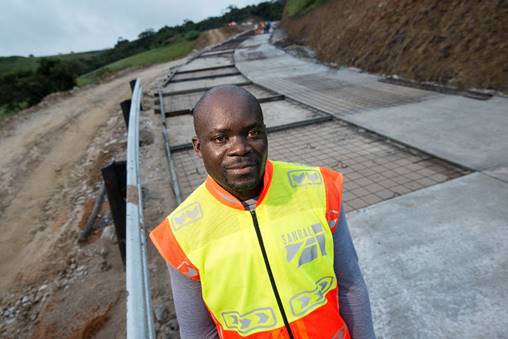
The road features a 140mm deep concrete pavement.
Khoza said: “With this concrete pavement you’ve got different panels. You have what we call anchor panels. With these panels, instead of having your normal C4, you’d have that as a trench that’s been opened so the concrete can go deeper. This is so it can be that anchor for the road so, that it can hold on to the other to bond with the road itself.
“Underneath you’ve got mesh steel reinforcement. We’ve also installed guardrails for safety purposes.”
The first phase was completed at the end of March 2018.
Khoza said they have managed to work hand in hand with the local SMMEs and offer them guidance on how to help their businesses to succeed.
SMMEs grow
Emmanuel Sisanda’s company, First Building Construction, has helped to create much-needed jobs in the Msikaba area where they are contracted to help build a haul road for the construction of the N2 highway.
Before being contracted on the project, Sisanda worked in the construction sector, building schools and other public amenities.
He was sub-contracted on the Msikaba North haul road project by Grinaker. The company’s responsibility includes building a concrete pavement and steel fixing. They also supply the concrete used on the project.
“On this project I have 17 labourers drawn from the local community,” said Sisanda.
“There is a lot that we are looking forward to. We have always wanted to be a growing company. Working for SANRAL is a good opportunity for getting exposure and people will know about us through the work we do here.
“We would like to say thank you to SANRAL for what they are doing for us because even as individuals we are benefitting from this project. The community is also benefitting from this so, thank you SANRAL,” he said.
Agency is contributing towards creating a safe road transport network, while extending opportunities for black-owned enterprises to participate in construction projects.
The new policy sets clearly-defined targets for the participation of black contractors, suppliers and professionals in all projects and procurement commissioned by SANRAL.
The South African National Roads Agency (SOC) Limited (SANRAL) is changing what so far has been a given – the construction industry is dominated by big corporations with little participation by black-owned companies.
Many local emerging black-owned businesses do not possess the resources and skills to take on major road construction projects.
Lack of capital and adequate financial support, as well as access to other resources, such as construction equipment, has them at a disadvantage when tendering for projects.
A big step was taken in 2017 when SANRAL launched a new strategy – Horizon 2030 – and a draft transformation policy which seeks to increase the participation of black-owned contractors in the construction and related industries.
The new policy sets clearly-defined targets for the participation of black contractors, suppliers and professionals in all projects and procurement commissioned by SANRAL.
According to SANRAL transformation manager, Ismail Essa, the transformation policy will soon require contractors wishing to secure tenders from SANRAL to have a minimum of 51% black ownership.
SMMEs speak
While welcoming the progress, some SMMEs have expressed their wish that the pace was even faster and the net cast wider.
Tshireletso Shebi from Dipako Construction is one of the SMMEs subcontracted by Edwin Construction (Pty) Ltd to work on the rehabilitation of the R34 road, a SANRAL project in Schweizer Reneke in the North West province.
Although he is grateful for the opportunity to work on the project, Shebi believes SANRAL can do more to assist in the development and participation of black-owned companies in projects.
“We are thankful to SANRAL for the opportunity and for its efforts to transform the industry, but we feel the approach does not go far enough,” said Shebi.
He feels small contractors are not being exposed to mainstream construction, but they are rather given a small taste of what it takes to build roads.
Shebi said: “If you give a company 30%, it should be 30% of everything. They should be able to do all the work from earthworks and excavation to construction of road-bed and road surfacing.
“In this way they can learn the difficulties that comes with building a road, let alone price it. The roads agency should at least allocate a section of the project or some kilometres to participating SMMEs with the main contractor to oversee the work.”
Shebi believes small contractors should be taught to stand on their own and be encouraged to take on major challenges, rather than settling for drain works or standard routine road maintenance (RRM).
“Achieving transformation will remain a big challenge if companies are not taught to stand on their own. They should not cut corners, but with proper training and grading they can manage,” he said.
Capacity building
According to SANRAL’s Vusi Mona, general manager: communications, the biggest challenge is the issue of capacity.
“SANRAL’s mandate is to deliver quality roads to meet global standards. Small companies do not have the capacity to deliver the complete package. When we issue tenders, they do not bid for the work or meet the set requirements,” Mona said.
But, the agency has recognised it must go even further and introduced a joint venture condition that requires big companies to partner with small companies when bidding for projects.
Mona explained: “Due to the complexity of SANRAL projects, new entrants into SANRAL work require a longer and more intense incubation period. Meaningful joint ventures will go a long way to prepare the new companies to become efficient service providers to the agency.
“This will help accelerate their growth and improve their grading at the Construction Industry Development Board (CIDB). This also applies to consulting engineers who wish to work for SANRAL.”
The joint venture condition was first introduced with the awarding of two contracts for the rehabilitation of sections of the R573 Moloto Road, one of South Africa’s busiest routes linking Gauteng, Mpumalanga and Limpopo.
SANRAL has also signed agreements with two private companies to make the leasing of heavy road construction machinery easier for SMMEs.
Mona said the agency is strongly committed to providing support to black business development through structured development programmes and partnerships with industry players to ensure meaningful and rapid development and growth of black entities.
“There is no magic bullet to resolving the issue and fast-tracking transformation. And, remember, we do not intend turning the industry black. The agency has set a new vision for 2030 that will require inclusive participation by all stakeholders to succeed. SANRAL will continue to create opportunities for all to co-exist and get a fair slice of the pie,” he said.
SkhumbuzoMacozoma, SANRAL CEO, said more suitable funding methods must be found if the road agency was to make roads more efficient at a minimal cost.
Skhumbuzo Macozoma said questions must be asked about the most suitable funding model for roads infrastructure.
Although South Africa has the 10th largest road network in the world, its need and efficient usage must be interrogated, said Skhumbuzo Macozoma, CEO of the South African National Roads Agency (SOC) Limited (SANRAL).
He said with the political changes since democracy, employees were living closer to their workplaces.
“In a modern world of efficient mobility, how much of the South African road network is really needed and useful?” he asked.
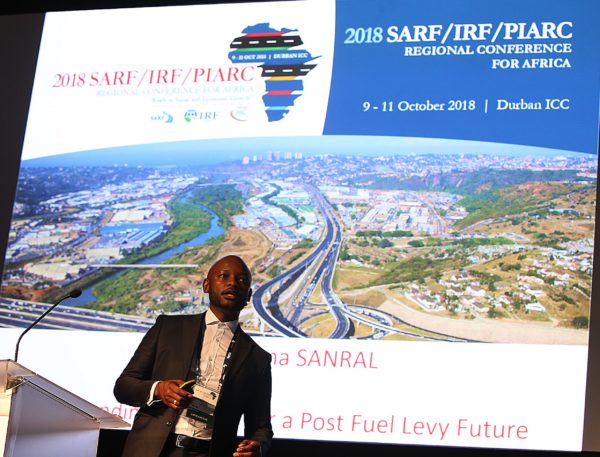
Macozoma was addressing a conference themed “Roads to Social and Economic Growth”, arranged by the South African Road Federation (SARF) in association with the Washington-based International Road Federation (IRF) and the Paris-based World Roads Association (PIARC), in Durban.
Speaking during a breakaway session on Road Financing, Macozoma said South Africa has a total road network of 750 000km (158?124km paved and 591?876km gravel). Of this SANRAL is responsible for 22?214km of the road system.
Efficiency and minimal costs
He said consumers and road users today demand rapid mobility with efficiencies and minimal costs.
Mixed use commercial and residential developments were giving rise to shorter travel distances, thus raising questions around those roads that previously linked cities to workers in far-flung areas.
Macozoma said questions must be asked about the most suitable funding model for roads infrastructure.
He said the fuel levy provided insufficient funding.
Macozoma said: “The future contribution of the fuel levy to the Central Revenue Fund is uncertain with the projected electric car take-off in 2022 and established vehicle efficiency technologies.
“In less than five years, electric cars will cost the same as their internal combustion counterparts and that’s the point of lift-off for sales.
“The total estimated funding requirements to sustain the South African road network, including addressing backlogs in surfacing and capacity expansion is R116.1-billion. The current allocation for the road network is R52-billion. What can we afford and how do we prioritise?”
He proposed that a funding policy for transport infrastructure and road infrastructure must be driven by National Treasury working with sector departments.
He said: “Funding strategies must be deliberate and agreed. A suite of funding models is available. South Africa must be decisive about how to fund its roads.
“The needs, priorities, engineering principles and spending efficiencies must inform future spending allocations.”
Macozoma said economic and social economic infrastructure differentiation was imperative in determining future funding models.
“Road users must be directly responsible for economic infrastructure, such as roads. The Government must provide for social infrastructure such as housing, schools and hospitals.
“Future tax or pricing mechanisms are required for road users. Equity and direct user charging must be embedded in such future funding sources,” Macozoma said.
The R946-million project is one of the biggest road infrastructure developments being undertaken by SANRAL in KZN and is aimed at coping with the increased traffic volumes on one of the country’s key arterial roads.
Since the start of the contract 37 subcontractors have been employed by the main contractor, Concor Infrastructure, of which 23 have been SMMES that have been paid R76-million.
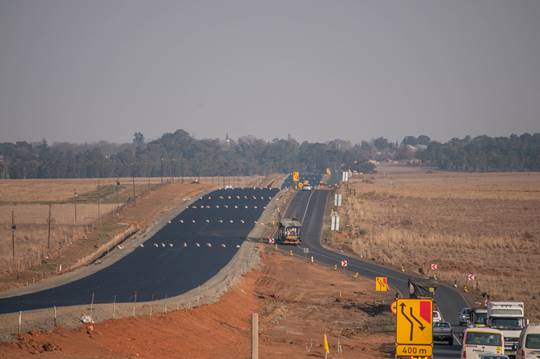
The upgrading of 35km of the N2 between Mtunzini toll plaza and Empangeni interchange on the KwaZulu-Natal North Coast, which commenced three years ago, is well on track for its anticipated completion at the end of June 2019.
The South African National Roads Agency (SOC) Limited (SANRAL) is constructing a new north-bound carriageway with the existing road to become the future south-bound carriageway.
Corné Roux, Project Manager at SANRAL Eastern Region, said that within weeks the north-bound traffic will be diverted onto the newly-constructed carriageway just after the Mtunzini toll plaza and redirected back to the existing carriageway just before the eSikhawini interchange.
He said this will allow the start of the repair of the existing road – the future south-bound carriageway – adjacent to the newly-constructed section.
Roux said: “Work is progressing well despite the challenges posed by the 60-metre deep piles and difficult piling conditions at the Mhlathuze and Umlalazi river bridges, as well as the high rainfall experienced in this part of Zululand.”
Since the start of the contract 37 subcontractors have been employed by the main contractor, Concor Infrastructure, of which 23 have been SMMES that have been paid R76-million.
A maximum of 541 labourers have been employed at any one time, with 428 coming from within the local municipal target areas.
The project
The engineers on the project, UWP Consulting, have indicated that the structures are largely complete, with only the deck of the Empangeni road-over-rail bridge still to be cast.
The bulk earthworks and layers have progressed according to plan and outstanding work is concentrated around the Empangeni interchange.
The R946-million project is one of the biggest road infrastructure developments being undertaken by SANRAL in KwaZulu-Natal and is aimed at coping with the increased traffic volumes on one of the country’s key arterial roads.
Roux said current traffic volumes on the N2 south of Empangeni exceeded 12 000 vehicles per day, with the highest traffic volumes occurring on the section between the eSikhawini and Empangeni interchanges.
When the project is complete, four agricultural overpasses over the N2 will have been lengthened; new bridges will have been built at the R34 Empangeni/Richards Bay interchange and at the P537 Port Dunford underpass; two road-over-rail bridges constructed; and 16 major box culverts and numerous minor box culverts and other drainage structures built. In addition, the height of two overpasses would have been increased by jacking up the bridges.
This stretch of the N2 is on a declared toll road and, therefore, the income generated from the toll plazas on the N2 North will be utilised for funding this project.
Agency received its 15th successive unqualified audit while playing a defining role in the construction and engineering sector in the past financial year.
Transport Minister, Dr Bonginkosi Nzimande, highlighted the fact that SANRAL exceeded its target for expenditure on work done by black-owned SMMEs and contractors.
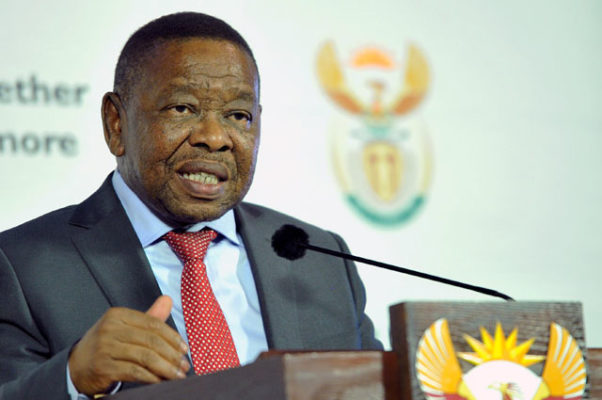
Transport Minister Dr Bonginkosi Nzimande commended the South African National Roads Agency (SOC) Limited (SANRAL) for its performance and contributions towards creating a safe road transport network, while extending opportunities for black-owned enterprises to participate in construction projects.
Speaking at the Annual General Meeting of SANRAL in Kempton Park, Dr Nzimande referred to improvements in the agency’s overall performance, a decrease in expenditure and positive revenue patterns that grew by more than R2.3-billion in the past financial year.
In this period SANRAL received its 15th successive unqualified audit opinion.
Dr Nzimande raised a concern about the agency’s irregular expenditure, saying: “One critical concern I have is the irregular expenditure which is sitting at R346,649-million, mainly as a result of SCM policies not being adhered to. This needs to be addressed urgently.”
Creating opportunities
He added: “I am extremely excited about the role SANRAL continues to play in providing road infrastructure and creating opportunities for the South African economy.”
He highlighted the fact that SANRAL exceeded its target for expenditure on work done by black-owned SMMEs and contractors. “It is good to see we are excelling in this area.”
He urged the agency to attain gender parity in job creation and increase the number of scholarships to deserving students.
Dr Nzimande called on the Board of SANRAL to embrace opportunities presented by the Fourth Industrial Revolution and produce more jobs through the enhanced use of technology. As an engineering and project management company SANRAL must maximise the capacity and resources at its disposal.
Future road planning
Regarding future road planning, Dr Nzimande said there is a need to strike a balance between new commissioned road projects and the maintenance of existing roads.
He said: “It is of critical importance to develop mechanisms to assist provinces and municipalities with the function of providing access roads.
“National government is to give greater technical support to provinces and municipalities, which will enable them to provide and maintain road infrastructure for rural communities and the poor.”
Dr Nzimande added that the national road infrastructure is not only important for South Africa but also for the rest of the SADC region and the entire African continent.
The Trans-Kalahari Corridor, which links South Africa to Botswana and Namibia is of vital importance, and SANRAL must optimise its investment in the route and take advantage of the opportunities that are created.
He also envisaged a gradual shift from road to rail for freight transport to reduce the heavy load on the country’s roads.
“This will allow us to channel budget from road maintenance to building access roads,” Dr Nzimande said.
SMMEs, their owners and employees benefit from the exposure of being involved in a major construction project.
Kholeka Motolwana’s greatest pleasure is being able to provide employment for others.
Kholeka Motolwana cannot hide the joy and satisfaction she derives from having given a lifeline to the more than 15 people employed at her construction company who are working on the R61 All Saints Baziya road project in Eastern Cape.
Motolwana is a director of Southern Ambition 313, which started work on the project in the middle of 2016.
Initially her core work on the project was fencing, but she has now acquired other skills that have enabled her company to take on more responsibility.
“I have learnt a lot. I got exposed to machinery that I was never exposed to before. I also learnt the terminology and gained experience. It gives me pleasure to be involved in this industry because we have always thought that this was only meant for men,” she said.
Her greatest pleasure is being able to create jobs.
“Some of the people I work with had been retrenched in places as far away as Cape Town and Joburg, and they were forced to return home to here in the Eastern Cape,” said Motolwana.
“Some of them are semi-skilled and some of them are very good artisans. Now that I have employed them, they are able to put food on the table. It makes me feel good to be able to help people.”
Growth of SMMEs
The sentiment also rings true for Khanyisa Okuhle Nwelende, Director of Seriti sa Basotho Trading Projects, which is building concrete line drains on the same project. He started work in April 2016 and now employs 22 people.
He worked for a building contractor for four years before deciding to start Seriti sa Basotho and tendered for this project.
Nwelende said: “I’m turning 28 this year. I really think it is very important for the youth to be part of this project because if you start while you are young you gain more experience. So, as your company grows, you also grow with it in terms of experience.
“I’m very proud of our achievements. Firstly, the company was on grade 1 on the CIDB when we started and we are now a grade 4. Secondly, the company itself has grown. We now own a bakkie and a truck that we managed to get through doing this project.”
Nwelende added that the workers have also benefitted as they are able to build themselves houses and assist their families.
Thembinkosi Ngxangane of Ezakuthi Civil and Construction, which employs 15 people, started in January 2017 and was sub-contracted for the toe drain and grass box work.
Ngxangane said: “On this project my company was able to benefit a lot because we were nothing before, but now, we can do things for ourselves, especially with the 12% requirement of the local SMMEs share that SANRAL has given to us.
“I can say my company has benefited plus-minus 2.5% because the SMME share in this project is R42-million. So, the work I’ve done already is around R1.2-million, which is around 1.5% out of the subcontractors on the project.”
Ngxangane hopes that working on the project will help him to be able to invest in machinery, which would help his company grow and secure bigger contracts.
“In this industry the one thing I have noticed is that many companies invest in is machinery. This would make my business very lucrative if I went this route. I have also seen that even when there is a new contract, the SMMEs who earn the most are the ones who come into the project with their own machinery,” he said.
Positive results of the project
Ngxangane said even though the project is not yet complete, they have already begun to see positive results of their work.
“Our road was a high accident zone previously. When SANRAL explained their design to us, we saw it as one that would work and really help decrease the high accident rate.”
Ngxangane said there were a lot of steep hills on the road, which led to many collisions. But with the new design the number of steep roads has been reduced, leading to a better flow of traffic.
“Our roads were very narrow, and they have now been widened and have clear markings,” he said.
The new bridge built over the great river Mbashe has also made traffic flow easier and is safer for pedestrians as it has walk ways and secure railings.
Motolwane said working on the project was a good learning curve and they were helped by SANRAL’s support in providing engineers who assisted and guided them through the work.
“I would like to thank SANRAL very much for the opportunity they have given us. There are meetings that SANRAL sits in on and check how we are doing, and those meetings help us a lot. As a local in this area I have noticed that the roads are much safer now compared to before. There used to be a lot of accidents on the road, but now the road is wider, and we are very grateful for that,” she said.
SANRAL’s community project will improve mobility between two villages and enhance road safety.
SANRAL stakeholder engagement manager Siphiwo Mike Mxhosa addressed participants during a workshop at Sigidi Junior Primary School, in August.
The South African National Roads Agency (SOC) Limited (SANRAL) has rolled out a 24-month community development project in the Sigidi and Mahaha villages in the Eastern Cape.
Fezekile Duze, SANRAL Southern Region Project Manager, said: “The aim of the project is to improve mobility between the two villages, enhance road safety for local traffic and non-motorised traffic, and enhance access of local communities to the N2 Wild Coast Road (N2WCR) to facilitate socio-economic development.”
Learner Sub-contractors
SANRAL has appointed a training service provider tasked primarily to train, mentor and develop “Learner Sub-contractors”.
Following stakeholder consultation and a candidate selection process, 10 local learner SMMEs from the two villages have been appointed to construct a 10km access gravel road to a surfaced road.
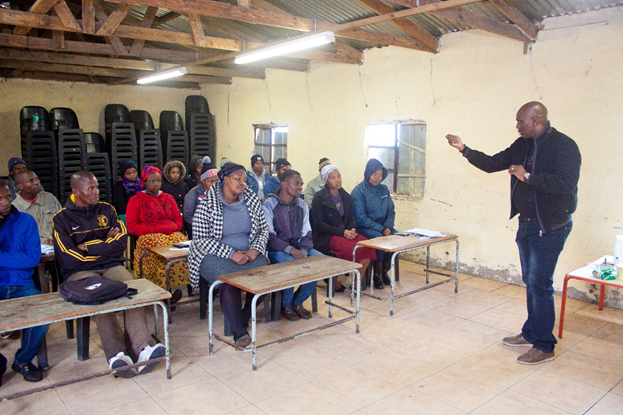
“Phase one of the project included classroom training, while phase two includes the construction of a 10km community access road. The 24-month training programme will provide a full learnership programme, accredited by the South African Qualifications Authority (SAQA), which will provide the National Qualifications Framework (NQF) level 2, 3, and 4 training,” said Duze.
Theoretical training was held over a three-month period at the Sigidi Junior Primary School.
Mbulelo Peterson, SANRAL Southern Region Manager, said: “We catered for 50% women-owned and 30% youth-owned SMMEs on this project. The majority of SMMEs are registered as CIDB level 1 CEPE, while two SMMEs are registered as CIDB Level 3 CEPE. We aim to have the CIDB Level 1CEPE SMMEs upgrade to level 3 CEPE once the project is completed.
“Once the access road has been completed, the school yard will be upgraded with a concrete walkway and an upgraded parking area.”
Peterson added that 10 FET college students would also assist SMMEs with financial administration and management while they work on the project.
A Public Liaison Committee (PLC) and Public Liaison Officer (PLO) from both villages were appointed earlier this year.
Changing lives
Mzandile Yebeni of Sophaphela General Trading is registered as a CIDB Level 1 CEPE. He is from Mahaha village and commutes 16km daily to and from classes.
As a married man and father of seven children, he finds it difficult being unemployed and occasionally works in the catering industry.
“Once I am finished working on this project, I hope to get work elsewhere on other projects. I would like to tender for other work at municipalities as well. I am happy to be part of this programme. I only have a matric and once I have completed my training, I will have an NQF qualification. Due to a lack of money I could not further my education. I have always liked the construction industry and look forward to JV with someone on a project,” said Yebeni.
Nwabisa Dlamini of Sigidi Development is registered as a CIDB level 1 CEPE. Dlamini is from the village of village, is married and has two children.
Before participating in the SANRAL project, Dlamini was self-employed farming sweet potatoes, mielies and other vegetables.
“I used to sell my produce to markets to earn an income. Through this project I have gained knowledge on the construction industry and once completed I want to apply for other jobs on other projects. I am proud to be part of this course,” said Dlamini.
Zanele Mbuthuma is a single mother to an 11-year-old son. Prior to working on the project, Mbuthuma was studying towards a Diploma in Education and Development.
“My goal is to do a good job on this project. This will be good for the community,” said Mbuthuma.
Agency to ensure road network in the province continues to play vital role in economic development in the province.
At the heart of every productive economy lies strong infrastructure networks. Road infrastructure is one of the most important of these as it provides access to a host of opportunities, including jobs, education and health care facilities.
In its role as a key agency in the delivery of the country’s massive investment in economic infrastructure, the South African National Roads Agency (SOC) Limited (SANRAL) will invest approximately R10-billion in Mpumalanga in the short to medium term budgeting framework (5–10 years).
Mpumalanga is one of South Africa’s major tourist destinations with attractions such as the Loskop Dam Nature Reserve, which is home to over 70 species of wildlife, including three of the big five – buffalo, leopard and white rhino.
There is also an abundance of coal and agricultural produce, which is transported daily via the provincial road network.
At the heart of every productive economy lies strong infrastructure networks. Road infrastructure is one of the most important of these as it provides access to a host of opportunities, including jobs, education and health care facilities.
Progress Hlahla, Regional Manager SANRAL northern region, said: “Roads are crucial for the provincial economy as they are the arteries connecting the economic hubs of the province to each other and to the rest of the country. Roads provide access and enable the wheels of commerce to keep turning by facilitating the transportation of goods from one destination to another.”
Taking SANRAL to the people
Some projects currently under construction in the province include the N11 from Hendrina to Hendrina Power station. This R275 million project is rehabilitating the route by strengthening the existing pavement and introducing new features to make it safer for motorists.
The upgrading of the R573 Moloto Road, which runs through three provinces – Gauteng, Mpumalanga and Limpopo – has also started. National Treasury has set aside about R3-billion for the Mpumalanga and Limpopo sections. The allocation will be determined by the scope of work and the engineering interventions required for each province.
The Gauteng section will be funded by the Gauteng provincial government.
Other projects have included: the improvement of the R570 N4 to Jeppes Reef, worth R984-million, to rehabilitate existing pavement layers, upgrade storm-water drainage and construct new climbing lanes to cater for the increasing traffic; and the R404-million rehabilitation of the N11 Middleburg to Loskopdam. Both projects have been completed.
The success of the projects can be attributed to the existing good relations and partnership with the provincial government.
“SANRAL enjoys cordial relationships with the province and municipalities and continues to actively engage with them through platforms such as the ‘Taking SANRAL to the people’ initiative. We continue to partner with the local and provincial spheres of government in the implementation of projects,” said Hlahla.
Several projects are still planned for the province, including:
N17 from Chrissiemeer to KM 85
N17 from KM 85 to Oshoek
R37 from KM 50 to Lydenburg
R555 from Emalahleni to Middlemen
N2 from KZN Border to Piet Retief
N2 from Piet Retief to Ermelo
SANRAL looks forward to partnering with all stakeholders in the delivery of projects in the province and continues to pursue its transformation agenda to ensure the meaningful participation of SMMES in its projects.
New programmes are being rolled out as SANRAL positions itself to play a defining role in the construction and engineering sector.
In the past year SANRAL issued a total of 60 new contracts to the value of R4.9-billion for road construction.
The value of the South African National Roads Agency (SOC) Limited (SANRAL) to the South African economy through the provision and maintenance of a world-class primary road network will continue to grow with new infrastructure programmes being rolled out.
Skhumbuzo Macozoma, SANRAL CEO, said: “We are well-positioned to play a defining role in the construction and engineering sector through our tender processes and the imminent completion of major projects that will help to grow both South Africa’s and the regional economy.”
Integrated Report presented
SANRAL’s Integrated Report for 2017/18 was presented to Parliament, and reflected the achievements and challenges of the agency, which is responsible for the management of the 22 000km national road network.
Revenue from non-toll operations – which comprise 87% of SANRAL’s business – grew by 4% to R9-billion. Non-toll operations are funded entirely by the fiscus through an allocation from the Department of Transport.
The revenue from conventional toll roads increased by 12.4% following a tariff adjustment in line with consumer price inflation and a 6.5% growth in traffic volumes.
Revenue from the Gauteng Freeway Improvement Project (GFIP) decreased by 4.83% year on year. During the financial year SANRAL received an amount of R463.5-million from the government as a GFIP grant and a further R1.9-billion was transferred from the non-toll grant to address the shortfall resulting from low toll tariff payments.
Macozoma said government’s commitment to the formulation of a comprehensive national policy on tolling will provide certainty about the future of toll roads and on the future funding model for the construction and maintenance of the national road network.
In the past year SANRAL issued a total of 60 new contracts to the value of R4.9-billion for road construction.
This was significantly lower than in 2016/17 because of technical interpretations of new Treasury procurement regulations, which delayed the issuing on new contracts.
“These issues have now been resolved and we have already awarded more than 50 new contracts since July,” said Macozoma.
“Our tender decisions have an impact on the engineering and construction sectors, and have wider implications for emerging enterprises, black-owned companies and start-ups that form part of the supply chains of larger engineering companies.”
Among the new contracts that were awarded in 2017/18 were:
The construction of a mega bridge across the Mtentu Gorge. It is one of two mega bridges that form part of the N2 Wild Coast Highway, which will contribute to economic growth and job creation in some of the most impoverished districts of the country.
A R115-million project to extend the road network and improve road safety near Kimberley in the Northern Cape.
The improvement of three intersections near Olifantshoek and Kathu on the N14.
Projects completed during the year include the widening of the R24 near Rustenburg, the realignment of the N7 near Clanwilliam in the Western Cape and a R567-million project to improve the N4 in Mpumalanga.
SANRAL and transformation
Macozoma said SANRAL strengthened its commitment to job creation, empowerment and the growth of black-owned enterprises with the adoption of a new Transformation Policy.
The aim is to grow the share of work done by black-owned contractors beyond the statutory threshold, and to increase the participation of enterprises owned by women and the youth in the construction industry.
Contracts to the value of more than R3-billion were awarded for road rehabilitation and maintenance projects – of which about 60% went to black-owned SMMEs. More than 3600 work opportunities were created – with some 57% of these positions filled by men and women under the age of 35.
SANRAL’s expenditure on community development projects grew by 42% to a combined value of R367-million. These include training and skills development programmes that enable workers to improve their future job prospects.
The agency has received an unqualified audit report from the Auditor General for the 15th year in a row.
There was no fruitless or wasteful expenditure reported, although irregular expenditure to the value of R346-million was identified. The bulk of this can be attributed to the awarding of contracts that were not advertised for at least five working days.
Macozoma said the Integrated Report highlights the quality of governance at SANRAL and its adherence to the standards set in the King IV guidelines.
“The entire construction industry has endured a very tough year because of the economic slowdown. However, we are uniquely positioned to play a role in the new infrastructure initiatives announced by President Cyril Ramaphosa and are looking forward to contributing to an uptake in activities in the engineering and construction sectors,” he said.