
Blog

TRAVEL CONDITIONS ON THE N3 TOLL ROUTE

Always reduce speed and keep headlights switched on when visibility is affected. This also applies in misty and wet weather conditions. 

Always reduce speed and keep headlights switched on when visibility is affected. This also applies in misty and wet weather conditions.
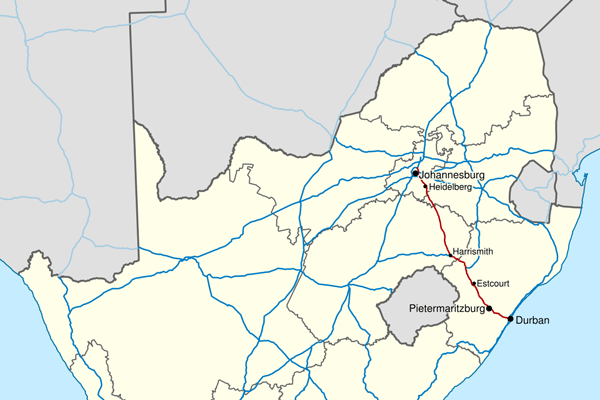
Although a few drops of rain have been reported since the turn of the season, conditions along most parts of the N3 Toll Route are still very dry and windy.  

Veldfires remain a high risk and can create challenges for drivers. 

The South African National Roads Agency (SOC) Limited (SANRAL) and N3TC entered into a Concession Contract in 1999, which gave N3TC the responsibility to design, construct, finance, operate and maintain the N3 Toll Route for a period of 30 years. 

“Our weather remains unpredictable and can quickly change from a beautiful, clear spring day to high winds or temperatures dropping sharply. It is therefore best to be prepared before you set out on your journeys and to heed warnings,” explained Praveen Sunderlall, manager of N3TC’s road incident management systems (RIMS). 

Always reduce speed and keep headlights switched on when visibility is affected. This also applies in misty and wet weather conditions.  

It is not uncommon to experience strong winds in mountainous areas, such as Van Reenen’s Pass, where the pass can act as funnel for wind.  

High winds can cause sudden gusts making large vehicles or vehicles towing caravans or trailers difficult to control.  

Always reduce your speed and keep both hands on the wheel in these conditions. 

N3TC operates a 24-hour Route Control Centre (RCC) from where any information about the route and travel conditions can be accessed.  

Problems can also be reported to the RCC and emergency assistance obtained.  

Stay in touch with N3TC by contacting the RCC on its helpline number, 0800 63 4357, or via Twitter: @N3Route 

For your convenience, you can now also tune into the N3 Radio app, which has updates on traffic flows and news relevant to motorists on the N3 route. In addition, N3 Radio broadcasts wonderful stories about the region, its people and places. 

Access the app by downloading it on your mobile devices. It is available from both Android and iOS App Stores. 

Upgrading the N3 Toll Route 

Travellers are reminded that major construction work is currently underway along three sections of the N3 Toll Route: 

  • Cedara to Nottingham Road 
  • Van Reenen’s Pass 
  • Warden to Villiers 

N3TC’s commercial manager, Con Roux, said: “Road worksincluding maintenance, rehabilitation and upgrades, are essential to maintain our transport networks, to extend their lifespan and ensure we keep our economy moving. It is a necessary inconvenience that may cause traffic disruptions and frustrations for both construction workers and road users. 

“At N3TC we carefully plan and manage our construction programmes to limit disruptions, especially during peak periods such as long weekends and holidays. At peak times only essential works are carried out, but lane closures and reduced speed limits may remain in place at existing construction zones. Road users are advised to pay careful attention to temporary yellow warning signs indicating construction zones as well as their cautionary instructions.” 
BAKWENA’S DRAMA FOR CHANGE INITIATIVE A HUGE SUCCESS

This project is in its seventh year and involves learners from 17 schools from communities close to the N1N4 route. 

Bakwena holds a 30-year Concession Contract with the South African National Roads Agency (SOC) Limited (SANRAL) to design, build, finance, operate and maintain 385km of road.

Bakwena Platinum Corridor Concessionaire (Pty) Limited (Bakwena)’s flagship project, Drama For Change, once again culminated in two final events, which were held on the 5 and 12 October 2019.  

Bakwena holds a 30-year Concession Contract with the South African National Roads Agency (SOC) Limited (SANRAL) to design, build, finance, operate and maintain 385km of road. 

Drama for Change 

This project is in its seventh year and involves learners from 17 schools from communities close to the N1N4 route.  

Powerful social messages, sourced from both the learners’ schools and their communities, are performed through drama. 

The first event saw nine schools from Ramotshere Moiloa area taking part in the final event held on 5 October at the Lehurutshe Civic Centre. 

At the second event held on 12 October, eight schools from Madibeng and Kgetleng Rivier performed their plays at Borolelo Community Hall. 

Bakwena partnered with Monde Mayephu from Rare Arts Productions and CapaSity (Pty) Limited, to train Drama Pioneers from Dinokana and Bapong in drama and peer education, to enable the learners to develop their dramas around social issues affecting the youth of today in their communities. 

Charmaine van Wyk, Public Relations manager at Bakwena said: “The main objective of the campaign is to encourage the youth to make responsible decisions based on the social challenges and risks they are faced in their daytoday lives”. 

The drama themes included road safety, domestic violence, child abuse, substance abuse, discrimination (physical disability), homophobia, mob justice, community dissent and femicide. 

Adjudicators were an independent documentary professional, a local artist, two senior drama pioneers and a representative from Department of Health, who judged both events and selected the best performances of the day.  

At the Lehurutshe event, Ramatu won best Overall Performance and Ngotwane was the runner-up, while at the Borolelo event, Johane Mokolobetsi walked off with the winning performance and two schools tied for second position, namely Moedwil and St Teresa. 

Van Wyk said all performances from the learners were on a high level and conveyed powerful social messages.  

She said: “The Drama for Change initiative encourages young people to explore the issues that affect them most in a deeply personal way. Through this project we hope to encourage and assist young people to make affirming decisions in their lives. 

“We thank our partners and all the learners, teachers and Drama Pioneers for their dedication and hard work which was evident in the quality and professionalism of both drama events.” 

Belfast-Machado roadworks still on course

Roadworks are expected to take 36 months to complete, and to date, no delays have been experienced according to the contractor, WBHO Construction. 

TRAC prides itself on offering quality road infrastructure which requires regular upgrades, rehabilitation and routine maintenance. 

The extensive upgrade between Belfast and Machadodorp on the N4 Toll Route is progressing well, with 17% already complete. 

The R400-million project commenced earlier this year and will see 30km of Section 5B rehabilitated and upgraded to a four-lane carriageway.  

Roadworks are expected to take 36 months to complete, and to date, no delays have been experienced according to the contractor, WBHO Construction. 

The initiative will not only benefit road users but the local community too.  

In line with an MOU signed between the eMakhazeni Local Municipality, Trans African Concessions (TRAC), SANRAL and WBHO/Motheo JV 21 local small, medium and micro-enterprises have already been appointed while 278 jobs have been created. 

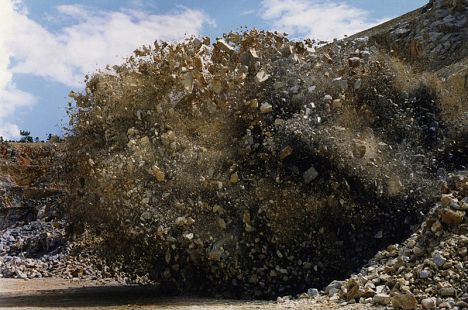
Blasting of the cutting at KM41.0 is progressing well with scheduled blasts occurring every week or biweekly.  

Notifications for blasts can be seen along the route – near the roadworks – and on TRAC’s social media pages. 

Several traffic accommodations have been implemented and will remain in place throughout the construction period, including speed reductions, contraflows and occasional Stop/Go’s.  

Road users are urged to visit our website, www.tracn4.co.zafor regular updates to assist them to plan their trips accordingly. 

TRAC prides itself on offering quality road infrastructure which requires regular upgrades, rehabilitation and routine maintenance.  

Roadworks may at times cause traffic disruptions and therefore TRAC would like to thank the public for their patience and understanding at construction zones.    

CATCH THEM YOUNG – ENGAGE YOUR CHILDREN ON ROAD SAFETY

Increased community involvement, pro-active approaches, and individual responsibility and actions are desperately needed to influence and change behaviours to stem the carnage on our roads. 

SANRAL and N3TC entered into a Concession Contract in 1999, which gave N3TC the responsibility to design, construct, finance, operate and maintain the N3 Toll Route for a period of 30-years. 

Use traveling time with your children to teach them about road safety in a fun, interactive way.  

“Young minds are impressionable and the sooner we start educating them about road safety, the better our chances of raising responsible road users and young drivers,” stressed N3TC’s commercial manager, Con Roux. 

SANRAL and N3TC entered into a Concession Contract in 1999, which gave N3TC the responsibility to design, construct, finance, operate and maintain the N3 Toll Route for a period of 30-years. 

In 2016 it was estimated that worldwide 1.25-million people die annually due to road crashes and a further 50-million people suffer varying degrees of injuries as a result thereof.  

By 2030, road traffic crashes are expected to become the fifthleading cause of global fatalities. 

“Increased community involvement, pro-active approaches, and individual responsibility and actions are desperately needed to influence and change behaviours to stem the carnage on our roads,” explained Roux. 

Role of parents and caregivers 

Parents and caregivers can help turn this tide by modelling responsible behaviour and using children’s natural curiosity to start teaching them about safety and the rules of the road from a very young age. 

Start by teaching your children the language of road safety by pointing out the various parts that make up roads such as pavements, emergency lanes, right, centre and left lanes, road signs, lighting, solid and broken lines, road and street names and more.  

Also teach them about the different types of vehicles and people working on roads, from construction workers to cleaners, police, ambulances, traffic police and the fire brigade. 

Make it fun by playing “I spy with my little eye” or counting games. 

As children grow older and their knowledge and experience of roads develop, key safety messages can be shared and discussions evolve.  

Even teens, who may think they “know it all” or may feel invincible, can benefit by playing out different scenarios and thinking about the type of actions or interventions they can take to achieve desired outcomes in different situations. 

Roux said: “Remember to always be a good role model to your children, whether you are the driver or passenger in a vehicle, riding a bicycle or a pedestrian. Children imitate adults, most notably their parents or close family members.  

“Let’s teach our children to be good citizens and to take responsibility for their actions. Ultimately, road safety is about stopping fatalities and serious injuries and it is crucial that we start taking it seriously. Your actions always speak louder than your words.” 

Numerous resources are available online, at retail outlets and from community organisations to guide you and your children to be responsible road users.  

Make sure you stay familiar with the rules of the road, what the common risks are and how to prevent these.  

Always consider these when you get in a vehicle or on the road – practice makes perfect. 

Never worry when we blast

Most of the blasting is done to improve the horizontal and vertical alignment along a cutting.   

There is not a lot of blasting on South Africa’s national roads. But, when there is, it is good to know that it is always handled by experts.  

But why blast?  

In technical terms, most of the blasting is done to improve the horizontal and vertical alignment along a cutting.  

More simply, it is necessary when widening a road, smoothing out curves and improving sight distance, all of which are major contributors to better road safety.  

SANRAL does not undertake blasting.  

Rather, the job is handled by a contractor who has a proper blasting licence and uses specialist blasting sub-contractors with safety personnel in attendance.  

Blasting is carefully circumscribed: It is the controlled use of explosives to break rock for excavation and to reduce the rock to a size suitable for use in road construction.  

Before any blasting can commence, the area is cordoned off and all people, livestock and vehicles are moved to a point of safety.  

Barricades are erected and are manned to prevent any movement back into the area. It is then declared safe.  

The police are present to assist, the area is again checked, and sirens are sounded.  

After the blast, qualified personnel go back into the area to make sure all is safe.  

Debris is cleared, barricades and signage removed and only then is the road reopened for all. 

Strict rules for blasting 

Where and when it is necessary to do blasting to upgrade a road, strict rules apply.  

  • People living in the area where blasting will take place, as well as motorists, are warned well in advance.  
  • Nobody is allowed within 500m of the blast and safety personnel ensure that no individuals or vehicles enter the blasting area.  

The most recent blasting took place on the R72 Section 3 (KM 49.24) to Section 4 (KM 16.0) between Birah River and Openshaw Village on Tuesday, 15 October from 3pm – 5pm. 

Developing people through interaction

Taking SANRAL to the People is about transforming the construction industry and alerting people of opportunities. 

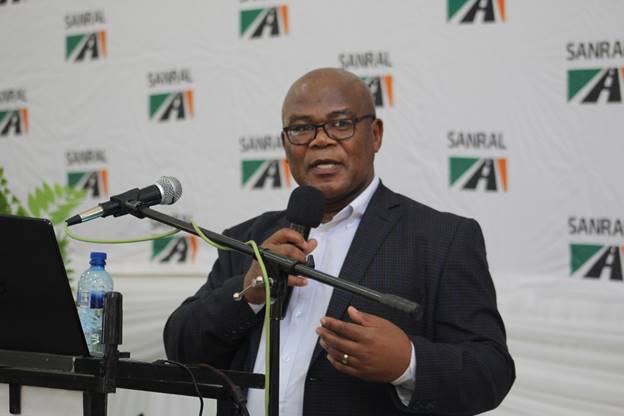
Mbulelo Peterson, SANRAL Southern Region Manager addressed stakeholders at the Taking SANRAL to the People engagement held at the Town Hall in Matatiele.

Talking to the people about projects in their towns, cities and villages is integral to the SANRAL approach.  

Known as ‘Taking SANRAL to the People’, the agency relishes the time spent engaging with communities across South Africa, from Rustenburg to Worcester.  

These are opportunities to discuss matters of concern raised by the local municipality, business and the community in general.  

At every occasion the same approach is stressed: Development is good for the local economy, it will create local jobs, it will boost local SMMEs and people will be trained.  

Ultimately, it is about transforming the construction industry. SANRAL’s board chairman, Themba Mhambi, said: “The days of there being only a few construction companies capable of taking on large projects is coming to an end. Instead of hearing about the big five construction companies, we would like to hear about the big 50.”  

Earlier this year there were three examples where big projects were discussed during these local forums:  

  • Rustenburg: The primary economic artery in the North West, the N4, is being upgraded while the pavement repair and resurfacing of the R505 (from Wolmaransstad to the N14) is nearing completion. Another massive project which is still in its design stage, is the improvement of the R52 from Rustenburg to Koster.  
  • Elias Motsoaledi: There are two notable upgrade projects underway in the Mpumalanga municipality, which includes Groblersdal. Firstly, the R573 Moloto Project, which starts next year, and then the R574 to Morwaneng, which kicks off in 2021. The R573 is particularly important because of its economic importance as the connector between Gauteng, Mpumalanga and Limpopo. The route carries 50 000 cars, taxis, trucks and busses every day, so safety is critical.  
  • Worcester: The Huguenot Tunnel on the N1 is in urgent need of an upgrade, which means the tunnel must be closed to allow the work to be done safely. To cause as little disruption as possible, the tunnel will be closed nightly from 10pm until 6am in the morning on Mondays to Thursdays. This project has started already. 

Partners unite for safer roads

Through their close links to communities who live in proximity to the road network, the concessionaires are increasingly involved in campaigns that promote safer road behaviour.

Through their close links to communities who live in proximity to the road network, the concessionaires are increasingly involved in campaigns that promote safer road behaviour, especially among vulnerable groups such as pedestrians, cyclists and long-distance truckers.  

The private sector companies that manage important stretches of South Africa’s freeway network are vital partners in SANRAL’s broader efforts to promote road safety through safer infrastructure, education and awareness campaigns.  

All three concessionaires responsible for the management of some toll roads play leading roles in road safety campaigns, community-based initiatives and the coordination of responses among law enforcement, emergency services and maintenance teams.  

Through their close links to communities who live in proximity to the road network, the concessionaires are increasingly involved in campaigns that promote safer road behaviour, especially among vulnerable groups such as pedestrians, cyclists and long-distance truckers.  

24/7 N3TC customer care 

The N3 Toll Road through KwaZulu-Natal is the primary road freight corridor linking the port city of Durban with the metropolitan hubs of Gauteng.  

Moreover, this route also carries high volumes of commuter traffic, especially at weekends and during holiday periods.  

The N3 Toll Concession prioritises road safety through its dedicated focus on partnerships and thanks to initiatives with the road freight and haulage sectors.  

A dedicated patrol service covers the route 24/7 and a customer-care line is operational to respond to emergency calls and coordinate activities between N3TC, municipal law enforcement and emergency medical and rescue services.  

Contact the 24-hour N3TC Customer Careline on 0800 63 4357 (0800 N3 HELP) or follow N3TC on Twitter @N3Route.  

In recent years, the company has made significant investments in upgrading road infrastructure, including improved road signage and markings and the rapid deployment of teams to clean up crash scenes and repair damaged road surfaces.  

Furthermore, a comprehensive database of hotspots and hazardous locations helps to ensure more effective road management and law enforcement.  

For the past decade, N3TC has provided post-crash support to victims of vehicle collisions through its Duduza initiative.  

With the help of community members and businesses along the route, the concessionaire helps in transporting victims to hospital, arranging for the tow and storage of vehicles, and contacting family members. 

TRAC: A coordinated operation 

The safety and wellbeing of road users is a primary concern for Trans African Concessions, which operates the N4 Toll Route that links Gauteng, through Mpumalanga, to the Mozambican border and on to Maputo.  

TRACAssist conducts around-the-clock route patrols and provides roadside and emergency services free of charge to road users.  

This is linked to a dedicated helpdesk, which also coordinates the activities of first responders, medical services and traffic officials.  

TRAC maintains close ties to local law enforcement units and regularly sponsors the purchase of emergency gear, high-visibility clothing and lighting equipment, which are vital for effective policing, especially in rural areas.  

A pedestrian safety campaign is in place at several primary schools and children are taught the basic rules of the road through social media platforms and creative material that can be used in the classroom.  

Over the past year, TRAC made significant investments in upgrading road infrastructure to improve the safety and comfort of all road users.  

Cables were installed along the median of the road to prevent illegal U-turns at interchanges, and paved emergency crossings were constructed at priority interchanges in Tshwane and Middelburg. 

The Bakwena success story 

Strong partnerships between the Bakwena toll concessionary and local communities in the North West contribute to the creative integration of road safety awareness campaigns with broader community development programmes 

The positive results of this approach are becoming apparent. During the 2018/19 holiday period, there was a reduction in the number of serious crashes – and resulting fatalities – on the N1N4 toll route linking Gauteng through the North West Province to Botswana.  

Road safety is a year-round priority for Bakwena, which is involved in several initiatives designed to educate children, pedestrians and motorists on road safety.  

There are specific concerns about the presence of illegal cyclists on the busy freeways, especially at dawn and dusk.  

The ‘Secure-A-Kid’ campaign is a partnership between Bakwena and a non-profit organisation that focuses on children in road safety.  

A ‘Glow Kids Glow’ campaign involved the distribution of reflective beanies to learners who must walk to and from schools.  

The company is also working closely with provincial and local authorities to increase the visibility of law enforcement along the road, which includes roadblocks where vehicles are checked for roadworthiness and overloading, and drivers are tested for alcohol abuse. 

Roadworks ahead

Due to the expected congestion and travel time delays along the section of the road, SANRAL recommends those road users, and in particular, Heavy Trucks and Buses consider making use of alternative routes.

SANRAL regrets the inconvenience caused during this period of road improvement and thanks all travelers in advance for their co-operation and patience.

The South African National Road Agency (SOC) Limited (SANRAL) advises travelers and residents in and around the Ga-Sekgopo area, the surrounding farms and road users travelling along the Road R81 Section 1 between Polokwane and Giyani or passing to and from Modjadjiskloof towards Polokwane of the roadworks now underway for a period of 18 Months starting in August 2019 until February 2021, Km 61.2 and Km 71. 2.

Residents and Road users are advised that:

  • The above-mentioned completion date may change due to unforeseen circumstances.
  • Two-way traffic flow will be maintained throughout this construction duration between Km 61.2 and Km 66.2, and between Km 67.4 and Km 71. 2, hence motorists are urged to drive with caution along these sections of the road.
  • One-way traffic flow with 24 hour STOP/GO traffic control will however be encountered between Km 66.20 and Km 67.4 due to the improvements to an existing bridge and the half width construction of a new bridge across the Middle Letaba River respectively. A result of this, speed limits of up to 30km/hr will be implemented along this particular section of the road leading to travel time delays. within that section of the road both during the day and at night.
  • Travelers are advised to be patient and exercise extreme caution when travelling along this particular section of the road. This is a work zone area and there are workers present whose safety is of paramount importance.
  • Appropriate signage will be in place and all road users are advised and requested to take note of the signage displayed over this period.
  • Blasting works are also scheduled to take place along the mountain pass section of the road. During blasting, the road will be closed for a duration of time due to safety implications.

Due to the expected congestion and travel time delays along the section of the road, SANRAL recommends those road users, and in particular, Heavy Trucks and Buses consider making use of alternative routes.

SANRAL regrets the inconvenience caused during this period of road improvement and thanks all travelers in advance for their co-operation and patience.

Frequently Asked Questions about SANRAL

These are the most asked questions about SANRAL in the Free State. 

Roads bring economic growth, tourism, social development and create economic opportunities for all citizens. But they need to be maintained. 

WHO IS SANRAL?  

It was established in April 1998 by an Act of Parliament as an independent company to operate South Africa’s national road network.  

It is a public company with share capital within the requirements of the South African Companies Act and is governed by a board of directors.  

The Minister of Transport is the sole shareholder of SANRAL, representing the government.  

SANRAL is a state-owned entity (SOE), category 3A, and is not allowed to make a profit. It is not a business enterprise. It is responsible for a national road network of 22 214km.  

This network is gradually expanding, as a growing number of provinces request the agency takes over the management of their primary roads.  

SANRAL’s role is to be an implementing agency of the Department of Transport for road planning, construction and maintenance.  

FOR WHICH ROADS IS SANRAL RESPONSIBLE?  

The agency is the custodian of most of the national roads – the N roads – with minor exceptions, such as a stretch of the N14 in Gauteng and the N2 between Cape Town International Airport and the city centre.  

There are also some provincial and municipal roads in the Eastern Cape, Mpumalanga, Limpopo and the North West that have been incorporated into the SANRAL network.  

WHY DOES SANRAL TOLL ITS ROADS?  

Of the entire network, only 2 952km are tolled. Roads are the arteries of our nation – they connect major cities, towns and villages in rural areas.  

Roads bring economic growth, tourism, social development and create economic opportunities for all citizens. But they need to be maintained. 

This is extremely expensive, as is upgrading them to keep up with growth and manage congestion.  

To fund this, SANRAL cannot rely solely on tax. In these instances, the user-pays principle is applied. This decision is never made lightly or rashly.  

WHERE IS SANRAL’s EASTERN REGION?  

It comprises KwaZulu-Natal and the Free State with a total road length of 2903km.  

WHAT IS THE CONDITION OF SANRAL’S ROADS IN THE REGION?  

The pavement is generally in a good to very good condition due to continuous maintenance. The breakdown is as follows: Fair – 20%, Good – 45%, Very Good – 35%.  

WHAT IS THE PURPOSE OF THE R30-MILLION SANRAL GRANT TO THE UNIVERSITY OF THE FREE STATE?  

To ensure South African students can measure up to international standards in maths, SANRAL sponsors a Chair in Science, Mathematics and Technology Education at the university.  

Through an endowment of R30-million, SANRAL wants to promote the development of human capital through high-quality education, training and research, and through partnerships with recognised international institutions in the field of pavement engineering and transportation planning.  

At an academic level, the SANRAL Chair supervises a cohort of doctoral and Master’s students, while also guiding research and publications in mathematics, science and technology education.  

In addition, this partnership strives to address underperformance in mathematics and science in South African schools.  

The SANRAL Chair helps to train teachers, supports student-teacher interns, and incentivises education results so that the participating schools become centres of excellence.  

I WOULD LIKE TO WORK FOR SANRAL. HOW DO I GO ABOUT IT?  

Please contact the human resources department on 012-844-8000, or via email at info@nra.co.za   

HOW CAN I CONTRACT FOR WORK WITH SANRAL?  

Construction work is all given out on tender. SANRAL’s procurement philosophy is aimed at broad-based BEE.  

This contributes to economic growth in our country and the southern African region as a whole.  

All SANRAL’s supply chain management must be done in line with its Transformation Policy.  

To read the entire Supply Chain Management Policy and Procedure Manual in PDF format and look out for contracts advertised on the SANRAL website: www.sanral.co.za    

HOW DO I BRING ROAD CONDITIONS TO SANRAL’s ATTENTION?  

The agency has special maintenance teams in place to respond to unplanned events, such as major crashes or floods, and can respond immediately.  

In addition, there is a 72-hour turnaround time, from reporting to repair of a pothole on national roads.  

Should you want to report a problem, simply visit www.nra.co.za for contact details of regional offices and concessionaires. 

Making the N6 from Rouxville to Smithfield safer

The project has created employment for 318 local workers to date.   

The expected completion is at the end of September 2020.

Work is on track on the upgrading of a 34-kilometre section of the much-used N6 between Rouxville and Smithfield in the Free State.  

The contract was awarded by SANRAL to construction firm WBHO and work began in June 2017.  

The expected completion is at the end of September 2020.  

Upgrades 

The upgrade entails mostly realignment of the existing road.  

“While the horizontal alignment is mainly on the original footprint, there is a substantial amount of vertical realignment being conducted,” said WBHO contract manager, Russell Deenik.  

This  achieved by several cuttings  smooths out the undulations on the original road, and  required drilling and blasting.  

“Rock conditions vary from cutting to cutting, necessitating careful blasting techniques to obtain optimal fragmentation while conserving explosives and preventing fly-rock,” Deenik said.  

The result of the vertical realignment will be fewer blind rises on the route and a longer field of vision for motorists, generally improving the safety of the road.  

It will also reduce the number of climbing lanes necessary to accommodate overtaking of slower traffic.  

In another important safety improvement, the road is being widened to 12,4metres, including a generous shoulder on each side.  

Most of the road is being constructed in half-widths, where the traffic is moved onto a widened shoulder on the one side of the road while work continues on the other.  

Stop-go arrangements have been installed for traffic for single-lane sections of about four kilometres at a time.  

The main bridge on the route is over the Caledon River, and this was widened on the left and right to accommodate the new road width.  

To do this, piling was driven into the riverbed for new sub-structure footings, and both the piers and the abutments were extended on each side using precast beams to carry the extended bridge decks.  

Rebuilding with challenges 

Closer to the Rouxville side, the smaller bridge over the Eldorado River was demolished and rebuilt to larger dimensions. 

A significant challenge on the project has been the prevalence of mud-stone material at road-bed level at various points of the route.  

As the material is not fit for road building, an extra 300450mm was removed in places below roadbed level and replaced with a pioneer rock layer.  

Six burrow pits  including the main quarry  are spread evenly along the route and provide all the required material.  

To facilitate recycling, the existing road’s base and surfacing was reclaimed and stockpiled, to contribute 20% of the new sub-base layer after it has been mixed with new material.  

In terms of targeted labour, the labour force was sourced locally from the Xhariep District Municipality.  

The project has created employment for 318 local workers to date.  

There is a similar focus on creating opportunities for local enterprises, which make up 24 of the 31 sub-contractors on site.  

SANRAL Project Manager Jason Louw said the upgrade was on schedule.  

“The contractor is progressing well and is on track with the programme.”