
Blog

Taxes and tolls pay for national roads

Toll levies and borrowings on commercial markets have been the main sources of finance for national toll roads managed directly by SANRAL. 

Revenue from toll collections decreased by 18%. The tariff adjustment on all toll roads, which is guided by the Consumer Price Index, was 5.58% for the year. 

The South African National Roads Agency (SOC) Limited (SANRAL) has two distinct areas of business, the operation of toll roads and the operation of non-toll roads, which are funded in different ways.  

An annual grant from the national fiscus funds the development, upgrading, repair and maintenance of national roads that are not subject to tolling  87% of the national road network.  

Toll levies and borrowings on commercial markets have been the main sources of finance for national toll roads managed directly by SANRAL.  

These constitute some 7% of the national road network. However, due to the under-collection of e-tolls on the GFIP, Government grants have become a significant supplementary source of funding for the toll portfolio.  

In addition, there are toll roads – comprising the remaining 6% of the national road network – for which 30-year concessions have been granted to private companies.  

These companies, TRAC, N3TC and Bakwena, have concluded public-private partnerships with SANRAL for the construction, maintenance and operation of the relevant routes.  

Under these arrangements, the concession holders are responsible for raising capital for road construction, servicing this debt and funding all upgrades, rehabilitation and maintenance as well as operational costs. 

Toll revenue on these routes accrues to the concession holders. At the end of the concession period the roads are to be handed back to SANRAL and must comply with specified standards at the time of transfer. 

Annual income  

SANRAL recorded total revenue of R16 661million in 2018/19. Overall, across the non-toll and toll portfolios, Government grants constitute the largest source of revenue for SANRAL, followed by toll fees collected from road users.  

The annual government grant for the non-toll portfolio amounted to R12.4-billion. For the second consecutive year, the authorities permitted SANRAL to transfer part of this grant (R5.7billion) to the toll portfolio to offset the substantial under recovery of toll fees on the GFIP.  

Government continued to make a special allocation for GFIP, amounting to R505-million. A portion of the non-toll Government grant is capitalised and deferred for future spending on multi-year road development projects.  

In 2018/19, this amount was R574,5million. Conversely, a portion of amounts capitalised in previous years becomes available for capital projects each year and in 2018/19 this was R192,1million.  

Revenue from toll collections decreased by 18%. The tariff adjustment on all toll roads, which is guided by the Consumer Price Index, was 5.58% for the year. 

Annual expenditure  

The effective reduction of the non-toll grant as a result of the transfer of a large portion of the grant to the toll portfolio had a marked effect on patterns of spending on the development and maintenance of the road network.  

Overall spending on capital projects and road maintenance decreased by 19% in 2018/19 from the previous year, and by a total of 22% over a two-year period.  

Non-toll spending saw a modest 6% year-on-year decline in 2017/18 with a larger drop (18%) in the current reporting period.  

This impacted especially on maintenance contracts for non-toll roads. Spending on toll roads increased by 5% year-on-year in 2017/18 but decreased by 22% in the current reporting period.  

Maintenance spending for toll roads remained constant while capital spending declined. 

The main categories of expenditure in the non-toll and toll portfolios present contrasting profiles. While road construction and maintenance represent nearly two-thirds of non-toll expenditure, these activities account for about one-third of spending in the toll portfolio.  

Three out of every 10 rand in the toll portfolio is committed to servicing debt raised to develop toll roads. 
Creating jobs and building skills

The slowdown in construction activity during the past year had an impact on SANRAL’s ability to issue contracts.  

Small- and medium-sized enterprises are given opportunities to tender for projects, while preference is given for companies owned by black South Africans, women, the youth and the disabled. 

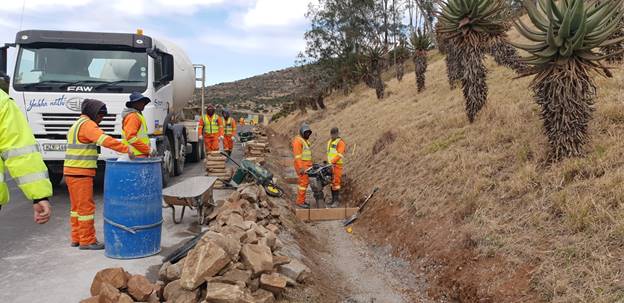
Road construction and maintenance projects help to address some of South Africa’s most pressing social and economic challenges relating to unemployment and widespread poverty.  

the South African National Roads Agency (SOC) Limited (SANRAL) is committed to the transformation of the construction sector through its tender processes.  

Small- and medium-sized enterprises are given opportunities to tender for projects, while preference is given for companies owned by black South Africans, women, the youth and the disabled.  

This contributes to the broader national efforts to create jobs – especially in rural areas – and empower communities through training and on-the-job experience.  

As a state-owned enterprise, SANRAL’s corporate ethic is strongly influenced by Government’s policies and the broader national efforts to build and consolidate social and relationship capital.  

A slow year 

The slowdown in construction activity during the past year had an impact on SANRAL’s ability to issue contracts.  

The total value of work undertaken by SMMEs increased by only 1.6%, but the number of contracts grew by nearly 30%. More than 70% of contracts went to black-owned SMMEs. This represents 83% of the value of work done. 

Delays in the awarding of tenders for planned construction projects resulted in a decrease in the number of work opportunities offered by SANRAL.  

There were also fewer opportunities for training offered to workers who were employed on SANRAL contracts.  

However, the work opportunities that were created were, on average, of longer duration and contributed to the empowerment of participants. 

There was a decrease in the number of work opportunities afforded through SANRAL contracts in 2018/19.  

About 10 000 fewer work opportunities were available than in the previous year – a decrease of 27%.  

That said, work opportunities created in 2018/19 were, on average, of longer duration.  

Because of the drop in work opportunities, there was also a major decrease in training offered to workers employed on SANRAL contracts.  

This situation is attributable to delays in the awarding of tenders for planned construction projects. 

TRAC concerned about truck backlogs

Road users, local landowners and businesses have approached TRAC about the problem as excessive truck traffic causes queues of up to 7km long. 

Standing trucks also block farm and business entrances, creating major frustration for the local community. 

Trans African Concessions (TRAC) has received numerous complaints and been repeatedly questioned about the truck backlog between the Komati Load Control Centre and the Lebombo Border Post over the past few weeks, which is having a negative impact on the N4 Toll Route. 

Although truck traffic build-up is not a new dilemma on this part of the route, truck traffic volumes have escalated considerably since September 2019 following Transnet’s temporary halt of its rail service to Maputo Port.  

This has resulted in a 30% increase in trucks going through the border post. 

Road users, local landowners and businesses have approached TRAC about the problem as the excessive truck traffic causes queues of up to 7km long. These queues obstruct traffic flow and create safety hazards.  

Standing trucks also block farm and business entrances, creating major frustration for the local community.  

As border and road users themselves, TRAC fully understands the frustration as they are not immune to the problem.  

One of TRAC’s own trucks recently took over 54 hours to be cleared at the border, which indicates a serious problem. 

Meeting the Lebombo Management 

In a bid to understand the matter, TRAC recently met with Lebombo Border Post Management and other stakeholders, who confirmed the truck traffic is simply too excessive to be adequately accommodated at the Lebombo Border.  

Clearing lanes and human resources urgently need to be improved.  

Although some measures have been implemented to alleviate the problem, they have not been as effective as expected. 

TRAC has also approached SANRAL, via the Department of Transport, to assist as it is expected to get worse over the festive season when traffic volumes to the border post are traditionally very high. 

TRAC believes the backlogs will decrease if the clearing of trucks at the border post improves.  

Improvements needed 

TRAC is also of the opinion that an expansion at the Komati Load Control Centre, which is managed by TRAC and owned by SANRALis overdue. 

This should include the expansion of the facility through the addition of a second lay-bye and improvements to the access road.   

TRAC offered to assist with a project of this nature a few years ago, but this was declined. 

In view of the above, and while a better solution is sought, TRAC urges all road users to take care when driving on this section of the route.  

Although TRAC fully understand the current status quo causes frustration for all affected parties, they appeal to all to respect road regulations and signage to avoid further complications. 

To alleviate some of the frustration, TRAC has agreed to erect a four-way stop at the Komatipoort/Sasol Garage Intersection.  

We are confident this will improve vehicle movement across the intersection. 

TRAC empowers Nkomazi youth

TRAC congratulates the students and wishes them well in their future endeavours. 

This three-month programme consisted of theory and practical and although challenging at times proved worth it.

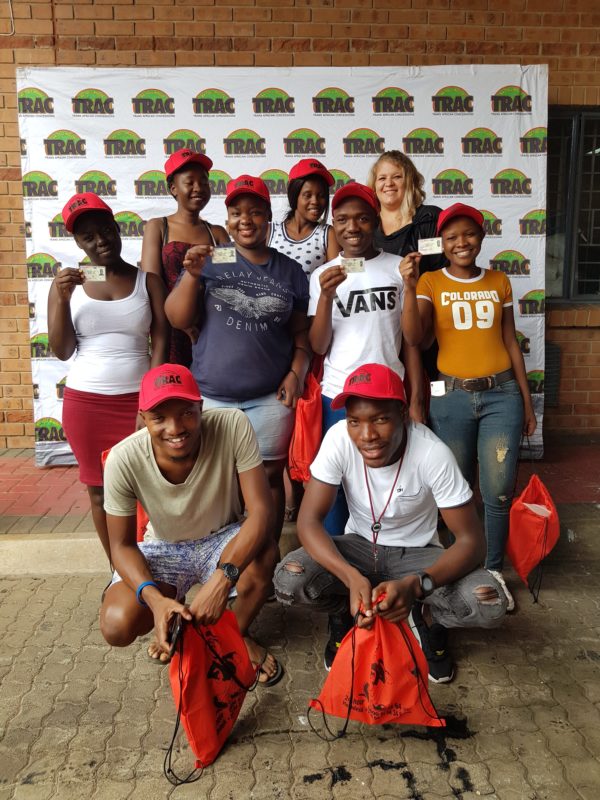
Fourteen youths from Nkomazi now have a greater chance of getting their dream job after obtaining their Code C1 Driver’s Licence through the Trans Africa Concessions (TRAC) and Nkomazi Licence Programme. 

The initiative came about after the community leadership requested TRAC to help several local youngsters obtain their licenses in order to make them more employable.  

The request was in line with research undertaken by TRAC, which showed that the Nkomazi region is severely affected by poverty and unemployment.  

These social challenges make it difficult for youth in the area to expand their skills and in turn improve their circumstances. 

As the initiative also conformed to TRAC’s social responsibilities towards the communities along the N4 Toll Route, the selected candidates were enrolled at Msai Drive Alive Driving School.  

This three-month programme consisted of theory and practical and although challenging at times proved worth it. 

TRAC would like to congratulate the students and wish them well in their future endeavours. 

Successes despite funding constraints

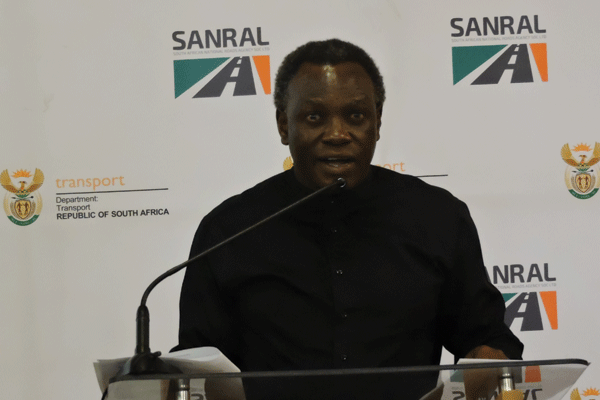
Themba Mhambi, Chairman of the SANRAL Board, believes the national road network will continue to be the catalyst for growth and socio-economic transformation. 

Themba Mhambi mentioned that the governance of SANRAL was again a highlight in the year under review with a record 15th unqualified audit report achieved.

In our long-term strategy – Horizon 2030 – we identify one of SANRAL’s greatest challenges as balancing the gradual expansion of the national road network within a constrained funding envelope.  

Funding constraints worsened during the financial year because of a downturn in the global economy and a stagnant South African economy.  

Additionally, low level e-tolls payment have led to the National Treasury approving the reallocation of R5.75-billion from the non-toll portfolio to the toll portfolio.  

This resulted in a 27% reduction on expenditure in the construction of road infrastructure.  

The resolution of the e-toll non-payment impasse is therefore critical.  

The importance of SANRAL will continue to grow, but only if the network growth is capped at 25 000km and the funding of roads is resolved.  

SANRAL sets an example of what government wants to achieve in the transformation of state-owned entities and the creation of a capable state.  

The governance of SANRAL was again a highlight in the year under review with a record 15th unqualified audit report achieved. 

Another major highlight is that 201 SMMEs benefited from our community development projects. That is 23% more than the previous year.  

All of these are black owned. In line with government’s programme of producing black industrialists, the Board mandated management to evolve a special project for the targeted development of black industrialists.  

SANRAL also continues to take the lead in transforming the industry from within. Of the 127 engineers in the organisation’s employ, 52 or 41% are black.  

Together with coloured and Indian engineers, this number increases to just under 60%, or 76.  

Transformation is also being driven by SANRAL’s Technical Excellence Academy, where over 50 candidate engineers, technologists and technicians have been assisted since 2014.  

Our national road network will continue to be the catalyst for growth and socio-economic transformation. 

This is an opinion piece by Themba Mhambi, the Chairman of the SANRAL Board

N4 upgrade in Nkomazi progressing well

The project is valued at approximately R340-million and is expected to take 24 months to complete. 

The project is valued at approximately R340-million and is expected to take 24 months to complete.  

There has been significant progress in the upgrade and rehabilitation project between Kaapmuiden and the Kaalrug Intersection in Nkomazi, Mpumalanga.  

The project got off the ground in August this year and five percent of it has already been completed. 

The project, which is being completed by Tau Pele Construction, will see the 15,5km stretch of the carriageway upgraded to four lanes and will also include the rehabilitation of the current road.  

The installation of high mast streetlights at the Kruger Malelane Gate/Jeppes Reef Interchange and a footpath between Stentor and Kaapmuiden Primary School are only some of the specific safety issues raised by the Nkomazi Local Municipality that will be addressed in the project. 

The project is valued at approximately R340-million and is expected to take 24 months to complete.  

Road users are advised that traffic flow will be affected throughout the roadworks as lane reductions and/or deviations will be in effect.  

TRAC would like to thank the public for their patience and understanding at construction zones and assures them of their continued commitment to maintaining the N4 Toll Route on par with world standards. 

BAKWENA ASSISTS LEARNERS THROUGH THE VISION FOR THE FUTURE PROJECT

Over R5,3-million has been spent as part of the project and students are also educated on health and road safety. 

This annual project involves eye testing for all learners along the Platinum Corridor and is carried out by community volunteers who have been equipped and trained through the assistance of Bakwena.  

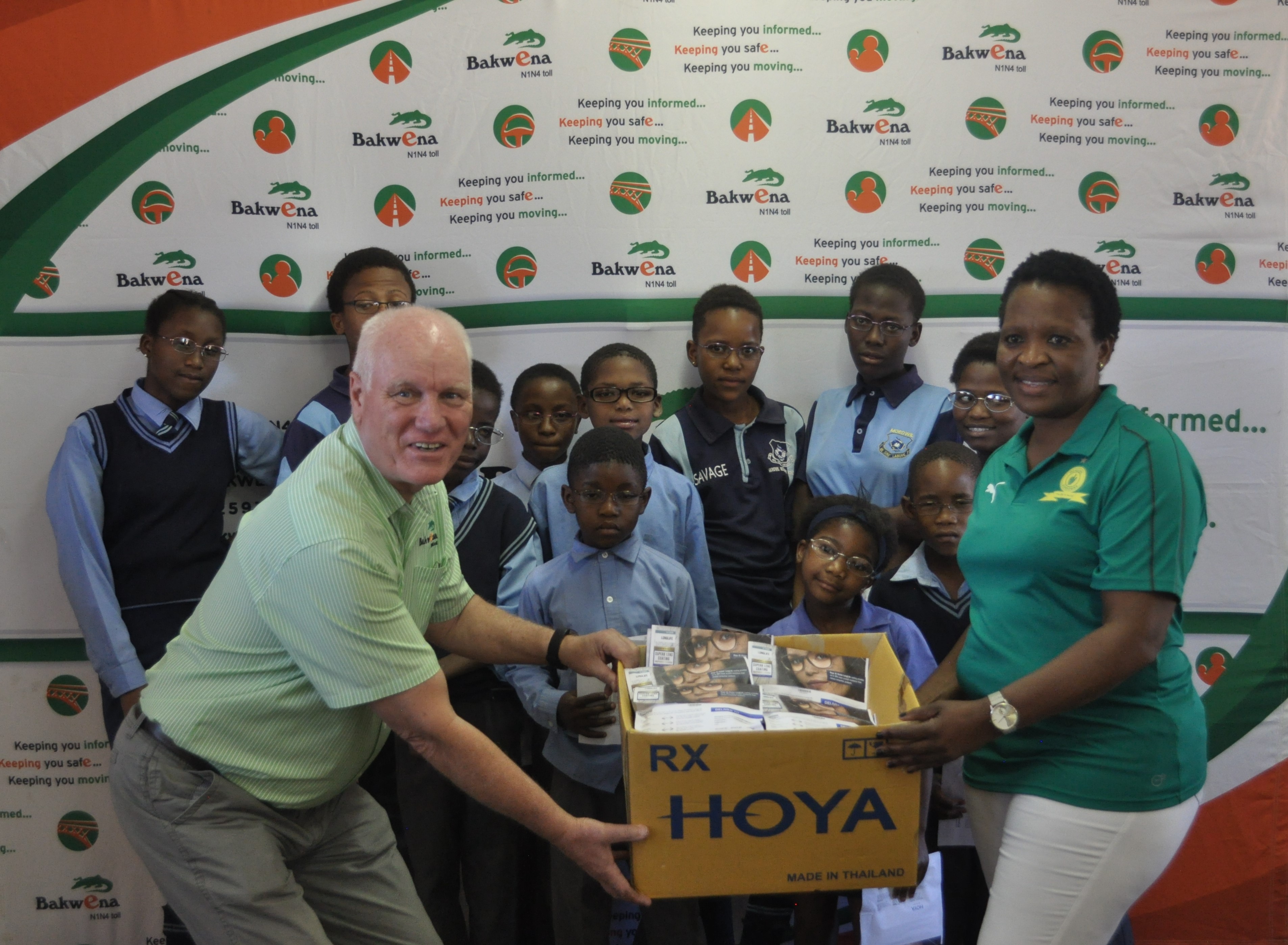
The Bakwena Platinum Corridor Concessionaire (Pty) Limited (Bakwena) “Vision for the Future” project handed over 11 pairs of spectacles to Moedwil Primary and 48 pairs to Moedwil High School on 30 October. 

This project was launched in 2011 and to date has resulted in 54 824 learners along the N1N4 route having had their eyes screened, with 1080 of these learners receiving the necessary prescription spectacles to improve their eyesight. 

This annual project involves eye testing for all learners along the Platinum Corridor and is carried out by community volunteers who have been equipped and trained through the assistance of Bakwena.  

Bakwena holds a 30-year Concession Contract with the South African National Roads Agency (SOC) Limited (SANRAL) to design, build, finance, operate and maintain 385km of road. 

Improving their vision 

As part of the initiative, eye tests at reduced fees are conducted by local optometrists on learners who have been pre-identified through the volunteers.  

Hoya SA is a valuable partner in this initiative as they provide the spectacles for the children to Bakwena for a significantly reduced cost. 

The objectives of the project is to provide free eye screening for all learners in schools along the N1N4 Corridor at least once, to get those who failed the eye screening tested to an optometrist and to provide spectacles to those who need them.  

To date, over R5,3-million has been spent as part of the Vision for the Future Project, while also educating students on health and road safety. 

Poor vision dramatically increases the risk of crashes, with SANRAL claiming that nearly half of the deaths that occur on South African roads are pedestrians.  

In remote areas, this percentage may rise considerably closer to the average percentage experienced in other developing countries.  

The eye screening project is carried out in conjunction with hearing screening which was launched in 2016. 

Since September 2016 the eye screening has been done through the Peek Acuity cell phone application supported by the HearX company in South Africa. 

In 2015 Bakwena merged the project with their Integrated School Health Strategy.  

This initiative has produced many positive results, including impressing on learners the importance of observation when using a road. 

Bakwena’s public relations manager, Charmaine van Wyk, said: “Our various programmes have had a meaningful impact on many aspects of the lives of people in the communities around the routes that we operate. We are committed to their road safety and well-being, but we also focus on other initiatives that will bring positive change in their day-to-day lives that will deliver long-term benefits.  

“From informative programmes to educating children on road safety to programmes raising awareness for environmental heritage, we believe that we have the responsibility as a business not only to build, maintain and operate effective highways, but also to improve the lives of the people along these routes”. 

YOUNG PEOPLE MATTER AT SANRAL

The key to a sustainable future for SANRAL is the development of the next generation of civil engineers and the creation of a leadership reserve.   

Heidi Harper, SANRAL’s Corporate Service Executive, said SANRAL’s history is built on a substantial investment into research and education.

The South African National Roads Agency (SOC) Limited (SANRAL) is best known as the builders of South Africa’s roads. However, to SANRAL it’s about the people, not the asphalt.  

With two decades of road building behind us, we’ve re-engineered the strategic direction of the agency to ensure we continue to build South Africa through better roads. 

However, the key to our sustainable future is the development of the next generation of civil engineers – more specifically, the creation of a leadership reserve. 

Research and education  

SANRAL’s history is built on a substantial investment into research and education. We recognised the need to feed the engineering sector with skilled, qualified and highly engaged engineers, and in understanding the need for a pipeline of human development, learning platforms were created from school scholarships, bursary schemes and university chairs. 

We remain committed to nurturing a pool of talent through mentoring and training and maintain our plans to attract and retain talent.  

Through our endowments of the SANRAL Chair in Transportation at the University of Cape Town, the University of Stellenbosch Chair in Pavement Engineering and the Chair in Science, Mathematics and Technology Education at the University of the Free State, we endeavour to increase the country’s pipeline of engineering skills.  

Bridging the divide between graduation and working in the field is a critical transition, and in response to this need for seamless integration into the industry, the SANRAL Technical Excellence Academy (TEA), which is housed in Port Elizabeth, provides dedicated mentorship and practical training in road and bridge design for graduate candidate engineers, who are SANRAL bursary students. 

Looking beyond university 

We also recognise that in making civil engineering more inclusive for young people, we need to look beyond university.  

As such, there is a concerted effort to ensure as many young people as possible benefit from construction projects that pass through their communities.  

Be it the funding of learnership opportunities along with our consulting and contracting partners, or specialised procurement training to capacitate youth-run SMMEs to successfully tender for subcontracts on large-scale projects, we recognise the incredible value that our youth play in building current-day South Africa, not just in someday leading South Africa. 

In our quest to develop South Africa’s knowledge economy, we will continue to invest in research and education to unlock the potential that lies within the road construction industry, with a focus on creating platforms for young South Africans to grow and prosper. 

This is an opinion piece by Heidi Harper, SANRAL’s Corporate Service Executive. 

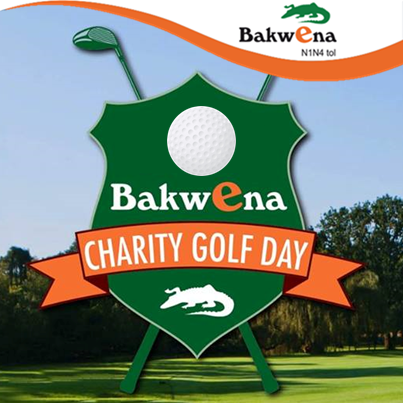
TEEING OFF FOR CHARITY

Six organisations benefited from Bakwena’s annual golf day. 

Six charities were selected to benefit from this year’s event, namely Thusanang Early Learning Centre, PinkDrive, WheelWell, Cansa, Laudium Cancer Care and Mohau House. 

Bakwena Platinum Corridor Concessionaire (Pty) Limited raised R193 600 at its 11th annual charity golf day held at the Centurion Country Club in October.  

To date, the total amount raised by Bakwena for charity sits ajust over R1.8-million.  

Bakwena holds a 30-year Concession Contract with the South African National Roads Agency (SOC) Limited (SANRAL) to design, build, finance, operate and maintain 385km of road. 

Six charities were selected to benefit from this year’s event, namely Thusanang Early Learning Centre, PinkDrive, WheelWell, Cansa, Laudium Cancer Care and Mohau House. 

Bakwena’s public relations manager, Charmaine van Wyk, said: “The success of this event is due to the support of our valuable stakeholders, who have generously supported us for the last 11 years. 

“This initiative forms part of our social development programme where we contribute to the health and well-being of communities adjacent to the N1/N4 routes we manage.” 

Bakwena would like to thank the following sponsors and supporters of the 2019 Charity Golf Day: AIIM, Basella Maintenance CC, Big Fleet Media (Pty) Ltd, Bridge Jointing, Evo Motors, G4 Civils (Pty) Ltd, Hatch, Inspecta Car, IPI Development Construction, JG Afrika (Pty) Ltd, Kikuti Events, Leo Consulting (Pty) Ltd, Merchelles Collective (Pty) Ltd, MasterDrive, Mikros Traffic Monitoring (Pty) Ltd, Moonraker Creative Communications, N3TC (Pty) Ltd, Nextec Roads and Highways, Nedgroup Investments, Nedbank Corporate and Investment, Nyeleti Consulting (Pty) Ltd, Pt Operational Services (Pty) Ltd, Roadlab Laboratories, Raubex Construction, SceniVision, SARF, USASA Plant Hire, Veritas, WBHO, Webber Wentzel, VEA Road Maintenance and XFactor Safety. 

BAKWENA CONGRATULATES THE ENDANGERED WILDLIFE TRUST ON ICOET INTERNATIONAL STEWARDSHIP AWARD

The award is presented to agencies or organisations that demonstrate a cooperative effort to maintain or restore ecological function during transportation operations above the regulatory requirements. 

Bakwena holds a 30-year Concession Contract with the South African National Roads Agency (SOC) Limited (SANRAL) to design, build, finance, operate and maintain 385km of road. 

The Bakwena Platinum Corridor Concessionaire (Pty) Limited congratulates the Endangered Wildlife Trust on being awarded the ICOET International Stewardship Award for their Wildlife and Energy and Wildlife and Transport programmes.

They received this award at the International Conference on Ecology and Transportation (ICOET) held in the USA recently. 

The International Stewardship Award is presented to agencies or organisations that demonstrate, through the results of their actions, a cooperative effort to maintain or restore ecological function during transportation operations above the regulatory requirements. 

Bakwena’s public relations manager, Charmaine van Wyk, said the award bears testimony to the dedication and incredible work Wendy Collinson and the Endangered Wildlife Trust (EWT) have done in establishing and running the EWT’s Wildlife and Transport Programme.

“Wendy and her team oversee numerous research projects that are working to address environmental concerns and challenges, through putting plans in place to implementing mitigation methodologies – incredibly making them one of the first African NGOs to do this.” 

Bakwena holds a 30-year Concession Contract with the South African National Roads Agency (SOC) Limited (SANRAL) to design, build, finance, operate and maintain 385km of road. 

A mutually beneficial partnership 

The Wildlife and Transport Programme includes valuable training that is provided by the EWT to Bakwena’s route patrollers on wildlife incident data collection, species identification and mitigation measures.  

By developing wildlife incident data collection and the management thereof, the negative impacts of transport infrastructure on wildlife are reduced. 

Fraser Shilling of the Road Ecology Centre at UC Davis and the main organisers of ICOET said: “The EWT unites industry and wildlife impacts in Africa, working towards shared objectives, expanding knowledge, and understanding how to ultimately minimise threats to wildlife.” 

Road safety is one of Bakwena’s core pillars, which is why this project is so significant. Bakwena has supported various initiatives by the EWT over the past eight years.  

In addition to being a core supporter of the Wildlife and Transport Programme, it has also supported the organisation’s Livestock Guarding Dog Project, part of the EWT’s Carnivore Conservation Programme. 

Van Wyk concluded: “Bakwena is proud to be a partner and supporter of an organisation such as the EWT. Their dedication and commitment in protecting and preserving the country’s precious wildlife is recognised and appreciated.  

“We thank the Endangered Wildlife Trust and Wendy for the exceptional work they are doing to protect one of this country’s greatest resources – its wildlife.”