Government has partnered with community safety councils in every province to bolster its efforts to reduce road accidents.
Statistics indicate that most people who die on the roads are young people aged between 20 and 34, according to the Department of Transport.
Collaboration between communities and government is needed to tackle the issues of road safety.
With this in mind, government has partnered with community safety councils in every province to bolster efforts to reduce road accidents.
It was the job of government “to empower communities as masters and shapers of their own destiny to identify local road safety challenges and then address those with [the safety councils]”, said Minister of Transport Joe Maswanganyi at the launch in Bela-Bela, Limpopo, of the Department of Transport’s festive season road safety campaign. “Our people … are the ones who must deal with these [issues] daily.”
Road safety challenges were societal problems, he added. “We need to collaborate and work closely with our provinces, municipalities and communities if we are to win this battle.”
Statistics indicate that most people who die on the roads are young people aged between 20 and 34, according to the Department of Transport.
“Due to their energy and militancy, young people are always at the forefront of change. We should, as leaders of society, allow space for these young people, through their organised formations, to play a role in addressing the scourge of road deaths that so badly affects them,” said Minister Maswanganyi.
Hlokomela-Phila campaign
In addition to the road safety campaign, the Department of Transport has launched the Hlokomela-Phila campaign in partnership with the South African National Taxi Council and the Department of Health.
The campaign aims to improve health and wellness within the taxi industry. Operators, drivers, commuters, street traders and other key players in the sector will be offered HIV testing services, as well as screenings for TB and non-communicable diseases.
Stakeholders in the sector will be able to test for diabetes and hypertension at taxi ranks and transport hubs across the country.
The minister called on everyone to work together to make this year’s festive season a different and memorable one.
“I have no doubt that we shall emerge from this festive season firmer and more resolute in our determination to turn the tide against the carnage on our roads,” he said.
Traffic authorities will have a zero-tolerance approach to law enforcement over the festive period in an effort to reduce fatalities.
Transport Minister, Joe Maswanganyi, urged all motorists to treat traffic officers with respect and dignity.
Statistics show that South African road and traffic officials have a monumental task to improve the behaviour of road users, according Minister of Transport Joe Maswanganyi.
The number of deaths on the country’s roads during the festive season over the past three years – from 1 587 in 2014/15 to 2 006 in 2016/17 – shows a need for a zero-tolerance approach to law enforcement on the road, the minister added.
Minister Maswanganyi was speaking at the launch of the Department of Transport’s festive season campaign in Bela-Bela, Limpopo.
Five provinces, the Eastern Cape, KwaZulu-Natal, Gauteng, Limpopo and Mpumalanga, accounted for 73% of all fatalities last year.
This festive season, government will strive to combat this by removing unfit drivers and vehicles from the road. “Those that do not adhere to the standards [expected of road users] will not leave the provinces of their origin. Residential areas such as suburban, township and village roads will be policed to ensure that holidaymakers do not cause unnecessary crashes,” Maswanganyi said.
Back to basics
A trends analysis of festive season road crashes showed that over the past three years, road accidents spiked over weekends, according to the Department of Transport.
Many of the accidents take between 3pm and mid-night, and between 4am and 7am.
“I would like to make a clarion call for us get back to basics and direct our efforts at high risk violations occurring at certain times and places that lead to an increased number of accidents,” Maswanganyi said.
The situation is compounded on long weekends where alcohol consumption spikes, leading to reckless and negligent driving, a bold disregard of road rules and an increase in road crashes, injuries and fatalities.
The minister condemned acts of criminality, such as motorists bribing officers of the law.
Remembering fallen heroes
He used the launch to remember officials who died on duty because of the negligence of some drivers.
“I urge all motorists to treat our traffic officers with respect and dignity. Let us all bear in mind that traffic officers have chosen this career to serve and protect the nation against lawlessness.”
He warned motorists and the public that an attack against law enforcement officers was an attack against the State and would not be tolerated. “Those who attack them must be pursued, arrested and face the full might of the law.”
Minister Maswanganyi urged municipalities and provincial authorities to ensure adequate protection of traffic officers.
People involved in road accidents are urged to claim directly from the Road Accident Fund instead of spending large amounts of money on litigation fees.
RAF officials are available all over the country and are also strategically placed in hospitals to assist those involved in road accidents.
Anyone injured in a road accident is encouraged to claim compensation directly from the Road Accident Fund (RAF) rather than spending money on litigation.
“Using lawyers can be costly and often results in a large chunk of the money intended for the victim being spent on litigation fees instead of their maintenance,” said Minister of Transport Joe Maswanganyi.
He was speaking at the launch of the Department of Transport’s festive season campaign in Bela-Bela, in Limpopo.
Beneficiary speaks
The minister handed over a wheelchair to Letlhogonolo Chokwe, a RAF beneficiary who, as a pedestrian, was hit by a car in 1989.
“They [the RAF] have really assisted me with compensation; everything I need, like the wheelchair, crutches and the chair I use in the shower, they bought for me. Whenever I need help, they assist me,” said Chokwe.
The RAF, an agency established by the Road Accident Fund Act of 1996, provides appropriate cover to all road users within the borders of South Africa. It pays medical and rehabilitation costs as well as compensation to people injured as a result of motor vehicles accidents.
RAF officials are available all over the country and are also strategically placed in hospitals to assist those who involved in road accidents.
“You often find that we, as [the Department of Transport], have to go through lengthy court processes to ensure beneficiaries receive their money when they make use of a lawyer,” said Maswanganyi.
The efficiency of RAF is, therefore, a crucial component to deliver services to all road users.
“We are grateful that the Road Accident Fund is improving its administration of funds to the beneficiaries,” the minister said.
Steps to claim
The first step in claiming from the RAF is to gather all the necessary documents:
The police report and case number of the accident.
All your relevant personal details as well as those of any other person involved in the accident.
All medical documents supporting the claim for the injuries incurred.
Any motivating testimony from medical and/or legal experts, as well as witness testimony.
Any relevant information pertaining to the accident such as damages to the vehicle/s and/or surrounding structures.
Make sure all the official RAF forms are filled in.
Who may make a claim?
Claims may be made by:
A person who sustained a physical injury in the accident – except for a driver who was the sole cause of the accident.
A dependent of a deceased breadwinner.
A close relative of the deceased who paid for the funeral.
A claimant under the age of 18 years must be assisted by a parent, legal guardian or curator ad litem.
In addition, claims can be submitted by the injured person or a representative and/or the supplier in terms of a certificate of undertaking.
In the event of the supplier making a claim, a written request is required before the assessed liability can be reimbursed.
What is the time period in which a person can claim?
Identified claims (where the identity of the driver or owner of the motor vehicle involved is known) must be lodged with the RAF within three years from the date of the accident and must be finalised within five years from the date of accident.
Hit and run claims (where the identity of the driver or owner of the motor vehicle involved is unknown) must be lodged with the RAF within two years from the date of the accident and must be finalised within five years from the date of accident.
Claims in terms of the undertaking certificate issued in terms of section 17(4)(a)(ii) of the Act must be lodged and finalised within five years from the date on which services were rendered to the injured.
The national road network has been growing over the years, and this improves connectivity between cities and regional hubs.
The national road network has been steadily growing over the years, improving connectivity between cities and regional hubs. It is via the road networks that the majority of South African citizens commute and conduct business.
It is important to unlock the value of South Africa’s road network and build partnerships with communities along these routes so they can benefit economically from their local roads.
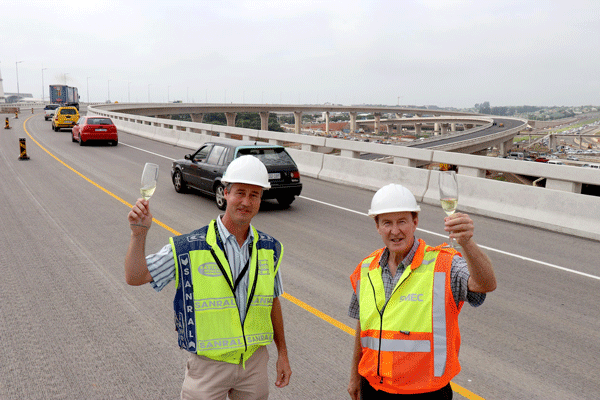
“At a time when the world is undergoing rapid changes brought on by new – and sometimes disruptive – technologies, it is important for 21st century organisations such as SANRAL to embrace change and continuously adapt strategies to remain at the leading edge of trends in the management of vital economic infrastructure,” said the general manager of communications at The South African National Road Agency (SOC) Limited (SANRAL), Vusi Mona.
The national road network has been steadily growing over the years, improving connectivity between cities and regional hubs. It is via the road networks that the majority of South African citizens commute and conduct business.
Against this background, it is critically important to unlock the value of South Africa’s road network and to build partnerships with communities so that these communities can become active participants in the entire process of delivery, which includes planning, construction, as well as the supply of services and material to long-term maintenance of local roads, Mona said.
Embracing innovation
An important aspect of an ever-changing world is the challenge brought about by rapidly evolving Smart Road Technologies and global innovation.
“Innovating to create a better and safer road network can never operate in isolation, and SANRAL has always been acutely aware of, and committed to, impacting positively on the lives of the communities in which it operates, across the national road network,” Mona said.
He was particularly excited that innovation funding had been prioritised through the establishment of the Western Cape-based Technical Innovation Hub (TIH) during the 2016/17 financial year.
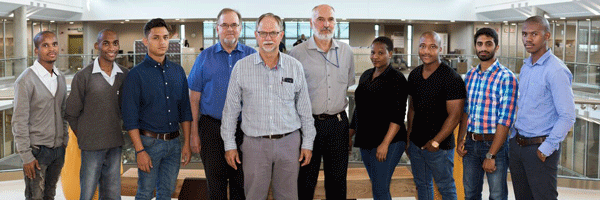
The TIH, he said, could be likened to a think tank of young intellectuals, who were mentored by senior professional engineers, and who could be inspired by the possibilities that exist when technology is harnessed to improve South African lives and promote progressive development in transport.
Simply creating road infrastructure was not enough when citizens did not always have the ability and resources to access developmental opportunities created by an improved road network, he said.
To this end, SANRAL’s Community Development Programme was a way of strengthening communities, particularly those who were adjacent to the national road network.
The programme addressed both concrete and intangible human needs, Mona added.
“SANRAL implements a detailed plan when working with community structures on all of its projects, with the goal of providing improved access and mobility in a locally sensitive manner, and offering opportunities for economic empowerment.”
Future focus
With SANRAL having had two decades as the custodian of the South African road network, Mona is pleased to note that the length of the network has tripled from 6 700 km in 1998 to the current 22 000 km – with an estimated net asset value of more than R250-billion.
“We stand at the start of a global new era in transportation technology, where concepts such as smart roads, intelligent infrastructure and driverless vehicles have moved from the realms of science fiction to a future that is just down the road.”
SANRAL’s medium-term strategy, named Horizon 2030, aligns with the timeframes set in the National Development Plan.
Horizon 2030 is a proactive response to deliver on SANRAL’s vision of a national transport system that builds South Africa through better roads, Mona said.
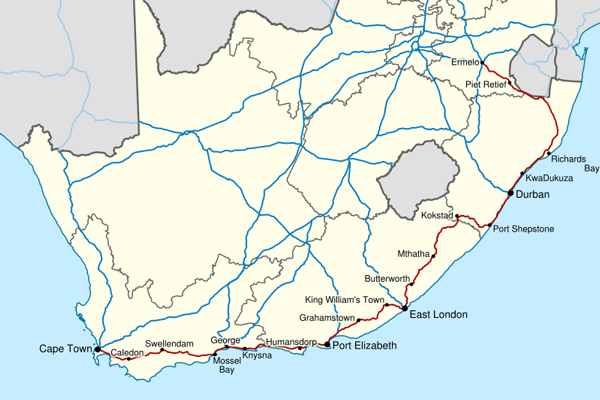
Two examples of the agency’s ongoing investment in the long-term future of South Africa’s road network can be seen in the R3.2-billion invested in the upgrade of the N7 corridor and the construction of two mega bridges as part of SANRAL’s N2 Wild Coast road project in the Eastern Cape.
“We are looking forward to continuing to engage with other role players in the construction and engineering sectors, with our sister agencies and road authorities, with provincial and national departments, and with the experts in our various engineering disciplines, as we strive to build South Africa through better roads,” he added.
World Road Association Conference
In October 2017, SANRAL hosted engineers from several countries at the biannual World Road Association (PIARC) conference on Road Tunnel Operations in Low and Medium-Income Countries. The event was formally opened by SANRAL CEO Skhumbuzo Macozoma.
“The biannual seminar was an opportunity to draw on knowledge and technical leadership from over 30 governments globally, and was, in itself, a huge benefit to growing the knowledge economy within South Africa,” said Mona.
During the conference, engineering professionals engaged with thought-provoking presentations on new technological breakthroughs in civil engineering around safe design and operations of road tunnels.
The South African team led with a presentation on the Huguenot Tunnel, a major transportation link between the Western Cape coast and the interior. The presentation looked at operations, maintenance and planned upgrades.
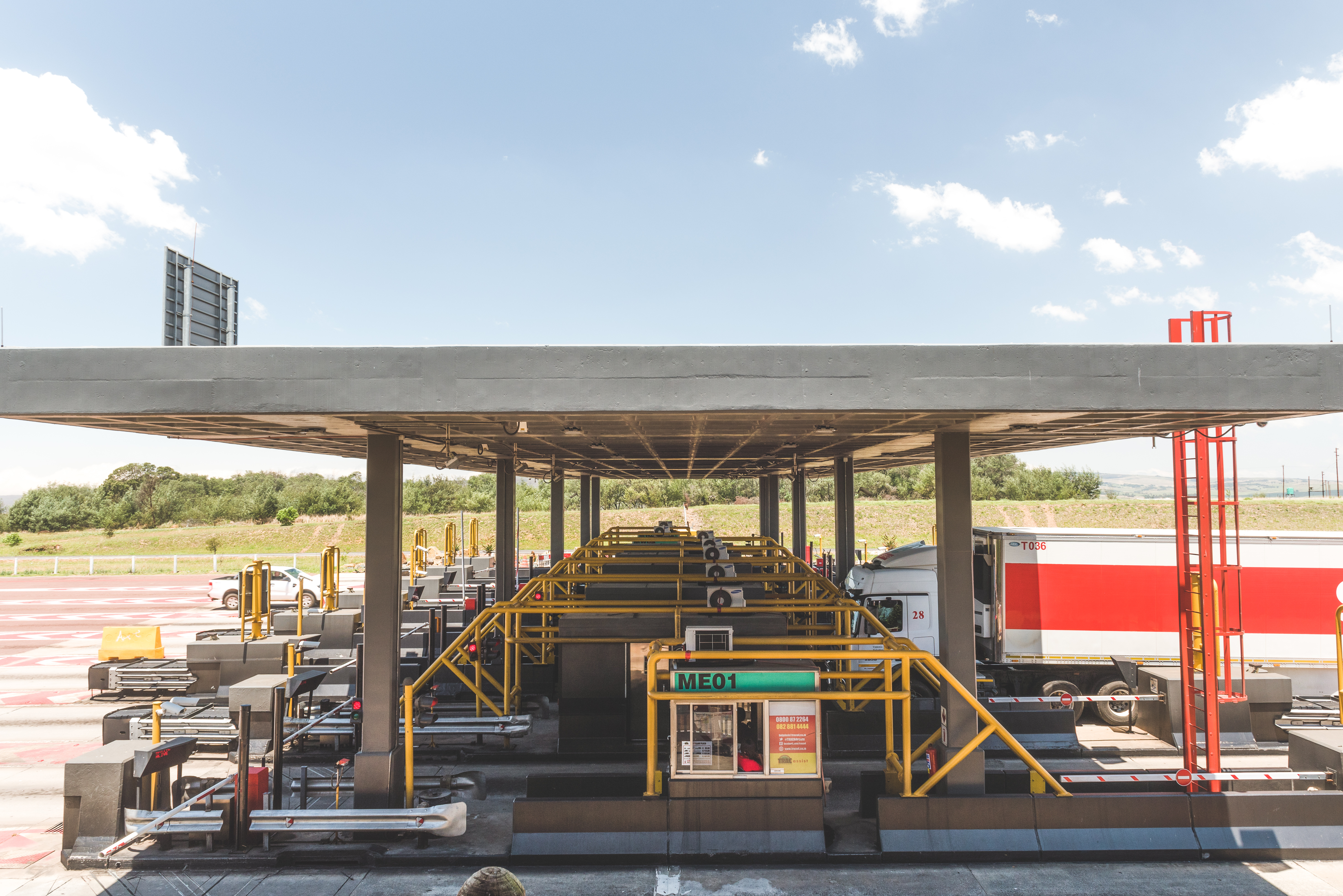
Drivers using the automated electronic payment system on the country’s toll roads will enjoy the benefits of an uninterrupted traffic flow and shorter travel times this festive season.
Road users can register a single account and use a tag, linked to the account, for all the toll plazas – irrespective of who operates the plaza.
Road users on South Africa’s toll road network will continue to enjoy the benefits of an automated electronic payment system during this holiday period.
The fully interoperable tag system, introduced by the South African National Roads Agency (SOC) Limited (SANRAL) in 2015, has proven to be a major success.
The same tag can be used at toll plazas operated by SANRAL and its concessionaires, Bakwena Toll Concessionaires, N3 Toll Concessions (N3TC) and Trans Africa Concessionaires (TAC).
Road users can register a single account and use a tag, linked to the account, for all the toll plazas – irrespective of who operates the plaza.
“We are very pleased with the growth and take up of electronic toll transactions across all historical ‘manually’ operated toll plazas in South Africa,” said manager of toll and traffic at SANRAL, Alex van Niekerk.
“The average number of toll transactions done electronically has grown from a zero base to above 20% in quantum and 30% in value over the past two years.”
Improved service and delivery
The transition from manual to electronic toll systems is aligned with the expectation road users have for improved service and efficiency: drivers do not want to delay their journeys when paying at a conventional toll facility.
A system of electronic toll collection has been developed over the last decade, allowing road users to move through toll plazas without delay.
Automated electronic toll payment is an efficient, fair and sustainable method of collecting tolls. Among its benefits are improved speed and efficiency of traffic flow for the convenience of road users and a reduction the overall journey time due to less time spent making toll payments.
Travel information
Some important information for those travelling this festive season:
For a detailed list of toll plazas where automated electronic toll payment will be accepted, visit the SANRAL website sanral.co.za/e-toll.
Signs at the plaza will indicate which lane can be used to pay with a tag.
If a ‘tag accepted’ sign is displayed at the toll plaza and lanes are not individually marked, it means all lanes accept tags:
reduce speed when entering the toll plaza area;
select a lane which accepts SANRAL tags as a method of payment; and
maintain a car-length following distance to avoid paying for the vehicle in front.
If a tag is detected, it will emit one or more beeps depending on the account status:
1 beep – payment successful;
2 beeps – low balance warning; and
4 beeps – account suspended because there are no funds in the account.
Ensure there are sufficient funds on the tag to accommodate the costs of all toll plazas en route.
Note that payments made into the toll account may take up to five days to reflect, if they have not been made online (sanral.co.za/e-toll) or at a SANRAL Customer Service Centre. Booms will not open if the funds in the toll account are less than the amount due at the specific toll plaza. It is possible to create an automated top-up on the account by linking it to a conventional bank account or credit card.
Keep all till slips safe should there be any disputes at a later stage, for example, in the event of double billing, when the tag appears not to have been read and cash is paid.
“Should any motorist need help in planning their journey, contact our Customer Services on 0800 726 725, visit one of our centres or email us on info@sa-etoll.co.za,” said Van Niekerk.
SANRAL’s i-Traffic system now has new features to help road users plan their journeys better and avoid congestion on the country’s freeways.
i-Traffic is South Africa’s most advanced traffic information system, covering the primary roads in Gauteng, KwaZulu-Natal and the Western Cape.
The New Advanced Traveller Information System, rolled out last month, has already proven its value during the first week of the holiday season.
The new features on the i-Traffic system, run by the South African National Roads Agency (SOC) Limited (SANRAL), will enable road users to plan their journeys better.
“People are now able to plan and tailor their journeys according to off-peak periods and be aware about crashes or congestion on the road ahead,” said the general manger of communications at SANRAL, Vusi Mona.
“Real time information on road conditions, congestion and estimated travel times contributes greatly to road safety at a time when the national road network is at its busiest,” he added.
i-Traffic is South Africa’s most advanced traffic information system, covering the primary roads in Gauteng, KwaZulu-Natal and the Western Cape.
Users are able to see road conditions, incidents and congestion prior to the start of their journeys and receive real time alerts when conditions change.
Features on the New Advanced Traveller Information System include:
A single adaptive display that will automatically align itself with the device being used. i-Traffic users will no longer need to log on to separate mobile sites when using computers, tablets or smart phones.
An updated tool for trip planning and congestion alerts. The system now provides estimated door-to-door travel times and incident alerts based upon the user’s unique profile.
A new “My Cameras” feature which enables users to add their most frequently viewed cameras to the i-traffic.co.za homepage.
A better user experience and improved usability when accessing the website.
Intelligent Transport System
SANRAL introduced the Intelligent Transportation Systems to meet the growing need among road users to access accurate, real-time information about road conditions. The system is also linked to SANRAL’s emergency response units and on-road services, further contributing to road safety.
At the core of the system is a number of closed-circuit television cameras placed at strategic positions along the highways. The collected images and data are relayed to traffic management centres where the information is analysed and disseminated.
When road conditions change, or incidents occur, the information is posted on overhead electronic signposts and published on the website, while registered users receive alerts on their devices.
“The new changes are also contributing to the gathering of additional traffic and incident data that will be used for future planning. Decision-makers will be able to use this data to gain insights into critical traffic hot spots and the impact of variables such as weather conditions, time of day, network flow and speeds,” said Mona.
SANRAL will provide live feeds to transport management professionals in other entities such as the Road Traffic Management Corporation, and to provincial and local governments.
There are already live CCTV feeds to the Cape Town International Airport Management Centre and the Public Emergency Communication Centre (107) in Cape Town.
With the festive season officially underway, take time to check your car’s road-worthiness before setting off on your travels and save yourself hassles and heartache this holiday season.
Drivers falling asleep behind the wheel is a major cause of crashes, so even though it might be tempting to reach your destination a day earlier, it is vital that you pay attention to your body.
Your car’s road-worthiness could be the difference between a great holiday or a very expensive disappointment.
Make sure you are safe on the more than 22 000km of roads maintained by the South African National Roads Agency (SOC) Limited (SANRAL).
Here is a handy holiday checklist to keep on hand this festive season, courtesy of Arrive Alive.
Service your vehicle
Nothing ruins a holiday like a mid-highway blowout, so it is important to make sure your vehicle is inspected prior to a trip by an authorised dealership or auto-repair shop. They should pay special attention to mechanical and electrical systems, as these can be very costly to repair once broken.
2. Oil and water checks
It is important that you keep tabs on both your oil and water, as a lack of either can cause significant damage to your engine. In most cars, by the time the oil light comes on, the engine has already been compromised, so check up on this as regularly as possible.
3. Weigh up the pros and cons of aircon
With many of us feeling the festive pinch, the temptation to conserve fuel by shutting off the air conditioner is probably strong. But while air conditioning does put added pressure on the engine, there is in fact very little change in fuel economy, particularly in modern cars. As such, it is probably best to go with what is most comfortable for you and your family, as this is likely to keep the kids quieter and enable you to remain more focused on the road.
4. Tyre pressure
Correctly inflated tyres are not only a safety requirement, but can also improve fuel efficiency by 4%. It is also important to bear in mind that, should you be carrying a heavy load, you’ll probably need to pump them up a little bit more than usual. If you are unsure of the correct inflation pressures, look on the inside of the driver’s door jamb or under the fuel filler flap for a tyre pressure chart.
5. Stay charged
While it is important not to use your phone while driving, your mobile device can be a lifesaver in the event of an emergency. Not only is it your lifeline to outside assistance, but it can also help you to navigate your way out of unknown or dangerous areas thanks to built-in GPS technology. So make sure to invest in a car charger for those long journeys – it could be the difference between life and death.
6. Get tracked
Serious accidents can leave us incapacitated and unable to call for help, which is why a tracking device for your vehicle could make a critical difference to your road trip this year. Thanks to impact sensors, these devices can automatically send an emergency notification to your insurer should you find yourself in an accident, even if you are not able to do so. Be sure to check that your insurance cover also includes ambulance and towing services before setting off, as this could save you a lot of money in the long run.
7. Stay alert
Drivers falling asleep behind the wheel is a major cause of crashes, so even though it might be tempting to reach your destination a day earlier, it is vital that you pay attention to your body. Stop when you feel your eyes drooping. By staying alert, you will be better equipped to scan for potential dangers, and to keep your speed consistent according to the weather conditions. Ensure you take regular breaks to freshen up during the journey – and never compromise on a good night’s sleep.
8. Keep the kids buckled up
In many instances, backseat passengers tend not to make use of a seatbelt, particularly when the kids are overexcited. Yet the reality is that, despite preconceptions to the contrary, they are just as much at risk as their front seat counterparts. So, do not make buckling up an adults-only priority this festive season.
SANRAL wishes everyone a happy – well-deserved – holiday, and offers some suggestions to keep road-users safe.
Make sure your vehicle is in a roadworthy condition before a long journey.
The December festive season is a time when many travel to holiday destinations or go home, and the South African National Roads Agency (SOC) Limited (SANRAL) has some advice for people planning road trips.
Get ready for the journey
Obey the rules of the road and carry your driver’s licence with you.
Plan your route and give yourself enough time to travel to your destination.
Use a GPS navigation tool or a road atlas to plan your trip in advance.
For peace of mind, try to stick to major routes or toll roads. If you are going to travel on the back roads, make sure you know the towns along the route and the distances between them.
Do not get stranded without fuel. Plan where you will refuel on your trip.
Plan rest stops along the way and, if you are travelling with kids, share with them when and where you will be stopping.
Always ensure that a friend or family member who is not travelling with you knows the route you plan to use. You should also update them on your progress and let them know when you have reached your destination.
If possible, try to avoid driving after dark.
Be alert and do not expect others to be as obedient of the law as you.
Vehicle fitness
Make sure your vehicle is in a roadworthy condition before a long journey.
Take your vehicle for a full check before going on your holiday travels.
All lights and indicators, windscreen wipers, brakes, steering, exhaust system and tyres should be carefully examined for faults.
Check your shock absorbers.
Do not overload your vehicle.
Driver fitness
Have a good rest before you embark on your journey.
Take a safety break every two hours or every 200kms.
Do not drink and drive. If you intend to consume alcohol, make alternative arrangements so you will not be behind the wheel.
Remain alert at all times. Avoid distractions such as cellular conversations or texting.
Make sure you and your passengers always wear seat belts. South African law requires everyone in a motor vehicle to use seatbelts. It is the driver’s responsibility to make sure all passengers are strapped in for the duration of the journey. It is a criminal offence for an adult to allow a child younger than 14 to travel unrestrained in a vehicle equipped with seatbelts or a car safety seat.
Infants and children under the age of 12 should travel in the back seat and should be buckled up, either in a car seat, a booster seat or using the car’s seatbelt, depending on the age and weight of the child.
Infants up to the age of one, or up to 10kg in weight, should travel in a rear-facing car seat in the back of the car. In the event of an accident, the impact will be on the seat and not on the infant.
Be prepared for emergencies
Have numbers for roadside assistance and other emergencies close at hand or saved on your cell phone, so that you are well-prepared for any eventuality.
Keep essential roadside equipment with you, as many breakdowns are caused by relatively minor problems. Equipment should include a first aid kit, a tow rope, warning triangles, a torch and a fire extinguisher.
Try to avoid stopping on the highway. Rather take the next off ramp to stop in a more public area where you can stretch, refresh yourself and take a break from driving.
In the event of an accident, determine the extent of the damage or injuries and assess whether or not medical attention is required.
Take a picture with a camera or mobile phone and file an accident report with the police. You will need a case number to file a claim with your insurance company. Remember to get the names, addresses, telephone numbers and ID numbers of everyone involved in the accident
Know your emergency numbers
When you need assistance, call the following numbers:
The national road agency will monitor the roads this holiday season, making sure travelling conditions are safe, but motorists must do their bit too!
Roads and environmental factors account for 17% of road accidents, the rest is due to physical factors such as unroadworthy vehicles.
Road safety over the December period is major issue, and it is up to all road users to be drive safely and prevent accidents – to know their WHOA moment and act responsibly.
The festive season brings more vehicles onto the roads as South Africans travel to their holiday destinations, and with the increase of volume on the roads comes an increase in the risks of accidents.
Road safety is a major challenge during this period, says South African National Roads Agency (SOC) Limited (SANRAL) CEO Skhumbuzo Macozoma.
“Although there is a major drive from many institutions around road safety, accident statistics remain unacceptably high,” Macozoma adds.
Roads not real problem
Almost 80% of road crashes in South Africa occur as a result of human factors, such as speeding and reckless behaviour, according to the Road Traffic Management Corporation’s 2016/2017 report.
Roads and environmental factors account for 17%, the rest is due to physical factors such as unroadworthy vehicles.
“An important part of what SANRAL does is to provide safe roads; safe for vehicles and pedestrians,” says Macozoma. This festive season the agency will redouble its efforts to promote road safety.
Motorists can look forward to a safe journey on the national network, with its high-quality roads and 24-hour emergency and law enforcement from partners in the provinces – part of the Roads Incidents Management Systems programme. Road users, particularly tag holders, can expect easy passage through the friendly toll plazas.
“We have been travelling on our roads to assess their condition, and we visited several construction zones to determine the extent of road works and their impact on traffic. We are happy to say our roads are ready to accommodate the holiday traffic,” says Macozoma.
Motorists can also visit the SANRAL website www.nra.co.za for help in planning their journeys.
The road agency has made available a series of videos to help motorists plan their journeys: routes to use; what to expect on the road; the estimated cost of tolls; and rest spots on the route.
Beyond assessing the state of the roads, SANRAL will also be rolling out the WHOA! campaign to encourage responsible behaviour on the roads and reduce deaths and accidents.
“Please heed the calls to stay safe on the roads. Do things differently this festive season. Be responsible for your life and for that of fellow road-users. Don’t drink and drive. Don’t text and drive. Don’t text and walk,” says Macozoma.
Transport is the heartbeat of South Africa’s economic growth, ensuring goods move swiftly and safely to their destinations.
There are 12 state-owned agencies that report to the Department of Transport and, collectively, they cover the country, from the east to the west coast and from the borders of the far north to the southernmost tip of Africa.
The country’s road, rail and maritime networks combined ensure the sustained growth of economic activity; the effective movement of goods and services and the safe travel of people.
The National Department of Transport oversees the integration of the different modes and ensures a coordinated response to the country’s long-term transport requirements.
There are 12 state-owned agencies that report to the Department of Transport and, collectively, they cover the country, from the east to the west coast and from the borders of the far north to the southernmost tip of Africa.
Meet the agencies that keep SA moving
The South African National Roads Agency (SOC) Limited (SANRAL) is responsible for the planning, management, and maintenance of the country’s national road network. With more than 22 000km of primary road network under its control, it plays an important role in keeping the country’s economic wheels turning and improving the safety and travel experience of commuters.
All road traffic that crosses the country’s extensive borders with neighbouring states is managed by the Cross-Border Road Transport Agency. Its aim is to reduce operational constraints and facilitate the free flow of trade and traffic.
The Road Accident Fund provides a social security net to citizens by making available compulsory social insurance cover. The cover is in the form of indemnity insurance to persons who cause accidents and personal insurance to victims of motor accidents.
The mission of the Road Traffic Infringement Agency is to encourage compliance with traffic laws through education and awareness campaigns, and the application of laws and regulations to penalise road users who contravene the rules of the road.
The Road Traffic Management Agency coordinates the activities of agencies responsible for road safety across the national, provincial and local spheres of government. Its objective is to improve safety, security, discipline and mobility on the country’s roads.
The Passenger Rail Agency (Prasa) is responsible for most of the passenger rail services in the country. Prasa consists of: Metrorail, which operates commuter rail services in urban areas; the Shosholoza Meyl, which operates long-distance passenger rail services; and Autopax, which manages long distance coach services. It also oversees regional rail services.
The Railway Safety Regulator oversees safety on the network and investigates accidents and incidents relating to rail transport.
More than 40-million passengers pass through the nine major airports managed by the Airports Company of South Africa (ACSA) every year. ACSA has grown into an efficient and commercially successful business which has expanded its operations to major markets overseas.
The activities of the Air Traffic and Navigation Services ensure air safety and traffic control across the entire county as well as large parts of the southern Indian and Atlantic oceans.
The Civil Aviation Authority is responsible for the enforcement of civil aviation safety and security through regulation, enforcement and the promotion of higher levels of safety in the industry.
The Ports Regulator is an independent body that promotes access to ports and facilities and monitors the industry’s adherence to the national policy and regulatory framework.
The country’s coastline stretches more than 2 500km from the desert border with Namibia on the west coast to Mozambique in the Indian Ocean. The SA Maritime Safety Authority was established to promote the country’s maritime interests, ensure the safety of life and property and combat pollution in the marine environment.