
Blog

SANRAL’s mega upgrade of the N3 begins

Work on improvements to KZN’s Gateway to Africa planned to take 8-10 years.

There are various work packages along the corridor with each package taking between 36 to 42 months to complete.

The South African National Roads Agency (SOC) Limited (SANRAL) has started work on the mega project to upgrade the N3 Corridor between Durban and Pietermaritzburg.

The upgrades to the 84km freeway, known as KwaZulu-Natal’s Gateway to Africa, will be implemented in phases over the next eight to 10 years. This was announced by SANRAL at a briefing to stakeholders to showcase SANRAL’s current activities in KwaZulu-Natal.

SANRAL’s Eastern Region design and construction manager, Ravi Ronny, said the N3 Corridor is essential if one of government’s strategic integrated projects linking the port of Durban with Gauteng, South Africa’s economic heartland, is to succeed.

Critical sections to be upgraded by 2023

The project has been given priority status and construction on the critical sections will commence within the next two years.

Phase 1, which includes the critical sections between Cato Ridge and Pietermaritzburg, the Key Ridge realignment and the EB Cloete to Paradise Valley section will be upgraded over the next five years and completed by 2023.

Detailed designs are being drawn up for the reconstruction of the N3 between Durban and Cedara at an estimated cost of between R22-R24-billion.

The plans include a ring road around Pietermaritzburg to avoid the notorious Town Hill section of the N3.

There are various work packages along the corridor with each package taking between 36 to 42 months to complete.

“Environmental impact assessments are also being commissioned, while routes are being plotted to increase the capacity and safety of the freeway, which will have up to four and even five lanes in each direction over certain sections,” said Ronny.

New routes being investigated to ease congestion on Town Hill

Key Ridge and Town Hill will see a major realignment of the highway, where the steep grades cause major traffic congestion, especially when heavy-duty vehicles are on the road.

The expansion of the roadway in the current alignment is not an option due to the close proximity of residential and commercial properties and the extended period over which lane or road closures would be required.

Improvements are needed because it is estimated that users of the N3 will continue to suffer losses of nearly R800-million per annum due to accidents and time delays. Around R775-million of that can be attributed to time delays and between R250 000-R295 000 per hour to accidents and road closures.

Twelve proposed new routes are being investigated to eliminate the problems at Town Hill. A 14km ring road around Pietermaritzburg and north-east of the current N3 alignment is being considered as one of the more favoured routes.

Seamless flow of freight important

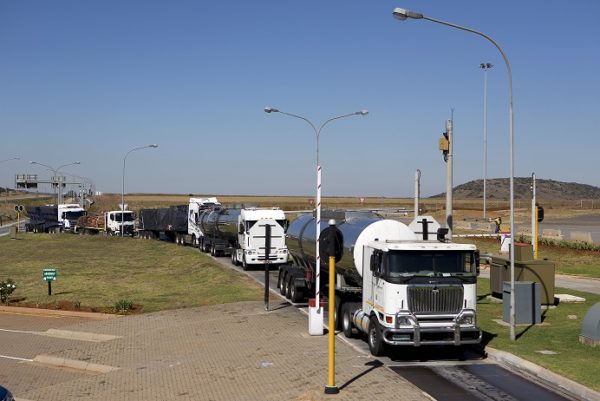
According to Ronny, the N3 carries in excess of 40 000 vehicles per day around Pietermaritzburg and consists of a mix of urban commuter traffic, long-distance traffic and very heavy vehicles. On some sections, the number of heavy vehicles can be over 25% of the daily total.

“In excess of 40 million tons of freight are carried on the N3 corridor per annum, with approximately 9 000 heavy vehicles using the national road per day. Durban is by far South Africa’s busiest port with over 80% of goods moving along this corridor by road,” said Ronny.

“Therefore, the need to consider the best economic solutions to ensure the seamless flow of freight is very important to this corridor.”

Ronny added that any blockage on the N3 causing its closure was tantamount to a national crisis.

A new road network for KZN

KwaZulu-Natal’s road network is undergoing major refurbishment and expansion, with the rewards being safer motoring, time-saving, improved business links, better-connected towns and cities, jobs creation, empowerment, poverty alleviation and unlocking land for new homes and businesses.

A new interchange at Kwabhoboza has been completed at a cost of R242 million and will improve the safety of pedestrians and motorists.

The newly-opened traffic control centre at Eteza will curb overloading on the N2 north, thereby extending the life of the pavement and improving safety.

The major upgrade to the iconic Mount Edgecombe interchange, at a cost of R1.1-billion, is fast nearing completion and should be finished within weeks.

The R950-million upgrade of National Route N2 between the Mtunzini Toll plaza and the Empangeni interchange is underway. This will see this 34km single carriageway upgraded to a four-lane dual carriageway freeway.

The elimination of curves at Umhlali River Bridge and Umvoti River Bridge on the N2 North will reduce accidents and improve road safety.

In order to fast track construction of a major interchange on the N3 at Hammarsdale between Durban and Pietermaritzburg, SANRAL entered into a partnership with eThekwini Municipality to share the R276-million cost of the project.

“The new N2 on the KwaZulu-Natal side will join with the N2 Wild Coast Highway currently under construction in the Eastern Cape. Once completed, the highway will be approximately 85km shorter than the current N2 alignment from Mthatha to Port Shepstone and will reduce travel time by about three hours,” said Ronny.

“There are scores of other projects in KwaZulu-Natal running into tens of millions of Rands involving periodic maintenance on various stretches of the province’s roads.”

Litter collection is a vital part of SANRAL’s routine road maintenance

Aside from being an eyesore and a pollutant, roadside rubbish can potentially cause collisions on highways.

SANRAL’s RRM programme is aimed at empowering small, micro and medium-sized enterprises. This also presents sustainability opportunities for small businesses, contractors and engineers to manage the RRM in their local areas.

To ensure South Africa’s roads and pavements around the country remain in good working condition, the South African National Roads Agency (SOC) Limited (SANRAL) has made routine road maintenance (RRM) a key focus since 1992.

Because roads deteriorate over time, RRM is essential for the preservation of road conditions through various contractors. This includes pavement, drainage, roadside maintenance, as well as the upkeep of traffic signs and other road furniture. Litter collection is an important part of RRM as the build-up of rubbish could indirectly cause vehicle crashes.

Public needs to play its part

“It is just astonishing what and how much people just throw out of their vehicle windows, with little regard on the impact it has,” said Mpati Makoa, SANRAL’s Environmental Manager.

On a regular basis, staff collect typical litter such as fast-food wrappers, boxes and soft drink bottles on national roads. There are times when the routine maintenance crews have been surprised at some of the strange items they pick up, including nappies, bottles of urine and animal carcasses.

“If you throw away a piece of litter each day, it can become a veritable mountain of rubbish by the end of the year. Millions of rand are spent just to clean up litter that many people have thoughtlessly tossed out on the streets and other public spaces,” said Makoa.

She said that it also poses a threat to public and ecosystem health, as it ends up in water systems, impacting aquatic habitats and clogging up culverts and bridges. This increases the frequency and cost of infrastructure maintenance.

Makoa said: “It is important to educate communities so that they understand that by throwing litter on the road they can indirectly cause crashes. People need to stop littering and report it when others do it.”

SMMEs keep our roads clean

Along the N12, for example, from the Northern Cape border to the Gauteng border in Potchefstroom, some 3 000m3 of rubbish was collected between January and June of 2017.

Gertrude Soko, SANRAL Project Manager for Operations and Maintenance, said: “Litter collection along the N12 is administered through three five-year contracts, benefiting 15 people employed by these contractors on a full-time basis.”

SANRAL’s RRM programme is aimed at empowering small, micro and medium-sized enterprises. This also presents sustainability opportunities for small businesses, contractors and engineers to manage the RRM in their local areas.

Although costly and time-consuming, cleaning up the national roads in the country has become a crucial part of what SANRAL does. Close to 10m3 of litter are collected per day; in some areas this is done on a monthly basis or every two months at the beginning of each month.

An emerging subcontractor is appointed for each section to conduct RRM, including litter collecting. The litter is disposed of at registered local municipal landfill sites along routes in each region.

SANRAL continues to put the environment first

Partnership with the Department of Environmental Affairs aims to further a green lifestyle among learners and their communities.

SANRAL was the first parastatal to receive a Green Star SA rating for its head office on Schoeman Street in Pretoria in 2012 by the Green Buildings Council of South Africa (GBCSA).

The South African National Roads Agency (SOC) Limited (SANRAL) and the Department of Environmental Affairs are working together on the department’s Green Schools programme.

The aim of the partnership is to create green jobs and environmental sustainability through collaborations between schools, recycling, buy-back centres and entrepreneurs in waste management.

Students empowered to implement change

Green Schools is an international initiative founded by the Foundation for Environmental Education (FEE). Their aim is to empower students to implement change through engagement in socially responsible learning.

The initiative operates in over 40 countries internationally, with over 1 000 South African schools currently registered to ensure environmental awareness and responsibility is taught at all levels in all cultures and locations.

The programme is curriculum-based and supported by the national Education Department. Regional green school coordinators ensure learners are taught environmental skills appropriate to their environment and community.

Projects initiated by Green Schools include: water-wise food gardens, the cleaning up of pollution, designing posters and the use of energy-saving measures such as solar cookers.

Creating a legacy for future generations

The inaugural South African Green Schools Programme (SAGSP) was launched on 25 April 2017 in Polokwane by the Deputy Minister of Environmental Affairs, Barbara Thomson, and Limpopo Economic Development, Environment and Tourism MEC Seaparo Sekoati.

The purpose of the initiative was to raise awareness about the issue of environmental degradation, which can be changed through “embracing sustainable measures of harvesting environmental resources to create a legacy future generations can inherit”.

The Deputy Minister prompted learners to become environmental ambassadors and said that caring for and protecting our environment has to start at a young age.

Frequently asked questions about the N2 Wild Coast Road Project

All you need to know about the N2WCR.

The new route is not a coastal route. Most of the route will run 10-15km inland, away from the coast, to avoid the most sensitive areas of the Pondoland centre of plant endemism.

Will there be toll gantries between East London and Mthatha?

No. All the upgrading done on the N2 between East London and Mthatha and along the R61 between Mthatha and Port St Johns since 2011 have been funded from SANRAL’s non-toll portfolio.

Will the greenfields portion proceed between Port St Johns and Port Edward?

Yes. The decision to proceed was taken by the Presidential Infrastructure Coordinating Commission in December 2015.

Are there any court cases against SANRAL regarding the N2WCR project?

SANRAL is supporting the Department of Environmental Affairs in one court case regarding the N2WCR. All the communities originally involved in this case have withdrawn, leaving only one remaining applicant – a member of a local anti-mining NGO.

Does the new route run along the coast?

The new route is not a coastal route. Most of the route will run 10-15km inland, away from the coast, to avoid the most sensitive areas of the Pondoland centre of plant endemism. The route only comes closer to the coast west of Port Edward so that it can link up with the current R61.

Are there any communities opposing the N2WCR project?

There is no community that opposes the N2WCR. However, there are some members of some of the communities living near the proposed Xolobeni sand dune mine who have raised objections.

Why do some families affected by land acquisition receive money and others don’t?

If any family loses some land used for the new road, but remain living on the remaining portion, they are compensated for the portion of land they lose. The amount is determined by a professional valuer, and is affected by the size and any improvements and crops that will be lost.

However, if a homestead must be entirely relocated, SANRAL obtains a new piece of ground nearby and rebuilds new, brick houses to the same size as the original plot and structures. Thus, these families receive new land and all their costs are covered and, therefore, do not receive any additional compensation over and above their new house and new land.

Due to legal and procedural requirements, there can be a substantial wait between contract signing and payment. This delay can unfortunately lead to rumours that payment will not occur or that money has been paid to the chief.

Does SANRAL pay people to move their family’s graves?

A grave does not constitute an improvement and SANRAL cannot pay families for their graves. However, SANRAL does cover all the costs involved for the exhumation and reburial in a new location to the satisfaction of the family. This includes all costs for permits, the undertaker, new graves, coffins and tombstones, as well as animals for slaughter, groceries and the travelling costs of family members to attend the traditional ceremony.

Easter Road Safety Campaign launched by Minister of Transport

Dr Nzimande tells traffic law enforcement officers they remain the “hope of the nation” over the holiday period.

Minister of Transport, Dr Bonginkosi Nzimande (in reflector jacket) and Deputy Minister Sindisiwe Chikunga (also in reflector jacket), at the launch.

The Easter Road Safety Campaign was launched by the Minister of Transport, Dr Bonginkosi Nzimande, with words of encouragement to law enforcement officers and an appeal to the public to take ownership of road safety.

Nzimande was joined at the launch, held in Heidelberg in Ekurhuleni on 20 March 2018, by deputy Minister of Transport Sindisiwe Chikunga and Road Traffic Management boss Makhosini Msibi.

Save lives and prevent accidents

The Minister of Transport said law enforcement officers remained the hope of the nation at periods like this.

“Your primary objective as traffic law enforcers is to save lives, prevent injuries and accidents, and facilitate the free flow of traffic,” Nzimande said. “It is a universally accepted fact that visible patrolling of freeways, streets and public places by uniformed officers in clearly-marked vehicles is the best method of preventing road traffic violations.”

The 2017 Easter Road Traffic Report indicated that many of those who died on

South African roads during this period were the victims of hit-and-run incidents or motorists who were driving at speeds that were too high.

The 2017 preliminary report showed a new pattern with crashes shifting from identified historical hotspots into new routes and built-up areas at times that had previously not had a high number of crashes.

An attack on an officer is an attack on the State

The Minister also told officers that the State and courts supported them, particularly against those who attacked them while fulfilling their duties.

“We have noted with deep concern the increasing number of unwarranted attacks on our traffic law enforcement officers,” Nzimande said.

“Too often there are reports of a traffic officer who has been run over by some rogue who refuses to obey the rules of the road. Our courts will deal harshly with the people who attack you when doing your work. An attack on law enforcement officers is an attack on the State.”

Nzimande urged law enforcement officers to avoid taking bribes and to implement the law without fear, favour or prejudice.

“Always remember that the embarrassment of being caught in corruption will not be borne by you alone. This embarrassment will extend to you families, children and the entire government.”

State investing in specialised skills

The Minister advised the officers on a new qualification being launched for their benefit.

“The government is prepared to continue to invest in improving your skills and development. We now have introduced a new qualification which will be equivalent to a National Diploma or National Qualification Framework level 6,” he said.

“We want you to be skilled in all competences of traffic law enforcement and we will be re-organising our training colleges to offer specialised training to equip you.”

Road users urged to plan Easter trips in advance

With high volumes of traffic expected on the N4 Toll Route this holiday weekend, motorists have been asked to prepare for their journeys accordingly.

TRAC’s 24-hour Helpdesk and TRACAssist will both be on full alert throughout the Easter holidays.

The N4 Toll Route will see thousands of holiday-makers and workers make the long trek from Gauteng to Mpumalanga and Mozambique this Easter weekend.

In anticipation of these high volumes, Trans African Concessions (TRAC) will once again boost its efforts to accommodate the increase in traffic and ensure the N4 highway, east of Tshwane, stays safe and congestion free.

Statistics indicate that the Easter weekend sees the biggest surge in volumes on the route, with traffic expected to be extremely high between 11:00 and 22:00 on Thursday, 29 March and on Monday, 2 April 2018.

Road Safety Awareness Campaign

The first stage of the TRAC N4 Easter Road Safety Awareness Campaign will be held at the Alzu Petroport on 29 March 2018, and will be implemented at other strategic locations along the 570km route.

At the Alzu Petroport, TRAC will interact with members of the public to generate road safety awareness, offer a well-deserved and proper rest stop, which will include free coffee and massages. They will also be informed of TRAC’s 24-hour Helpdesk and TRACAssist, both of which will be on full alert throughout the Easter holiday.

The second stage of the campaign will be held on 2 April 2018 and will see emergency services and TRACAssist stationed at strategic points along the route, from 10:00 to 22:00. These points include Bronkhorstspruit (Gauteng), Alzu (Highveld), Milly’s (Highveld/Lowveld), Kia Ora (Lowveld), Hectorspruit (Lowveld) and the Matola Weighbridge (Mozambique).

Each station will be the central dispatch centre for various sections of the N4 Toll Route, to reduce response times to roadside emergencies and incidents.

TRACAssist and the TRAC 24-hour Helpdesk will lead stage two of the campaign, with the latter being the communications’ hub. The TRAC Helpdesk will be the first to be alerted of incidents on the road and, therefore, plays a vital role in this project. Other participating emergency services include private and public ambulance services and paramedics, fire and rescue, provincial traffic, SAPS, pathology units and TRAC Accident Response.

Border post traffic assistance

TRAC will work hand-in-hand with the Lebombo Border Control Operational Coordinating Committee to assist with traffic management measures towards the border post.

This will be done through the distribution of traffic control flyers, and the provision of signage and other logistical requirements. The border will be open 24 hours a day from 28 March to 4 April 2018 to process the high volumes expected at the international crossing.

To avoid severe traffic congestion on the Mozambican portion of the N4, Stop/Go’s for the roadworks between Ressano Garcia and the Moamba Plaza will be removed from 30 March to 2 April 2018. However, the section between Shoprite in Matola and the Maputo Plaza, which is also under construction, is expected to be congested despite two lanes in each direction being kept open.

Elands Valley roadworks to continue

Unfortunately, TRAC will be unable to halt the roadworks in the Elands Valley section this Easter, as the project is at a vital stage. There will still be three Stop/Go’s in this section and road users are advised to use Schoemanskloof to enter and exit the Lowveld.

The safety and well-being of the N4 Toll Route’s road users is TRAC’s primary concern and all road users are urged to make full use of the road safety initiative. They can call the TRAC Helpdesk on 0800 87 22 64 in South Africa or +258 84 34 34 34 6 in Mozambique, for fast assistance and response to any problems.

SANRAL continues to support local SMMEs

More than 300 SMMEs graduate from SANRAL training programme in the Eastern Cape.

Sean Strydom, SANRAL Southern Region Project Manager (centre) and Lulama Jakavula, director and training specialist at Kwezi Skills Training congratulate some of the SMMEs who completed a training programme, from left Simphiwe Jama from Kangelani General Trading, Siphokazi Sikelwa of Fathuse Trading Pty Ltd and Bongile Dom of Bay Ngwane Trading (Pty) Ltd.

The South African National Roads Agency (SOC) Limited (SANRAL) has handed out certificates to 384 small, medium and micro-sized enterprises (SMMEs) after they completed a training programme that formed part of the R75 Port Elizabeth to Despatch interchange road rehabilitation project.

The two-week training course focussed on tendering, preparing construction documentation and business skills training.

The 384 women, youth and male-owned SMMEs whose CIDB levels are between 1CE and 4CE, received their certificates at a hand-over ceremony held at the Nangoza Jebe Hall in New Brighton on 15 March 2018.

SANRAL are committed to supporting local businesses close to projects. Sixty percent of the SMMEs are from the 10 wards adjacent to the R75, while the remaining 40% are from the greater Nelson Mandela Bay’s SMME Targeted Enterprises.

Sean Strydom, SANRAL Southern Region Project Manager, said: “Through proper consulting, a prequalification tender process was held to determine who should be selected for the training programme. The trainees were then chosen from that pool.

“The training was necessary to assist the SMMEs with the skills needed to complete tendering and construction documents. The SMMEs now have the knowledge to be able to compile competitive tenders for SANRAL projects.”

Of the SMMEs who graduated, 23 have already started working on the rehabilitation project. This includes erecting guardrails, picking up litter, building subsoil drains, erecting anti-climb fencing, building open-line concrete drains, erecting palisade fencing and building prefab culverts.

Accreditation certificates will “open doors”

Siphokazi Sikelwa of Fathuse Trading Pty Ltd started working on the six-month litter cleaning project in January.

“The training I received is important especially because it is an accredited training course. This will help me greatly with compliance. I do have other qualifications but these are not accredited,” Sikelwa said.

Bongile Dom of Bay Ngwane Trading (Pty) Ltd, who does not have a tender to work on the R75 project, also completed the two-week training course, and believes it will assist the growth of his company.

“This certificate means a lot to me as I only have a matric. I was appointed as a sub-contractor on other construction projects for another company before, and did kerbing and pre-mix. This is the first time I have received training on a project and I believe the certificate will open doors for my business,” Dom said.

Simphiwe Jama from Kangelani General Trading has also been involved with the litter cleaning project in January, employing 10 workers.

“I have a matric and now that I also have the national certificate I am motivated to study further. Because of the training I received, I know how to calculate and price tender documents, and have learned the importance of health and safety. These are important skills when you have your own business,” Jama said.

Maintenance contracts spurring black business

The SANRAL Southern Region awarded road maintenance contracts to 147 black-owned SMMEs during 2015/16. The region was responsible for the management of 18 routine contracts for the maintenance of 4 559km of road, constituting 23% of the SANRAL network.

Routine road maintenance spending for 2015/16 amounted to approximately R400-million.

More work on the R75 project will be rolled out during May 2018 and May 2019.

The implementation of road safety measures and rehabilitation of the National Route R75 Section 1, constitutes 13km and will create work for a minimum of 37 local SMMEs between 1CE PE and 6 CE PE CIDB grading within the Nelson Mandela Bay.

This two-year project should be completed in May 2019.

SANRAL to build pedestrian bridge over N2 near George

The new bridge will join communities and make a safe passage for learners going to school in George.

The N2 will need to be reduced to a single lane in each direction for short periods of time during construction.

The South African National Roads Agency (SOC) Limited (SANRAL) will soon begin construction of a pedestrian bridge over the N2 in George, east of Nelson Mandela Boulevard.

The bridge will provide a link between the communities of Thembalethu and Ballotsview and will facilitate the safe passage of pedestrians, particularly school children, who regularly cross the N2 at this point. The project will also include the construction of approximately 2km of pavements to tie in with the recently completed pedestrian facilities.

The construction of the bridge has been designed to ensure there is minimal disruption to traffic. However, the N2 will need to be reduced to a single lane in each direction for short periods of time during construction.

A temporary, surfaced bypass cross-over will be built in the median to divert traffic from one carriageway to the other during these periods, and two-way traffic will be maintained at all times. The cross-over will be indicated with temporary signage and flagmen will be deployed to control the traffic as the need arises.

Speed restriction signs will be applicable when approaching the construction area. Road users are encouraged to be cautious at all times and to adhere to the relevant speed limits when using the temporary cross-over.

The contractor is currently setting up the construction site and with work due to start at the end of March. The project is scheduled to be completed early in 2019.

Contact details for emergencies will be displayed on the signage in the construction area. SANRAL apologises for any inconvenience caused during construction.

SANRAL glitters at Scifest Africa

Learners from Eastern Cape schools exposed to the science of road building as a career path.

At this year’s SciFest about civil engineering, SANRAL’s exhibit explained the importance of building good roads, the different road signs and what line markings are. It also highlighted scholarship and bursary opportunities available to learners in primary and high schools.

The South African National Roads Agency (SOC) Limited (SANRAL) exhibition at Scifest Africa 2018 proved to be a hit with school children in Grahamstown this month.

Established by the Grahamstown Foundation in 1996, SciFest Africa is South Africa’s national science festival, promoting public awareness, understanding and appreciation of science, technology and innovation in South Africa. The festival celebrated its 22nd anniversary event from 7-13 March 2018 in Grahamstown.

At this year’s SciFest about civil engineering, SANRAL’s exhibit explained the importance of building good roads, the different road signs and what line markings are. It also highlighted scholarship and bursary opportunities available to learners in primary and high schools.

Michelle Ah Shene, SANRAL marketing and communications representative, said: “There has been an influx of learners enquiring about the scholarships and bursary programmes. The younger learners were also very excited about what makes line markers glitter and what civil engineering entails.”

Learners can apply for the SANRAL scholarship programme, which supports academically deserving applicants from grades 10 to 12. The minimum requirements are an overall average of 75% with subject choices that include maths, physical science and English. For further information on the bursary and scholarship programme visit www.nra.co.za

“Approximately 122 students at tertiary institutions are pursuing their academic goals with the support of SANRAL bursaries and about 196 high school learners have received scholarships,” Ah Shene concluded.

Learners inspired to help communities

Likhona Duba, an 11-year-old grade six learner at Sinako Lower High Primary School, had enjoyed the experiments and “really liked learning more about road signs and knowing the difference between permanent and temporary ones”.

For Paul Papiso, a teacher at Sinako Lower High Primary School, the road signs part of the SANRAL exhibition was important as road signs form part of the natural science and technology syllabus.

Aviwe Nzema, a 16-year-old from Khulani Commercial School in East London, would like to be a pilot or civil engineer someday: “I love doing things for my community and think building bridges and roads so that people will have quicker access to clinics or schools is a good way of helping the community.”

Sakhile Ndaba, an 18-year-old matric learner at Butterworth High School, said his first time visiting the SciFest had been important: “I believe what we learn at the SciFest will help us with our school work. I would like to be a civil engineer like my brother who inspires me.”

Aphiwe Nogqala, 18, also in matric at Butterworth High School, also wants to follow in his aunt’s footsteps who is a civil engineer based in Cape Town: “There will always be a need to build roads to make trips shorter between towns and cities. Building better and safer roads can reduce road accidents.”

Communities to play major roles on projects

SANRAL has been engaging locals in road construction improvements in their areas.

Through its draft transformation policy, SANRAL intends to allocate tenders to black-owned and women-owned enterprises beyond the current legal thresholds.

The transformation of the construction industry and job creation for local communities on road construction projects were discussed at a meeting convened by SANRAL in Mpumalanga in early March.

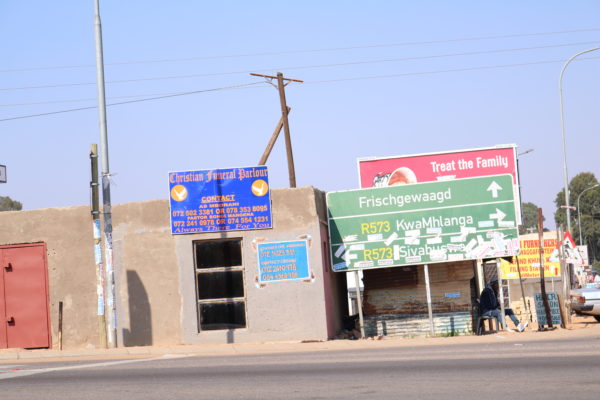
The session, attended by more than 150 members from small business owners, entrepreneurs and community leaders was held in KwaMhlanga, located next to Moloto Road (R573), which is currently being upgraded to improve road safety and mobility in the area.

Ismail Essa, the Transformation Manager of SANRAL, said: “We are using this event to update smaller contractors and local communities on how they can participate in road construction contracts – not only on the Moloto project but also on future SANRAL activities.”

Horizon 2030

The South African National Roads Agency (SOC) Limited (SANRAL) has embarked on a countrywide roadshow to explain its new long-term strategy – Horizon 2030 – and its draft transformation policy introduced in November 2017.

Since then it has hosted some 40 sessions in all nine provinces and informed communities about opportunities that will open up for joint ventures with small and medium enterprises.

The Moloto road is a national priority that has been fast-tracked by SANRAL to address safety issues on a corridor that carries 50 000 daily commuters and passes through 33 communities in Gauteng, Mpumalanga and Limpopo.

Essa said: “Our approach to job creation and the participation of small business in major projects is a good example of how SANRAL wants to transform the construction and engineering sectors.

“Our objectives are to empower small businesses, allocate a growing portion of major projects to emerging contractors and transfer skills and experience so that these contractors will, in future, be able to become major players in their own right.”

Through its draft transformation policy, SANRAL intends to allocate tenders to black-owned and women-owned enterprises beyond the current legal thresholds.

“We play a pivotal role in the engineering and construction sectors, and we want to use this leverage to maximise the participation of contractors owned by women, the youth and the disabled,” said Essa.

Current construction work

The current phase of the construction work in Mpumalanga involves the upgrading of four intersections at a tender amount of R106-million.

The work is shared as a joint venture between a major contractor with a Grade 9 recognition from the Construction Industry Development Board (80%) and joint venture partners with CIDB gradings 5-7.

Twenty percent of the work is allocated to small and medium enterprises and, within this target, 20% must to go towards both women-owned and youth-owned businesses. For future phases of construction, the allocation to SMMEs will be raised above 30%.

Essa added that the Moloto Road project also contributes towards job creation in communities that live in the vicinity of the construction.

SANRAL has created a database of people seeking employment opportunities where workers are selected through a raffle system. Some 160 people from all 32 wards in the Thembisile Hani Local Municipality have been selected and 79 recruited to date. Similar processes will be used during the next phases of the 139km project in Mpumalanga, Limpopo and Gauteng.

Another element of SANRAL’s transformation policy is to ensure skills training and the transfer of knowledge and experience to contractors and labourers. The joint venture partners will benefit from on-the-job experience and training and learnerships are provided to subcontractors and local SMMEs.

All of the work done for the duration of the five-year construction period will make use of labour-enhanced construction methods designed to utilise members of local communities and ensure they acquire new skills.