
Blog

SANRAL system combating crime and saving lives

The operators at the TMC are responsible for visual surveillance of the freeway network to detect incidents and manage traffic flows.   

The cameras used form part of SANRAL’s Freeway Management System (FMS) used to manage traffic flow and incidents on strategic national roads.

Cutting-edge technology managed by the South African National Roads Agency (SOC) Limited (SANRAL), combined with the quick action of law enforcement officers led to the swift apprehension of hijackers near Alexandra. 

The hijackers were spotted on cameras operated by the SANRAL Traffic Management Centre (TMC) and arrested by police officials within 13 minutes after the hijacking occurred near the London Road exit on the N3. 

The cameras used form part of SANRAL’s Freeway Management System (FMS) used to manage traffic flow and incidents on strategic national roads. 

According to SANRAL spokesperson Vusi Mona, one of the supervisors on duty at the TMC alerted the Joburg Metro Police officials – also stationed at the centre  of suspicious activity next to the road. 

This was picked up from the closed-circuit television cameras used to monitor major roads in Gauteng, KwaZulu-Natal and the Western Cape. 

Realtime surveillance  

The operators at the TMC are responsible for visual surveillance of the freeway network to detect incidents and manage traffic flows.  

When incidents occur, response vehicles are dispatched and the public is informed through Variable Message Signs (VMS) located along the freeways, on Twitter and the i-Traffic website.  

In Gauteng, SANRAL has its own fleet of On-Road-Service vehicles that assist with securing, clearing and re-instatement of traffic on the Gauteng e-roads. 

All this happens in real time. 

In the Alexandra hijacking, the JMPD alerted its freeway unit, which apprehended the perpetrators. 

“The close-circuit cameras are vital to our efforts to improve the safety and comfort of commuters who travel on the SANRAL network,” said Mona.  

“One of the benefits of the Freeway Management system is that it introduced a comprehensive monitoring system that can detect crashes, stationary vehicles, veld fires and hijackings. 

“This incident again demonstrated the value that a well-managed road network brings to road users and to the social economy of the country,” he said. 

Recently the SANRAL ITS received a prestigious engineering award for its ability to optimise traffic flow, improve road safety and enhance traffic management on the road network.  

This is a groundbreaking intervention and has since influenced several engineering disciplines to develop advanced transportation solutions for the country. 

Mona said SANRAL is proud to have partnered with local law enforcement authorities, provincial governments and various agencies from the Department of Transport to make this work. 

The SANRAL TMC operates 24-hours a day, seven days a week, 365 days a year to keep road users safe Mona encourages the public to visit the i-Traffic website at www.i-traffic.co.za for more information and to get all the latest updates. 

Major upgrade between Matola and Maputo complete

TRAC prides itself on offering quality road infrastructure and therefore continuously works on improving and maintaining its route.   

Several bridges were widened, and barrier walls, drains and walkways were built.

Trans African Concessions (TRAC) is delighted to announce that the major upgrade of the EN4, between Matola and Maputo (Sections 19 and 20) in Mozambique, has been completed. 

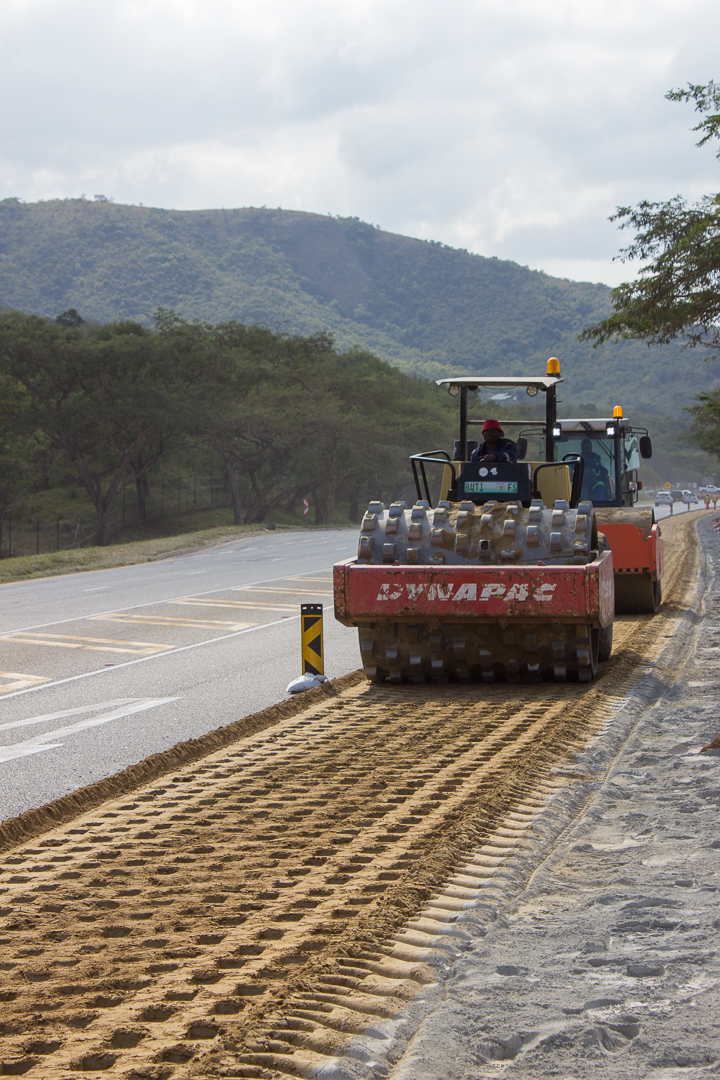
The road between the two densely-populated urban areas has been upgraded to a six-lane carriageway and the existing paving was rehabilitated.  

In addition, several bridges were widened, and barrier walls, drains and walkways were built. 

Some auxiliary works, such as pedestrian walkways and a few drainage elements, are still incomplete and are expected to be finalised in July 2019.  

However, this is unlikely to frustrate motorists. The possibility of constructing an elevated median between the two carriageways from the Shoprite Intersection to the Maputo Plaza in a separate contract is being considered and discussed with the authorities. 

As is always expected with projects of this magnitude, traffic disruptions were experienced during the construction phase.   

TRAC thanks road users for their patience and understanding. 

TRAC prides itself on offering quality road infrastructure and therefore continuously works on improving and maintaining our route.  

We value our road users and take our commitment to maintaining the N4 Toll Route on par with world standards seriously, for their benefit and safety. 

Taking SANRAL to Upington

The agency is committed to creating economic opportunities for small black businesses to grow and prosper. 

Officials at the stakeholder engagement in Upington.

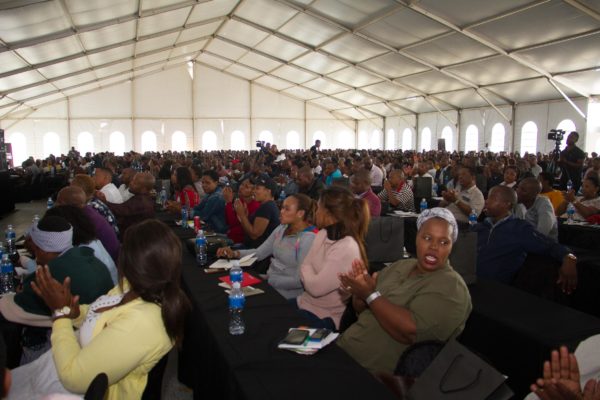
The South African National Roads Agency (SOC) Limited (SANRAL) held a stakeholder engagement session in Upington, attended by local subcontractors in the road construction industry, local labour, emerging SMMEs, provincial and local government, and members of the Upington business community. 

The session was opened by the recently elected Mayor of David Kruiper Municipality, Councillor Michael Segede, who lauded SANRAL’s contribution to the development of the regional economy through its various road construction ventures across the Northern Cape. 

Key to this engagement was identifying emerging SMMEs in the road construction industry that need training and capacity building to ensure they are familiar with the procurement requirements when doing business with the state, and to understand their developmental needs.  

Economic opportunities 

SANRAL is committed to creating economic opportunities for small black businesses to grow and prosper, and recognises that for this to materialise they need to be supported from the very beginning with the necessary training that will enable them to tender competitively, realistically and profitably. 

Randall Cable, SANRAL Western Region Manager, said: “This engagement today is the start of a process of unlocking value in this community. Opportunities for small businesses should not just be limited to construction work. Where products can be supplied, those suppliers should be sourced from the local pool.  

“Where support services, ie catering, facilities, etc, are needed, local businesses should have the first opportunity to benefit from these contracts. I am pleased the new Mayor, Cllr Segede is on the same page with us and committed to improving cooperative governance so that together we can enable communities to carve a pathway out of poverty.” 

As the engagement was held during youth month, a part of the programme was also dedicated to promoting SANRAL’s bursary and scholarship programme, which benefits deserving young people who excel at Maths and Science, but for whom financial challenges could be an obstacle to succeeding academically.  

“We don’t attract enough applications from this area, and we are appealing to the municipality to use their local communication platforms to spread the word and encourage teachers, parents and learners to take advantage of this lifeline,” continued Cable. 

Job creation and skills development 

SANRAL’s conventional road construction projects across the Northern Cape are all reaching completion, and while there are ongoing Routine Route Maintenance contracts in place, which support the local economy with job creation and skills development, a concerted effort is being made to speed up the process of rolling out large construction tenders, which would create a massive cash injection into the regional and local economy. 

Cable said: “Guided by SANRAL’s Transformation Policy we are committed to working with all stakeholders in the road construction arena, as we recognise the critical role that SANRAL plays in the economic development of our country at large. Going forward, all SANRAL projects will be facilitated through an inclusive and consultative process, using Project Liaison Committees (PLCs) that are being set up locally in the targeted project areas with all relevant stakeholders.   

“We look forward to rolling out new projects across the Northern Cape in the future and want to ensure that the way is paved for local labour and SMMEs to seize the opportunities that road construction projects can bring to the marginalised communities along the route,” concluded Cable. 

Karino Interchange to improve traffic flow

Apart from improved traffic flow, local communities will further benefit from the initiative through job creation.   

According to TRAC CEO Graham Esterhuysen, the project is in line with the company’s commitment to communities along the N4 Toll Route.  

In line with their commitment to offer road users world-class road infrastructure, Trans African Concessions (TRAC) is delighted to announce the construction of the Karino Interchange in Mbombela, Mpumalanga.  

The R390-million project commenced in June and will see the existing intersection transformed into a grade separated interchange. 

This section of the N4 Toll Route has become synonymous with daily peak-hour traffic delays at the KMIA/Plaston Road/N4 intersection, following a notable growth of residential areas such as Kanyamazane and Karino.  

Improve traffic flow 

The interchange will improve traffic flow onto and off the N4 Toll Route. It will also enhance safety as it will eliminate the need for pointsmen who currently manage the morning and afternoon traffic. 

Raubex Construction has been appointed as the project’s main contractor.  

Roadworks will spread over 4km with the project expected to take just over two years to complete.  

Traffic deviations of onelane free flow will be implemented throughout construction, which may result in slower moving traffic. 

Locals benefit 

According to TRAC CEO Graham Esterhuysen, the project is in line with the company’s commitment to communities along the N4 Toll Route.  

Apart from improved traffic flow, local communities will further benefit from the initiative through job creation.  

“Local contractors will be appointed to assist the main contractor. The process is already in motion, with the contractor following SANRAL’s 14-point plan for road construction projects,” explained Esterhuysen.  

This plan focuses on improved liaison with local communities and structures which in turn ensures inclusivity in the allocation of project-related work to locals. 

TRAC is excited about this project and urges road users to be patient and cautious during the construction phase and to obey all road construction signage when travelling through the area. 

Opportunities to build our country

Skills development, research and knowledge accumulation must be a national priority if we want to maximise on the opportunities presented by the fourth industrial revolution. 

Lungile Madlala, a member of SANRAL’s Board of Directors, said SANRAL recognises the value that leading-edge research brings to the design, construction and management of South Africa’s primary road network.

The South African National Roads Agency (SOC) Limited (SANRAL) prides its self on its world-class national road network.  

For SANRAL to continue to be ranked among the best in an increasingly competitive global environment depends primarily on the quality of our education system.  

Youth Month 2019 presents us with a unique opportunity to reflect on what SANRAL’s youth investment has been in the past.  

Skills development, research and knowledge accumulation must be a national priority if we want to maximise on the opportunities presented by the fourth industrial revolution.  

In recent years, our focus has shifted towards the production of skilled human resources who are able to play a leading role in the creation of knowledge that can be used to benefit the broader society.  

The government continues to make strides in ensuring that tertiary education is more accessible to students who were excluded in the past. SANRAL has invested immensely in the youth over the years.  

In the past year, the agency has awarded scholarships worth more than R4-million to high school learners, enabling and encouraging them to take mathematics, science and English as senior subjects.  

SANRAL recognises the value that leading-edge research brings to the design, construction and management of South Africa’s primary road network.  

As a country we will not be able to attain the growth objectives set out in the National Development Plan 2030 without a well-planned and -maintained road infrastructure network.  

It is important we encourage and inspire the next generation to follow careers in technical fields such as engineering and construction.  

We must create opportunities throughout the entire education value chain, from primary school to advanced research and development. 

Universities of technology and colleges for technical and vocational education and training (TVET) play a critical role in preparing young people for careers in sought-after trades.  

We have taken a conscious decision to focus on these institutions. Importantly, SANRAL has recognised the need to bridge the gap between the academic training offered at universities and colleges and the demands of professional careers in the construction and engineering sectors.  

SANRAL has awarded bursaries to students to study engineering, construction and the built environment. Internships are made available to students on many of the major road construction projects currently under way across the country.  

The establishment of the Technical Excellence Academy (TEA) in Port Elizabeth was an imaginative move by SANRAL to address a critical area of skills development in our country.  

At the TEA, engineering graduates now receive the practical experience they require to obtain professional registration as engineers.  

The programme serves as a valuable bridge between the academic training of engineers and their professional careers through on-the-job training and access to SANRAL’s specialised software and laboratory facilities.  

This is a long-term investment in the next generation of engineers and artisans who will have to plan and manage the country’s physical infrastructure in the decades to come.  

It fits in well with SANRAL’s other research and academic pursuits – through its partnerships with universities in the fields of pavement engineering, construction, road safety and smart mobility.  

Together these innovation hubs contribute to the growth of a dynamic engineering sector with world-class expertise in road design, construction and transport management.  

SANRAL’s investment in education and research is a prime example of what can be achieved by both state-owned entities and the private sector committed to the creation of a prosperous and growing South Africa.  

My hope is that Youth Month 2019 will inspire many young South Africans to grab the opportunities opening and make valuable contributions to building the country of the future.  

This is an opinion piece by Lungile Madlala, a member of SANRAL’s Board of Directors. 

Taking SANRAL to Nkomazi

This initiative addresses matters of concern raised by local business and the municipality, in addition to educating about the opportunities available. 

From left to right: Nontobeko Mathenjwa(SANRAL), Madoda Mthembu(SANRAL), MMC C.N Hlophe, MEC Petrus Ngomane, Emmau Zodwa Ngcane, Solomon Mahlalela, Melba Geca (SANRAL).

Small businesses in Nkomazi are set to benefit from upcoming road construction projects. 

The South African National Roads Agency (SOC) Limited (SANRAL), accompanied by the Honourable Petrus Ngomanethe newly appointed MEC for Finance, Economic Development and Tourism in Mpumalanga, and Nkomazi Local Municipality Mayor Cllr Johan Mkhatshwa, embarked on a drive to inform stakeholders about the opportunities that exist in the road construction industry. 

Transformation and projects 

SANRALs transformation policy opens opportunities in the road construction industry. 

Small, Medium and Micro-sized Enterprises (SMMEs) in Nkomazi will benefit from SANRAL’s upcoming road upgrade and routine road maintenance projects, said Madoda Mthembu, SANRAL’s Operations and Maintenance Manager.  

One such project is the improvement of the R581 from the R570 intersection near One Tree Hill to Tonga.  

The project is still in the design phase, with construction set to begin in 2021.  

It will entail the addition of passing or climbing lanes, earth and layer works, safety improvements, drainage and structural improvements.  

Local businesses can also look forward to 176km of upcoming routine road maintenance projects, which will include among others, general maintenance of the road reserve, grass cutting, storm water drainage, fencing and road signs. 

Taking SANRAL to Nkomazi 

Attended by local municipality officials and business people, the “Taking SANRAL to Nkomazi” initiative took place on 14 June with the aim of addressing matters of concern raised by local business and the municipality, in addition to educating those in attendance about the opportunities available to them.  

“It is our objective to involve the communities in the immediate vicinity of our projects, especially on our routine road maintenance and community development work packages.  

“Previously, smaller contractors had to face many barriers to entry, but, now, SANRAL’s corporate strategy and transformation policy empowers us, as an agency that plays a major role in the construction industry, to develop emerging contractors,” Mthembu added. 

Central to the discussion was the economic impact of roads on Mpumalanga’s economy. “Our people must benefit from SANRAL’s work. All three spheres of government must work together. We want to develop Nkomazi and place factories and manufacturing companies near the border, benefiting the people of Mpumalanga. Good roads are important for this to be achieved,” MEC Ngomane said.  

“South Africa has a well-maintained road network. Today we can drive from Malelane to Pretoria without having to go through Nelspruit, all thanks to SANRAL. As we plan to grow our economy, we will need more roads. Let us begin by taking care of our current roads. SANRAL, you are a part of us. My hope is that our partnership will be fruitful and will continue to grow.” 

Mayor Mkhatshwa, added: “We are pleased with SANRAL’s presence here today. We trust there will be economic improvement. Our people didn’t know where to go to access SANRAL business and employment opportunities.  

“We, as a province, are strategically located between two countries and this should mean opportunity for our people. We need this to become more than just strategic placement. We want to see things happening.” 

SMME DEVELOPMENT 

Mthembu said SANRAL is committed to providing opportunities for small contractors that have limited experience.  

This is done through various community development projects. 

“Local SMMEs are able to build and maintain these roads for their local municipality. This will help them gain experience and improve their CIDB grading and skills levels, said Mthembu. 

As per government policy for SMME development, main contractors are required to subcontract 30% of the contract value to SMMEs of CIDB grading 1-6.  

In some cases, main contractors enter into joint ventures, with a 70/30 split between a 9CE main contractor as the lead partner and lower-grading contractors (5CE, 6CE or 7CE) as the joint venture targeted partners. 

Driven by this commitment, SANRAL has visited all provinces in South Africa with the aim of engaging communities and interested organisations in its transformation strategy, which commits to give suitably qualified emerging enterprises an opportunity to perform some of the work awarded to main contractors. 

“As much as we would all like to see transformation take place quickly, local business must understand that we cannot do this outside of the prescripts of the law. We are guided by the Public Finance Management Act, which binds us to doing business fairly,” Mthembu concluded. 

Off-peak closure of the Huguenot Tunnel

The timing for the upgrades is scheduled for September, October and November 2019. 

During specific upgrades to the ventilation system, the tunnel will be completely closed to all heavy vehicles, for five days in each direction, 10 days in total. These dates will be confirmed closer to the time. 

Following extensive research and planning, the South African National Roads Agency (SOC) Limited (SANRAL) has put together an operations plan for the much-needed upgrades to the Huguenot Tunnel.  

After 31 years of continuous and safe operation, the electrical and mechanical systems have neared the end of their operational life spans and need replacement to ensure compliance to international safety standards. 

At an engagement session held in Worcester, SANRAL’s regional leadership presented the operational requirements and time schedule of the upgrades to stakeholders from local and provincial government, the road freight industry, agricultural sector and local business community. 

“In considering the travel patterns of road users, peak traffic times, the economic impact of a full-scale closure and detour routes, we have decided that commencing in September 2019, the tunnel would be closed to traffic from 10pm to 6am, Monday to Thursday. This means that the tunnel will be fully open from Friday to Sunday for all road users,” said Randall Cable, SANRAL Western Region Manager. 

Holiday traffic considered 

The timing for the upgrades is scheduled for September, October and November 2019. Work will then be suspended during December and early January, to accommodate the increased volumes of holiday traffic that make use of the Huguenot Tunnel.  

Once the schools re-open in January work will resume and the off-peak closure will come into effect again. 

During specific upgrades to the ventilation system, the tunnel will be completely closed to all heavy vehicles, for five days in each direction, 10 days in total. These dates will be confirmed closer to the time. 

Cable said: “We are particularly mindful of the effects the off-peak closure may have on the long-distance freight community and the agricultural sector, where farmers may be transporting goods to Cape Town for export purposes, under nighttime conditions in line with harvesting times.  

“Where transport schedules can be amended to ensure heavy vehicles pass through the tunnel before 10pm, we strongly advise this. However, where this is not possible, one of the various alternative routes should be taken. We are exploring further engagement with the agricultural sector in this regard.” 

Alternative routes 

Alternative routes include PaarlDuToit’s Kloof PassWorcester (±62km), PaarlGouda-TulbaghWorcester (±121km) or Wellington-Tulbagh-Ceres (± 74km.) Depending on origin and destination, the N2 Grabouw to Villiersdorp (41km) is also an option. 

“Where unforeseen changes to the schedule are necessitated, we will communicate these as soon as possible to ensure road users are fully informed of the work being carried out and the effects this may have on traffic flow,” concluded Cable. 

Real-time and accurate Huguenot Tunnel closure information will be made available on www.i-traffic.co.za and the SANRAL website www.nra.co.za to allow road users to plan their journeys accordingly.  

Various other social media platforms will also be used to convey real-time and accurate information to all stakeholders. 

While SANRAL apologises for the inconvenience these upgrades may cause, the safety of every road user passing through the Huguenot Tunnel, is our prime objective. 

SANRAL and SAWIC engage on opening the construction industry to women

Deliberations were around key challenges faced by women in construction and related industries and how SANRAL and its empowerment partners could further assist to advance their interests. 

SAWIC members (in black and green) with SANRAL empowerment partners (seated from L-R) Maxwell Bukashe (Purple Sunshine), Mark Revees (Pilot CrushTec), Tom Swartz (Bell Equipment), Phumeza Kate (SAWIC EC Chair), Kile Mteto (SAWIC President), Thabile Dube (Barloworld Equipment), Dumisane Mtsweni (Barloworld Equipment) and Pamela Bukashe (Purple Sunshine).

The South African National Roads Agency (SOC) Limited (SANRAL) held a round table engagement with South African Women in Construction (SAWIC) to deliberate on how the roads agency can further advance interests of women in the construction industry. 

Held at the SANRAL regional office in Baywest, Port Elizabeth, the engagement was attended by SAWIC president Kile Mteto, SAWIC Eastern Cape Chapter chairperson Phumeza Kate and a group of SAWIC members who recently completed a training programme with SANRAL. 

The group of 40 SAWIC women, who received their certificates during the session, undertook a two-week Accredited Training Programme in Construction Management organised by SANRAL Southern Region SMME Unit Coordinator Vanda Nqunqa to empower them to better manage their construction businesses.  

“The training programme came after we identified common challenges faced by SMMEs on SANRAL projects,” said Nqunqa. 

A mutually beneficial relationship 

SANRAL’s Stakeholder Relations Coordinator for the Southern Region, Welekazi Ndika, said this was the first step towards a long and mutually beneficial relationship.  

She outlined construction projects to be undertaken by SANRAL in the province in the next three financial years in which women-owned businesses could look forward to participating. 

Ndika outlined the roads agency’s transformation policy, which aims to ensure participation of marginalised groups in opportunities created by SANRAL. 

“It is very critical that SANRAL’s procurement and supply chain policies be transformation friendly to ensure that our transformation objectives are fulfilled. Our focus should no longer be only on the 30% subcontracting to SMMEs. We should push for 51% black ownership in joint ventures on our projects to ensure tangible growth and transformation,” urged Ndika. 

Empowerment partners speak 

SANRAL’s empowerment partners – Bell Equipment, Barloworld Equipment, Pilot Crushtec and Purple Sunshine  were in attendance to outline the services the group can benefit from, as well as their partnership with SANRAL that allows emerging contractors access to plant equipment and mentorship. 

Pamela Bukashe of tar manufacturing company Purple Sunshine said: “98% of Eastern Cape roads are gravel, so you are in the right space.” 

She shared insights on the use of polymer in construction and advised members to consider participating in this area of the industry as it was not yet congested. 

SANRAL’s Community Development Specialist, Dr Mongezi Noah urged SAWIC members to not only focus on SANRAL’s construction projects.  

“You are not limited to participating in SANRAL’s capital projects. Our transformation policy applies to all our sub-sectors, which are maintenance, operations, ICT, legal, non-core services, finance and audit, human capital, property and marketing, and communications,” said Noah, urging the members to broaden their participation in opportunities in sub-sectors of SANRAL. 

SAWIC President Kile Mteto appreciated the support provided to the Eastern Cape Chapter by SANRAL Southern Region. 

Mteto said: “What is SANRAL going to do to ensure that the investment made through this training yields results? We would appreciate SANRAL ringfencing a budget to place the persons trained into an incubator system in order to see real growth in the next few years.  

“The training should be intentional and done consciously in order to yield results. My proposal is that SANRAL should apply to National Treasury to enable ringfencing of work for targeted enterprises, particularly women in the sector.” 

Mteto advised the certificate recipients that “having knowledge is one thing, but applying the knowledge is where the empowerment is. 

“Thank you SANRAL leadership and management for your continued support. Our members should never take opportunities of this nature lightly. I want to plead with SANRAL in the Eastern Cape to encourage their counterparts in other regions to follow in their path and assist SAWIC chapters in other provinces,” she concluded. 

Deliberations were around key challenges faced by women in construction and related industries and how SANRAL and its empowerment partners could further assist to advance their interests. 

Ndika said that although the task that lies ahead is a mammoth one, some ground is already being covered to ensure that tangible results can soon be realised in the advancement of interests of women in the sector.   

Cashless parking now part of your SANRAL Mobility Account

The new updates will make it possible for e-toll registered road users to take advantage of cashless parking, manage their toll accounts and enjoy additional features.  

ETC has partnered with KaChing, a cashless and ticketless parking system providing road users with an easy-to-use parking service.  

The South African National Roads Agency (SOC) Limited’s (SANRAL) mobile application has received a major design overhaul to improve the user experience and enhance its functionality.  

The new updates will make it possible for e-toll registered road users to take advantage of cashless parking, conveniently manage their toll accounts and enjoy additional features such as viewing frequent user discounts and tracking monthly spend. 

Coenie Vermaak, CEO of Electronic Toll Collection (ETC), the company responsible for managing the Gauteng e-tolling system on behalf of SANRAL, said: “The evolution of the SANRAL mobility app is a part of ETC’s and SANRAL’s continued strategy to deliver hassle-free road and travel services to registered road users across the country.  

“While this app currently supports features mostly related to our e-toll system and conventional plaza accounts, the future vision is to develop this platform to deliver other convenient mobility services to enhance mobility across South Africa with road users opting into their desired service.” 

Easy to use cashless parking 

ETC has partnered with KaChing, a cashless and ticketless parking system providing road users with an easy-to-use parking service.  

There are plans in the pipeline to partner with other parking providers to extend this service offering.  

The new parking feature, which is an optin service on the app, enables users to park at 34 different KaChingoperated parking lots without the need for a paper ticket or cash. 

Through license plate recognition technology, parking garage booms will automatically open for people using the SANRAL Mobility app, with payment being linked to the registered user’s account.  

The cashless parking service is an opt-in service, accessible through the services tab on the app. 

Touch of a button e-toll account management 

Through the SANRAL Mobility app, registered users can view and settle their accounts easily and conveniently from the palm of their hands.  

Users can view their account balances, top up their mobility account/s, view and download account statements and invoices, view their transaction details (which can also be downloaded and shared) and log an enquiry or contact SANRAL’s customer services department.  

This new release also includes in-app notifications, driven by SANRAL’s efforts to enhance road safety. 

“The e-toll features on this app not only save users time but will also give them sight of the frequent user discounts that have been earned and ultimately put extra cents in their pockets,” said Vermaak. 

The app, developed by ETC, is available for both Android and iOS devices 

Biometrically enabled, the app enables users to log in quicker and more securely through fingerprint and facial recognition technology on supported devices. 

Exciting future updates in pipeline 

A future release will enable users to register a mobility account from the app, meaning users will be able to complete the full mobility registration process on the platform.  

ETC is also working on several additional, exciting features including a route planner and i-Traffic integration, a realtime traffic information system run by SANRAL.  

Later this year, users will be able to order e-tags through the app and have them couriered to either a home or work address, as well as add or remove vehicles from their account. 

Gamification features, loyalty programmes and ride-sharing schemes are also planned. 

“All future updates and additions to the SANRAL Mobility App will progress our vision to provide a smart transport solution that promotes seamless mobility for users,” concluded Vermaak. 

The app can now be downloaded from either the Google Play store or from the Apple App store. 

SANRAL manager earns award for “first-of-its-kind programme”

All infrastructure development projects require a professional team of engineers to determine the scope for design, standards for construction and effective project delivery. 

SAICE Transportation Engineering Division chairperson, Jarendra Reddy and Alex van Niekerk: SANRAL Toll and Transport Project Manager.

To ensure effective infrastructure delivery, serious consideration must be given to simplifying the process of appointing professional teams that oversee projects. 

This is the view of Alex van Niekerk, senior project manager at SANRAL, who has been awarded the prestigious Chairman’s Award from the South African Institution for Civil Engineering (SAICE) – Transportation Division. 

The SAICE Transportation Division is a professional home for transportation engineers, technicians and technologists. Its objective is to advance the study, knowledge and application of transportation engineering. 

A specialist in his field 

Handing over the award at a function in Midrand, SAICE Transportation Engineering Division chairperson Jarenda Reddy said: “Alex has invested in himself to be a specialist in his field, gaining him international recognitionallowing him to contribute to the betterment of transport within an African and global context. This, in combination with his focus and resolve in delivering a contentious, firstofitskind programme – in the opinion of the committee – earns Alex the 2019 Chairman’s Award.” 

Van Niekerk said a major challenge faced by government departments and agencies is the effective procurement of service providers.  

All infrastructure development projects, as a minimum, require a professional team of engineers to determine the scope for design, standards for construction and effective project delivery. 

When this is resolved, meaningful service delivery and effective implementation of large infrastructure projects essential for economic growth and job creation can happen, said Van Niekerk. 

He said: “Anyone entering the debate about road infrastructure funding must do so with the best long-term interest of the public at heart, to not only criticise, but also provide workable solutions.” 

He has learned that roadfunding mechanisms  toll or fuel levy – “stir emotions and are politicised all over the world”. 

“Regardless of challenges such as these, the engineering profession remains one that stirs the intellect and heartsI am grateful for the many opportunities SANRAL has afforded me throughout my career,” concluded Van Niekerk.