
Blog

Huguenot Tunnel upgrades underway

While it may appear to the average traveler that nothing has changed, much of the current work is done behind the scenes. 
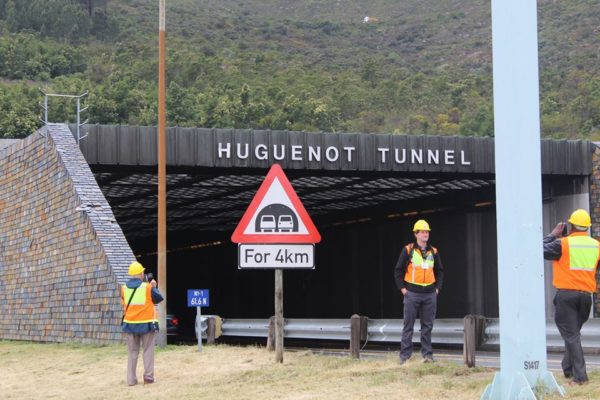
The work has already begun, but in the interest of minimal inconvenience to the road user work that is able to be completed under live traffic conditions has been prioritised. 

The South African National Roads Agency (SOC) Limited (SANRAL) met with stakeholders earlier this year to present the operational requirements and time schedule of the Huguenot Tunnel upgrades and how this would impact the road user. 

After 31 years of continuous and safe operation, the electrical and mechanical systems have neared their end of life limits and need replacement to ensure compliance to international safety standards. 

The work has already begun, but in the interest of minimal inconvenience to the road user work that is able to be completed under live traffic conditions has been prioritised. 

The following work has already been completed: 

  • 11Kv line replacement between the tunnel and Main Control Centre (MCC); 
  • Installation of back-up generator at MCC; 
  • North-bore water main replacement; 
  • Replacement of MCC fire detection and suppression system. 

“This bodes well for our overall progress and we are committed to doing as much of the work as possible under live traffic conditions. In this way, the impact to the road user is little to none,” said Randall Cable, SANRAL Western Region Manager. 

The team is currently busy with the following processes, some of which are nearly complete: 

  • South-bore water main replacement; 
  • MCC water main replacement; 
  • MCC building redecoration and upgrade of ablution facilities; 
  • Replacement of VMS signs on the approaches and in the tunnel; 
  • Replacement of all electronic signage in the tunnel; 
  • Installation of Tetra Emergency radio system in the tunnel. 

The old Du Toit’s Kloof Pass, the R101, which will act as the primary alternate route during the weekday and nighttime Huguenot Tunnel closures will also receive a facelift with the installation of additional road signs to better indicate passing opportunities as well as LED road studs along the entire centre line of the pass.  

This work will commence shortly and will be completed before the end of the year to aid nighttime travellers using the pass.

While it may appear to the average traveller that nothing has changed, much of the current work is done behind the scenes. As soon as current operations are complete, the next stage will include the following, some of which will have to occur during the planned closure: 

  • Replacement of tunnel FM radio re-broadcast system; 
  • Upgrade of tunnel PA system; 
  • 6.6/ 11 kV Switchgear upgrade/replacement; 
  • Replacement of tunnel fire detection system. While this will be started under live traffic conditions, some of it will only be completed during the scheduled closure. 

Originally, the off-peak maintenance closures were scheduled to commence in late September 2019, but are now scheduled to commence in middle January 2020.   

The off-peak closures are to allow for the completion of the remaining works, which will not be possible under live traffic conditions and will last approximately four months.  

The times of closure remain as previously communicated, which will mean the tunnel will be closed to traffic from 10pm to 6am, Monday to Thursday.  

This is when traffic volumes through the tunnel are at their lowest. The tunnel will be fully open weekdays from 6am until 10pm as well as 24 hours a day from Friday to Sunday for all road users.  

Motorists are reminded of the alternative routes, which include Paarl–DuToit’s Kloof Pass–Worcester (±62km), PaarlGoudaTulbagh–Worcester (±121km) or WellingtonTulbaghCeres (±74km) Depending on origin and destination, the N2 Grabouw to Villiersdorp (41km) is also an option. 

“Where unforeseen changes to the schedule are necessitated, we will communicate these as soon as possible to ensure road users are fully informed of the work being carried out and the effects this may have on traffic flow,” concluded Cable. 
Inspiration and insights at the Western Region induction

From first year to final year students alike, inductees were impressed by the magnitude and extent of SANRAL’s footprint on the national network and how this touch lives daily.   

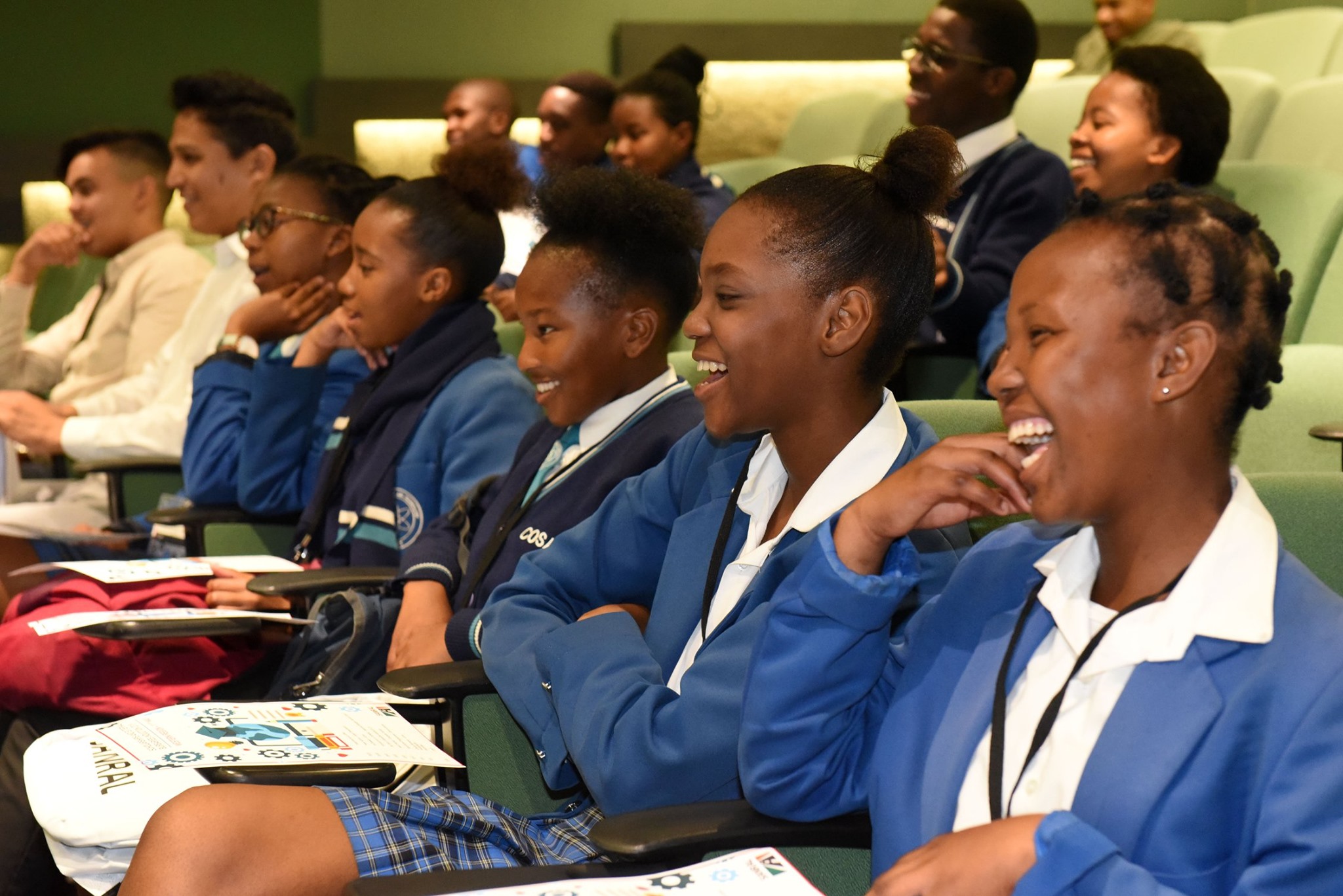
Learners laughing during SANRAL Western Region’s bursary and scholarship induction.

The Western Region’s bursary and scholarship induction event was held at the South African National Roads Agency (SOC) Limited (SANRAL) Regional Office in Bellville recently, during which 30 students and learners gathered to get a taste of SANRAL’s work and vision for the next generation of civil engineers.  

Once the ice was brokencourtesy of some awkward speed dating, it was down to business.  

From first year to final year students alike, the inductees were impressed by the magnitude and extent of SANRAL’s footprint on the national network and how this touches lives daily.  

Randall Cable, Western Region Manager, touched on the use of technology and the potential this unlocks in road construction and beyond.  

After lunch, Kayelihle Molefe and Nthokozo Sikhosana, final year civil engineering students at the University of Cape Town (UCT), captivated the audience with their inspirational stories.  

These two can only be described as besties. They hail from Newcastle in KwaZulu-Natal and after a bromance in high school, they went their separate ways.  

Their academic rollercoasters finally brought them back together at university.  

Molefe’s journey took him to the University of Pretoria to pursue a degree in actuarial science, which was short lived and was then followed by a stint at the University of the Western Cape, where he dabbled in dentistry. With near perfect teeth, he soon discovered that this was not his thing either. 

Sikhosana attended Stellenbosch University for his first year, which also did not work out, and the two soon ended up back home in Newcastle.  

After re-grouping, the duo decided on civil engineering as a career and, with no funds available, started the process of bursary applications.  

As fate would have it, they had their interviews a day apart and clearly made a massive impression on the panel, as they both walked off with full bursaries to pursue civil engineering at UCT. The rest is history.  

When one was ready to give up, the other was there to encourage him. Together they tackled and overcame every exam.  

Today, they are more excited than anxious to complete that final exam later this year and venture into the field as engineering cadets.  

Road safety starts with awareness

Special attention has been given to programmes that combine elements of law enforcement and technology with education and/or awareness campaigns.   

SANRAL is inviting registered non-governmental organisations in the fields of adult road safety education to submit suggestions that can contribute to the development of an adult road safety education programme.  

The South African National Roads Agency (SOC) Limited (SANRAL) is mobilising the support of communities, grassroots organisations, academics and the private sector to develop a comprehensive education and awareness programme on road safety. 

Elna Fourie, SANRAL’s Road Safety and Awareness Manager, said: “The aim is to influence attitudes through road safety education and encourage safe behaviour on our roads, especially among adults who may have developed dangerous habits over the years.”  

A comprehensive desktop study was recently completed and SANRAL has also drawn from the best practices introduced by other countries.  

Special attention has been given to programmes that combine elements of law enforcement and technology with education and/or awareness campaigns.  

The study highlights that such an adult education programme should have a multipronged approach capable of reaching a variety of road users across different generations and communities while catering for all levels of knowledge and understanding of road use.  

These insights will now be developed into a uniquely South African adult road safety education plan, which, through consultations within the field of road safety and based on a scientific study of current road user behaviour, will be able to meet the requirements of local conditions using a structured, multipronged approach.  

SANRAL is inviting registered non-governmental organisations in the fields of adult road safety education to submit suggestions that can contribute to the development of an adult road safety education programme.  

“Road safety is one of SANRAL’s pillars,” said Fourie. “We are committed to forming partnerships with all sectors of society to ensure we come up with workable solutions to promote greater safety on our country’s roads.” 

Scam alert: increase in internet fraud attempts

SANRAL has warned that special care should be taken when dealing with any company which purports to deal with or claims to represent the roads agency in some way. 

Vusi Mona, SANRAL’s General Manager: Communications said people should please verify any given information like telephone numbers, email, addresses, etc. by phoning or going online..

The South African National Roads Agency (SOC) Limited (SANRAL) would like to warn you on the increase in the number of scams purporting to request quotations on behalf of SANRAL. 

These involve companies creating the impression that they have a SANRAL tender – when they do not – to procure and deliver specified products. 

The latest is one from a company named Breece Allessio Technology. 

SANRAL has warned that special care should be taken when dealing with any company which purports to deal with or claims to represent SANRAL in some way. 

Vusi Mona, General Manager: Communications at SANRAL, said: “There are tell-tale signs that the public can look for to establish whether they are dealing with SANRAL or not. For instance, SANRAL will never use a Gmail account or a .NET account for official business. 

“Please verify any given information like telephone numbers, email, addresses, etc. by phoning or going online. The agency’s internet domain is www.nra.co.za ”  

Note that SANRAL does not charge any fee for tenders or quotations. 

The public must contact SANRAL directly to verify any requests purporting to be from SANRAL where payment is requested. The number is 012 844 8000 

N2/N3 freeway upgrade estimated to create 15000 jobs

The upgrades consider the strategic nature of the corridor and the fact that it boasts the highest volume of traffic anywhere in KwaZulu-Natal and Free State. 

It is SANRAL’s intention to use this as an opportunity to develop and grow black-owned SMMEs in the construction, engineering and related industries.

For the next five to eight years, the South African National Roads Agency (SOC) Limited (SANRAL) will be undertaking a large-scale upgrade of the N2/ N3 Corridor in a project valued at R30-billion.  

Determined that this project should have positive economic spin-offs for smaller businesses, it is being split into several detailed design and construction packages.  

This opens tremendous potential for small-, medium- and micro-sized enterprises (SMMEs) to secure a piece of the pie.  

Taking SANRAL to the people 

In June, SANRAL got close and personal with thousands of entrepreneurs and job seekers during stakeholder consultative engagements in Pietermaritzburg, Hammarsdale and Durban, sharing information about business and job opportunities and providing information about potential contracts.  

Discussions delved into the process for registering with the Construction Industry Development Board and how to submit a tender.  

SMMEs also had access to an exhibition area where they could engage with the South African Forum of Civil Engineering Contractors, the National African Federation for the Building Industry, Ithala Business Finance and construction industry equipment companies such as Bell Equipment, Barloworld, Wirtgen and Pilot Crushtec.  

Economic spin-offs 

As one of South Africa’s key infrastructure development projects, the N2/N3 freeway upgrades will have enormous economic spin-offs for KwaZulu-Natal during the construction phase and it is SANRAL’s intention to use this as an opportunity to develop and grow black-owned SMMEs in the construction, engineering and related industries. 

Dumisani Nkabinde, SANRAL Regional Manager in the Eastern Region, said: “It is estimated that a project of the magnitude of the N2/ N3 freeway upgrades will create approximately 15 000 job opportunities in KwaZulu-Natal. It is also envisaged that SMMEs will benefit enormously, allowing them to grow their businesses and create jobs.”  

Ravi Ronny, SANRAL Eastern Region Design, Planning & Construction Manager, said the upgrades consider the strategic nature of the corridor and the fact that it boasts the highest volume of traffic anywhere in KwaZulu-Natal and Free State. 

Furthermore, it is equally important that SANRAL adopts a strategic approach in its efforts to build a capable and developmental state, and drive economic growth through the provision and maintenance of critical infrastructure.  

“SANRAL’s transformation policy sets clearly defined targets for the participation of black contractors, professionals and suppliers in all of its projects,” said Ismail Essa, SANRAL’s Transformation Manager.  

On capital projects, SANRAL will in future only do business with companies that are at least 51% black-owned. 

Transformation in road construction gathers momentum

SANRAL has adopted a transformation policy following a process of extensive consultation with industry stakeholders in all nine provinces.   

Ismail Essa, SANRAL’s Transformation Manager, said, the roads agency has positioned itself as a catalyst to link top-tier companies involved in the manufacturing and deployment of advanced earth-moving and construction equipment with emerging contractors who do not have the resources to purchase such expensive machinery.  

Away from the public spotlight a quiet evolution is taking place in the South African road construction and engineering sectors.  

Large and established businesses are joining forces with emerging blackowned enterprises to enable them to become primary contractors and participate on an equal footing for future projects.  

SANRAL has positioned itself as a catalyst to link top-tier companies involved in the manufacturing and deployment of advanced earth-moving and construction equipment with emerging contractors who do not have the resources to purchase such expensive machinery.  

The construction of national and provincial roads that can carry large volumes of traffic over extended distances requires specialised skills and experience.  

The primary contractors who bid for SANRAL projects must, therefore, have the requisite capacity, skills and track record based on similar projects.  

While critical for safety and know how, these high standards and technical requirements have become barriers of entry to new contractors – especially black-owned and women-owned enterprises – who, for historical reasons, have not been able to gain the requisite experience and qualifications.  

It is also challenging for new entrants to break into this close circle of construction companies, which receives the dominant share of tenders for major road construction or rehabilitation projects.  

Aware that this status quo cannot be allowed to continue, SANRAL has undertaken several initiatives to help accelerate the transformation of the road construction and engineering sectors.  

Vision 

Our strategic vision – Horizon 2030 – is designed to position SANRAL as a modern and progressive roads management agency responsible for the design, construction and maintenance of the country’s single biggest public asset.  

To drive an inclusive transformation agenda SANRAL has adopted a transformation policy following a process of extensive consultation with industry stakeholders in all nine provinces.  

At the core of the policy is the recognition that SANRAL plays a critical role in the construction industry – a sector that has a notable impact on the lives of millions of South Africans.  

SANRAL, therefore, has a responsibility to adjust its procurement policy to maximise the participation of black contractors, suppliers and professionals.  

Similarly, SANRAL is committed to breaking down monopolies in supply chains that span the fields of materials, equipment and technologies, and ensuring the broad-based participation of all South Africans.  

Over the past six months SANRAL has turned these words into action by signing agreements with global and local leaders in the road construction and equipment industries.  

Changing the landscape 

Deals have been struck with Barloworld, Pilot Crushtec, Wirtgen and Bell Equipment to facilitate access to construction machinery for emerging companies.  

An agreement of a different kind was signed in February, easing the way for emerging entities into the construction industry. The National African Federated Building Industry (NAFBI) and will provide mentorship, guidance and coaching to emerging contractors. 

Through these agreements SANRAL is working to overcome some of the biggest hurdles holding back medium-sized contractors from growing and bidding for tenders on major construction projects.  

All too often these contractors do not have the capital to purchase the major machinery required for excavations, ground moving and the construction of roads.  

The cooperation between SANRAL and the existing equipment giants will accelerate fair competition in the construction and engineering sectors.  

Black-owned contractors will now obtain access to finance, leasing and rental options, as well as training and maintenance services.  

This move also demonstrates a willingness on the part of major players in the construction sector to think beyond the confines of traditional wisdom and recognise the opportunities for business growth that will open with the entrance of new participants. 

This sends a clear signal that there are South African companies willing to facilitate the transformation of the broader construction industry rather than merely waiting for new government tenders to fall into their laps.  

The pioneering documents signed with South Africa’s top equipment manufacturers will be followed by similar agreements within the broader construction sector, with banks and development finance institutions.  

Through this we will ensure that the quiet evolution gathers the necessary momentum to spread the economic benefits of road construction and maintenance to a much wider section of the South African population. 

This is an opinion piece by, Ismail Essa, the Transformation Manager at SANRAL. 

Work to complete N2 roadworks about to commence

While the irritation of motorists was understandable, it must also be stressed that the delays in appointing a new contractor were not caused by SANRAL. 

Four of the original contractors were invited to a tender briefing meeting and a visit to the site on 21 August with representatives from SANRAL and the supervising consulting engineer.  

The South African National Roads Agency (SOC) Limited (SANRAL) has good news for Kwazulu-Natal North Coast motorists: the procurement of construction tenders for the completion of roadworks on the N2 between Ballito and Stanger has commenced. 

Work originally began in February 2016 for localised realignment of the N2 at Umhlali River Bridge and at Umvoti River Bridge, but construction stopped when the main contractor was put in liquidation. 

This resulted in angry and frustrated motorists having to contend with sections of the N2 being narrowed to a single lane for almost four years. 

Ridhwaan Mahomed, SANRAL Eastern Region Project Manager, said while the irritation of motorists was understandable, it must also be stressed that the delays in appointing a new contractor were not caused by SANRAL. 

“It was never SANRAL’s intention for this work to be delayed for such a prolonged period.” 

Contractual issues 

He said after the contract was terminated with the original contractor, SANRAL tried for months to resolve the way forward with National Treasury to appoint a new contractor as well as ensuring continuity regarding technical supervision. 

Without getting this approval from Treasury, it was impossible for SANRAL to proceed and appoint a new contractor to complete the work. 

There were also issues around sub-contracting of works in keeping with national policies on economic transformation which have delayed all projects being undertaken by SANRAL. 

“We have only recently been given approval to go ahead using the same supervision consultant and procuring a new contractor,” said Mahomed, adding it was hoped to have a new contractor on site before the end of the year for a construction duration of approximately 10 months. 

Original contractors invited to tender 

He added that four of the original contractors were invited to a tender briefing meeting and a visit to the site on 21 August with representatives from SANRAL and the supervising consulting engineer.  

These are all contractors graded by the CIDB and well capable of completing this contract. Tenders will close in mid-September. An award to the successful contractor will then be made before year end.  

Mahomed appealed to motorists to meanwhile proceed with caution and adhere to speed limits. 

“SANRAL apologises to the motoring public for any inconvenience caused and thanks them for their patience during road construction. The patience and co-operation of motorists will be appreciated,” he said. 

Frequently Asked Questions on roads in the North West province

The N4 corridor is a vital connection between Botswana and Gauteng. 

WHAT IS THE CURRENT STATE OF SANRAL’s ROAD NETWORK IN THE NORTH WEST?  

The 2 598km of SANRAL roads in North West are in fair -to -good condition. Of these, just over 1 400km were transferred from the province to SANRAL in November 2012. SANRAL is in the process of completing reseal projects on the transferred sections of roads that are in a good condition.  

For roads that require reconstruction and rehabilitation, designs are under way and, in some cases, consultants are being appointed for design.  

WHAT IS SANRAL’s PREVENTATIVE MAINTENANCE PLAN TO ENSURE ITS NORTH WEST ROADS REMAIN WITHIN INTERNATIONAL NORMS? 

SANRAL focuses on the effective maintenance of its roads through ongoing routine road maintenance contracts. The agency has nine routine maintenance contracts for all its roads in the North West.  

Overload control is important to prevent premature deterioration of our roadsOn the N4 toll road, a concession managed by Bakwena, effective overload control is being carried out in the corridor.  

HOW HAS THE N4 BAKWENA TOLL ROAD HELPED UNLOCK THE ECONOMIC POTENTIAL OF THE REGION?  

The N4 corridor provides a necessary road connection between Botswana and Gauteng. It also provides a link to tourist attractions in the province, as well as mining activity around Rustenburg and Brits.  

Importantly, the development of the N4 has stimulated the creation of opportunities for contractors, SMMEs and local labour, as well as other related businesses through downstream activities.  

HOW IS SANRAL CONTRIBUTING TO SMME DEVELOPMENT AND JOB CREATION IN THE NORTH WEST?  

Suitably qualified emerging enterprises are given an opportunity to perform some of the work awarded to main contractors. As per the Government’s policy for SMME development, main contractors are required to subcontract 30% of the contract value to SMMEs of CIDB grading 1-6. 

In certain cases main contractors enter into joint ventures, with a 70/30 split between a 9CE main contractor as the lead partner and lower-grading contractors (5CE, 6CE or 7CE) as the targeted joint-venture partners.  

As a result of the Government’s preferential procurement regulations, which became effective on 1 April 2017, contracts above R30m require 30% of the value of the contract to be subcontracted. SANRAL has adjusted its procurement strategy to comply with these regulations.  

In future, smaller contractors will benefit from SANRAL’s projects through subcontracting. In terms of job creation, main contractors are required to allocate 6% of the value of work to the employment of local labour.  

Importantly, part of the contract between SANRAL and the main contractors is that there will be training provided to everyone recruited for its projects.  

HOW IMPORTANT ARE ROADS TO THE NORTH WEST ECONOMY?  

Road infrastructure plays a huge role in the national economy.  

The economy of the North West is driven specifically by mining activity in Rustenburg, Brits and Matlosana; agricultural activity, which is mainly in the Dr Ruth Segomotsi Mompati district municipality and tourism. Our roads are conduits to export markets.  

HOW DO I BRING ROAD CONDITIONS TO SANRAL’s ATTENTION?  

All SANRAL-managed roads have road signs that display contact numbers and details on how and where reports on road conditions can be made. Alternatively, SANRAL’s Northern Region Office can be contacted during office hours on 012-426-6200. 

Roadworks between Montrose and Schagen progressing well

In line with TRAC’s commitment to the communities along the route, the project is benefiting the local community with 36 locals employed at the site.   

However, given the tricky topography of the road at this section, lane deviations and Stop/Gos have been put into place, which has impacted traffic flow and compromised safety.  

The rehabilitation project between Montrose and Schagen on the N4 Toll Route is quickly reaching the halfway mark, with 48% of the roadworks officially complete. 

The R100-million project near Mbombela (Nelspruit) commenced in May this year and will see 11km of Section 7A rehabilitated.  

Roadworks, which were estimated to last 14 months, include the rehabilitation of the existing slow lane and overlaying of the entire carriageway.  

According to the main contractor, Tau Pele, the project is running smoothly with no major delays or complications experienced thus far.  

However, given the tricky topography of the road at this section, lane deviations and Stop/Gos have been put into place, which has impacted traffic flow and compromised safety.  

Safety concerns stem from a lack of compliance by road users with road construction warning signs and speed restrictions. Both Tau Pele and Trans African Concessions (TRAC) urge road users to obey these for their own safety and the safety of others. 

In line with TRAC’s commitment to the communities along the route, the project is benefiting the local community with 36 locals employed at the site.  

In addition, the subcontractor value for local SMMEs is valued at R12-million.   

Given the traffic accommodations in place, road users should expect delays. 

Members of the public are urged to visit TRAC’s website, www.tracn4.co.za, for regular updates and to plan their trips accordingly.  

Road users can also follow us on Twitter, @TRACN4route, for real-time notifications. 

TRAC prides itself on offering quality road infrastructure, which requires regular upgrades, rehabilitation and routine maintenance. 

Surveying by SANRAL reveals that the second-highest waterfall in South Africa is in the Eastern Cape

The Pondoland Wild Coast area contains several spectacular waterfalls, including the well-known 142m Magwa Falls and the 60m Waterfall Bluff. 

The high local rainfall means that, unlike the Tugela Falls, the Ntentule Falls are usually flowing and visible all year round, and not only after heavy rains. 

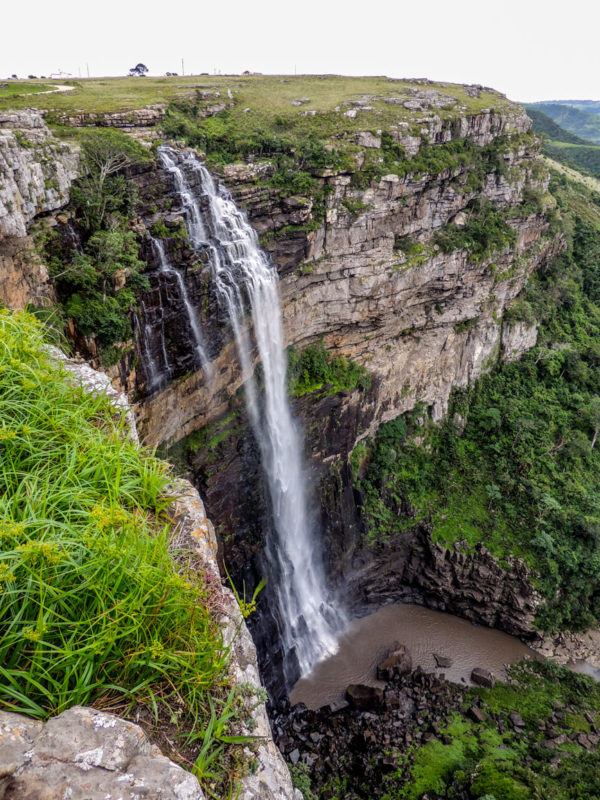
South Africa’s secondhighest waterfall is in the Eastern Cape. This is the professional opinion of surveyors and engineers working on SANRAL’s N2 Wild Coast Road’s Msikaba Mega Bridge site near Lusikisiki. 

Until the N2 Wild Coast Road project, very little was known about the Ntentule Falls on the Mateku River 20km east of Lusikisiki.

Surveying done by SANRAL reveals that the height of the falls is 175metres.  

This places Ntentule Falls second after the country’s highest waterfall, the Tugela Falls (947m) in the Drakensberg in KwaZulu-Natal 

Elands River Falls in Mpumalanga becomes the thirdhighest waterfall (150m) in South Africa after Ntentule. 

Waterfalls in Pondoland

SANRAL project leader for the N2 Wild Coast Road (N2WCR) greenfield section, Craig McLachlan, explained that the Pondoland Wild Coast area contains several spectacular waterfalls, including the well-known 142m Magwa Falls and the 60m Waterfall Bluff.

“When various internet searches failed to provide much information about the waterfall on the Mateku River close to the site where the new Msikaba gorge mega bridge is being built, I requested the engineer’s site surveyor to measure the height of the falls.

“When the answer came back that the falls are 175,4m high I realised that the little known Ntentule Falls, as it is called locally, is the secondhighest waterfall in South Africa – higher than the 150m Elands River Falls in Mpumalanga,” said McLachlan.

The high local rainfall means thatunlike the Tugela Fallsthe Ntentule Falls are usually flowing and visible all year round, and not only after heavy rains.

The top half of the falls will in fact be visible directly from the new N2WCR, while a short-surfaced detour will bring visitors to the top of the falls with a spectacular view over the falls, the nearby Msikaba gorge and the new Msikaba cable stay bridge.

“There is something deeply spiritual or mystical evoked by waterfalls and we believe that a Wild Coast ‘waterfall route’ could be a great added tourism attraction,” said McLachlan.

“Over the next few years SANRAL will be working with provincial, municipal, traditional and local stakeholders to help develop a sustainable, conventional, adventure and eco-tourism legacy once the new N2WCR is opened,” said McLachlan. 

Unlocking economic growth

The N2WCR project is a significant economic investment by government to stimulate economic growth in the KwaZulu-Natal and Eastern Cape provinces.

It is a key Strategic Integrated Project (SIP 3: South Eastern node and corridor development) endorsed by the Presidential Infrastructure Coordinating Commission (PICC).

The project will unlock tourism and agriculture opportunities for the people of Pondoland.  

Over 8000 full-time equivalent direct jobs and 16-18 000 indirect jobs will be created during the construction phase of the project.

There will be nine major construction projects over the 112km road; including the two mega bridges (Msikaba and Mtentu).

The project provides a major opportunity for the development of local targeted enterprises (SMMEs).  

Over 30% of the project spend – over R2.8bn  – will be directed to SMME contractors and suppliers.  

The bulk of this (over R1.8bn) is expected to flow to SMMEs from OR Tambo and Alfred Nzo Districts, particularly those from Port St Johns, Ingquza Hill and Mbizana local municipalities.