

Blog

Incorporating The R24 Into SANRAL’s Network

Jobs have been created and business opportunities in the Rustenburg area are set to improve, thanks to an important project currently underway in the North West province.

Major upgrades to the R24, currently in progress, are intended to improve traffic flow in the area. The road is being widened and improved.

The R24 is currently a single carriageway road and was recently incorporated into the SANRAL network. The road serves as a link between Rustenburg and other nearby towns, providing access to the N4, Rustenburg’s industrial area, the Waterfall Mall as well as various smallholdings next to the road.

Rustenburg has experienced significant development and expansion in recent years due to mining activities. Much of the development occurred along the R24, raising the road’s status to an urban arterial.

Screenshot 2015-12-17 13.40.11

Hennie Kotze, SANRAL’s Senior Project Engineer for this upgrade, said the North West province identified the need to upgrade the R24 from a two-lane single carriageway road to a four-lane dual carriageway road because of increased traffic volumes in the area resulting from the numerous developments.

“The increased capacity will also reduce heavy congestion during peak hours that is currently being experienced on the road and also on feeder roads as a result of under- capacity of the R24.”

The scope of works involves the construction of new road works, structures and road lighting as well as the rehabilitation of the existing road.

The project started in March 2013 and it is foreseen to be completed in October 2015, at an estimated cost of R194.9 million. The work is being undertaken by Lonerock Construction.

Kotze said as part of the contract, SANRAL requires the contractor to allocate 12% of the value of work to SMMEs and 6% to the employment of local labour – a move which will contribute to job creation and skills development in the area.

These upgrades are done in part to create improved accessibility to adjacent properties, ‘businesses and the potential for further development on vacant land which will have a major impact on economic growth in the area.

SANRAL Achievers Honoured

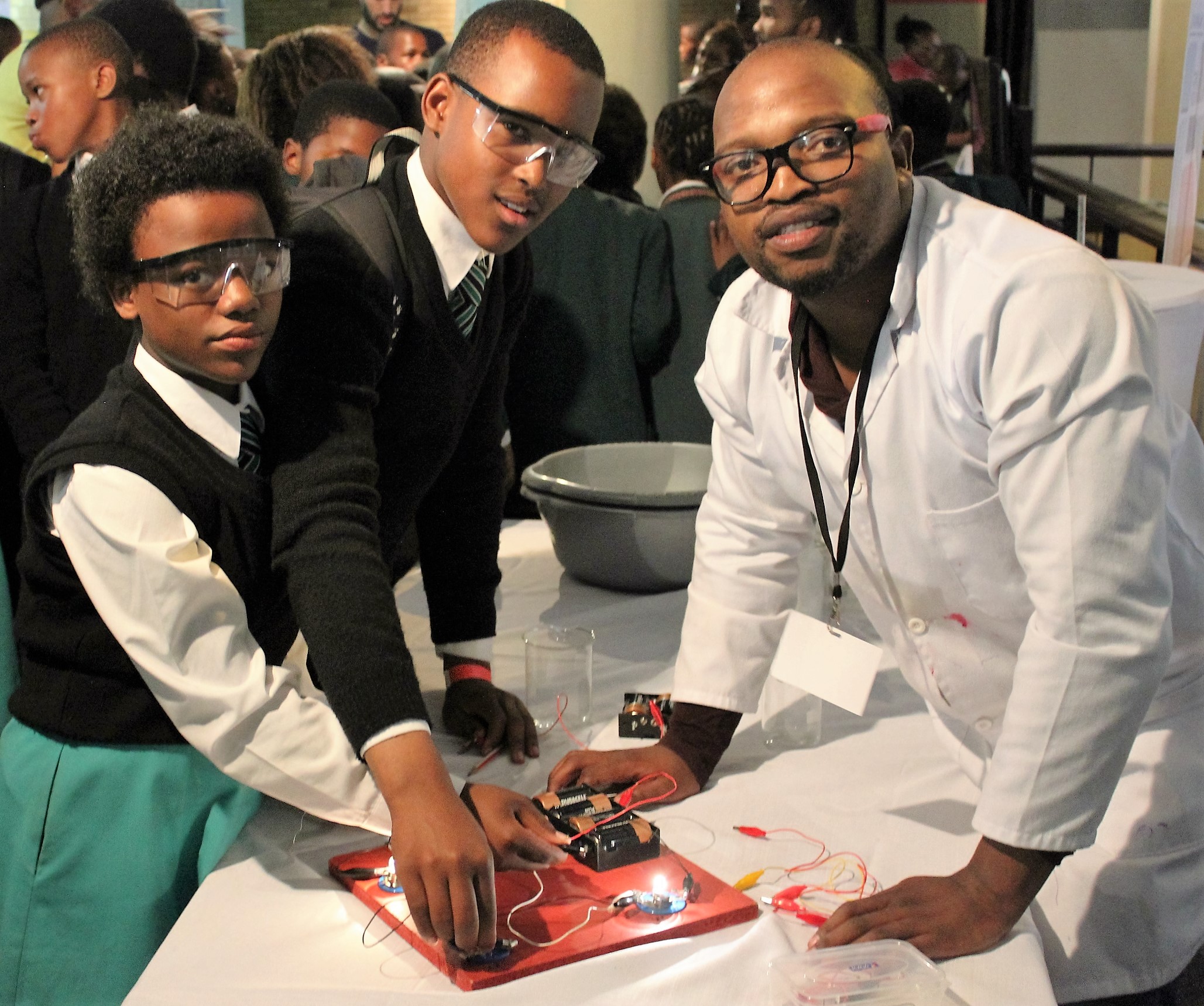
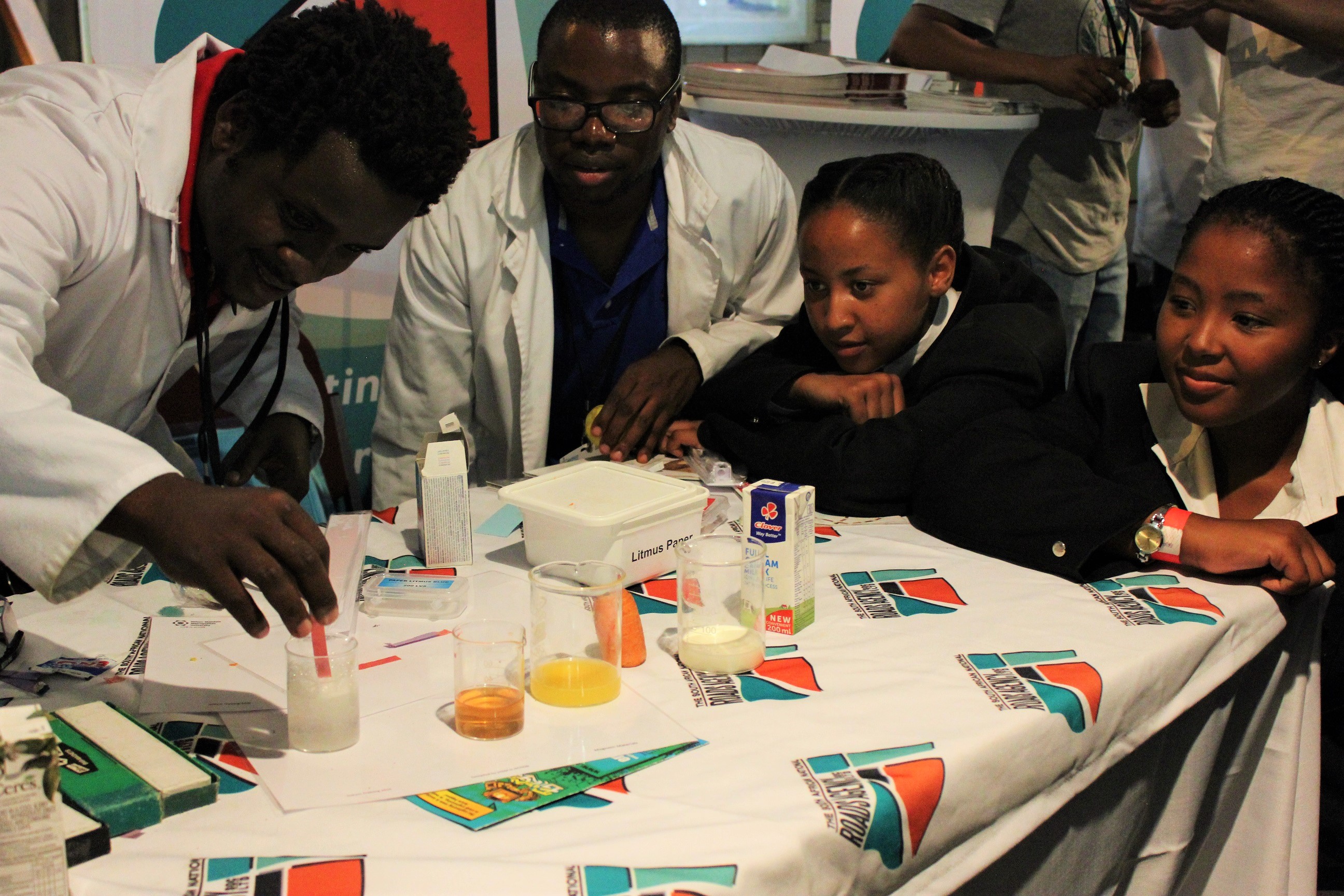
In October last year, SANRAL hosted its annual scholarship function at the Nelson Mandela Metropolitan University. The event was attended by SANRAL school scholarship recipients – learners in grades 10 to 12 from schools in Nelson Mandela Bay.

Speaking at the event, SANRAL Southern Region acting regional manager Marelize Nel-Verwey said the agency is committed to developing the skills of learners who express an interest in studying and building a career with SANRAL or similar organisations.

This is how important the scholarships are to the recipients.

“It was gratifying to get financial assistance from SANRAL, and I will always be indebted to them.”

“I come from a single parent household. I applied for a SANRAL scholarship in Grade 11 and they financed my matric year. This was a huge relief for me because it was also the year that my deceased father’s trust fund ran out. It is a big help for me and my mother.”

Carmel Chan-Lok from Collegiate Girls’ High School. said,

“The SANRAL scholarship has helped me to do more things than I can possibly imagine. It really is good motivation – you do well to stay on the programme.”

Screenshot 2015-12-17 13.34.55

SANRAL Empowers Our Youth

In 2015, SANRAL had 85 students at six universities across the country, 20 of which were study- ing at the University of KwaZulu- Natal. It also supports learners across the country who aim to become engineers.

How important this support is, is typified by the responses of some of the recipients.

Sanchia Pillay, a graduate design engineer, completed her degree in 2013 and has since been employed by SANRAL. She has gained vast knowledge and experience working on different projects with consulting engineers, also known as design officers, which have many divisions that perform a variety of functions.

“Working for SANRAL has been a great learning curve thus far.”

Kerisha Govender, a graduate construction engineer said the SANRAL bursary had relieved her family of a major financial burden.

“After graduating, SANRAL placed me with SMEC consulting engineers which opened a door of opportunities for me.”

Top achieving scholar Nikai Jagganath from Durban Girls High School was awarded a SANRAL scholarship in Grade 12 and has already been accepted by the University of Cape Town to study engineering in 2016.

Screenshot 2015-12-17 13.30.07

Second year civil engineering student from the University of KwaZulu-Natal and SANRAL bursary recipient, Jernelle Mariemoothoo said she is most grateful for the opportunity afforded to her by SANRAL.

“Being a SANRAL bursar means the world to me. It has eased the financial burden and given me a chance to fully concentrate on my studies.”

Angel Nxumalo, 25, from Nkandla believes she would not be where she is today had it not been for SANRAL. The third-year civil engineering bursary recipient is the first resident in her rural community to have received academic sponsorship to further her studies.

Lwanda Sigayi from Umtata in the Eastern Cape, also a third- year civil engineering bursary recipient at the University of KwaZulu-Natal, is another grateful recipient whose dreams were enabled by SANRAL.

Congratulations ???to the Class of 2015!

What a year 2015 was… And what a stunning end to the year with some of our scholarship recipients matriculating and achieving great results.

Last year 55 learners in Grade 12 had received scholarships. This, is, in addition, to support programmes at a school level to boost the interest and understanding of science and maths. Several thousand learners in a number of provinces are beneficiaries of this programme.

Bursaries go to those who have excellent results at school. An overall average of 75% is a requirement as well as getting the same percentage for maths, physical science and English.

The scholarship programme pays for school fees, book and stationary costs, as well as school and sports uniforms. SANRAL also arranges for learners to attend beneficial extra-curricular activities.
The programme was initiated with the aim of providing sponsorships for learners with an aptitude for maths and science and creates opportunities for students who want to proceed to tertiary studies.

It creates a pipeline to develop and nurture young talent which will one day make important contributions to the built environment – specifically in the fields of road infrastructure development, intelligent transport systems and civil engineering.

Some of these learners will receive SANRAL bursaries and go to university. These cover their tuition and registration fees, accommodation and meals, books and equipment plus compulsory excursions and seminars as well as a living allowance.

The bursary programme is very comprehensive, offering among other things, invaluable work experience during study breaks and an employment pipeline for when the students graduate.

Bursaries Grow Engineers

Growing engineers through bursaries is one of the many things SANRAL does exceptionally well. Just ask Mari Venter and John Rammutla.


Mari Venter

Screenshot 2015-12-17 12.57.28

In asking: “how things work and why”, Mari became an engineer.

Born in Durbanville, Cape Town, Mari said:

“With a good education, I have the necessary theoretical background needed for my career. Education is also important because it helps the country to grow.”

Mari has a very supportive family and says they encourage and support her in her career.

“The SANRAL bursary is important because it means that I have a job after my studies. I hope to learn about all the aspects of civil engineering.”

She says engineering is a critical skill in South Africa and can contribute by improving the road network of the country.

Screenshot 2015-12-17 13.00.03

“Working on the SANRAL projects means that you help improve the infrastructure of the country.”

Her goal is to be the best engineer she can be, but first she would like to be professionally registered.


John Rammutla

Screenshot 2015-12-17 12.57.48

When John Rammutla, who hails from the remote village of Maroteng in the Limpopo province, wrote his matric in 2010, he had no idea then that he would end up studying Civil Engineering at the University of Cape Town.

When I applied to study Civil Engineering at UCT, I honestly didn’t know much about the profession. Information regarding the SANRAL bursary scheme reached me when I was in my final year of high school. My science teacher one day came to school with about eleven hard- copy bursary application forms and handed them out to us. I applied for the bursary and was fortunately called for an interview at SANRAL’s offices in Pretoria, thanks to his outstanding achievements in maths and physical science.

I knew and understood that South Africa is in need of qualified engineers for its socio-economic development. Hence, I decided to opt for civil engineering and got to learn more about the profession when I got to university and, fortunately, fell in love with it.”

Screenshot 2015-12-17 13.02.58

John’s family was struggling financially and he said it would not have been possible for him to study after matric if it wasn’t for SANRAL’s scholarship.

“Education is extremely important to me. To start with, I will be the first member of my family to attain a higher education qualification. Also, many young people from my community in Limpopo are looking up to me as their personal mentor and inspiration. I sometimes feel like my education is more important to them than it is to me! I want them to be proud of me.”

He says that he strongly believes that education is the key to success and South Africa cannot and will never truly prosper if it fails to invest in the education of its people. He is extremely grateful for the opportunity that the SANRAL scholarship has brought him.

“There is no way that my family could have been able to support me and the bursary covers all my expenses. I have also been afforded the opportunity to work on the N7 upgrade near Malmesbury to gain practical experience.”

He is hoping to learn as much as he can from SANRAL, the work it does and the contribution it is making to the development of the country’s road infrastructure and economy.

He hopes to inspire other young people in South Africa’s most disadvantaged communities to hold onto their dreams and give them hope for the future. John also hopes to establish his own civil engineering construction company in the future once he has graduated and gained more experience.

John is certainly living his dream. Apart from being a full- time student in his final year, he was also the Chairperson of the UCT’s Engineering and Built Environment Student Council.

No Heavy Vehicles, No Heavy Damage

No heavy vehicles, no heavy damage. That is the motto of SANRAL’s weighbridges, used to determine the static weight of a heavy motor vehicle.

Uncontrolled vehicle overloading has been proven to result in the accelerated deterioration of roads, as well as increasing the risks of crashes. In crashes SANRAL’s Northern Region alone, which comprises Gauteng, North West, Limpopo and Mpumalanga, there are 15 Load Control Centres (LCC) that operate 24 hours a day, 7 days a week, and 11 lay-bye sites that are operated by means of Mobile Load Control Units.

Once a vehicle has been found to be overloaded it is directed into a holding yard. The load has to be corrected within the legal limits. No load is allowed to be left at the facility. Only after the load is corrected and the vehicle is re-weighed will it be released to continue on its journey.

The number of vehicles weighed varies between the various centres – from about 150 to 500 per day. In 2014, approximately two million vehicle weighs were conducted at SANRAL LCCs.

The existence of weighbridges along the network has had a positive effect. When SANRAL started operating the LCCs on the N4 the overloading percentage was 28%. It is currently below 5%. The average overloading percentage is 4.5%.

We asked SANRAL’s Louw Kannemeyer a few questions about weighbridges and their importance:

Screenshot 2015-12-17 12.48.37


Heavy vehicles that do not comply with the load design specifications of the suspension, brakes, tyres and steering of vehicles are a safety hazard to all road users. In addition, overloaded heavy vehicles cause exponentially more damage to the road structure, resulting in accelerated deterioration and increased maintenance costs. As an example, a single 9-ton axle that is 25% overloaded causes 155% more damage to the pavement.

Screenshot 2015-12-17 12.49.58


SANRAL continues to support the road transport management system (RTMS), which is a Department of Transport strategy to promote self-regulation in the road freight industry. RTMS accreditation means that truck fleet owners must continually demonstrate that they load their vehicles correctly and securely, ensure that their trucks are roadworthy and that their drivers are healthy and well rested.

The benefits of RTMS management are reduced road damage, promotion of road safety and reduction of road transport costs. SANRAL supports this initiative with data indicating that member organisations seldom overload and are involved in fewer accidents.

SANRAL also supports the “smart trucks” demonstration project. This is research being conducted to ascertain the benefits of allowing vehicles that meet stringent dynamic design criteria to carry heavier loads, while maintaining all loading criteria except for the maximum legal load of 56 tonnes.

In terms of road maintenance, every kilometre of the national road network has service providers appointed that are responsible for all the day to day responsive maintenance requirements that need to be performed, this includes cutting grass, cleaning drains, litter collection, repairing of damaged road signs, repairing of potholes, accident scene clean-up, etc. The impact of this preventative maintenance approach of SANRAL should be clearly visible to road users when travelling on the national road network.

Screenshot 2015-12-17 12.52.45

Creating jobs, expanding skills

Helping small businesses grow while creating jobs and expanding skills knowledge is an important part of what SANRAL does.

Screenshot 2015-12-17 12.41.05

Ketane Nationwide Road Maintenance in the North West is one of these. Owned by Richard Stevens, David Olivier and Matsekiso Meshake, the company specialises in vegetation maintenance, which includes grass cutting, physical eradication and chemical control. It operates in the North West and Northern Cape provinces.

Stevens said:

“Not only are we getting valuable experience, but we are also able to make a significant difference in the communities in which we operate, by supporting small businesses and providing locals with employment opportunities”.

Screenshot 2015-12-17 12.40.22

Furthermore, grass bales coming off the road reserve are donated to developing stock farmers along the routes. The estimated rand value of revenue remaining in the area, specifically previously disadvantaged communities and individuals, is approximately R1 million per annum.

Also, in the North West is Big Family Construction, owned by Bafana Radebe, Doshiwe Sithole and Elsie Mthombeni.

Screenshot 2015-12-17 12.41.18

The company is currently working on six SANRAL projects, with a workforce of 119 employees.
In the North West it conducts routine road maintenance on the N14 and is also involved in a large fencing project along the same road. Radebe said the company is excited to be working for SANRAL.

Explore The Many Tourism Gems Along The N3 Toll Route This Summer

Life happens at a fast pace. Our responsibilities often force us to rush from one point to another. We seldom get time to slow down and take it easy.

This summer, N3 Toll Concession (N3TC), encourages travelers to unwind and not rush from point A to B. Slow down and explore the many experiences offered in the different regions along the N3 Toll Route. N3TC manages the N3 Toll Route between Heidelberg in Gauteng and Cedara in KwaZulu-Natal. This section of the route traverses four of South Africa’s provinces – Gauteng, Mpumalanga, Free State and KwaZulu-Natal.

To unlock the tourism potential along the N3 Toll Route, N3TC initiated the N3 Gateway Tourism Association in 2008.

Today the N3 Gateway region stretches from Pretoria in the North to Valley of a Thousand Hills in the South, and incorporates cross-border tourism with Lesotho through Phuthaditjhaba, Caledonspoort and Sani Pass. It includes key destinations such as the mighty uKhahlamba Drakensberg World Heritage, the famous Battlefields Route up to Newcastle and picturesque towns and routes such as Clarens and the Midlands Meander.

he beauty of the N3 Gateway route is that it allows travelers to explore and experience these areas in just about any way that takes your fancy from mountain biking; fishing; trail running and hiking to heritage tourism; arts and crafts; secluded retreats; pamper spas and gourmet feasts.

Adventure tourism opportunities along the route now delight many thrill seekers. This is evident in places such as the Karkloof which has been rated the best mountain biking destination in the country.
“N3 Gateway works closely with members and stakeholders to produce over 150 detailed itineraries to self-drive tourists. These itineraries can be accessed on the N3 Gateway website,” says Andy Visser, director of the N3 Gateway.

Discover what lies beyond the beaten track, visit www. n3gateway.com or visit one of the thirteen N3 Gateway tourism nodes in the N3 Gateway region during your travels. Share your experiences on Twitter @N3Gateway and @N3Route.

Opinion: The slow erosion of the rule of law

On September 10 the first e-toll evader was convicted in the Pretoria Magistrate’s Court.

Biochemist Dr Stoyen Stoychev was convicted of fraud (the falsification of number plates) and evading e-tolls – cited as a contravention of Section 27 of the SANRAL Act. It is important to note that there were two sentences handed down by the court – one for fraud and the other for non-payment of e-tolls.

For non-payment of e-tolls, Stoychev was sentenced to a R20 000 fine or six months imprisonment and ordered to pay all his toll bills (of more than R14 000). For the fraud charge, he got 100 hours of community service, a 12-month jail term suspended for five years on condition that he is not caught committing fraud again, and another R20 000 fine or six months imprisonment.

Screenshot 2015-12-17 12.26.41

Stoychev pleaded guilty to one charge of fraud and 987 counts of evading the payment of e-tolls. He was arrested on the 2nd of October 2014 after it was found that he had been driving on Gauteng’s tolled highways with fraudulent number plates on his white Hyundai over the preceding seven months.
Pretoria’s Chief Magistrate, Desmond Nair presided over the matter, ruled that failure to pay e-toll fees was not only a crime but that SANRAL was affected because “as a direct consequence of his (Stoychev’s) actions, the agency suffered prejudice”.

“Mr Stoychev carefully planned these crimes. The crime of fraud, in particular, required presence of mind. He removed the license numbers, changed registration plates, used that vehicle to avoid detection. So, what visits my mind is that an individual – highly intelligent as he is, holding a doctorate – resorts to that level of criminality to avoid detection, makes this a very serious offence.”

This case was brought to a court of law after following the due process, which involved the South African Police investigating the matter and the National Prosecuting Authority appointing a senior advocate to prosecute.

Screenshot 2015-12-17 12.23.22

Advocate David Broughton noted during the trial of Dr Stoychev:

“We must also be wary of not seeing the proverbial wood for the trees. Whatever our personal views on the e-toll system, the fact remains that it has been legislated. The plain fact is: whether we like it or not, the law requires us to pay if we use the roads that are subject to the e-toll system.”

Now, there are some who argue that e-tolling is illegal, but they have never sought to test this assertion with our courts – which are duly empowered to pronounce on the legality or otherwise of our laws.

Advocate Broughton reminded the court that we live in a constitutional democracy. One of the founding provisions of our Constitution is that South Africa is a democratic state founded on various fundamental values, including the ‘supremacy of the constitution and the rule of law’.

Adv Broughton stressed the latter during his address on sentence when he argued against those who select which rule of the law to follow:

“It is a notorious fact that some within our society have vociferously in the public domain urged the public to refuse to comply with the legislation pertaining to the e-toll system. This is a clear incitement to commit a crime and is intended to render the e-toll system unworkable.”

This matter is a clear indication that we live in a constitutional democracy and that if citizens do not follow the rule of law they will face legal consequences. Critically, there has to be an appreciation that the rule of law requires of government and its agents as well as individual citizens and private entities to be accountable under law.

At the heart of the rule of law as a basic tenet of democracy is the idea that free people are ruled by law and not by the arbitrary views or powers of man. The day the rule of law is made an option rather a societal obligation, the day its erosion will begin. Unfortunately, to reverse that erosion is more difficult than the relative ease with which the rule of law can be undermined.

In our reaction to the Stoychev judgment, our actions and pronouncements can and should be evaluated to determine whether they advance the rule of law or do not.

Getting To Know Thaba Nchu

Travelling between Bloemfontein and Thaba Nchu will become easier and more pleasant. This stretch of the N8 is being substantially upgraded.

The contract value is some R920 million and work is scheduled to be completed in January 2017.
The main challenges faced on site in relation to both tenders has been gaining access to land adjacent to the existing road reserve, which was required to expand the road footprint and finding suitable material for construction.


Screenshot 2015-12-17 12.15.00

Jason Lowe, Project Manager at SANRAL Eastern Region, said the rehabilitation and upgrading would result in a road of a higher standard, both in terms of alignment and capacity.

He said the two N8 projects would also set in motion the wheels of transformation, job creation and economic inclusion.

“As far as possible, we always ensure that communities, where we operate, are empowered through local job creation. This gives them ownership and a sense of pride to be associated with a particular project.

Also, the local skills enhancement through on the job training as well as formal training received from the service providers will stay with them for the rest of their lives.

The small businesses that were contracted will also be able to raise their profiles having worked on this project.”