
Blog

SANRAL unveils Technical Innovation Hub

Smart technology and the road user can no longer be separate concepts. The road user harnesses smart technology on their devices, in their vehicles, in their offices and homes. 
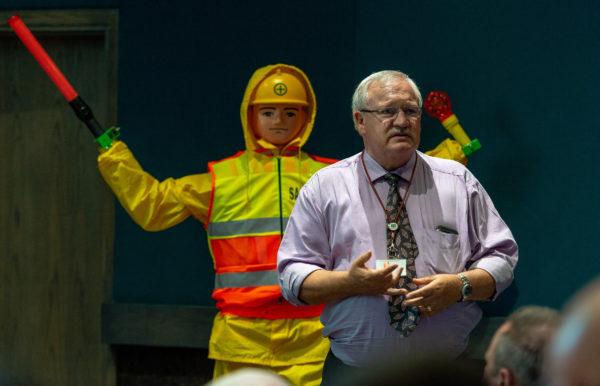
Kobus van der Walt said that key to SANRAL’s sustainable future is the development of the next generation of civil engineers, but more specifically, the creation of a leadership reserve.

In rising to the challenge of rapidly evolving Smart Road Technologies and global innovation, the South African National Roads Agency (SOC) Limited (SANRAL) has established the Technical Innovation Hub (TIH), which is driven from the Western Region Office in Cape Town. 

Although not a physical space, the TIH can be likened to a think tank of young intellectuals, mentored by senior professional engineers, and inspired by the possibilities that exist when technology is harnessed to improve lives and promote progressive development in transport. 

Smart technology and the road user can no longer be separate concepts. The road user harnesses smart technology on their devices, and in their vehicles, offices and homes.  

Technology integrated 

It therefore stands to reason that this technology should be integrated into the travel experience during everyday commutes. This is ultimately where the world is headed and South Africa should be no different. 

Introducing the TIH to industry creates a platform for graduate engineers to showcase some of the innovation-focused pilot projects that are in the development phase at the TIH.  

The projects include the use of a robotic flagger at road construction sites, intelligent road studs to provide additional guidance to the road user and the planned use of 3D road markings 

Other presentations include: 

  • video analytics for vehicle inspection and pedestrian detection 
  • drones for engineering applications 
  • floating car data 
  • road sensors 
  • electrical and automated vehicles 
  • alternative materials, i.e. nanotechnologies 
  • augmented / virtual reality 

Kobus van der Walt, who heads up SANRAL’s TIH, said: “I cannot overstate the importance and relevance of credible research in the work we do. A clear and direct strategy is needed to ensure economic growth in our industry, and our research can be used to inform this strategy. 

“Furthermore, we want to create solutions that speak directly to the needs of the road user. For too long engineers have created transport solutions that they think will serve the needs of the public at large. Our approach is to stay engaged with road users at all levels, and through research and partnerships we aim to create an engaging environment where the road user has a vested interest in getting the best use out of our national road network.”   

While advancement in road user technology seems predominantly geared at motorists, it is important to note that pedestrians make up a massive component of road users in South Africa.  

Therein lies a major driver of road safety using technology. Engineers with post-graduate studies in research topics relevant to transportation technology advancements, such as automated pedestrian detection and drone applications, play a major role in how we apply technology in saving lives.  

The technology already exists and SANRAL is now well positioned to embrace it to the benefit of all road users. 

TEA provides mentorship 

In addition, the SANRAL Technical Excellence Academy (TEA), which is housed in Port Elizabeth and is also headed up by Van der Walt, provides dedicated mentorship and practical training in road and bridge design for graduate candidate engineers, who are SANRAL bursary students. 

“Key to SANRAL’s sustainable future is the development of the next generation of civil engineers, but more specifically, the creation of a leadership reserve. Our history is built on a substantial investment into research and education. We are committed to nurturing a pool of talent through mentoring and training, and to maintaining our plans to attract and retain talent,” concluded van der Walt. 

SANRAL remains committed to the development of South Africa’s knowledge economy and will continue to invest in research and education to unlock the potential that lies within the road construction industry as a key driver of economic development in our country. 
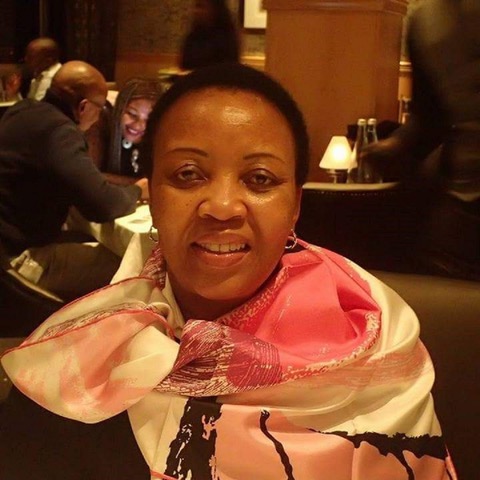
Dr Maboya leads the way in STEM

Her ground-breaking work to transform the way maths and science are taught was made possible in part by the SANRAL Chair at UFS. 

Dr Maboya reached a significant milestone in her life when she qualified as the first black female with a doctorate in mathematics education from the University of Free State, which was made possible by funding from the SANRAL Chair. 

Dr Mantlhake Julia Maboya, deputy director for curriculum management at the Free State Department of Education, aims to make sure every child in the system has access to quality education.  

Being highly adventurous and inquisitive, Dr Maboya was motivated to venture into demanding fields, determined to prove that with excellent teachers the difficulty of maths and science subjects for learners and students can be conquered.  

“Mathematics and science are vital subjects, as the demands of the fourth Industrial Revolution require our youth to acquire competencies to analyse, design, innovate and solve problems for which the science, technology, engineering and mathematics (STEM) subjects are essential,” she said. 

A first made possible by SANRAL 

Dr Maboya reached a significant milestone in her life when she qualified as the first black female with a doctorate in mathematics education from the University of Free State, which was made possible by funding from the SANRAL Chair.

Her ground-breaking research was the first to examine the need for and utility of mathematical laboratories at schools.  

The theoretical framework that grounded her studies guided her to become self-critical and self-reflective, to listen to teachers’ opinions and to adopt a dialectical approach to interventions that claim to transform teaching practices and empower educators.  

Career highlights 

Among her career highlights were being awarded a scholarship by the British Council to pursue a Master’s degree in mathematics education in England, and the conceptualization and initiation of a maths laboratory project that promotes hands-on experience in the teaching and learning of mathematics in the Free State.  

She has also led the Provincial Strategy on Learner Attainment team that saw the Free State becoming the top-performing province in South Africa, and she directed the South African delegation to the United Kingdom and France on a fact-finding mission on vocational education, publishing a concept paper on vocational education that will change the future landscape of education. 

Dr Maboya’s passion and commitment to her work, actively listening to others, taking every experience as an opportunity to learn, taking calculated risks, fostering creativity and driving innovation are among the traits that make her a brilliant resource for curriculum management.  

SANRAL is proud to have been involved with helping such an exceptional individual contribute to South Africa’s STEM talent pool. 

Spillages – from mopping up, to moving on

SANRAL’s responsibility doesn’t stop with road maintenance. 

While SANRAL has a vested interest, responsibility for spill containment and treatment, whether hazardous or not, rests with the contractor.

The maintenance of the roads that SANRAL builds and oversees extends beyond structural repairs.  

Conservation of the natural environment is prioritised before, during and after construction, and dedicated reaction teams are ready to kick into action when called upon to deal with environmental incidents.  

Prime example of such incidents are spillages on South Africa’s road network, which are a regular occurrence in some areas.  

The Garden Route (N2) is a popular route for commercial and leisure travel between the Western and Eastern Cape and, on some sections of this road, spillages are common.  

Between Riversdale and Wilderness, a diesel, oil or petrol spillage incident happens up to twice a week. Because environmental management is a key component of road infrastructure development, SANRAL has developed an Environmental Management Plan (EMP) as a tool with which to continually improve environmental performance. 

This EMP serves as a guide to respond to environmental incidents and mitigate the extent of the damage.  

If a spillage occurs, a primary concern is to prevent any hazardous material from entering the water supply system.  

It makes provision for the protection of streams, rivers and dams from direct or indirect spillage of contaminants such as refuse, cement, sewage, chemicals, fuels, oils, wash water, organic materials and bituminous products.  

While SANRAL has a vested interest, responsibility for spill containment and treatment, whether hazardous or not, rests with the contractor. The implementation of the EMP begins when the individual who either causes or discovers the spill immediately reports it to the engineer.  

From there, the situation is assessed and responded to. SANRAL must determine the exact treatment of polluted soil, or, in worse cases, polluted water, which by its very nature is much harder to contain.  

How spillages are handled 

We spoke with Johan Nel, Route Manager of Qunu Consulting, to understand exactly what happens when a spillage occurs and how the team operates.  

“In smaller incidents, with a petrol or diesel leak on the ground, the contractor is the first cog in the wheel,” said Nel. 

“Most contractors have their own spill kits on site, which enable them to cover the affected areas with an absorbent material that prevents the road surface from becoming slippery and ultimately dangerous to road users.” 

The staff receives basic training on how to use the material and equipment, how and where it should be disposed of, and on how the spill kit is replenished after every use.  

Such incidents are nipped in the bud before they become catastrophes. However, there are times when the incident requires specialised expertise to be called in.  

“Generally, this would involve the services of a hazardous-waste response company that can provide rapid response to spills and discharges,” said Nel. 

“When time is of the essence, the contaminated area has to be secured and cleaned up quickly and safely.” 

Although SANRAL is not responsible for managing the incident, emergency communication is channelled through the Road Incident Management System (RIMS) to ensure that all role players, including Traffic Services, Fire and Disaster Risk Management, Department of Water Affairs and so on, are mobilised and that there is a central communication of who has been deployed, real-time status updates on the situation and communication with the media – particularly when information needs to reach road users – in order to reduce or avoid chaos and confusion on the road. 

Some would argue that the real work starts once the situation has been contained and cleaned up, and the road is once again opened to traffic.  

There is much environmental activity that plays out behind the scenes, especially in the event of water contamination.  

Conservation of the fauna and flora in the area is prioritised and ecological monitoring, as well as remedial or rehabilitation treatment is prescribed.  

Where necessary, re-vegetation of affected areas will occur, in consultation with the contractor and environmental specialists.  

Sampling and testing of the water quality upstream and downstream of the spill is done and only concluded once upstream and downstream results correspond to each other, effectively giving the water a clean bill of health. 

“One thing is certain – when a spillage occurs, no stone is left unturned to respond, quickly, effectively and with as little inconvenience to road users as possible,” added Nel.  

SANRAL’s commitment stretches way beyond roads and because of this, the agency constantly engages with specialists, stakeholders and other interested parties to refine its response to incidents that threaten the health of the environment. 

SANRAL welcomes new candidate engineers

Most will join the design academy for 21 months, while eight will spend three months at the materials testing laboratory. 

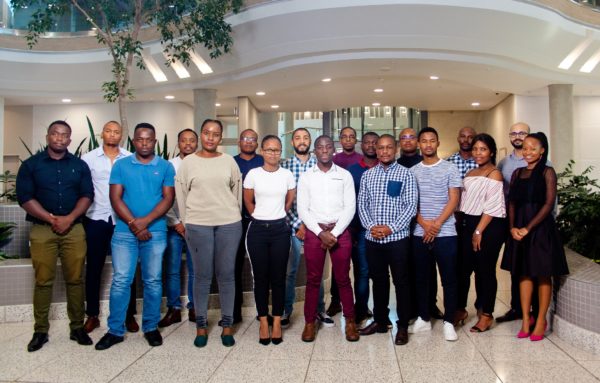
SANRAL welcomed 18 new engineering candidates to its Technical Excellence Academy (TEA) located at its Southern Region office in Port Elizabeth, Eastern Cape.

The South African National Roads Agency (SOC) Limited (SANRAL) has welcomed 18 new engineering candidates to its training academy in the Eastern Cape. 

This pushes the number of engineers interned at its Technical Excellence Academy (TEA) in Nelson Mandela Bay to 31, with another 15 expected.  

A further intake in July will bring the total close to 50. 

SANRAL welcomed the new candidate engineers at an induction held on 6 February 2019 at the academy in Port Elizabeth. 

How it works 

The candidates from various provinces in South Africa will be split into project design teams.  

Most will join the design academy housed at the TEA premises for 21 months, while eight will spend three months at the materials testing laboratory.   

The candidates will also gain on-site work experience after their design and laboratory training. 

This year there are five female candidates at TEA. Since establishing the Academy in 2014 there have been 13 female candidate engineers and 40 male candidates. In total 50 have finished their training at the academy since 2014. 

Kobus van der Walt, Head of Technical Excellence Academy, said: “It is wonderful that the Eastern Cape and KwaZulu Natal Department of Transport have seconded their staff to be part of the academy.  

“The Namibia Roads Authority have also seconded people to join the academy and they will start at the TEA in July. We are busy finalising the memorandum of understanding (MOU) between SANRAL and Namibia.” 

Candidates want to contribute 

Lumanye Filtane from Idutywa in the Eastern Cape graduated from the University of Pretoria. He is the only one in his family who has studied to be a civil engineer. 

“I studied civil engineering because I want to contribute to the infrastructure development of the Eastern Cape. My goal is to be a registered engineer with ECSA and I would like to further my studies,” said Filtane. 

Nonkanyezi Nxumalo from Nkandla in KwaZulu Natal first wanted to be a teacher, but her former high school principal told her about civil engineering. 

Nxumalo said: “My school principal motivated me and told me that he sees a civil engineer in me, so he gave me the SANRAL bursary application. He explained to me what a civil engineer is and that was when I decided that this was the career for me.  

“Another motivation is that there is a bridge in Nkandla, where I live, and it is a single-lane bridge, allowing only one car to cross at a time. I want to redesign that bridge and expand it. I am the first one in my family to be a civil engineer.” 

She believes with hard work and good grades one can achieve anything and go anywhere. 

The overall benefits of attending the TEA are two-fold. 

On one hand, engineering graduates enrolled in the Academy are provided with the much-needed training, which means TEA graduates are likely to achieve the training outcomes required by the Engineering Council of South Africa (ECSA) sooner than candidates who are not as privileged to be in such an enabling environment. 

On the other hand, SANRAL benefits from the programme by having access to an increasing pool of highly-talented candidate engineers and technologists while establishing themselves in the industry early in their careers. 

“During the training we have the solemn obligation to provide the environment required to achieve 11 ECSA outcomes,” said Andrew Van Gruting, senior mentor at the TEA. 

What are the ECSA outcomes? 

  • Candidates will have to define, investigate and analyse engineering problems; 
  • Design or develop solutions to engineering problems; 
  • Comprehend and apply knowledge; 
  • Manage part of all of one or more engineering activities; 
  • Communicate clearly with others in the course of his or her engineering activities; 
  • Recognise and address the reasonably foreseeable social, cultural and environmental effects of engineering activities; 
  • Meet all legal and regulatory requirements; 
  • Conduct engineering activities ethically; 
  • Exercise sound judgement; 
  • Be responsible for making decisions on part of all of engineering activities; 
  • Undertake professional development. 

What does the training entail? 

  • Geometric design;  
  • Traffic analysis and capacity; 
  • Materials investigation and utilisation; 
  • Pavement evaluations and materials designs; 
  • Storm water drainage including sub-surface drainage; etc. 

During the induction the candidate engineers were introduced to other departments within SANRAL to familiarise themselves. 

“No job is in isolation. The candidates will learn that all departments at SANRAL are connected. While they are here, they will expand their outlook and learn what their career is about. It is not about formulas and number crunching. There are other aspects to what we do,” said Van Gruting. 

“During the next five years we will work with the Engineering Council of South Africa (ECSA) to draft documents that will lead to accreditation of training programmes not just for SANRAL, but for other companies too. One would still have to apply to ECSA to be a registered engineer. 

“Our goal is to build a second building in the next five years to accommodate the TEA candidates. There is also a need for professional mentors to join the academy,” van Gruting concluded. 

2019 Toll Adjustments

The adjustments are made on an annual basis to keep the toll tariffs aligned with inflation rates. 

The effect of inflation means that every rand buys a smaller percentage of a good or service. As the average inflation rate is used to decide the adjustment, this means that there is no increase in real terms.

The South African National Road Agency (SOC) Limited (SANRAL) will be implementing the 2019 national roads Toll Tariff Adjustments in line with the Consumer Price Index (CPI), as determined by the Ministry of Transport. 

The adjustment will come into effect on 1 March 2019 for the 2019/20 tax year. This has been gazetted on 1 February 2019. 

Adjustments to the tariffs are in accordance with the CPI over the proceeding 12 months which has been calculated as 4,583%. 

Affected roads 

The newly adjusted tariffs will apply on the N3 toll road between Johannesburg and Durban, on the N4 between the Mozambican border and the Botswana border as on the toll sections of the N1, N2, N17, N12, R30 and R21. 

The adjusted toll tariffs will also be applicable to the GFIP toll roads. The CPI adjustments will also affect the monthly caps applicable to the GFIP toll roads. 

The monthly toll for compliant users of Class A2 vehicles have been adjusted from R273 per month to R276 per month.  

Discounts offered at specific toll plazas for frequent users, as well as qualifying local users still apply. Application for discounts can be made at the toll plaza offices. 

The Swartruggens Plaza on the N4 has not been included as it will be addressed separately. 

Why adjustments? 

The adjustments are made on an annual basis to keep the toll tariffs aligned with inflation rates. 

The effect of inflation means that every rand buys a smaller percentage of a good or service. As the average inflation rate is used to decide the adjustment, this means that there is no increase in real terms. 

Toll monies are used cautiously, only to maintain and improve toll roads. Toll roads are built at no cost to the fiscus – the concept of toll roads is to apply a user charge only to those who benefit from the use of the road. 

The Department of Transport, through SANRAL, uses tolling selectively.  

Only 2 952km of the 22 214km network that SANRAL is responsible for constitute toll roads. 

Toll roads are a prime example of a public-private partnership which makes capital available up front for important and expensive infrastructure projects. It also allows for the continued maintenance not done at taxpayer’s expense.  

Roads that are not regularly maintained will require repairs. The cost of major reconstruction can be up to 18 times higher than it would have been if routine preventative maintenance was undertaken.

Kimberley Traffic Circles – road safety meets economic development

The upgrade of the intersections to traffic circles will go a long way to improve the safety and ultimately reduce vehicle accidents. 

This project connected scores of SMMEs with economic and developmental opportunities that had a significant impact on the regional economy.

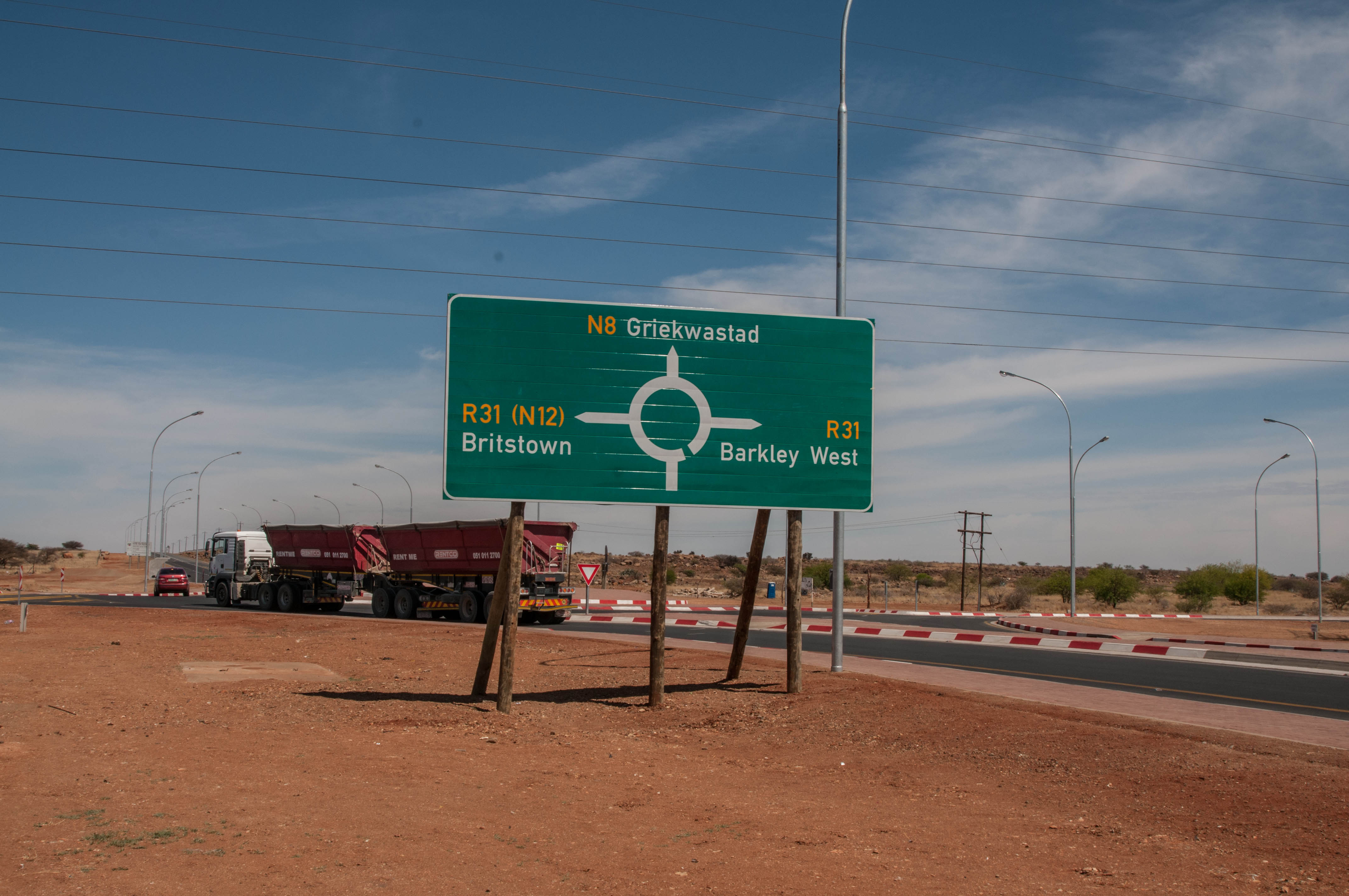
After just over one year of construction, Kimberley boasts a completed road safety upgrade at three major intersections that were upgraded to traffic circles. 

These intersections, which all cross the R31 coming into Kimberley, are the N12 from Hopetown, the N8 from Griekwastad and the R357 from Douglas, and were identified with a view to reduce the number of serious and fatal motor vehicle accidents that have occurred over the years, and ultimately improve the safety for all road users. 

The project, which started with construction in August 2017, was completed in October 2018, leaving three new traffic circles with pedestrian facilities and bus shelters. 

Petronella Theron, SANRAL Project Manager, said: “Particularly on the R31, vehicles had to come to a complete stop when crossing the N12, which had free-flowing traffic. Often motorists on the R31 mistook the intersection for a four-way crossing, resulting in them turning into oncoming traffic, with serious and sometimes fatal consequences.  

“The upgrade of the intersections to traffic circles will go a long way to improve the safety and ultimately reduce motor vehicle accidents.” 

According to Assistant Resident Engineer, Joubert Swanepoel, the main objective of a traffic circle is to reduce the incoming approach speed, reduce the angles of conflict between vehicles, and, ultimately, reduce the severity of accidents when they do occur. 

SMMEs benefit 

The project had a budget of R115-million, of which R33-million was spent on SMME contractor development.  

“This project connected scores of SMMEs with economic and developmental opportunities that had a significant impact on the regional economy,” said Pieter Muller of Taupele Construction. 

Furthermore, 169 locals and 17 skilled workers from outside the district benefited from work opportunities over the past year since construction has been underway. 

Maria Mooketsi, owner of Onkabetse Civils and Mining, is one of the SMMEs on this site.  

She expressed huge gratitude for being granted the opportunity to work, learn, grow and develop under the mentorship of Taupele Construction, while providing work opportunities to 10 others. 

“We looked at various options for road safety upgrades and, in the end, converting the intersections to traffic circles was the most viable option. Road safety remains a key priority for SANRAL and where we can deliver road transport solutions that aid and improve overall safety we are determined to do so,” concluded Theron.

N7 upgrade spearheads economic development

More than 500 job opportunities have been created and a legacy of empowerment will be left behind after completion of the construction work. 

For SANRAL, it is crucial that its projects must not only significantly contribute to economic development and job creation, but that a legacy of empowerment must be left behind after the completion of the construction work. 

The upgrade of the N7 in Malmesbury goes way beyond construction and has social inclusion at its very core.  

With a budget of R505-million, this project has created more than 500 work opportunities for residents since January 2015. 

This has far-reaching consequences in terms of the economic development of the town. 

Upgrades 

The existing single carriageway of the N7 Section 1 from kilometre 48 to  km 52 is being upgraded to a dual carriageway freeway, which would tie into the existing dual carriageway section beginning south of the Darling Road Interchange at km 52. 

This interchange is being upgraded in order to improve the capacity for traffic movement between the western and eastern parts of Malmesbury, situated on opposite sides of the N7.  

This is accomplished by dualling the Darling/Bokomo road under the N7, and improving the layout of the N7 ramps and ramp terminals. 

Alexi Maravelias of AECOM, SANRAL’s Consulting Engineers on this project, said: “This is a multi-phased project and our specific section, which spans approximately 4.5km, involved intense rehabilitation of the existing road, as well as the re-construction of 13 structures.” 

Stefanutti Stocks and Power Construction formed a consortium to ensure they could draw on the highly-specialised skills needed for a project as complex as this one. 

Community wins 

Poens Venter, MD of Power Construction, was highly pleased that the improved interchange not only improves traffic flow but also brings the residents of Wesbank closer to jobs and other amenities within the town of Malmesbury, thereby vastly increasing social inclusion in this area. 

For SANRAL, it is crucial that its projects must not only significantly contribute to economic development and job creation, but that a legacy of empowerment must be left behind after the completion of the construction work. 

Project Liaison Officer on this project, Lilian Leukes, has put her heart and soul into ensuring she facilitates as many developmental opportunities as possible for the residents to benefit from inclusion in this project.  

“As a result of this project many of our local residents have been able to put food on the table, while others have used this as a launchpad to further their education and career growth,” said Leukes. 

On a project of this magnitude challenges are par for the course and, according to Grant White, Site Agent of the Stefanutti Stocks Power Consortium, pedestrian and traffic accommodation during construction was one the major challenges.  

White lauded the community for their patience and cooperation during construction. 

“This project is in the final stages and we are incredibly proud not only of the world-class quality of the N7 in terms of the road-user experience, but also of the major role the construction industry has played and continues to play in spearheading economic development in our country,” said Steph Bredenhann, SANRAL Project Manager.

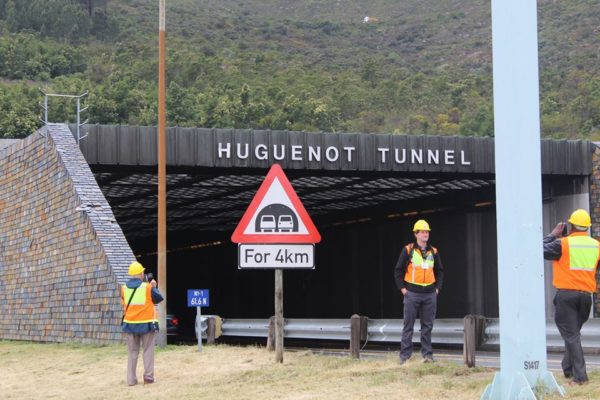
No planned full-scale closure of the Huguenot Tunnel

Essential upgrades and repairs to the South Bore could be done without having to close the tunnel completely for extended periods of time. 

At this stage it seems viable to do these repairs mainly at night, when traffic volumes are at their lowest, to ensure the tunnel can be operational during the daytime.

The South African National Roads Agency (SOC) Limited (SANRAL) has investigated various options for urgent and necessary upgrades and repair work to the current operational South Bore of the Huguenot Tunnel, with minimal disruption and inconvenience to the road user a vital aspect of the planning. 

Randall Cable, SANRAL Western Region Manager, said: “Over the past few months we have fielded various questions regarding the closure of the tunnel and the duration thereof while upgrades are underway. In considering the travel patterns of road users, peak traffic times, the economic impact of a full-scale closure and detour routes, we have concluded that the essential upgrades and repairs to the South Bore could be done without having to close the tunnel completely for extended periods of time.  

“At this stage it seems viable to do these repairs mainly at night, when traffic volumes are at their lowest, to ensure the tunnel can be operational during the daytime. This may involve, intermittently, only permitting light motor vehicles through the tunnel and diverting all heavy vehicles along alternative routes for short periods of time.” 

Towards the end of 2017, SANRAL hosted tunnel experts from around the world for a conference on Road Tunnel Operations.  

From this engagement two outcomes were clear. SANRAL must (i) ensure that enough systems are in place to communicate with road users to direct them to safety in case of an emergency in the tunnel and; (ii) to design and implement the commissioning of the North Bore to ensure the tunnel meets international standards in terms of safety and operations. 

Upgrades and repairs 

Refurbishment of the South Bore is currently planned to commence in the second half of the year and to be completed by January 2020, while construction on the North Bore is targeted for January 2021. The twin-bore operation could be effective by December 2025. 

Alternative routes are available and include Paarl – Du Toit’s Kloof Pass – Worcester (±62 km) and Paarl – Gouda -Tulbagh – Worcester (±121 km). Depending on origin and destination, the N2 is also an option. 

“In the coming months we will make final announcements with regard to the scheduled repairs and upgrades to ensure that road users are fully informed of the work being carried out and the effects this may have on traffic flow,” concluded Cable. 

The key is to ensure that the agency gives real-time, accurate information to road users, so they can plan their trips accordingly.

N14 upgrade will save lives

With industrial and residential expansion, the Kathu North and South intersections were experiencing significant increases in traffic volumes, which further compromised safety and road capacity. 

The total project cost is R66-million, of which 23% was earmarked for SMME contractor development.  

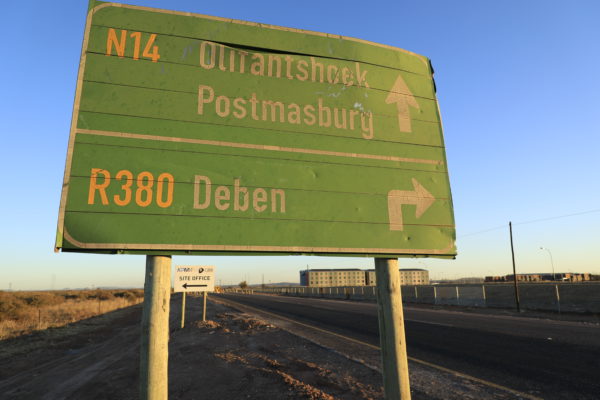
In evaluating the safety and capacity of the N14 between Olifantshoek and Kathu, SANRAL set out to improve and upgrade three intersections – Olifantshoek, Kathu South and Kathu North. 

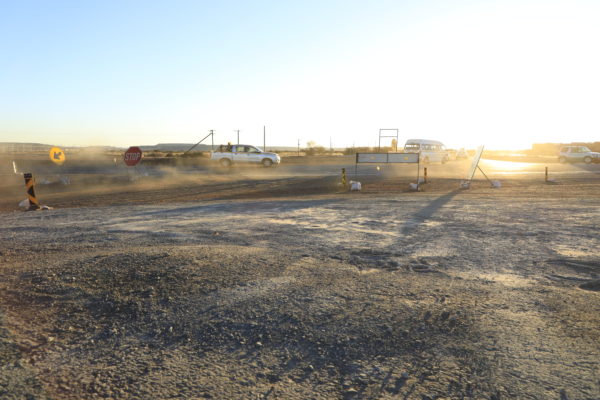
Friedl van der Merwe, SANRAL Project Manager, said: “The intersections were considered unsafe for motorists, as those travelling from Olifantshoek on the N14 would have to come to a complete stop at the intersection to either turn left towards Kathu or right onto the R325 towards Postmasburg.  

“Very often motorists did not anticipate this complete halt on a national road, and proceeded straight across the intersection into the veld, sometimes resulting in tragic fatalities.” 

With industrial and residential expansion, the Kathu North and South intersections were experiencing significant increases in traffic volumes, which further compromised safety and road capacity. 

“Chicanes are in place to slow down particularly heavy trucks approaching the intersections and special attention was also given to pedestrian safety by incorporating sidewalks for safer pedestrian access,” said Steven Gerber Resident Engineer from GIBB Consulting Engineers. 

SMMEs benefit 

The total project cost is R66-million, of which 23% was earmarked for SMME contractor development.  

Furthermore, SMMEs were sourced from the surrounding communities and, where needed, attention was given to capacity building and skills development. 

“When I initially came on board this project, I had limited knowledge and experience in road construction, but thanks to the training and development I am doing far more advanced work,” said Lazarus Phala, one of the SMME subcontractors on the project. 

This project also incorporates a partnership with the Northern Cape Department of Roads and Public Works, which saw SANRAL take care of the repair, widening and re-seal of approximately 3.5km of the R380, which forms part of the Western leg of the Kathu South Intersection. 

Construction started in August 2017, and it is anticipated that work will be completed early in 2019. 

A video link to this project can be found here.

Hopefield interchange – small town, big development

The value it adds to the life of ordinary people who benefit from work opportunities, training and exposure, cannot be overstated. 

SANRAL is incredibly proud of the legacy it leaves in this West Coast town, where many people can access further developmental opportunities with the skills and knowledge, they have acquired during the time spent working on this project.

The Hopefield Interchange is designed to link the R45 to the new N7, with a focus on safer access and increased capacity of the road, given the continuous expansion and development of the surrounding towns. 

Leon Oosthuizen, resident engineer from Consulting Engineers, Royal HaskoningDHV, said: “In a nutshell, we are building approximately 5km of dual road on the N7, 2km of ramps at the new interchange, three separate bridges and an agricultural underpass to assist farmers with getting their machinery and harvests safely underneath the N7.”  

A project of this complexity does not go unchallenged.  

“For the first year, a large amount of time was spent removing roughly 350 000m³ of clay soil to accommodate the roads underneath the bridges,” said Marius Matthee, Construction Manager for the contractor, Triamic Construction. 

This upgrade started in January 2017, comes at a cost of R334-million and is due for completion in July 2019. 

Locals respond 

The value it adds to the life of ordinary people who benefit from work opportunities, training and exposure, cannot be overstated. 

“I am deeply grateful for the opportunity to learn and earn a living. This project has given me a sense of pride because I can now pay my own way in life,” said Lawrence Gashez, a local resident who has been trained to do steel fixing on the site. 

Yolanda Makhubalo, from Malmesbury is one of the youths identified for learnerships on the project and after having aced the theory she is making her presence known on site, demonstrating a passionate hunger to learn from the experts. 

SANRAL is incredibly proud of the legacy it leaves in this West Coast town, where many people can access further developmental opportunities with the skills and knowledge, they have acquired during the time spent working on this project. 

The video link to this project can be found here.