
Blog

Road Incident Management System saves time and lives

The new technology is set to improve the way the system works and is anticipated to be rolled out in the Northern Cape by mid-2019.  
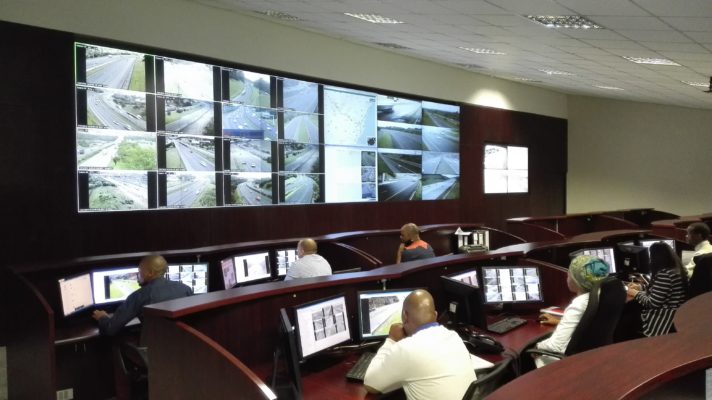
Detecting the incident, recording the details, deciding who to dispatch, waiting for the respondents to arrive on the scene, assessing the situation and applying the required remedy need to happen fast.

The Northern Cape is the largest province in South Africa, taking up 30.5% of the total land area.  

With 3257km of national roads, 4989km of provincial surfaced roads and 22746km of provincial gravel roads, which means that when responding to any incident, whether big or small, time is of the essence.  

Processes 

Detecting the incident, recording the details, deciding who to dispatch, waiting for the respondents to arrive on the scene, assessing the situation and applying the required remedy need to happen fast.  

Rossouw Dreyer, acting operational manager of the Northern Cape department of health, emergency medical services, said: “Currently we work on an old-school pen system where the call is logged, and the operator tries to extract as much information from the caller before activating the necessary response teams. The new system we are in the process of procuring is built on a computer-aided dispatch (CAD) model.  

“With the new technology, the caller is identified via caller ID, the GPS coordinates pick up the location and the computer prompts the operator with relevant questions in order to make a full assessment of the situation. The relevant response teams are then dispatched, and the system can even detect which vehicles are closest to the incident and provide an estimated time of arrival, so that the operator can keep the caller informed every step of the way.”  

After the emergency response teams have left the scene and the situation has been stabilised is when SANRAL’s Routine Route Maintenance (RRM) teams kick in to clean up and get the road safe and ready for road users, particularly after it has been closed due to a crash.  

“We are the last cog in the wheel of response, and we make sure the road surface is cleared of all debris and safe for vehicles to drive on,” said Zandile Gaba, Route Manager in the Northern Cape.  

The new technology is set to improve the way the Road Incident Management System is rolled out in the Northern Cape and it is anticipated that the CAD system will be implemented by mid-2019.  

Getting help to those who need it most is a key priority in SANRAL’s approach to road safety and response management – embracing technology that will take a good system to being great.
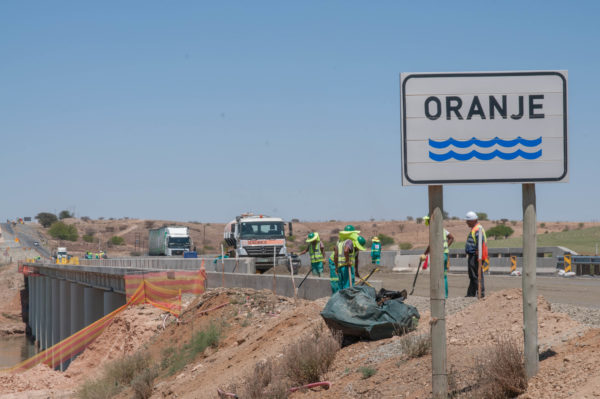

A bridge over the Orange River is Hopetown’s lifeline

The N12 bridge, which has served road users for well over 50 years, is now an impressive structural masterpiece. 

In line with SANRAL’s Transformation Policy, R20-million of the R100-million budget for this project was earmarked for SMME development.

The countdown until the first vehicles roll over the for the refurbished bridge over the Orange River on the N12 outside Hopetown in early 2019 has begun.  

Construction started in 2016 and, notwithstanding some challenges along the way, including working under live traffic conditions and violent protests in the Northern Cape that at times halted construction, the work is on track.  

What was once a 9.3m bridge that has been serving road users for well over 50 years, is now an impressive structural masterpiece with a width of 15.4m, significantly increasing the capacity of the N12 as a major industrial and commercial artery between the Northern Cape and, particularly, the Western Cape.  

Tiago Massingue, SANRAL Project Manager, said: “Building piers for a 12-span bridge in the Orange River was no walk in the park. We had to time our work carefully, taking seasonal rainfall, the strength of the river, environmental regulations and most importantly, the safety of the workers into account every step of the way.  

“However, nature has a way of sometimes aiding technology and for the most part we were very fortunate to have had favourable weather conditions, particularly in an unforgiving climate like that of the Northern Cape.“  

SMMEs always win 

In line with SANRAL’s Transformation Policy, R20-million of the R100-million budget for this project was earmarked for SMME development, which not only created a platform for economic growth of small businesses in the surrounding areas, but directly impacted on job creation for the local community.  

Abraham Swartz from Hopetown, one of the subcontractors on this project, is incredibly proud of the 10 residents he is able to give gainful employment to.  

“I have learnt so much from the main contractor, particularly on safety practices on site. It was my first time working on a project of this magnitude and I am grateful to SANRAL for giving us small businesses the opportunity to work alongside the big players and be capacitated for long-term sustainability,” said Swartz.  

Upon returning to site early in January, there were just a few finishing touches to bring to life a majestic concrete creation that is ready to serve road users for the next 50 years.

FAQs on Community Development Projects

SANRAL is committed to the transformation of the engineering and construction sectors through community development projects. 

A few FAQs to put your mind at ease.

How does SANRAL decide which projects to support? 

The community development projects chosen may or may not be directly related to SANRAL construction or maintenance activities.  

The national road network stretches across South Africa and benefits broader developmental objectives, such as economic growth and job creation. But it is also important to demonstrate the specific benefits of these projects to local communities who live close to the road network.  

People are justifiably asking questions about the relevance of construction projects: How will they benefit locals? How are they changing lives? 

What value does SANRAL add?  

The national roads agency has a clear commitment to the transformation of the engineering and construction sectors.  

Firstly, we are committed to breaking down monopolies in supply chains and ensuring the broad-based participation of black South Africans.  

Secondly, we put in place clear guidelines and structures to ensure local communities benefit directly from the procurement of goods and services from local suppliers to giving preference to the creation of local jobs. 

How can I participate in a local community development project?  

In each area where SANRAL is involved, we will set up project liaison committees (PLCs) to facilitate the involvement of local communities and enterprises.  

Companies or groups who want to participate are advised to approach their local PLCs for more information. 

How will local businesses benefit when it comes to procurement? 

SANRAL is engaging with original equipment manufacturers and suppliers to ensure that black individuals, contractors, suppliers and entities participate in fields such as manufacturing, distribution, installation and maintenance.  

In addition, it will promote the use of innovative materials that can offer opportunities for previously disadvantaged people to participate in these fields. 

Will SANRAL provide support for emerging enterprises?  

SANRAL’s aim is to help grow emerging black-owned enterprises through construction projects.  

We want them to become contractors who will be able to bid for major projects in the broader engineering and construction sectors.  

Each SANRAL project is accompanied by a programme for skills development, training and empowerment.  

We will also identify, train and nurture black small contractors through projects such as the Community Development Programme (CDP) and the Routine Road Maintenance (RRM) programme.  

Will SANRAL’s guidelines also apply to its contractors?  

All our contractors and service providers are required to provide us with clear transformation plans that outline their own commitment to the participation of black South Africans.  

They will also have to use a SANRAL-approved database of subcontractors that will be drawn up in consultation with PLCs.  

SANRAL will promote joint ventures, consortiums and partnerships on all its projects to ensure inclusivity, participation and the growth of black businesses. 

What are the implications of SANRAL’s Transformation Policy and Horizon 2030 for the agency’s broad business objectives?  

The Transformation Policy will apply to all SANRAL activities in the construction and engineering sectors, but also to services provided in fields such as property development, information and communications technology, finance and audit, legal and professional services, marketing, advertising and communications. 

What benefits will the new policies bring to education and training?   

SANRAL will set specific targets for scholarships, bursaries and internships to grow the pool of young professionals.  

We will also continue to support educational programmes and partnerships with universities and education departments to improve the quality of teaching in subjects such as maths, science and technology.  

Our Family Maths and Family Science initiative, in partnership with the University of the Free State and the Department of Basic Education (DBE), are good examples of such programmes.  

Schools or communities who want to participate in these programmes are advised to get more information from the district offices of the DBE.  

SANRAL’s Head Office is in Pretoria, Gauteng, and can be contacted during office hours on 012-884-8000.

SANRAL’s social responsibility

The road agency incorporates strong social transformation principles into the conduct of its core business. 

The terms of all the agency’s contracts are such that SMMEs – and particularly black-owned SMMEs – are prioritised for sub-contracts in all construction projects and road maintenance work.  

The South African National Roads Agency (SOC) Limited (SANRAL) takes seriously its potential to help alleviate the major social and economic challenges of our country, namely, widespread poverty, high unemployment and extreme inequality.  

It does so principally by incorporating strong social transformation principles into the conduct of its core business. The terms of all the agency’s contracts are such that SMMEs – and particularly black-owned SMMEs – are prioritised for sub-contracts in all construction projects and road maintenance work.  

In addition, there is an attempt to promote local sourcing of services and the participation of women and youth, not only through sub-contracting but through employment on construction and maintenance projects, and associated training. 

Further avenues for creating social value are:  

  • SANRAL’s community development projects, which enhance road infrastructure in communities close to, but generally off the national road network.  
  • Its road safety programme, which combines the engineering of safer roads with road safety education and interventions to improve the response to road incidents.  
  • The contribution it makes to universities in terms of their training of engineers and road transport professionals, the research they undertake and their projects to improve performance in maths and science at school level.  

Toll road concession companies are all contractually obliged to undertake social programmes and they fulfil this responsibility in different ways, according to local needs and their corporate culture. 

Contracting SMMEs 

SANRAL provided 1 886 opportunities for SMMEs to participate in road construction, rehabilitation and maintenance projects during 2017/18, and the total amount earned through these contracts was R3 087-million.  

Black-owned SMMEs derived the greatest benefit, accounting for 59% of all SMME’s participating earning 77% of the total rand value.  

Contracts awarded to black-owned SMMEs have increased, both in absolute numbers and percentage terms. Similar trends are apparent in relation to the value of work undertaken by black-owned SMMEs.  

These figures indicate the successful implementation of prevailing empowerment polices in SANRAL.  

Training of workers  

Contracts opened training opportunities for 3 421 workers in 2017/18 and the total number of courses undertaken was 6 748. 

Women constituted 42% of those afforded training.  

The three-year trend indicates that the number of trainees in 2017/18 was not greatly affected by the decrease in work opportunities in 2017/18, although fewer workers attended more than one course.

Working with the people for the people

 SANRAL’s approach to its business is always to take the needs of communities into account.  

According to Ismail Essa, SANRAL’s Transformation Manager, their aim is to have 30% of contract work done by local SMMEs, preferably black and woman-owned.

When we build roads, we also build communities. We do this for those who live close to our roads, but also in a wider sense.  

The latter we help with scholarships and bursaries, arrange for the intake of interns, we have partnerships with several universities to enhance the knowledge of science and maths among school children, as well as support chairs at three universities to grow the understanding of engineering and maths. 

We work very closely with the communities who live near our roads. We have a very deliberate approach, best expressed by the principle: work with the people for the transportation needs of the people.  

Local SMMEs win 

Our aim is to have 30% of contract work done by local SMMEs, preferably black and woman-owned.  

They are continuously trained to be able to manage their companies and their staff also undergo training courses to teach them various technical skills related to the work of road building and maintenance.  

The intention is to leave behind skills and experience to assist the SMME and its employees to find work once the SANRAL contract has come to an end.  

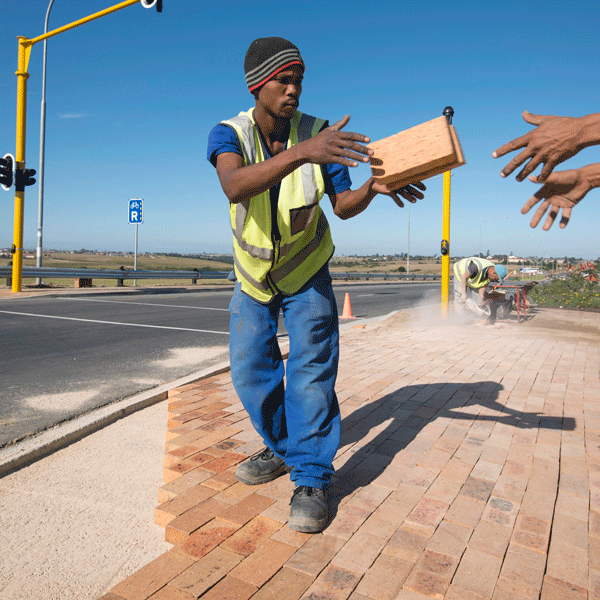
We know our roads are not only for cars and trucks. We keep other road users, such as cyclists and pedestrians, in mind too, and where necessary, build special facilities for them.  

We take road safety seriously and run road safety programmes in schools near our construction projects.  

Project Liaison Committees 

We establish Project Liaison Committees (PLCs) for all our projects in the different communities where we are active.  

The PLCs consist of local people, contractors, businesses, interest groups and SANRAL-delegated representatives.  

These committees are the voice of the community, communicating its needs to SANRAL.  

Economic growth without proper roads is impossible. But in the end, it is all about the people we serve.  

SANRAL’s approach to its business is always to take the needs of communities into account: working with the people for the people.  

This is an opinion piece by Ismail Essa, SANRAL’s Transformation Manager.

Beyond Inclusion

The roads agency seeks to expand on the strides already made to integrate female employees in its operations and has challenged itself to go beyond inclusion.  

According to Vusi Mona, SANRAL General Manager: Communications, while construction is an industry that is one of the most consistent providers of jobs in South Africa, it has the highest proportion of male employment compared with other industries. 

Leading CCTV News anchor Tian Wei once made the very salient point: “Any society that fails to harness the energy and creativity of its women is at a huge disadvantage in the modern world.”  

The ideal of better inclusion of marginalised groups is by no means a new one. Countries around the world have been grappling with the ideal of integrating them in their economic activities.  

The reason for this is, to some extent, an expansion of the global consciousness; an increased awareness of the brutal and unjust exclusion of certain groups in our economic past.  

The point Tian Wei makes is one that should hit home for any business wanting to operate successfully in a free market: excluding people based on accidental properties such as gender, race, creed or background from partaking in business immediately cuts your eligible workforce by half (if not more).  

It also deprives the business of a diversity of perspectives and a wealth of knowledge that there really is no business case for excluding. Because of South Africa’s history, the main focus of workplace inclusion initiatives and legislation here has been along the lines of marginalised race groups – black, Indian and coloured people.  

Gender inclusion 

But it’s time to widen our focus – it’s time to talk about gender inclusion. The meaningful inclusion of women has been difficult not just because our focus has been on race rather than gender.  

Our society is built on deeply ingrained patriarchy – so deeply ingrained that most of us fail to see or understand it even when it is pointed out to us. In industries such as construction and engineering, the old ideas of what constitutes suitable work for women face even steeper barriers.  

While construction is an industry that is one of the most consistent providers of jobs in South Africa, it has the highest proportion of male employment compared with other industries.  

Why is that? Well, fundamentally, construction and engineering are traditionally perceived to be an uncomfortable workplace for women – not just because of ingrained misogyny, but also because of the nature of the work.  

As a society, we often encourage boys to “get their hands dirty” and to “get out there and build something”, whereas girls are often chastised for “getting dirty”.  

It is so pervasive that even our toys are gendered – engineering toys for boys and homeware toys for girls. But it’s time to tell girls and women that we need them in the built environment and that it is safe for them to explore it.  

Their skills and perspectives add immense value to all our construction and engineering projects. Simply regulating the inclusion of women in this sector does not guarantee success.  

A changed attitude 

Regulation is just the start. What we need is to fundamentally change attitudes, so that regulation is not the only tool we use to implement change. This is a mammoth task we should all be getting involved in.  

It requires that patriarchal attitudes and ideas of gender roles are either grossly overhauled or discarded altogether. This means we need buy-in from the whole workforce, so we all create that change regardless of our gender.  

The very same men who dominate the built environment must be the ones who advocate for women to explore the prospects of the industry – and call out sexism and misogyny in their own peer groups.  

We must also encourage women to “get their hands dirty” and take an active role in physically building our country’s future. We must create safe working environments that will allow female employees to feel like meaningful contributors without being subjected to prejudice.  

This will not be simple. It requires that organisations workshop employees on the importance of diversity, with the goal of leveraging each other’s strengths and achieving business objectives. All prejudice is learnt. We must unlearn these prejudices we have all perpetuated for so many years.  

An ideal South African entity 

As a state-owned entity, the South African National Roads Agency (SOC) Limited (SANRAL) is partly entrusted with being an example of the ideal South African organisation.  

That is: being productive, visionary and, of course, inclusive. The roads agency seeks to expand on the strides already made to integrate female employees in its operations and has challenged itself to go beyond inclusion.  

Beyond inclusion to us means doing more than just regulating, more than talking a good game (although having open conversations about inclusivity certainly helps). But it’s not about policy.  

It is about making sure that room is made for women in corporate leadership, in a way that is not simply nominal. Beyond that, it requires pushing for facilities, tools and gear for women, until it is standard practice and not a unique requirement in some workplaces.  

Going beyond inclusion is about stepping above regulatory conversations and taking action that will create a space for women to contribute meaningfully and become our partners in equity.  

Some things just cannot wait. We must stand up now for the inclusion, valuing and respect of women in the built environment.  

This is an opinion piece by Vusi Mona, SANRAL’s General Manager: Communications.

Road funding: What are our options?

The total estimated funding requirements to sustain the South African road network, including addressing backlogs in surfacing and capacity expansion, is R116.1-billion. 

According to SANRAL General Manager of Communications, Vusi Mona, new road funding models need to be evaluated.

Funding road infrastructure is an issue worldwide. There are more arguments about which funding mechanism should be used than there is money. And there are many mechanisms.  

In Australia there is a fuel tax, a vehicle sales tax, a road user charge, vehicle registration fees and stamp duties. In Brazil there is a tax on the import and sale of oil products.  

In France there is no special tax, while next door, in Germany, there is. But they share a common denominator – public-private partnerships.  

They all have one approach: private money must see a return on investment – and thus tolls are raised. And this is not universally well received. All of this is true in South Africa, too.  

There are many demands on our fiscus, not enough state funding, some reliance on the private sector, resistance to tolling and yet there is a huge demand for more and better roads.  

Questions must be asked about the most suitable funding model for road infrastructure.  

The fuel levy alone is insufficient. The future contribution of the fuel levy to the Central Revenue Fund is uncertain, with the projected electric car take-off in 2022 and established vehicle efficiency technologies.  

In less than five years, electric cars will cost the same as their internal combustion counterparts and that’s the point of lift-off for sales.  

Funding models 

The total estimated funding requirements to sustain the South African road network, including addressing backlogs in surfacing and capacity expansion is R116.1-billion.  

The current allocation for the road network is R52-billion. What can we afford and how do we prioritise? 

So, a conversation has started on funding models. Yet, an example exists that is similar enough, yet different enough, to warrant our attention.  

It has several advantages: it ensures quality, mitigates corruption and takes some of the funding burden off the state’s shoulders. It happens in Colombia, which not only has some of the worst roads in South America, but also not enough.  

To get around the problem, it launched the National Development Finance Corporation (FDN) in 2013.  

What makes it different from other such corporations is that it funds, at most, 25% of any project. The implication is clear: the rest of the project must be packaged in such a way that private investors would find it attractive enough. 

Attractive in many ways: its shareholding, for example, is held by the Colombian state, but also by private, albeit foreign banks, as well as international and regional development institutions.  

And they are all represented on the board, which has to approve all tenders. This makes it very difficult and unlikely that there will be any corruption in a tender.  

This is important, as graft is quite common in infrastructure projects across the world. To know in advance that it is unlikely to occur is a huge advantage.  

The project also has to offer acceptable risks and returns to interest private investors. The result is that pie-in-the-sky-projects, or those beloved by politicians but of no immediate value to the economy or nearby communities, will not see the light of day. 

Almost by definition this means that if the FDN is involved, there is an acceptance that it will be a high-quality project.  

Central to all of this that private investors won’t go near to such a state project if there is not some guarantee that the funds invested will supply a return comparable or better than the open market could have done. 

The only way to do this is for users of the infrastructure, partly funded by the private sector, to continuously pay when they use the supplied facility – in this case a road.  

In plain English, these roads have to be tolled and the toll must be paid. In addition, there must be an undertaking that where tolls are not paid, the state will make up for losses through a subsidy.  

The advantages of the Colombian approach are enormous: less chance of corruption, a guarantee of necessity and quality, users pay for the use of the infrastructure and there is political will to ensure that the payment occurs. 

This is an opinion piece by Vusi Mona, SANRAL’s General Manager: Communications.

Connecting communities to opportunities

SANRAL creates job opportunities and helps develop skills by training locals in the fields of construction and road building, while encouraging active participation of local small businesses.

SANRAL CEO, Skhumbuzo Macozoma, said the roads agency wants to ensure communities participate in empowerment initiatives.

Developing and uplifting communities is part of the ethos of the South African National Roads Agency (SOC) Limited (SANRAL).

SANRAL does not just develop in the physical sense – in terms of infrastructure – it ensures the communities along the country’s roads develop economically as well.

Since its establishment 20 years ago, SANRAL has ensured that a significant portion of its work benefits the local labour force, including small-, medium- and micro-enterprises (SMMEs) situated close to its national road network.

Long-term economic benefits

Educating and training young people is also an important aspect of SANRAL’s work. The key motivation is to enable local communities to continue to enjoy the long-term economic benefits of SANRAL projects long after they have been completed.

The agency wants to ensure communities participate in empowerment initiatives. SANRAL’s community development programmes focus on providing pedestrian facilities and safe access points next to the national road network.

SANRAL creates job opportunities and helps develop skills by training locals in the fields of construction and road building. It encourages – and, in fact, requires – the active participation of local small businesses on all our projects.

During the last financial year, SANRAL has undertaken 24 community development projects in various provinces.

The combined value of these amounted to R257-million. The prioritisation of SMMEs, particularly those owned by women and black people, including the hiring and training of local workers, continues community development projects where labour-intensive construction methods are used.

The power of education

Through various partnerships with universities, SANRAL also continues to promote the teaching and learning of young people.

These partnerships include the SANRAL Chair in Mathematics, Science and Technology Education with the University of the Free State; the Science, Technology, Engineering and Mathematics Pipeline Project (STEM PP) at Nelson Mandela University and the Family Maths and Science Programme.

To strengthen its community development efforts, SANRAL is developing a focused strategy to ensure maximum impact.

As stated in the National Development Plan, roads are South Africa’s largest single public asset. They are conduits for economic activity. We connect people so they can do business.

This is an opinion piece by Skhumbuzo Macozoma, SANRAL CEO.

Bridge work halted

Construction of the Mtentu bridge on the N2 Wild Coast road has been halted due to violent protests. Locals have been employed on the project but those that did not find jobs are not pleased. SANRAL strongly condemned the violence. Work will resume when the situation is under control and safe for all concerned.

N3 to be upgraded

Public hearings in connection with the proposed capacity improvement on the N3 between Hammarsdale and Pietermaritzburg are ongoing. The expansion has become necessary because that section of the N3 is near full capacity. The plan is that extra lanes will be added and interchanges reconfigured.