Blog

Frequently Asked Questions about SANRAL in Limpopo

Learn more about what SANRAL is doing in Limpopo.

We answer your questions about Limpopo.

WHAT IS THE LENGTH OF SANRAL ROADS CURRENTLY IN LIMPOPO

The length is 3 645km.

LIST OF SANRAL ROADS IN LIMPOPO:

  • N1 from Gauteng-Limpopo boundary to Beit Bridge border post
  • N11 from Mpumalanga-Limpopo boundary to Grobler’s bridge border post
  • R33 from Marble Hall to Lephalale
  • R36 from Mpumalanga-Limpopo boundary to N1 Bandelierkop
  • R37 from Polokwane to the Limpopo Mpumalanga boundary
  • R40 from Mpumalanga-Limpopo boundary to R71 Phalaborwa
  • R71 from Polokwane to Phalaborwa 
  • R81 from Polokwane to Giyani 
  • R81 Gasekgopo to Munnik
  • R101 from Bela Bela to Polokwane 
  • R510 from North West-Limpopo boundary to Monte Christo
  • R511 from North West-Limpopo boundary to R510 near Thabazimbi
  • R516 from Bela Bela to Thabazimbi
  • R518 from Lephalale to Lebowakgomo 
  • R520 from Vaal water to R510 
  • R521 from Polokwane to Vivo 
  • R523 from Vivo to Masekwaspoort
  • R524 from Makhado to Kruger National Park (Punda Maria)
  • R526 from Mica to R71
  • R529 from R71 to Giyani
  • R531 from R40 to Kruger National Park 
  • R532 from R36 to Mpumalanga-Limpopo boundary 
  • R555 from Stofberg to Burgersfort
  • R567 from N11 to Seshego 
  • R572 from Monte Christo to Tom Burke 
  • R573 from Siyabuswa to Marble Hall (Moloto?Road)
  • R574 from R33 near Groblersdal to Mmotwaneng 
  • R578 from Makhado to Giyani 
  • R579 from Mmotwaneng to Lebowakgomo 

WHAT PROJECTS ARE CURRENTLY UNDERWAY IN LIMPOPO? 

  • R573 Moloto Road 
  • N1 Polokwane ring road
  • N1 Musina ring road
  • R518 Lephalale to Marken 

WHY DOES SANRAL DO SO MUCH MAINTENANCE WORK ON LIMPOPO ROADS?

SANRAL does so to protect the roads to international standards. What the agency has spent on routine road maintenance has remained roughly consistent with amounts spent in the last two years as these mundane activities are critical to preserving the lifespan of roads and maximising the return on capital investment.

HOW HAS THE N1 HELPED UNLOCK THE ECONOMIC POTENTIAL OF THE REGION?

It has provided the necessary road connection between different regions. This enables the efficient transportation of goods, coal and produce. It also provides a good connection to Limpopo’s tourist attractions. Importantly, the development of the N1 stimulated the creation of opportunities for contractors, SMMEs and local labour, as well as other related businesses through downstream activities. 

WHY IS THE R573 MOLOTO ROAD UPGRADE IMPORTANT? 

The Moloto Road is an economic route connecting the Limpopo, Mpumalanga and Gauteng provinces. It serves 50 000 commuters daily. This road is notorious for its high fatality rate. Upgrades will have a positive impact on the lives of many people and save lives. The construction of the road will also create employment and opportunities for the development of small contractors, suppliers and other businesses. 

HOW IS SANRAL CONTRIBUTING TO LOCAL JOB CREATION? 

Suitably qualified emerging enterprises are given an opportunity to perform some of the work awarded to main contractors. As per the policy for SMME development, main contractors are required to subcontract 30% of the contract value to SMMEs of CIDB grading 1-6. In certain cases, main contractors enter joint ventures, with an 80/20 split between a 9CE main contractor as the lead partner and lower grading contractors (5CE, 6CE or 7CE) as the JV targeted partner.?? 

WHAT DO BETTER ROADS IN LIMPOPO MEAN FOR OUR ECONOMY?

Road infrastructure plays an important role in the national economy. Limpopo has much to offer tourists. It is vital to have good roads to enable easy access to tourist attractions. Roads are also a conduit to export markets. 

HOW DO I BRING ROAD CONDITIONS TO SANRAL’S ATTENTION?

All SANRAL-managed roads have road signs that display contact numbers on which road conditions on that road can be reported. Otherwise SANRAL’s Northern Region Office can be contacted during office hours on 012-426-6200. 

Progress on Musina’s ring road

It will function as a freeway with controlled access to and from the N1 highway.? 

The duration of the contract for the outstanding works is 24 months and is estimated to end in October 2021.?

The South African National Roads Agency (SOC) Limited (SANRAL) is pleased to report some progress on the Musina ring road project, which began in 2016 and unfortunately stopped in March 2018. 

Located on the western side of the Musina CBD, the project consists of 8km of new single carriageway roadway with one lane in each direction and paved shoulders. 

It will function as a freeway, with controlled access to and from the N1 highway. After the original contractor was unable to complete the project due to liquidity issues, the contract was ceded under law to a different contractor. 

This was done through a guarantor who obtained prices from several contractors. 

After evaluation, the guarantor proposed the contract be ceded to Raubex. 

Raubex’sappointment includes the completion of some earth and layer works, the bridges and the newlybuilt houses that will be handed over to community members who will be relocated due to the construction of the road. 

Speaking about the impact on SMMEs and local labour, Progress Hlahla, SANRAL’s Northern Region Manager, said: “We are trying to ensure locals and SMMEs who were engaged by the previous contractor can be honoured by the new contractor”.

The duration of the contract for the outstanding works is 24 months and is estimated to end in October 2021.

Driving the growth of Limpopo

Dr Monica Mochadi, the MEC for Public Works, Roads and Infrastructure in Limpopo, believes SANRAL’s contribution to the transformation of the construction sector must be applauded. 

Road safety remains a major concern considering the high volumes of vehicles that travel on our roads, especially during high peak periods.

The Limpopo provincial government is committed to the expansion and improvement of our primary road network.  

Roads play a critical role in all of the priority economic sectors identified in the Provincial Growth and Development Strategy, most notably tourism, agriculture, mining and commerce.  

The bulk of our products and services are carried on the primary road network and none of our world-class heritage and tourism sites would be accessible without the existence of well-designed and well-maintained roads.  

It is encouraging to note some of the critical construction projects that were placed on hold have now resumed.  

We are looking forward to the completion of both the Polokwane and Musina Ring Roads, which will contribute greatly to improved traffic flows on the vital N1 freeway and create a much safer environment for all road users.  

Road safety remains a major concern considering the high volumes of vehicles that travel on our roads, especially during high peak periods.  

We thus welcome the installation of cutting-edge technology near the Kranskop Toll Plaza in Modimolle, which has already contributed to a reduction in fatalities on one of the busiest stretches of roads.  

SANRAL’s contribution to the transformation of the construction sector must be applauded.  

An increasing number of black-owned companies and enterprises owned by women are now participating in construction and road maintenance projects, and acquiring skills that will enable them to grow and create more jobs.  

This is an opinion piece by, Dr Monica Mochadi, the MEC for Public Works, Roads and Infrastructure 

TRAC remains concerned about truck backlog at Lebombo border post

Although truck traffic build-up is not a new dilemma on this part of the route, volumes have escalated considerably since September 2019. 

Road users, local landowners and businesses have approached TRAC about the problem, which has TRAC extremely concerned for numerous reasons.  

As the holiday season approaches  during which high traffic volumes are expected on the N4 Toll Route  Trans African Concessions (TRAC) remains concerned about the truck backlog on the route to the Lebombo Border Post. 

The delays, abouwhich concerns were raised earlier this month, have intensified, with truck queues now starting 5km from the Komati Load Control Centre on some days.  

Although truck traffic build-up is not a new dilemma on this part of the route, truck traffic volumes have escalated considerably since September 2019. 

Lack of capacity 

Road users, local landowners and businesses have approached TRAC about the problem, which has TRAC extremely concerned for numerous reasons.  

These queues not only block farm and business entrances, they also obstruct traffic flow and create safety hazards, which are concerning ahead of the upcoming peak travel period. 

TRAC recently met with Lebombo Border Post management and other stakeholders to understand the reasons behind the backlog, which, according to officials, is mostly due to a lack of capacity at the border.  

The officials said that the truck traffic is simply too excessive to be accommodated adequately.  

In a bid to improve safety in the affected area and alleviate some of the frustration, TRAC has erected a four-way stop at the Komatipoort/Sasol Garage Intersection.  

TRAC believes this will at least improve vehicle movement across the intersection. 

However, further intervention from the relevant authorities is needed to eradicate the problem.  

Clearing procedures must improve drastically and additional human resources are required, especially during the upcoming holiday season. 

TRAC is also of the opinion that expansion is overdue at the Komati Load Control Centre, which is managed by TRAC and owned by SANRAL.  

This should include the expansion of the facility through the addition of a second layby and improvements to the access road.   

Remain patient 

In view of the build-up, TRAC urges all road users to take care when driving on this section of the route, to remain patient and adhere to road regulations.  

TRAC also encourages road users to plan their trips, especially over the holiday period when high traffic volumes are expected.  

The Lebombo Border will be operational 24-hours a day from 13 December 2019 to 13 January 2020, which will alleviate some of the congestion. 

For more information, traffic updates or to report a problem, call TRAC’s 24-hour Helpdesk on 0800 87 22 64/082 881 4444 (RSA) or +258 84 34 34 34 6 (Moz). Alternatively, follow on Twitter @TRACN4Route 

World-class roads for Limpopo’s success

SANRAL’s priority is to ensure there is a viable primary road network in place that can serve as a catalyst for economic growth and development

Skhumbuzo Macozoma, SANRAL CEO, said Limpopo remains a key player in the improvement of our country’s economy..

Our mandate as the national road’s agency is to finance, improve, manage and maintain South Africa’s national road infrastructure.  

Roads in Limpopo have improved significantly since their handover to SANRAL. This has been no easy task, but it has been worth it.  

From SANRAL’s perspective, we have made sizeable investments in infrastructure projects in Limpopo ranging from new road construction and major improvements, to special maintenance and rehabilitation projects.  

Our priority is to ensure there is a viable primary road network in place that can serve as a catalyst for economic growth and development, and facilitate the efficient delivery of all services to communities.  

World-class roads 

Let’s talk about some of the great work our world-class team of engineers has been doing on parts of the 3 645km of Limpopo’s roads under SANRAL’s management.  

They have placed a major focus on ensuring these roads are engineered to international standards, and for the safe and efficient mobility of road users.  

While we have been working hard to maintain these high standards, we have encountered some challenges.  

From delays of some of our project work due to higher than usual temperatures, to a complete halt of work on the Polokwane and Musina ring roads due to financial troubles experienced by the contractor. 

It is with great pleasure, however, I can confirm that there is progress on these sections of the N1, which is a key link to the rest of Africa.  

Another notable project underway in Limpopo is the rehabilitation of the R81 from Gasekgopo to Munnik.  

We are excited about this improvement as the deterioration of this road posed a major safety risk to road users.  

The road works on the R573 (Limpopo section) are progressing well.  

Limpopo remains a key player in the improvement of our country’s economy. Our routine road maintenance projects will also go a long way towards uninterrupted mobility for road users wanting to take advantage of the province’s booming tourism, agriculture and mining industries in the province.  

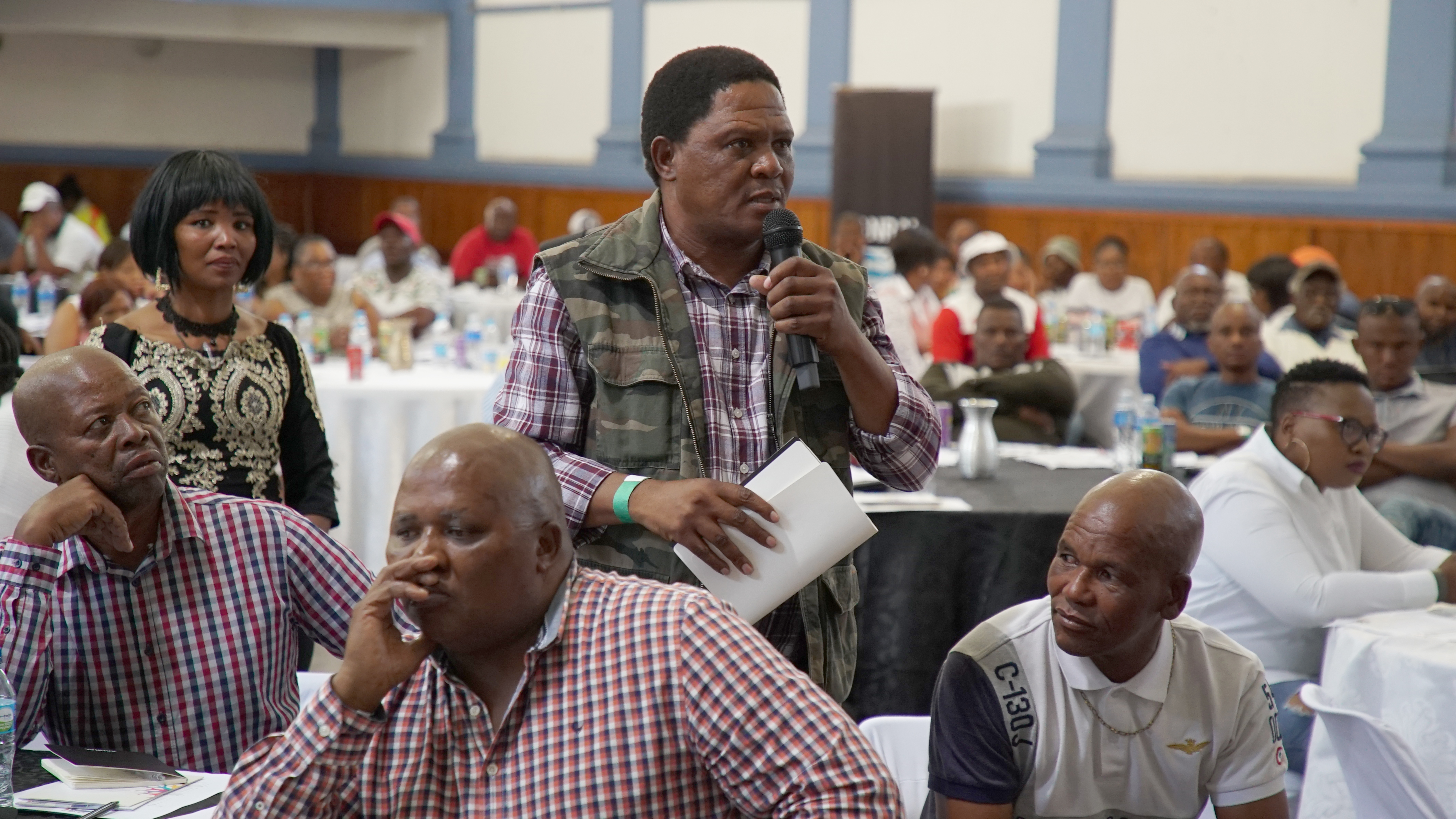
As has become customary for SANRAL in recent years, the regional team, as part of our ongoing engagements with communities around the country, hosted a Taking SANRAL to Elias Motsoaledi event where pertinent discussions around the empowerment of emerging blackowned businesses took place.  

It is our belief that through these engagements and the implementation of our transformation policy, we will be able to meaningfully contribute to the eradication of poverty, unemployment and inequality. 

This is an opinion piece by Skhumbuzo Macozoma, SANRAL’s CEO 

Rising to the challenge of the social and economic climate

Despite financial pressure, SANRAL has continued with construction and maintenance programmes, and remains committed to social and economic transformation.   

Macozoma said that SANRAL’s existing policy of affirming black contractors through the tendering system delivered more opportunities than in previous years.

The social and economic climate prevailing in 2018/19 presented numerous challenges to the South African National Roads Agency (SOC) Limited (SANRAL) 

With a reduced allocation of R12?369million from the fiscus and continued financial pressure on the toll portfolio due to the sustained under-collection of e-toll fees, SANRAL had to carefully consider how to utilise existing resources.  

Our first concern was to keep our programme of construction on toll and non-toll roads moving steadily forward with as little delay as possible, and to protect our road assets by sustaining essential road maintenance work.  

Social justice and economic transformation 

It was also imperative to resist sacrificing or putting “on hold” our commitment to social justice and economic transformation.  

It was equally important to continue our investment in human capital for a future construction sector, in road safety, in the physical development of rural communities and more.  

Our investment in road development, improvement and maintenance for the year was R12?680million – 19% lower than the preceding year.  

Our spending on routine road maintenance remained roughly consistent with amounts spent in the last two years. 

The year also saw the first measures to implement the Transformation Policy launched in 2017.  

SANRAL has always used its contracting power to enable black contractors to participate in the construction industry.  

But it had limits: black contractors encountered solid barriers to securing major contracts for complex projects.  

To counter this, four partnerships were concluded to ease the purchasing of equipment and provision of mentorship.  

Our existing policy of affirming black contractors through the tendering system delivered more opportunities than in previous years.  

However, the value of actual work performed by SMMEs and the number of work and training opportunities were affected by the number of work projects available.  

Yet, we allocated the highest amount yet – nearly R25-million – to bursaries for staff members, university students and scholarships for high school learners.  

Our road safety education programme reached approximately 200 000 learners and we continued to fund mass media campaigns to improve road safety.  

This is an opinion piece by Skhumbuzo Macozoma, the CEO of SANRAL. 

Taxes and tolls pay for national roads

Toll levies and borrowings on commercial markets have been the main sources of finance for national toll roads managed directly by SANRAL. 

Revenue from toll collections decreased by 18%. The tariff adjustment on all toll roads, which is guided by the Consumer Price Index, was 5.58% for the year. 

The South African National Roads Agency (SOC) Limited (SANRAL) has two distinct areas of business, the operation of toll roads and the operation of non-toll roads, which are funded in different ways.  

An annual grant from the national fiscus funds the development, upgrading, repair and maintenance of national roads that are not subject to tolling  87% of the national road network.  

Toll levies and borrowings on commercial markets have been the main sources of finance for national toll roads managed directly by SANRAL.  

These constitute some 7% of the national road network. However, due to the under-collection of e-tolls on the GFIP, Government grants have become a significant supplementary source of funding for the toll portfolio.  

In addition, there are toll roads – comprising the remaining 6% of the national road network – for which 30-year concessions have been granted to private companies.  

These companies, TRAC, N3TC and Bakwena, have concluded public-private partnerships with SANRAL for the construction, maintenance and operation of the relevant routes.  

Under these arrangements, the concession holders are responsible for raising capital for road construction, servicing this debt and funding all upgrades, rehabilitation and maintenance as well as operational costs. 

Toll revenue on these routes accrues to the concession holders. At the end of the concession period the roads are to be handed back to SANRAL and must comply with specified standards at the time of transfer. 

Annual income  

SANRAL recorded total revenue of R16 661million in 2018/19. Overall, across the non-toll and toll portfolios, Government grants constitute the largest source of revenue for SANRAL, followed by toll fees collected from road users.  

The annual government grant for the non-toll portfolio amounted to R12.4-billion. For the second consecutive year, the authorities permitted SANRAL to transfer part of this grant (R5.7billion) to the toll portfolio to offset the substantial under recovery of toll fees on the GFIP.  

Government continued to make a special allocation for GFIP, amounting to R505-million. A portion of the non-toll Government grant is capitalised and deferred for future spending on multi-year road development projects.  

In 2018/19, this amount was R574,5million. Conversely, a portion of amounts capitalised in previous years becomes available for capital projects each year and in 2018/19 this was R192,1million.  

Revenue from toll collections decreased by 18%. The tariff adjustment on all toll roads, which is guided by the Consumer Price Index, was 5.58% for the year. 

Annual expenditure  

The effective reduction of the non-toll grant as a result of the transfer of a large portion of the grant to the toll portfolio had a marked effect on patterns of spending on the development and maintenance of the road network.  

Overall spending on capital projects and road maintenance decreased by 19% in 2018/19 from the previous year, and by a total of 22% over a two-year period.  

Non-toll spending saw a modest 6% year-on-year decline in 2017/18 with a larger drop (18%) in the current reporting period.  

This impacted especially on maintenance contracts for non-toll roads. Spending on toll roads increased by 5% year-on-year in 2017/18 but decreased by 22% in the current reporting period.  

Maintenance spending for toll roads remained constant while capital spending declined. 

The main categories of expenditure in the non-toll and toll portfolios present contrasting profiles. While road construction and maintenance represent nearly two-thirds of non-toll expenditure, these activities account for about one-third of spending in the toll portfolio.  

Three out of every 10 rand in the toll portfolio is committed to servicing debt raised to develop toll roads. 

Creating jobs and building skills

The slowdown in construction activity during the past year had an impact on SANRAL’s ability to issue contracts.  

Small- and medium-sized enterprises are given opportunities to tender for projects, while preference is given for companies owned by black South Africans, women, the youth and the disabled. 

Road construction and maintenance projects help to address some of South Africa’s most pressing social and economic challenges relating to unemployment and widespread poverty.  

the South African National Roads Agency (SOC) Limited (SANRAL) is committed to the transformation of the construction sector through its tender processes.  

Small- and medium-sized enterprises are given opportunities to tender for projects, while preference is given for companies owned by black South Africans, women, the youth and the disabled.  

This contributes to the broader national efforts to create jobs – especially in rural areas – and empower communities through training and on-the-job experience.  

As a state-owned enterprise, SANRAL’s corporate ethic is strongly influenced by Government’s policies and the broader national efforts to build and consolidate social and relationship capital.  

A slow year 

The slowdown in construction activity during the past year had an impact on SANRAL’s ability to issue contracts.  

The total value of work undertaken by SMMEs increased by only 1.6%, but the number of contracts grew by nearly 30%. More than 70% of contracts went to black-owned SMMEs. This represents 83% of the value of work done. 

Delays in the awarding of tenders for planned construction projects resulted in a decrease in the number of work opportunities offered by SANRAL.  

There were also fewer opportunities for training offered to workers who were employed on SANRAL contracts.  

However, the work opportunities that were created were, on average, of longer duration and contributed to the empowerment of participants. 

There was a decrease in the number of work opportunities afforded through SANRAL contracts in 2018/19.  

About 10 000 fewer work opportunities were available than in the previous year – a decrease of 27%.  

That said, work opportunities created in 2018/19 were, on average, of longer duration.  

Because of the drop in work opportunities, there was also a major decrease in training offered to workers employed on SANRAL contracts.  

This situation is attributable to delays in the awarding of tenders for planned construction projects. 

TRAC concerned about truck backlogs

Road users, local landowners and businesses have approached TRAC about the problem as excessive truck traffic causes queues of up to 7km long. 

Standing trucks also block farm and business entrances, creating major frustration for the local community. 

Trans African Concessions (TRAC) has received numerous complaints and been repeatedly questioned about the truck backlog between the Komati Load Control Centre and the Lebombo Border Post over the past few weeks, which is having a negative impact on the N4 Toll Route. 

Although truck traffic build-up is not a new dilemma on this part of the route, truck traffic volumes have escalated considerably since September 2019 following Transnet’s temporary halt of its rail service to Maputo Port.  

This has resulted in a 30% increase in trucks going through the border post. 

Road users, local landowners and businesses have approached TRAC about the problem as the excessive truck traffic causes queues of up to 7km long. These queues obstruct traffic flow and create safety hazards.  

Standing trucks also block farm and business entrances, creating major frustration for the local community.  

As border and road users themselves, TRAC fully understands the frustration as they are not immune to the problem.  

One of TRAC’s own trucks recently took over 54 hours to be cleared at the border, which indicates a serious problem. 

Meeting the Lebombo Management 

In a bid to understand the matter, TRAC recently met with Lebombo Border Post Management and other stakeholders, who confirmed the truck traffic is simply too excessive to be adequately accommodated at the Lebombo Border.  

Clearing lanes and human resources urgently need to be improved.  

Although some measures have been implemented to alleviate the problem, they have not been as effective as expected. 

TRAC has also approached SANRAL, via the Department of Transport, to assist as it is expected to get worse over the festive season when traffic volumes to the border post are traditionally very high. 

TRAC believes the backlogs will decrease if the clearing of trucks at the border post improves.  

Improvements needed 

TRAC is also of the opinion that an expansion at the Komati Load Control Centre, which is managed by TRAC and owned by SANRALis overdue. 

This should include the expansion of the facility through the addition of a second lay-bye and improvements to the access road.   

TRAC offered to assist with a project of this nature a few years ago, but this was declined. 

In view of the above, and while a better solution is sought, TRAC urges all road users to take care when driving on this section of the route.  

Although TRAC fully understand the current status quo causes frustration for all affected parties, they appeal to all to respect road regulations and signage to avoid further complications. 

To alleviate some of the frustration, TRAC has agreed to erect a four-way stop at the Komatipoort/Sasol Garage Intersection.  

We are confident this will improve vehicle movement across the intersection. 

TRAC empowers Nkomazi youth

TRAC congratulates the students and wishes them well in their future endeavours. 

This three-month programme consisted of theory and practical and although challenging at times proved worth it.

Fourteen youths from Nkomazi now have a greater chance of getting their dream job after obtaining their Code C1 Driver’s Licence through the Trans Africa Concessions (TRAC) and Nkomazi Licence Programme. 

The initiative came about after the community leadership requested TRAC to help several local youngsters obtain their licenses in order to make them more employable.  

The request was in line with research undertaken by TRAC, which showed that the Nkomazi region is severely affected by poverty and unemployment.  

These social challenges make it difficult for youth in the area to expand their skills and in turn improve their circumstances. 

As the initiative also conformed to TRAC’s social responsibilities towards the communities along the N4 Toll Route, the selected candidates were enrolled at Msai Drive Alive Driving School.  

This three-month programme consisted of theory and practical and although challenging at times proved worth it. 

TRAC would like to congratulate the students and wish them well in their future endeavours.