
Blog

Thousands attend SANRAL SMME information sessions

The N2/N3 upgrade project will have enormous economic spin-offs for KwaZulu-Natal during construction.   
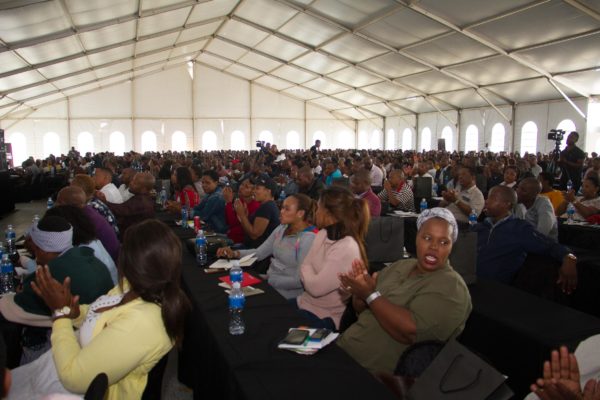
SANRAL wants to share business and job opportunities and has also made a concerted effort to ensure that youth, women, the disabled and other designated groups benefit from its projects.

Thousands of entrepreneurs and job-seekers have attended stakeholder events hosted by the South African National Roads Agency (SOC) Limited (SANRAL) to share information on business and job opportunities available on the R30-billion N2/N3 upgrade project. 

Stakeholder consultative engagements have been held in Pietermaritzburg, Hammarsdale and Durban for small, medium and micro-sized enterprises (SMMEs) about contract opportunities, how to register with the Construction Industry Development Board and processes to follow when tendering. 

SMMEs also had access to an exhibition area where they could get information from the South African Forum of Civil Engineering Contractors, the National African Federation for the Building Industry, Ithala Business Finance and construction industry equipment companies such as Bell Equipment, Barloworld, Wirtgen and Pilot Crushtec. 

The Upgrades 

The N2/N3 upgrades will have enormous economic spin-offs for KwaZulu-Natal during construction.  

The N2/N3 Corridor is one of South Africa’s key infrastructure development projects and its role in facilitating the movement of goods and people to the country’s economic hubs cannot be downplayed. 

Dumisani Nkabinde, SANRAL Regional Manager in the Eastern Region, said: “The strategic intent of SANRAL is to help develop and grow black-owned small to medium-sized construction, engineering and related industry businesses. 

“It is estimated that a project of the magnitude of the N2/N3 upgrades will create approximately 15 000 job opportunities in KwaZulu-Natal. It is also envisaged that SMMEs will benefit enormously, allowing them to grow their businesses and create jobs. 

“SANRAL wants to share business and job opportunities and has also made a concerted effort to ensure that youth, women, the disabled and other designated groups benefit from its projects.” 

The upgrade of the N2 will focus on a 55km stretch from Lovu River on the South Coast to Umdloti on the North Coast. The N3 upgrade will focus on an 80km section from Durban to Pietermaritzburg. 

These upgrades will include the widening of the N2 and N3 carriageways, with four to five lanes in each direction, and the reconfiguration of most major interchanges along these route sections. 

Due to the length and estimated cost of the entire N2 and N3 upgrades, the corridor will be split into several detailed design and construction packages. 

The upgrading is expected to take between five to eight years to complete, depending on funding availability. 

Strategic corridor  

Ravi Ronny, SANRAL Eastern Region Design, Planning and Construction Manager, said: “The N2/N3 upgrade is a strategic corridor that has the highest volume of traffic anywhere on the KwaZulu-Natal and Free State national roads network. 

“SANRAL has considered the current capacity and the future for expansion of the Durban port. Hence, the N2/N3 upgrades will cater for increased traffic volumes, especially heavy vehicles.” 

Mxolisi Kaunda, the MEC for Transport, Community Safety and Liaison in KZN said there was a need for all parties to work together for South Africa to grow as a united country. 

“We are extremely pleased that SANRAL is investing billions of rands in KZN to upgrade road infrastructure, which will not only facilitate economic growth but will also enhance road safety. 

“Over and above this, business and job opportunities will be created for SMMEs and ordinary citizens,” Kaunda said. 

Driving economic growth 

Ismail Essa, SANRAL’s Transformation Manager, said SANRAL recognises the contribution it makes in building a capable and developmental state and driving economic growth through the provision and maintenance of critical infrastructure. 

This commitment, he said, is spelled out clearly in the agency’s transformation strategy and its long-term strategy vision, Horizon 2030. 

“SANRAL’s transformation policy sets clearly defined targets for the participation of black contractors, professionals and suppliers in all of its projects. 

“The transformation of the construction industry is long overdue and to respond to this, SANRAL undertakes to develop SMMEs and to introduce project liaison committees (PLCs) on its major projects,” Essa said. 

On capital projects SANRAL will only do business with companies that are at least 51% black-owned and with a minimum B-BEE Level 2 rating. 

To give small contractors access to earthmoving machinery to allow them to participate more meaningfully in major construction projects, SANRAL has signed a Memorandum of Understanding with construction machinery company Bell Equipment. 

Themba Mhambi, SANRAL Board Chairperson, said South Africa faced economic challenges which could only be addressed under a leadership “that is visionary and dreams big”. 

“SANRAL has convened these information-sharing sessions to create a platform for KZN communities to voice their concerns and comments on job creation, tendering and skills development. 

“SANRAL will make sure that revenue from these billion-rand projects provides business opportunities to local SMMEs.” 

Access to equipment 

Ryan Britain, Regional General Manager at Bell Equipment, said: “Access to sophisticated and more advanced equipment used in construction has been identified as one of the biggest hurdles that faces emerging contractors. 

“Emerging contractors often do not have the capital to buy the machinery used for excavations, ground moving and the grading of roads.  

“SANRAL’s MOU with Bell Equipment will attract new entrants into the construction and engineering sectors, particularly black contractors, who will in turn grow their business and create jobs. 

“The cooperation between SANRAL and Bell Equipment is also expected to help to promote fair competition in the construction and engineering sectors.” 

Pinetown resident Dumisani Mkhize, who is a director of Zasembo Construction & Trading, does civil work and said he welcomed the useful information about the numerous job opportunities that will be available, as well as being able to meet some of the SANRAL project managers. 

Durban’s Sne Mwelase, who is the only bread winner in her family, was extremely grateful for the information session and the fact that SANRAL was offering SMMEs the opportunity to sub-contract with bigger companies. 

“We also had the opportunity to engage with some of SANRAL’s MOU partners at the exhibition stands and obtain valuable information about accessing finance for equipment,” said Mwelase. 

Durban resident, Nhlonipho Mbatha, who is currently unemployed, said the SMME workshop provided an opening for much-needed jobs. 

“I am eager to hear about the plans for the N2 and N3 upgrades as many jobs will be available,” said Mbatha. 

Nompumelelo Nzuza, who owns Gabayithini Construction Pty Ltd and supplies food to many local schools in KZN, said the workshop gave SMMEs access to many job opportunities and to gain knowledge about the various training programmes offered to grow your business. 

Joyce is a shining example at SANRAL

With a passion for learning and a calm demeanor, Joyce Pitso is rising the career ladder at the road agency with grace. 

Joyce Pitso describes her greatest attribute as her calm demeanor in an often-volatile environment.

One step at a time, Joyce Pitso has climbed the ramp to career success and is a shining example of what sheer grit and determination can do for professional advancement. 

In 2001, Pitso joined the South African National Roads Agency (SOC) Limited (SANRAL) as a receptionist at the Eastern Region offices in Pietermaritzburg. Today she is the Regional Finance and Administration Manager. 

When she began working at SANRAL, she was not satisfied with her job and yearned for a better position.  

SANRAL management saw her potential at an early stage and within a year she was promoted as an assistant Registry Documentalist. 

Her National Diploma in Management from the Durban University of Technology stood her in good stead.  

After two years of working in the registry environment and attaining a wealth of knowledge of SANRAL procedures and protocols, Pitso embarked on a B Comm degree through the University of South Africa. 

A passion for learning 

In the interim, and keen to learn as much as she could, Pitso helped the Finance Department, which was then short-staffed, with numerous financial functions whilst still performing her normal Registry duties. 

The aplomb with which she conducted herself in performing these functions did not go unnoticed.  

After two years at Registry and when a vacancy arose in the Finance Department, Pitso was a successful and deserving recruitment. 

She held the position of Financial Controller for 15 years, during which time she also successfully attained her Bachelor of Commerce degree.  

Since she was versatile in performing the various financial and administrative functions, Pitso acted as Regional Finance and Administration Manager on several occasions until she was permanently appointed in this role. 

The mother of two boys, who enjoys cooking as a hobby, was born in Pietermaritzburg where she attended primary and high school. 

She describes her greatest attribute as her calm demeanour in an often-volatile environment where she must work with technical staff not well versed in the vagaries of the financial requirements in terms of the Public Finance Management Act and IFRS® Standards. 

Pitso urged young people to acquire as much education as possible if they hoped to land a lucrative career. 

“Education is the key to success and if you have an opportunity, please grab it with both hands and move with it,” she said. 

Asked what she found most rewarding about her work, she said it was the realisation that together with her colleagues she was contributing to the development of the national road network “which is of vital importance to our economy and citizens of South Africa”. 

Moloto progress

Training and development were provided for 135 SMMEs along with 185 NGOs from Thembisile Hani municipality, making the lives of people better. SANRAL warned informal shopkeepers not to encroach into the Moloto Road. It is illegal and dangerous.

N2WCR progress

More than a thousand people attended a ministerial imbizo near Lusikisiki in April on progress at the Mtentu and Msikaba bridges on the N2 Wild Coast Road. SMMEs who worked on three community development projects upgraded their CIDB levels.

Upcoming upgrades on Huguenot Tunnel

The Huguenot Tunnel will be partially closed in September, October and November from 10pm to 6am, Monday to Thursday for necessary upgrading. To accommodate increased holiday traffic, work will be suspended during December and early January.

N2/N3 upgrade package set for end 2019

Thousands of entrepreneurs and job-seekers attended stakeholder events in Pietermaritzburg, Hammarsdale and Durban during the last week of June where SANRAL shared information on business and job opportunities available on the R30bn N2/N3 upgrade project. Some of N2/N3 freeway upgrade construction packages are expected to be awarded by the end of the year. The project will see the upgrading of the N2 between the south and north coasts and the N3 between Durban and Maritzburg.

Eleven good women and men

Four of eleven key appointments in roads and transport positions after the recent national and provincial elections are new, confirming the trend of continuity and change set in both national and provincial executives.

Top of the list is Mr Fikile Mbalula, who takes over as Minister of Transport from Dr Blade Nzimande. Dr Nzimande returns to his former portfolio of Higher Education which has now merged with Science and Technology.

Mr Mbalula came to politics via the United Democratic Front and the ANC Youth League, of which he was president. He was previously the Minister of Sport and Recreation and later of Police. He headed the ANC’s 2019 election campaign.

His deputy – Ms Dikeledi Magadzi – was previously the chairperson of the parliamentary portfolio committee on transport. She hails from Limpopo where she served as MEC in several portfolios.

Also new is Gauteng’s Mr Jacob Mamabolo, who heads the renamed Department of Public Transport and Roads Infrastructure. He was previously the MEC of Infrastructure Development.

The last of the new appointees is the MEC for Transport and Safety Liaison, Ms Nontobeko Vilakazi, in the Northern Cape. She comes from the provincial ANC Women’s League where she was secretary.

Heading the list of experienced hands, is North West’s MEC for Public Works and Transport, Mr Gaoage Molapisi. Premier Job Mokgoro and his administration has built a close working relationship with SANRAL in recent months.

In the Western Cape the go-to-man is Mr Bonginkosi Madikizela, MEC for Transport and Public Works. He also leads the DA in this province and has served on the Western Cape executive since 2009.

Ms Wesiwe Tikana was re-appointed as the Eastern Cape’s MEC for Transport, Roads and Community Safety. She will be working in an environment where the approach is to turn the province into a massive construction site.

Back in the job in Mpumalanga is Mr Gillion Mashego as MEC for Transport, Roads and Community Safety. His view is that road infrastructure is a critical part of growing the economy, creating jobs and opportunities for businesses.

In a much-changed executive in Limpopo, Ms Sekutu Mochadi, was one of the few who was retained as MEC for Public Works, Roads and Infrastructure. She is full of praise for the sterling work SANRAL is doing in the province.

In the Free State Mr Sam Mashinini was kept on as MEC for Police, Roads and Transport. He also heads the ANC in the province and points out that as a landlocked entity a high-class network of roads is essential.

Retained as MEC for Transport in KwaZulu-Natal is Mr Mxolisi Kaunda whose intent is on building quality roads and highways across the province to stimulate economic growth.

Judge has high praise for SANRAL

The N2 Wild Coast Road (N2WCR) project is going ahead. The North Gauteng High Court denied an appeal against a decision that had confirmed SANRAL’s commitment to proceed with the construction. Judge Cynthia Pretorius found in the road’s agency’s favour and confirmed the validity of the public participation processes during the environmental assessment.

This enabled the public to engage with the assessment through a range of platforms, including public meetings, imbizos and social media. Judge Pretorius had high praise for the level of engagement, calling it “one of the most comprehensive participation processes undertaken in this country”.

SANRAL recognises that there are a minority of people who are opposed to the project – mostly because of unconfirmed reports about an unconnected mining project. Yet there is overwhelming support for the benefits that N2WCR will bring to communities and local businesses.

According to a survey by the Human Sciences Research Council in 2015 more than 98% of residents interviewed supported the building of the new road between Lusikisiki and Port Edward.

None of the local protests were aimed at the project itself. There were issues concerning the composition of the public liaison committees, employment, sub-contracting and local suppliers. These are being resolved with stakeholders.

The High Court confirmed that the approved route was the best available alternative based on a combination of social, environmental and economic factors. In line with international best practice all the identified potential impacts are avoided, minimised or mitigated.

SANRAL is working closely with relevant agencies in the Eastern Cape to protect sensitive environmental areas. In addition, the social impact of the road is minimised through the construction of pedestrian and vehicle bridges as well as underpasses that will improve access and mobility for local communities.

Affected communities and individuals are compensated for any loss of land and all structures within the road reserve are relocated and rebuilt in line with approval of the owners.

The N2WCR forms part of government’s Strategic Integrated Projects – SIP3 – which is designed to accelerate economic growth in the Eastern Cape and KwaZulu-Natal.

The much shorter N2 route will shorten travel time, reduce carbons emissions and improve road safety on one of the most important national highways. It will provide improved access to the under-developed Pondoland region and boost economic opportunities in agriculture, tourism and the hospitality industry.

Roads: what can the country afford?

What can the country afford and what does it need?

This was one of the main topics at the Transport Forum’s series of discussions held between December 2018 and April this year. Difficult choices on funding lie ahead.

The forum is a platform for all transport stakeholders to meet, mingle and discuss major sector issues. Attendees come from government, civil society, academia and the private sector to discuss policy, technology and regulation.

At a recent meeting on road funding, SANRAL Engineering Executive Louw Kannemeyer said the estimated funding requirement to sustain the road network is R86bn a year. An additional R23.3bn is needed to catch up on the backlog, making the total annual requirement R110bn a year while the total budget for roads in 2017/18 was only R52bn.

He doubted that the fuel levy is a way out. To meet the funding shortfall, the levy would have to go up from R3.37 per litre to R6.21.

The rise of hybrid and electric vehicles will also influence revenue collection through the fuel levy.

Globally, the fuel price in South Africa is ranked 19th. But households spend almost 7% of their daily wages on fuel, which pushes the country down to 56th on the Bloomberg Fuel Price Index’s affordability ranking.

Kannemeyer said South Africa has to decide what length of road network it can sustain and in what condition.

Various experts added their voices:

  • Gavin Kelley, acting CEO of the Road Freight Association, predicted the fuel levy is going to decrease dramatically. “The funds from the fuel levy need to be ring-fenced for roads.”
  • Economist Mike Schüssler said the reality is that the fuel tax in itself is not enough for roads.
  • Dr Paul Nordengen, manager of network asset management at the Council for Scientific and Industrial Research, said that road funding is critical for future development, but the fuel tax is unlikely to exist in future.
  • Prof Stephan Krygsman of the Department of Transport Economics at Stellenbosch University said: “We should pay for roads. The question is how much and how to do it.”
  • Whity Maphakela, acting chief director of road infrastructure at the Department of Transport, said new revenue sources would have to be found to fund future road development. The government supports the user-pay principle as a primary funding mechanism. There are serious implications if roads aren’t maintained. Delaying maintenance by up to five years can increase costs by up to 18-fold. And warned: the road user carries the cost of poor roads – an additional R20bn a year due to failures in the current road network.

Removing entry barriers

SANRAL has taken one more step to transform the construction industry. In April it signed a memorandum of understanding (MoU) with Pilot Crushtec to give small and medium enterprises access to expertise and machinery required to execute major SANRAL projects.

The CEO of the roads agency, Mr Skhumbuzo Macozoma, said: “It is our intention, through MoUs like these, to open up the industry to new participants and remove many of the barriers that prevent companies owned by black people, women and youth entrepreneurs to compete effectively against entrenched players in the construction sector”.

Pilot Crushtec International was founded in 1990 and has established itself as Southern Africa’s leading supplier of mobile and semi-mobile crushing, screening, recycling, sand wasting, stockpiling, compacting and material handling solutions.

The company is well-placed to equip up-and-coming contractors and quarry owners with the opportunity to be educated by its team of experts on how to get the most out of their operations, said sales and marketing director Francois Marais. It looks forward to promoting its locally produced products, which are world leaders and are exported to many countries.

Mr Macozoma said that the partnership is proof that SANRAL’s efforts to transform the construction sector and promote fair competition are delivering results. “Lack of access to sophisticated machinery and equipment is a major barrier to small contractors and prevents them from participation in large tenders.

“By working with established companies, we can remove these barriers.”