
Blog

SANRAL CEO Reginald Demana says South African road safety will benefit from lessons shared at World Road Congress in Czech Republic

MEDIA RELEASE

SANRAL CEO Reginald Demana says South African road safety will benefit from lessons shared at World Road Congress in Czech Republic

Pretoria, 8 October 2023 – SANRAL CEO Reginald Demana says South Africa has learnt valuable lessons about road safety and reducing road deaths from countries such as Canada, Ireland and Spain. More than 12 000 people die on South Africa’s roads every year.

Demana says it is clear that SANRAL, which is responsible for maintaining and expanding the national road network and some provincial roads, will need to work with other state agencies to look at programmes to improve roads safety among the youth, particularly with regard to road safety, drinking and driving, pedestrian behaviour, and many other aspects. Education at primary and high schools, policing and the use of technology were key to reducing crashes and deaths on the road.

Young drivers are in the spotlight of policy-makers and law enforcement agencies in many parts of the world to ensure that the risk they pose is reduced, and in so doing reduce crashes, injuries and fatalities.

Speaking at the end of the World Road Congress in Prague, Czech Republic, where 4 300 engineers, policymakers, law enforcement agents and other professionals from 114 countries gathered to share knowledge and experiences, Demana said young people were key to reducing the country’s road fatality rate.

“Some of the lessons we have learned from the Canadians, the Irish and the Spanish, is that they have a focus on youth and that they have special programmes focussing on young drivers,” said Demana.

“In some countries they don’t allow young drivers who don’t have a certain minimum number of years of experience to drive alone. In other countries, they have a limit on

the hours during which youth drivers can be on the road by themselves. Others have a higher limitation on the age when youth can drive. It is clear that in South Africa we need to relook our own dispensation around young drivers and what we can do to enforce regulations and improve compliance with those regulations.”

The South African delegation of roads experts from the South African National Roads Agency SOC Limited (SANRAL) concluded a week of knowledge sharing and learning at the 27th World Road Congress held from 2 to 6 October 2023 in Prague, Czech Republic.

South Africa, via SANRAL, is one of 125 member countries of PIARC, having access to experts and specialists the world over, for collaboration, research, academic and global industry partnerships and so much more.

“Our first objective was to support the South African Minister of Transport, Sindisiwe Chikunga, during the congress, particularly in her bilateral meetings with transport ministers from other countries, including the Czech Republic and Mozambique, geared at improved cooperation and mutual learning,” said Demana.

Knowledge sharing, benchmarking against international success stories with regard to road safety, infrastructure development, road maintenance, innovation and sustainable road design were all high on the agenda of the SANRAL leadership and project managers at the World Road Congress.

“Our teams took part in different technical committees, presenting and listening to their peers, and we take all of this knowledge back to South Africa, as well as our neighbouring countries to further advance our technology and innovation,” said Demana.

“We also take away from the Congress major lessons about the impact of climate change on our road infrastructure in South Africa and of course the rest of the world, especially when you consider the destruction we saw in the Western Cape two weeks

ago, and further up the coast in the Eastern Cape and KwaZulu-Natal in recent years. PIARC, the international road association, has a programme for disaster management following these catastrophic events. As South Africa we need to start incorporating the damage of infrastructure such as roads into disaster management, we need to align ourselves with disaster management centres with our responses and coordinate better so that we are involved with disaster management. The time has come for an integrated approach across different agencies together with disaster management centres.”

Sisanda Dyubele, a strategist at SANRAL’s Head Office, who has since 2019 served on the World Road Association (PIARC) Technical Committee for Road Administrations, contributed significantly to his committee’s work on gender inclusivity and diversity, and was understandably pleased with the “Best Committee” award as voted by his peers.

“Transformation is at the core of how SANRAL does business, from insisting on meaningful transformation of the road construction sector that gives marginalised communities access to economic development opportunities, to prioritising financial support of the African girl child at schools and institutions of higher learning. Gender inclusivity and diversity is therefore a matter that resonates with me not only on a technical level, but more importantly on a patriotic level and in South Africa, we are making slow but impactful progress in this regard,” said Dyubele.

“Over the last week we exchanged ideas and experiences on how to ensure that we provide a safe and reliable road network. South Africa made a meaningful contribution with our initiatives and road engineering expertise. We also had good representation from the various universities where SANRAL funds research, as well as from the concessionaires who manage portions of SANRAL’s network, said Randall Cable, SANRAL’s Western Region Manager who also serves on the Executive Management of PIARC.

SANRAL’s Msikaba Mega Bridge features on National Geographic’s Building Impossible

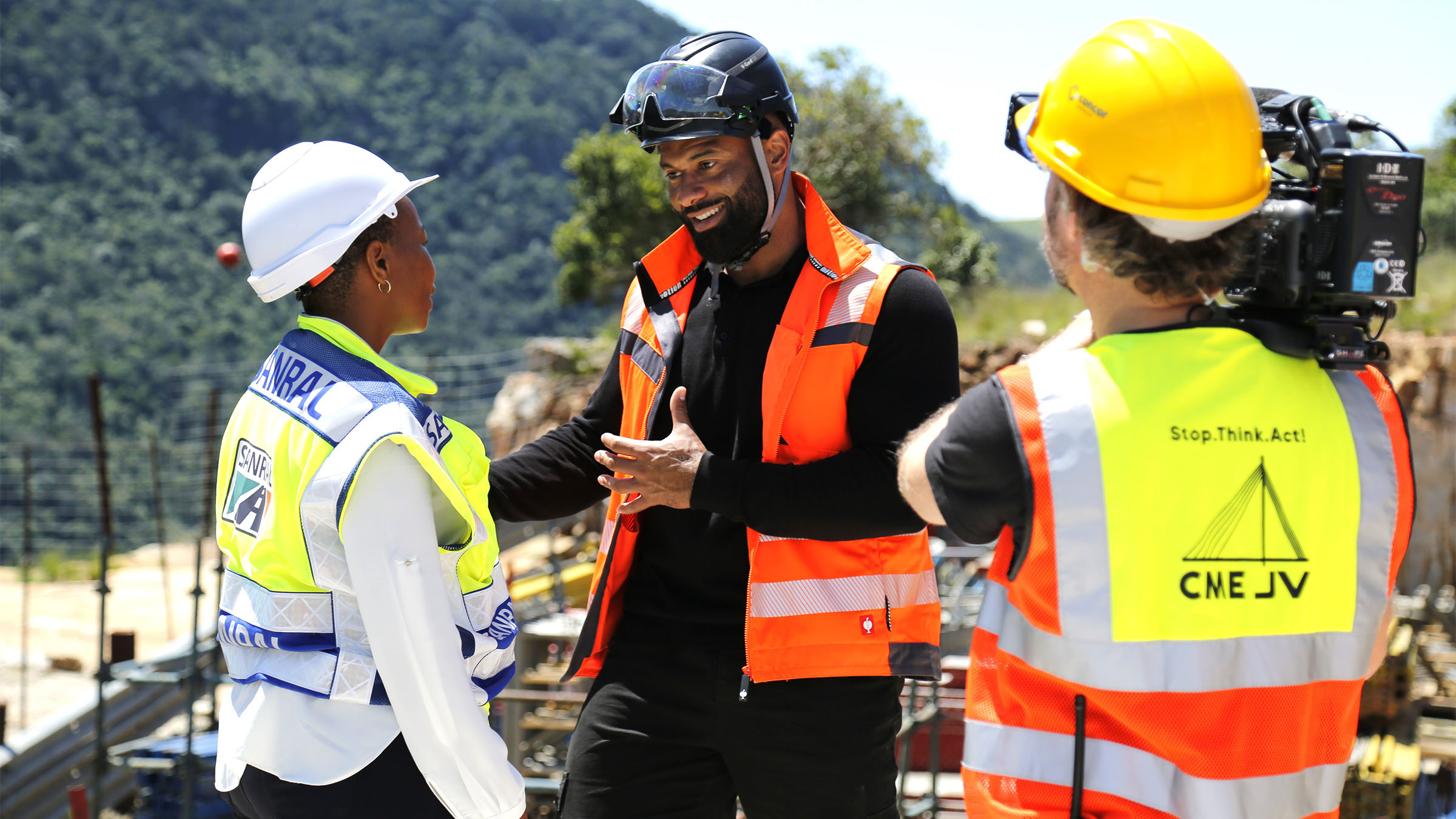
SANRAL’s Msikaba Mega Bridge, taking shape on the N2 Wild Coast Road in the Eastern Cape, was recently featured on National Geographics’s Building Impossible with Daniel Ashville television programme. This bridge across the Msikaba Gorge is one of the longest cable-stayed bridges in Africa, and is an engineering marvel.

Episode 2 of season 1, titled ‘Africa’s Mega Bridge’, featured the show’s host, British construction maestro Daniel Ashville, helping to build this bridge, which is one of SANRAL’s flagship projects.

Ashville described the “masterful concrete solutions” used on this project, and stated how once completed the Msikaba Bridge will cut the transport time between East London and Durban by up to 3 hours.

So how did South Africa end up as one of the destinations on the show? Ashville said that the show’s team had several projects under consideration, but their main criterion was to be on site when critical construction milestones occurred.


Photo: National Geographic for Disney.

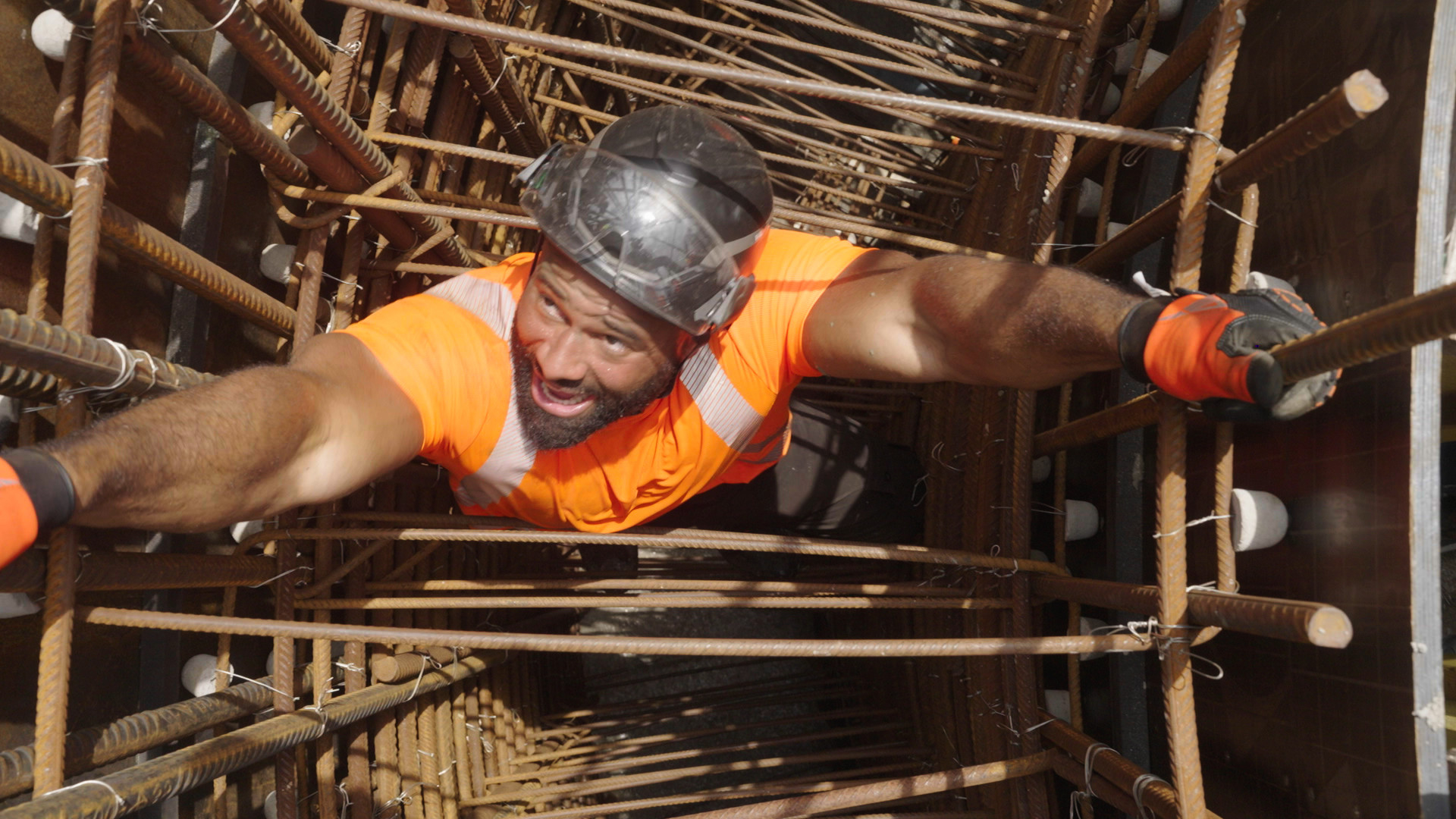
Daniel Ashville climbing into the steel works that reinforce each concrete pour on the Msikaba Bridge.

“The more I learnt about South Africa, the more I liked it – the location, the backstory,” he said. “Building Impossible is not just about structures; it’s about the people who build them, the cultural intricacies and the transformative impact of these constructions.”

Building Impossible often delves into complex engineering concepts, but Ashville makes it accessible to all by finding similarities between monumental projects and smaller-scale endeavours that people can relate to.

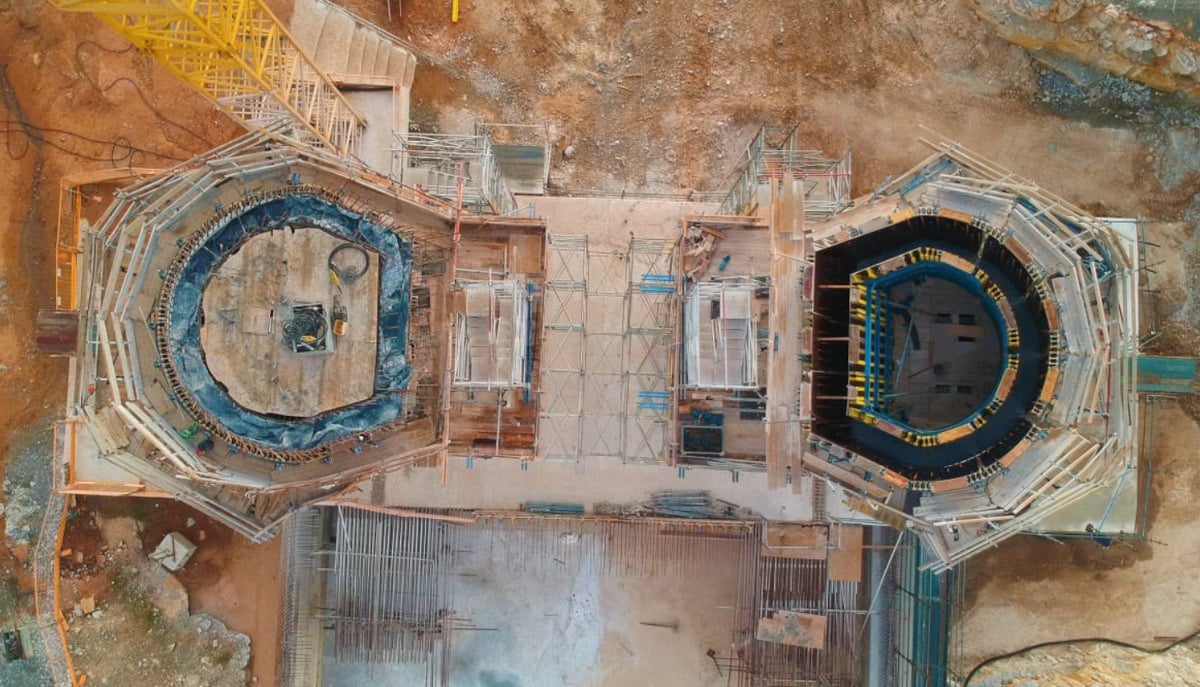
The Msikaba Bridge has pylons and anchoring blocks on each side of the Msikaba Gorge and will be built from each side until it meets in the middle Here are some of the staggering numbers mentioned in the show:

  • There are four anchor blocks, two on each side of the gorge, each weighing 21 000 tonnes.
  • The bridge deck will be made up of 38 deck segments.
  • The deck will include four traffic lanes and one pedestrian footpath, and will weigh 12 000 tonnes – the same as the Eiffel Tower.
  • Each pylon stands 40 storeys high and the concrete is poured in 5 metre increments.
  • The pylon legs are hollow, which is cost-effective and makes them stronger.
  • The concrete team operates 24/7.
  • In all, around 43,000 cubic metres of concrete will be used – the equivalent of 6000 truckloads or 20 Olympic-sized swimming pools filled with concrete.

During the episode Ashville gave viewers a look inside a concrete pour on the North Tower, making his way over to the opposite side of the gorge using a custom-made cable car.

At the North Tower the concrete was pumped up to make up part of the pylon legs. At the South Tower, 11 such concrete pours had already taken place, and the height was up to where the pylon legs meet, from which a single spire will rise.

Ashville physically got inside the steel reinforcement that was about to receive another 5 metres of concrete, to join other workers at the ready to use special ‘pokers’ to ensure that any air in the concrete is dispelled.

Then he took a drive on the truck bringing the 45-tonne box girder to the site. This box girder will hold the first deck segment in place. Carrying that kind of weight can be perilous when going up and down steep hills and around sharp turns – features that characterise the road to the site.

Once it reached the South Tower, truck driver Howard Ntuli had to reverse the massive load close to the edge of the cliff. Then the box girder had to be hand-winched into place, along two rails, by two teams of workers, which took over 3 hours.

This project is being built 200km away from the nearest town, which makes getting anything to the site a challenge. And before any construction could start, access roads first had to be built to get to the site.


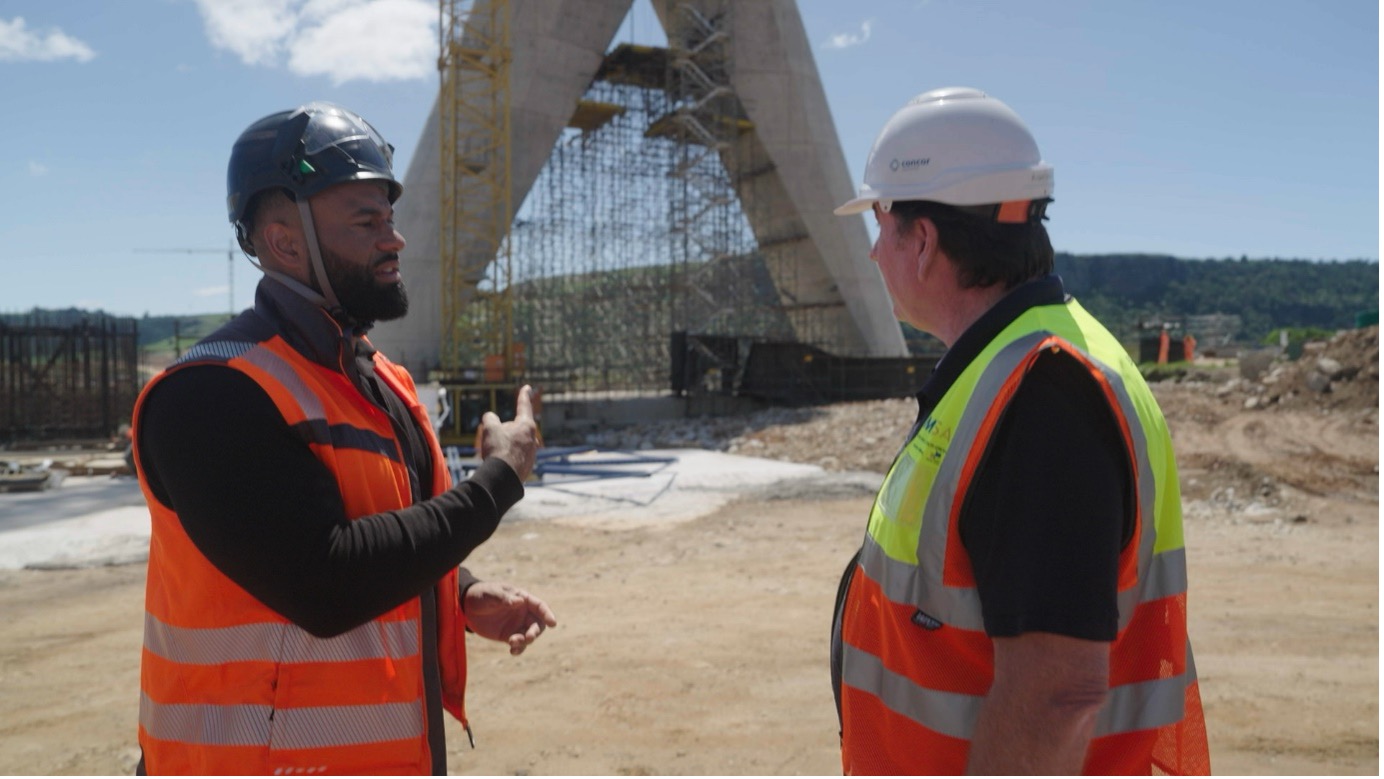
Daniel Ashville discusses the Msikaba Build project with crew site boss Lawrence Savage.

Photo: National Geographic for Disney.


Filming in South Africa spanned two days of travel, five days of filming and another two days to return. Ashville observed some striking cultural differences during his journey, and South Africa left a particularly profound impression. He noted that “people don’t clock watch” in South Africa, highlighting the dedication and emotional connection workers have to their jobs.

He added: It was a very emotional time building in South Africa, and the people were very connected with what they were doing, and were very proud of what they were building. They were proud that they were building something that would make a difference where they were.”

Find Building Impossible it on National Geographic, channel 181 on DStv, Tuesdays at 19h00. 

R216 million Montrose Interchange boosts economic growth

Transport Minister Chikunga officially opened the R216 million Montrose Interchange on the N4 in Mpumalanga on 8 September, and hailed the project as a model of cooperation between the National Department of Transport, the state’s roads agency SANRAL, and the private sector. SANRAL’s partnership with Trans Africa Concessions (TRAC), working together with provincial and local government, delivered state-of-the-art road infrastructure which meets the best engineering and construction standards in the world, she said.

“This project shows us that South Africa has the capability to build freeway interchanges that can compare to any similar projects in countries with advanced and highly developed economies,” Minister Chikunga added. “We are extremely proud of this achievement and it is yet another reason for us to celebrate the work of SANRAL, together with private sector partners such as TRAC. It’s a perfect example of a public-private partnership.”

Mpumalanga’s MEC for Public Works, Roads and Transport, Mandla Ndlovu, said the Montrose Interchange showed that all levels of government were working together to grow the economy. “I want to thank the national government, SANRAL and TRAC for delivering this project for the benefit of Mpumalanga and indeed South Africa and Mozambique as well,” he said.

SANRAL Chief Executive Officer Reginald Demana said the Montrose Interchange would significantly improve safety, reduce the number of accidents, and help to ensure the free flow of people and goods between South Africa and Mozambique.

“The new Montrose Interchange is a major feature of the N4 Maputo Corridor which connects Mpumalanga, Gauteng and North West to Mozambique. This is an economic development corridor which has proven to be a significant driver of growth in the region,” Demana said.

Construction of the project, which started in November 2021, aimed at improving mobility and facilitating trade and logistics between South Africa and Mozambique, especially exports and imports via Maputo Harbour.

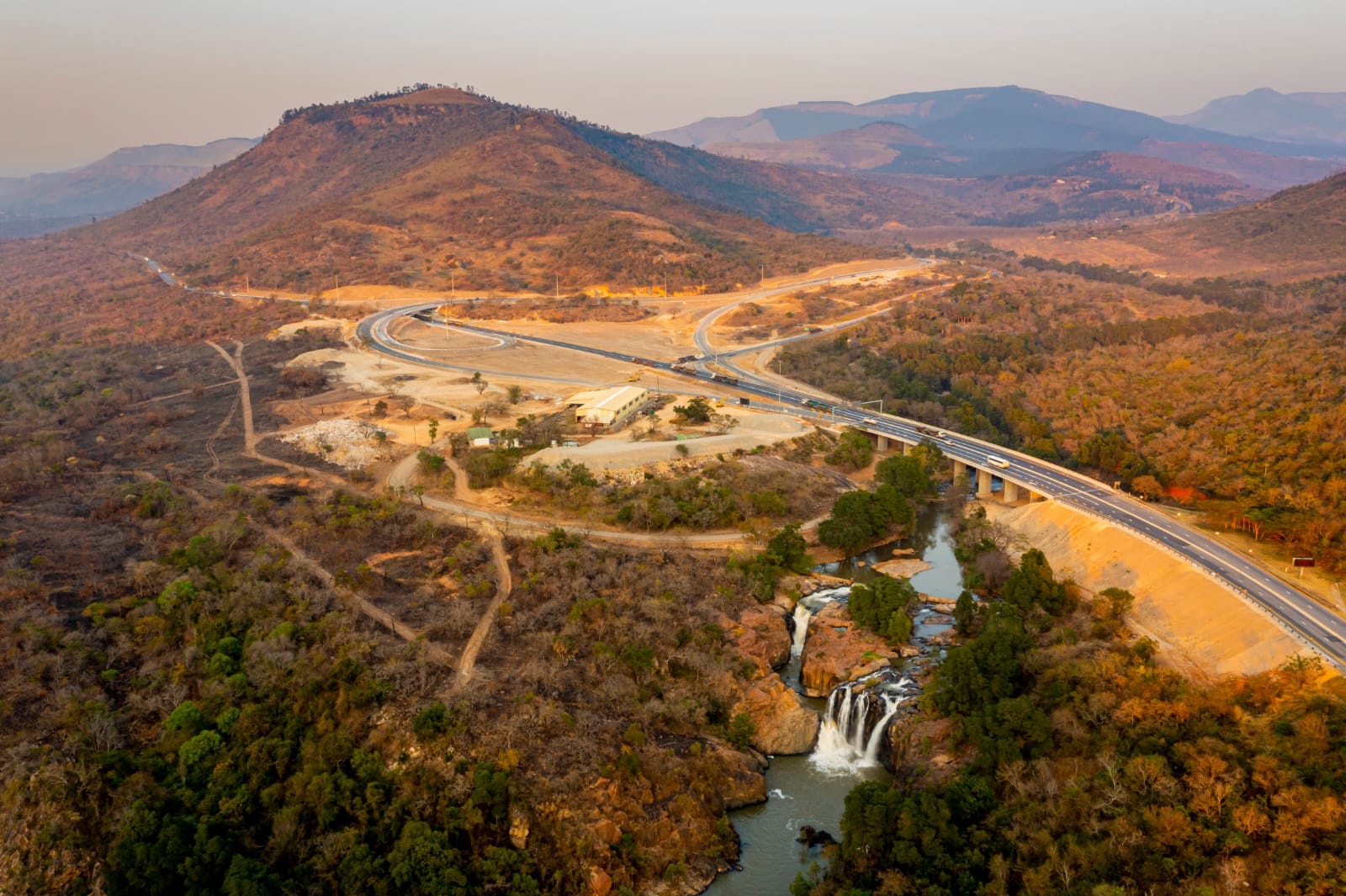
The scope of works included realigning 600m of the existing Schoemanskloof road, construction of four new interchange ramps, widening the existing two-lane Crocodile River Bridge from two to five lanes, and two new signature arch bridges.

The project is a prime example of government and SANRAL delivering on their mandate to build better and safer road networks which will help to grow the economy and create jobs. It provided employment and business opportunities, with more than 350 local labourers employed over 20 months and more than 20 local companies participating as subcontractors.

Many SMMEs benefitted by learning new skills and growing their companies. Raubex introduced LIT (labour-intensive training) to capacitate locals by giving them practical work experience before formal training by an accredited training institution. Forty-four emerging contractors benefitted from the project and 834 local people gained employment.

Mayor of the City of Mbombela, Councillor Sibongile Makushe, said she was proud of the sterling work by the Department of Transport and SANRAL. “The construction of this interchange has already uplifted local communities and will undoubtedly have an even greater economic spin-off by making it easier and safer to access neighbouring provinces and countries,” she said.


War Room boosts crackdown on potholes

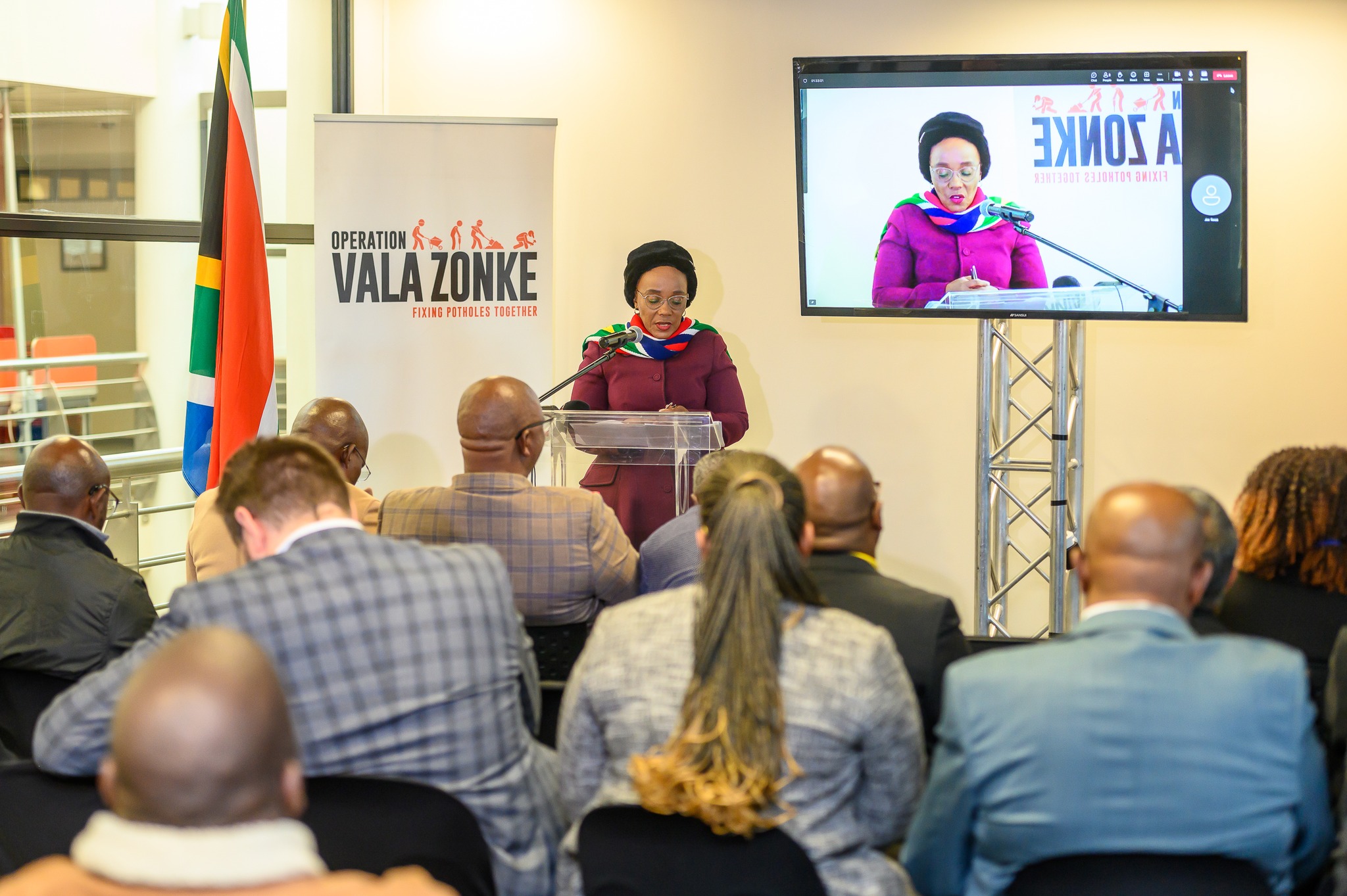
The Vala Zonke War Room, a high-tech facility located within SANRAL’s Central Operations Centre in Centurion, has the appropriate infrastructure, technology, and personnel to ensure effective monitoring and coordination of intervention programmes to address South Africa’s pothole crisis.

The War Room serves as a one-stop centre for all pothole-related issues, and its benefits are manifold. It offers a platform for effective communication between team members and the public, with visual information presented in a way that facilitates better analysis and response to the data. Moreover, the War Room fosters an environment of focus and collaboration, allowing experts to work collectively towards a shared goal. It ensures real-time addressing of concerns and expediting of resolutions.

In her keynote address at the launch, Minister of Transport Sindisiwe Chikunga expressed her gratitude to the Department of Transport and SANRAL for swift establishment of the War Room. She acknowledged that addressing the challenge of potholes in South Africa requires a comprehensive and united front: “It is a bold step on our part because of the enormity of the challenge and thus the vast coverage required for effective deployment of this resource.”

Establishment of the War Room is testament to the determination to acknowledge the pothole crisis and take a proactive stance in resolving it. “The very birth of this War Room remains a strong indication of the severity of the situation, especially expressed in the state of our road network, and evidence of this is highlighted by worsening traffic congestion and dangerous driving conditions or other road uses in urban and peri-urban areas,” she added.

Minister Chikunga emphasised that while each level of government operates autonomously, collaborative planning and budgeting are essential to optimise resource allocation and achieve collective goals. She underlined the need for a national approach, asserting that the declining state of the road infrastructure poses not only a safety hazard but also impedes economic growth and affects the quality of life for citizens.

The War Room bolsters the mission of Operation Vala Zonke (which translates into ‘Close All’ in English), to expedite the closure of potholes before they exacerbate road deterioration. With over 250 road authorities in the country, the challenge lies in coordinating repair efforts across multiple jurisdictions. The War Room’s role as a central hub effectively bridges communication and coordination gaps.

The information gathered by citizens through the Pothole reporting app, complete with images and real-time location data, feeds directly into the War Room’s operations, where it is assigned to the appropriate authorities for immediate attention.

With the majority of South African roads nearing or exceeding their 20-year design life, the maintenance backlog has skyrocketed to R197 billion. Funding constraints at both provincial and municipal levels have further hindered the sector’s progress. The Vala Zonke War Room’s strategic rollout plan addresses both short-term and long-term interventions, focusing on increased budgets and improved data integration.

View a video about the War Room at https://fb.watch/mqZj-U11e0/]


SANRAL’s R700m N1 upgrade gets South Africa working again

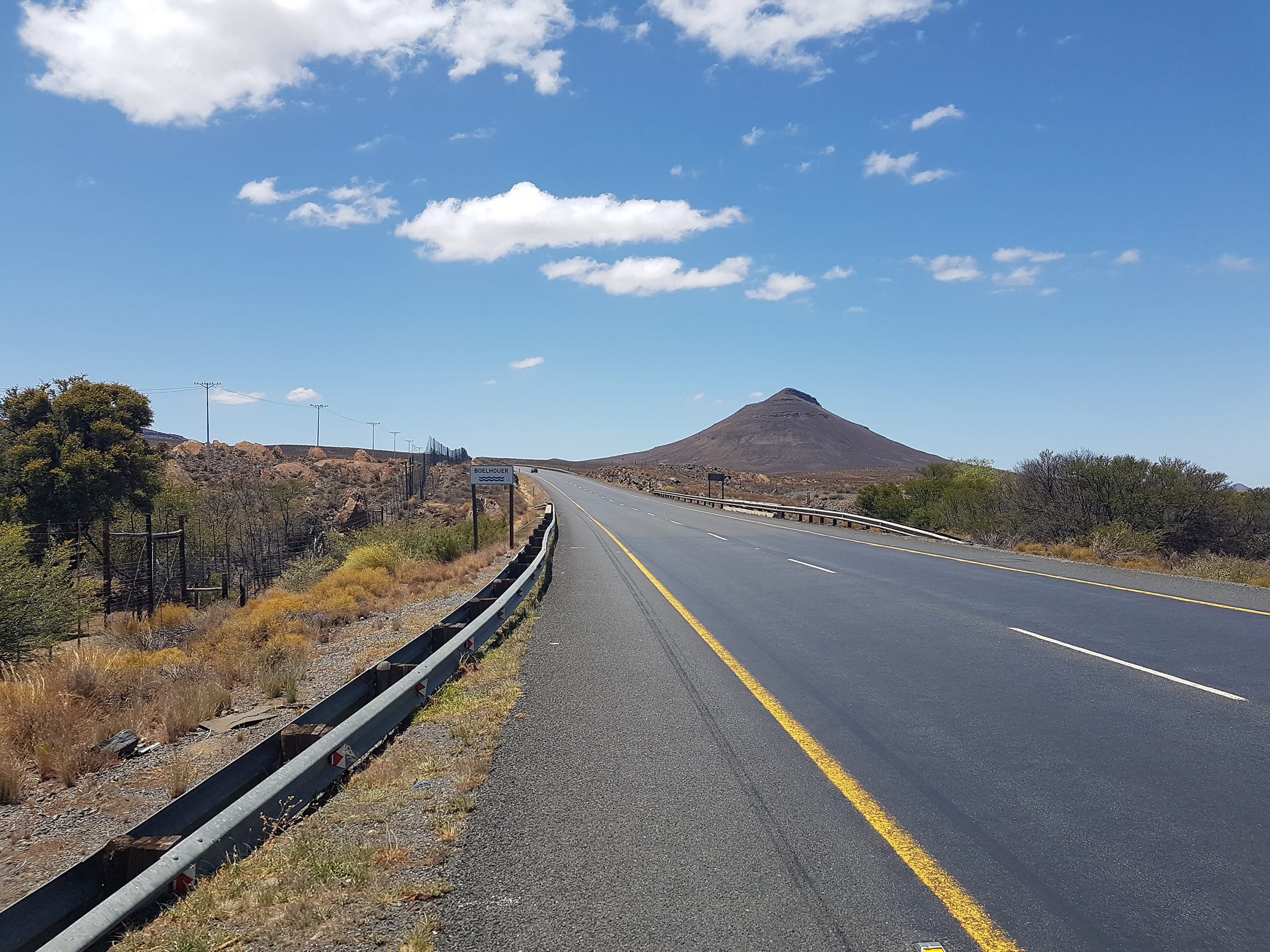
SANRAL’s upgrade of the N1 between Monument River and Doornfontein will make a significant contribution to the economy of the Central Karoo over the next 2.5 years. With 30% of the contract value – equating to over R220 million – prioritised for subcontracting to SMMEs, the wheels of economic recovery can begin to turn.

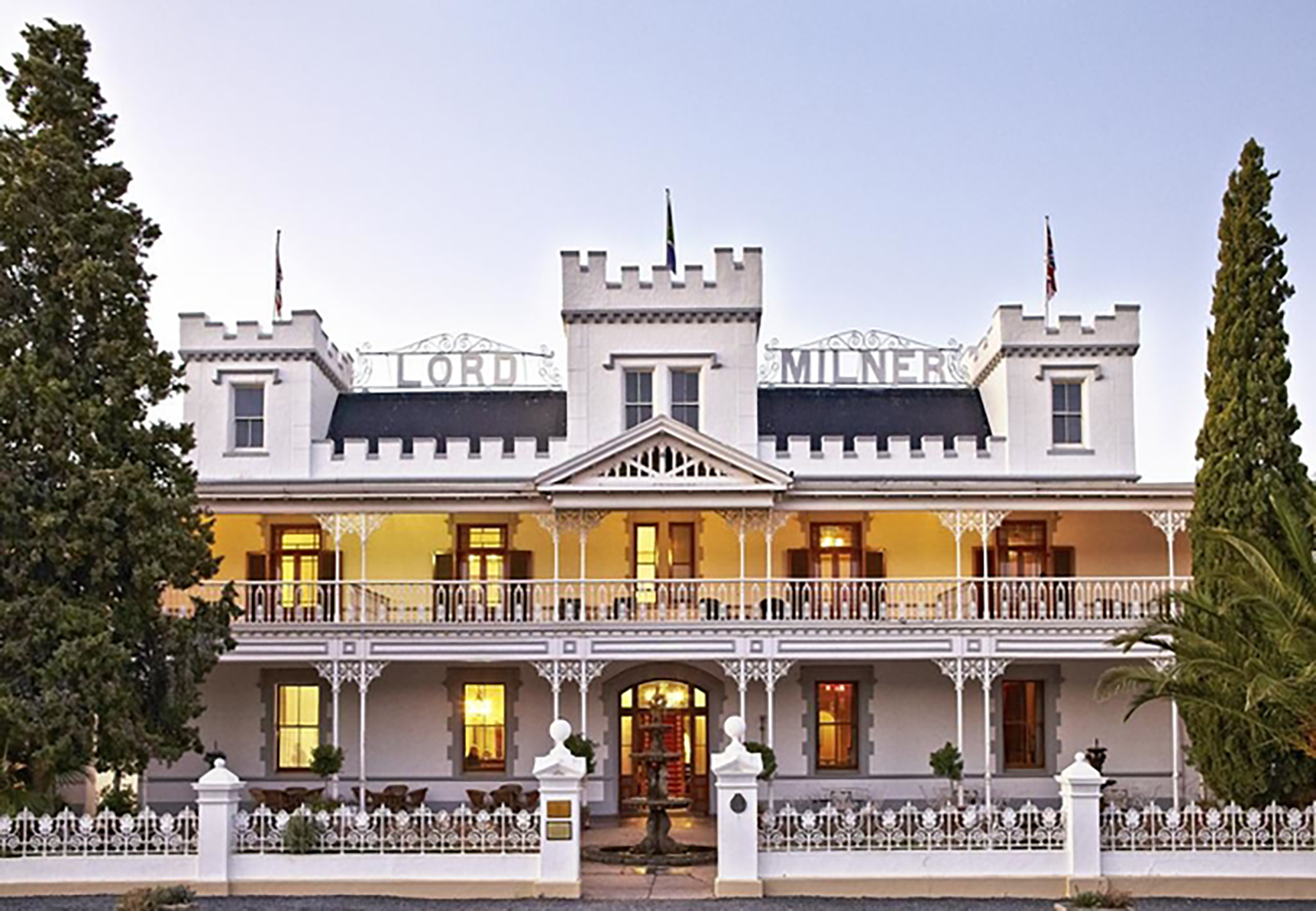
Local labour will largely be sourced from Matjiesfontein. Preserved as a National Heritage Site since 1975, Matjiesfontein is visited many domestic and foreign travellers to take a selfie at the Lord Milner Hotel (built in 1899), and marvel at the museums and Victorian cottages.

However, many members of the community experience a reality of poverty, unemployment and inequality, and for them and many other similar communities this project can begin to carve a pathway out of poverty.

The scope of works entails construction of a new carriageway so that the N1 becomes a four-lane, divided dual carriageway. Opportunities for project participation include, among others, clearing vegetation for the westbound carriageway, construction of gravel farm access roads, asphalt surfacing, reconstructing two existing bridge structures, and reconstructing seven major drainage structures, as well as new bridges and culverts.

“We are mindful that the N1 is a major economic artery and carries significant traffic between Cape Town and Johannesburg every day. As such, two-way traffic

will always be allowed, with access to landowners constantly maintained. We will construct the new westbound carriageway – including all structures – while traffic stays on the existing road. Once complete, we will switch all traffic onto the new carriageway, to allow reconstruction of the existing eastbound carriageway,” explained SANRAL Project Manager Tiago Massingue.

Routine road maintenance

While major conventional construction projects come around once every eight to 10 years, maintenance of that infrastructure is ongoing. Not only is routine road maintenance (RRM) critical to preserving the infrastructure, it also ensures a continuous flow of economic benefits for communities all along the national road network.

For the next three years, the R60 million RRM project in the Laingsburg Local Municipality, will directly contribute to employment of local labour in Laingsburg, Matjiesfontein, Prince Albert and Leeu-Gamka.

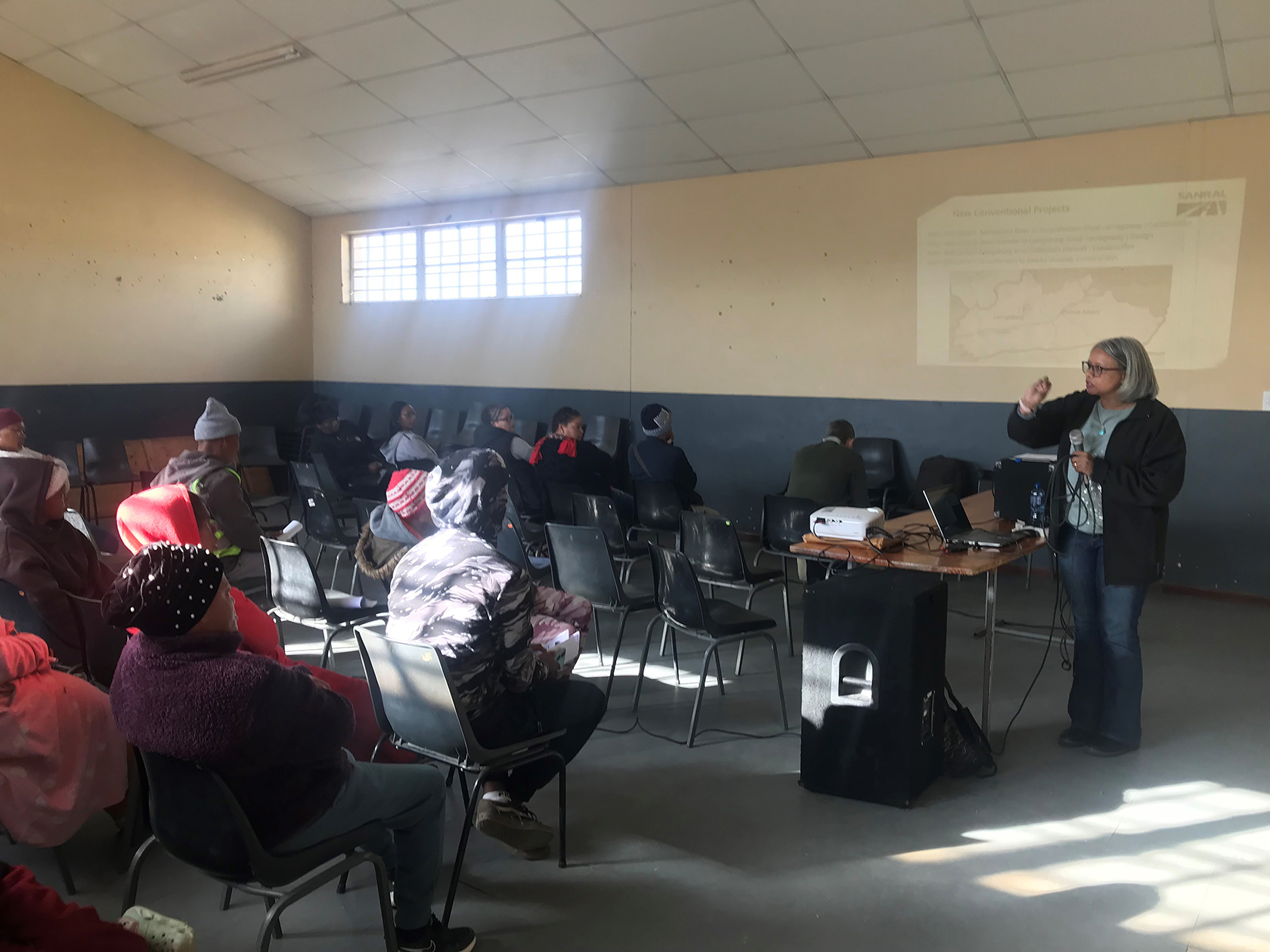
“Community engagement is key to successfully rolling out projects in South Africa, and SANRAL made a point of direct engagements with all affected communities

in the project area. The hunger for project participation and the preparedness of the leadership in the various communities to work with us in ensuring maximum benefit and participation opportunities for local labour, particularly women, youth and persons with disabilities, breathes life into an otherwise purely technical solution,” said SANRAL Project Manager Imelda Julies.

Oversight

All SANRAL projects are rolled out with a Project Liaison Committee (PLC) in place to conduct oversight and satisfy themselves and the communities or structures they represent, that the processes for appointment of subcontractors and local labour are fair and transparent.

PLC members were democratically elected by the communities themselves, and have been inducted to ensure that they understand their role and are ready to stand alongside SANRAL in serving the people of the Central Karoo.


R37 upgrade worthy of presidential visit

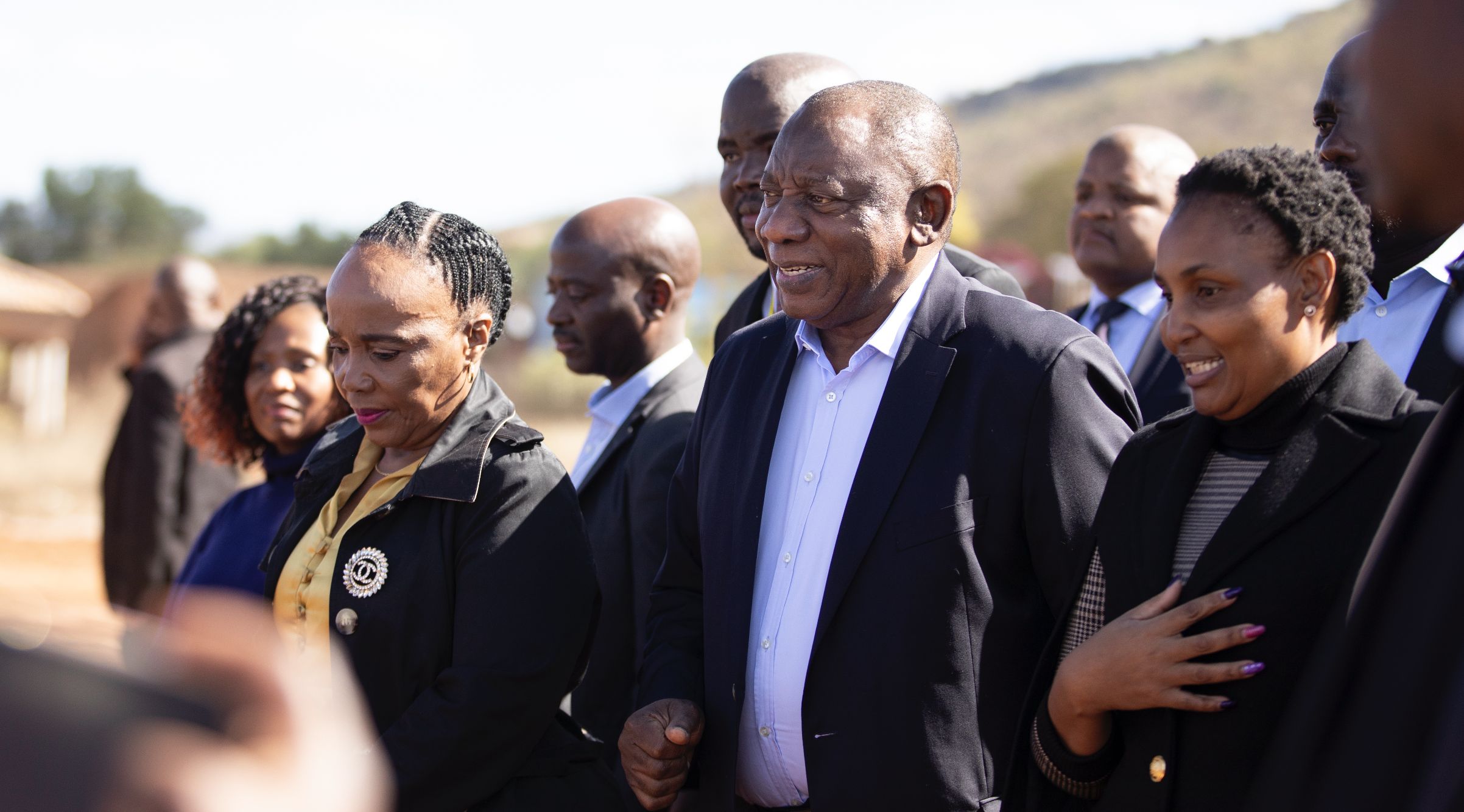
The R37 upgrade between Burgersfort and Polokwane in Sekhukhune District was recently inspected by the President. Worth R780 million, the project was started in February 2021 and the scope of work includes major roadworks and drainage structures, lighting construction on community access roads (sidewalks and bus shelters), widening of lanes, provision for overhead lighting, and reconstruction and widening of one bridge to accommodate four-lane traffic.

Approximately 400 local labourers are employed on this project, while more than R160 million has been allocated for SMMEs. Thirty per cent of every SANRAL contract is subcontracted to SMMEs to empower and grow local small businesses, and they are also afforded skills development and training benefits.

SANRAL pre-tender training for small businesses

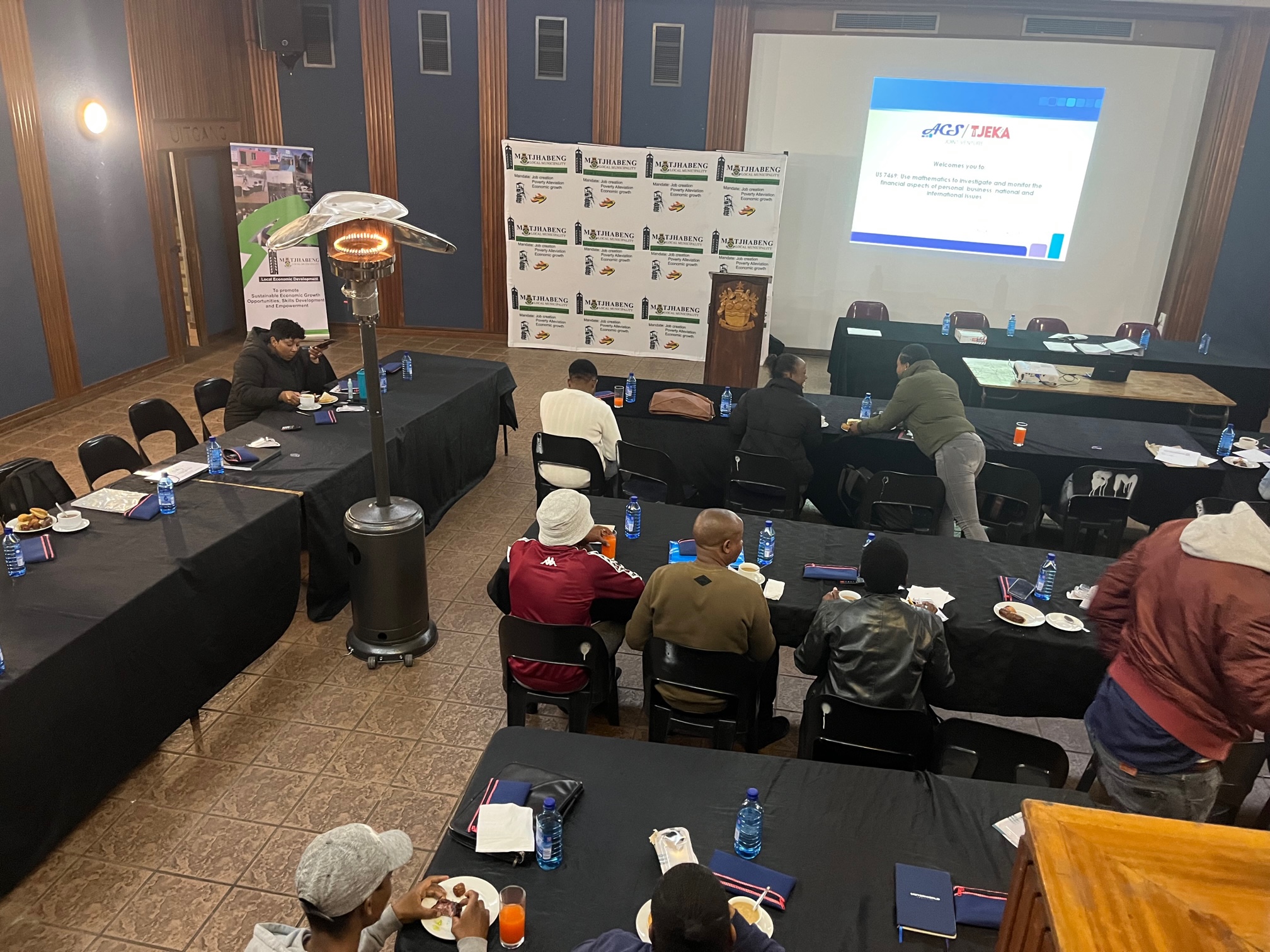
SANRAL has launched a training programme to assist SMMEs in enhancing their business acumen and tendering skills, so that they may successfully compete for opportunities on the national road network. SANRAL appointed ACS/Tjeka JV to carry out this training, and vast interest has been shown by SMMEs in all provinces.

In the past year, the pre-tender training has focused on training CIDB Grade 1–4 CE and GB companies. Starting from October 2023, ACS/Tjeka JV will advertise a call for submissions by interested CIDB Grade 5–7 CE, the aim being to reach as many qualifying entities as possible.


SANRAL stakeholder engagement helps people prepare for opportunities

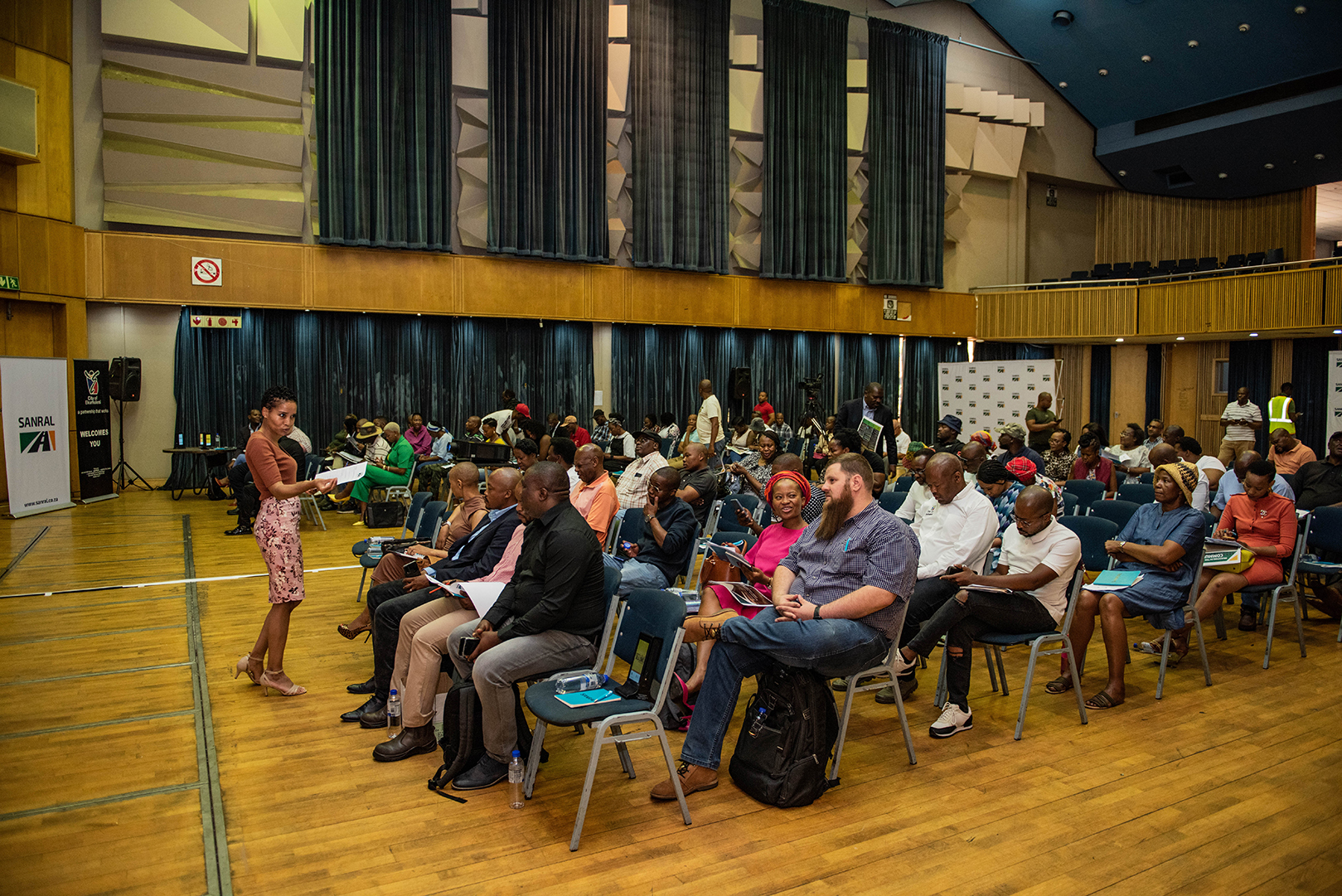
SANRAL’s stakeholder engagement sessions consult stakeholders on planned projects and how to prepare themselves for available opportunities. SANRAL’s stakeholders include community members, government (provincial, local and district municipalities), chambers of commerce, business forums, traditional leadership and civil society organisations affected by SANRAL’s projects.

SANRAL ensures that relations with each are strengthened through constant engagements via various platforms, including traditional and digital media. The Agency also strengthens its role through proactive consultation and partnerships.

SANRAL is committed to intensify efforts to engage all of its stakeholders on projects that impact on them, and will strive to take everyone along on this positive journey of transformation and economic development.

Career Expo visits rural Wild Coast

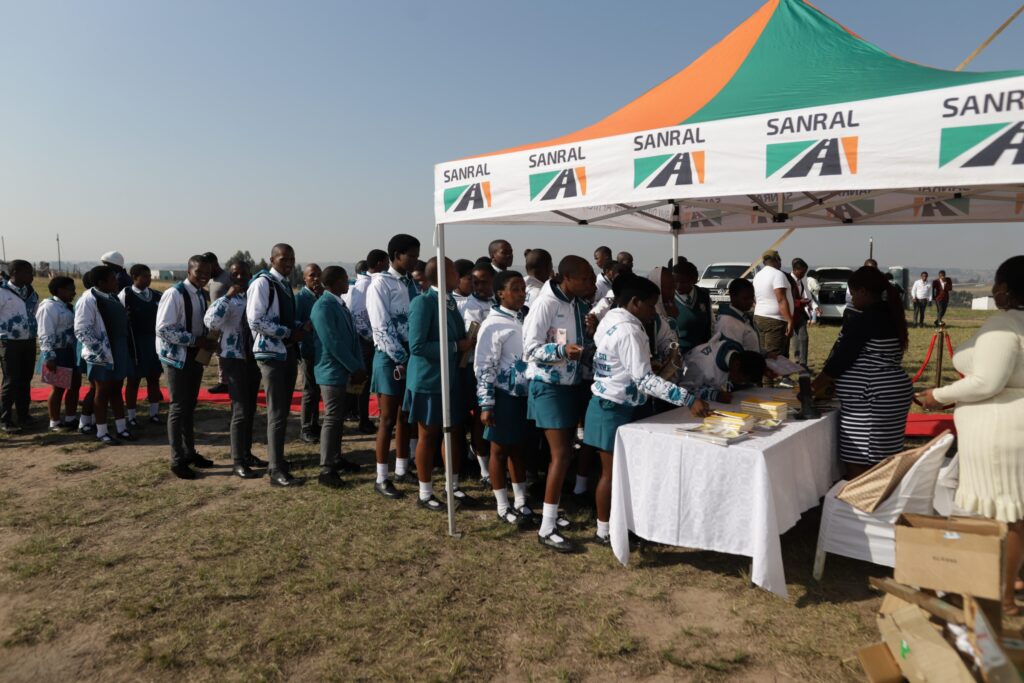
SANRAL recently hosted a Career Expo in Khanyayo Village on the Wild Coast, attended by nearly 700 Grade 12 learners from around Ingquza Hill Local Municipality, where SANRAL’s mega project the Msikaba Bridge has been under construction since 2019.

SANRAL Regional Stakeholder Coordinator Welekazi Ndika encouraged learners to take advantage of opportunities presented to them, saying “SANRAL is here to create awareness around its investment in education and young people, as well as to expose rural learners to stimulating career and bursary opportunities.”

Learners were exposed to unique career options, as well as motivational testimonials by young graduates and business owners. They were also taken on a virtual tour of the Msikaba Bridge to inspire them regarding the world of engineering and to demonstrate SANRAL’s engineering excellence.

South African Transport Minister Sindisiwe Chikunga and her Mozambican counterpart Mateus Magala seek solutions to traffic congestion at Lebombo Border Post

MEDIA RELEASE
South African Transport Minister Sindisiwe Chikunga and her Mozambican counterpart Mateus Magala seek solutions to traffic congestion at Lebombo Border Post

Prague, 3 October 2023 – Minister of Transport, Ms Sindisiwe Chikunga, and her Mozambican counterpart, Mr Mateus Magala, have agreed to work together to seek solutions to the ongoing traffic congestion at the Lebombo border post between the two countries. The South African National Roads Agency SOC Limited (SANRAL) manages the N4 in South Africa leading to the Lebombo Border Post, while the Mozambican National Road Administration (ANE) manages the same road on the other side of the border.

Queues of trucks stretching for many kilometres at the border post have had a severe economic impact which is of concern to both governments.

Minister Chikunga, SANRAL CEO Mr Reginald Demana and officials from the National Department of Transport took the opportunity to meet with Minister Magala and his officials on the sidelines of the 27th World Road Congress taking place in Prague in the Czech Republic, which they are both attending along with representatives from more than 115 other countries.

Minister Chikunga said the South African and Mozambican governments were concerned about the negative economic impact of the congestion and had instructed officials to seek solutions before the two ministers meet soon again in Pretoria, South Africa to assess progress in the next few weeks.

“In the main, the meeting will be looking at the Lebombo border post. We are appreciating the challenges at that border post, with the long queues and congestion that is happening there and that the impact is not good on our economies,” said Minister Chikunga. “We both believe and agree that there are solutions to such challenges. We have instructed our officials to start working on solutions before we meet again in Pretoria”.

Minister Magala said: “I’m sure we can resolve the challenges and capture the economic opportunity in the Maputo corridor. It is a corridor for development meaning it’s not just to transport goods from point A to B, but to establish and develop infrastructure and industries, and a range of economic activities which will create quality jobs for our people.”

Minister Chikunga also said the meeting had agreed to review a Memorandum of Understanding between the two countries. She also indicated that both countries have agreed to cooperate to ensure that the Southern African Development Community secured a seat on the International Maritime Organisation (IMO) Council later this year.