Northern Cape MEC for Roads and Public Works believes the move towards a computerised system can only improve the already outstanding services rendered by various role players.
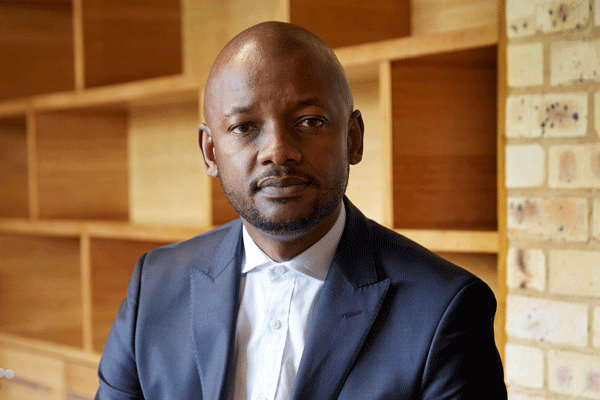
Mxolisi Simon Sokatsha, the Northern Cape MEC for Roads and Public Works believes the Road Incident Management System in a province as vast as the Northern Cape is crucial to saving lives on the roads.
As the Northern Cape Department of Roads and Public Works, we are incredibly proud of our association with the South African National Roads Agency (SOC) Limited (SANRAL).
They are an integral part of the road construction industry in our province and through their projects they not only aid job creation and skills development, but they leave a legacy of skilled citizens who are able to access further developmental opportunities.
Improved road safety
The almost complete three intersections at key entry points to The Diamond City will improve the safety of road users and pedestrians.
The department is glad to highlight that the improved and upgraded intersections (which were previously classified as high accident zones) will contribute to much safer roads.
Furthermore, we had no fatalities during the construction period, and we thank road users for their patience and for adhering to the safety instructions of the flagmen on site.
A section of the road that falls under provincial jurisdiction, between Olifantshoek and Kathu, needed urgent repair and because of the cooperative relationship we have with SANRAL, they incorporated the repairs into an existing project, and the department simply carries the cost thereof – seamless workflow with minimal disruption to road users.
Constant development
We are also encouraged by the constant development and improvement of the Road Incident Management System and in a province as vast as the Northern Cape, this infrastructure is crucial to saving lives on our roads.
The move towards a computerised system can only improve the already outstanding services rendered by various role players, including Emergency Medical Services and traffic, to the South African Police Service, Routine Route Maintenance and many other entities.
I want to encourage road users to be vigilant, courteous and to show concern not only for their own safety, but also that of other road users in the Northern Cape, particularly pedestrians.
Let us ensure that we all reach our destinations safely.
This is an opinion piece by Mxolisi Simon Sokatsha, the Northern Cape MEC for Roads and Public Works.
SANRAL iscommitted to engaging with industry forums and the public at large and have already forged some positive relationships with key stakeholders in this regard.
Skhumbuzo Macozoma, SANRAL CEO, said SANRAL remains committed to training and capacity building and, where the need exists, will ensure emerging SMMEs have the tools to enable them to compete fairly for economic development opportunities.
As we reflect on 20 years of being responsible for the development and upkeep of the national road network, we look back with pride on some of the significant achievements – the road network has tripled from 6 700km in 1998 to over 22 000km currently.
We also take key lessons from these projects in a bid to improve the way we engage with our stakeholders going forward.
That underpins our direction for the next 20 years. We have heard the cries from the SMMEs and start-ups, which further inspires our efforts to break down monopolies in the supply chain of materials, equipment, technologies, systems and other areas to ensure broad-based participation by black South Africans.
To this end, we are committed to engaging with industry forums and the public at large and have already forged some positive relationships with key stakeholders in this regard.
Projects
Our flagship projects in the Northern Cape are nearing completion. On the N12, the bridge over the Orange River is in the home stretch and we look forward to formally opening that bridge early in 2019.
The three intersections just outside Kimberley: Cape Town Road (N12), the Douglas Road (R357) and the Griekwastad Road (N8), which were upgraded to traffic circles, already have lighting in place and are having the finishing touches added.
Between Olifantshoek and Kathu, we have significantly upgraded major intersections to traffic circles because of a dire need to reduce motor vehicle accidents and increase safety conditions with regard to road engineering.
Going forward, all SANRAL projects will be facilitated through an inclusive and consultative process, using project liaison committees (PLCs) that are being set up locally in the targeted project areas with relevant stakeholders.
In some areas this is easier said than done. It requires a concerted effort, particularly at a local-government level, to assuage people’s fears that political allegiance will be rewarded.
We look forward to rolling out new projects across the Northern Cape in 2019 and we hope that the work we’ve done in terms of stakeholder engagements will pave the way for eligible local labour and SMMEs to seize the opportunities that road construction projects can bring to marginalised communities along the route.
We remain committed to training and capacity building and, where the need exists, we will ensure emerging SMMEs have the tools to enable them to compete fairly for economic development opportunities.
This is an opinion piece by SkhumbuzoMacozoma, SANRAL’s CEO.
In keeping with government’s Infrastructure Development Plan, SANRAL will use roads infrastructure development as the catalyst for job creation and empowerment.
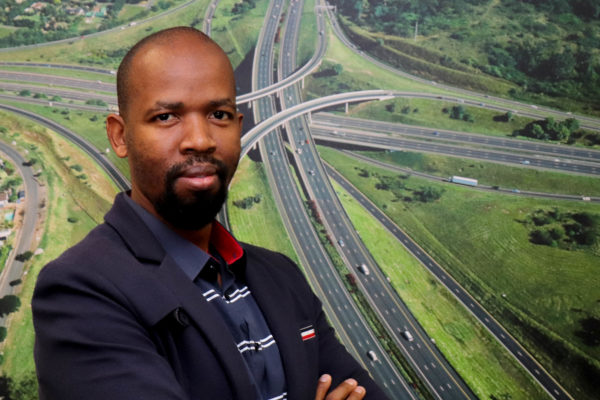
Dumisani Nkabinde, SANRAL Eastern Region regional manager, said that SANRAL wants to play a leadership role in sectors of the economy that are critical to job creation, skills development and community empowerment.
Communities in far-flung rural areas in northern KwaZulu-Natal (KZN) have not been overlooked by the South African National Roads Agency (SOC) Limited (SANRAL).
They have been provided with safer walkways for pedestrians and periodic road maintenance has been carried out on crucial routes that serve passenger and goods vehicles.
In the process, hundreds of jobs have been created and SMMEs have been developed.
SANRAL this week embarked on a drive to inform stakeholders of the opportunities that exist in the construction industry.
In keeping with government’s Infrastructure Development Plan, SANRAL will use roads infrastructure development as the catalyst for job creation and empowerment.
Taking SANRAL to the people
SANRAL hosted its Taking SANRAL to the People programme in Kwangwanase at Kosi Bay in Northern KZN to promote dialogue between the agency, different spheres of government, business, communities and other key stakeholders affected by its projects.
Dumisani Nkabinde, SANRAL Eastern Region regional manager, said that through this programme SANRAL shares information with stakeholders about its continuing role in infrastructure development, job creation and skills development initiatives, and also engages in dialogue on issues of mutual interest.
Nkabinde said communities far away from large cities and towns were often forgotten, but that these were the very people who needed jobs, empowerment and road safety education.
He said SANRAL will also draw from Horizon 2030, its renewed statement of intent of how the roads agency will grow to deliver a national road system that contributes to a better South Africa for all.
In tandem with Horizon 2030, SANRAL will also give real meaning to its transformation policy, which recognises the critical role SANRAL plays in the construction, engineering and related sectors.
Nkabinde said: “We are mindful of the impact that procurement and employment practices in these industries have on millions of people across South Africa. We accept our responsibility to help transform these sectors and to maximise the participation of black contractors, professionals and suppliers beyond the current regulatory levels in all aspects of our business.
“As a responsible state-owned entity, SANRAL wants to play a leadership role in sectors of the economy that are critical to job creation, skills development and community empowerment.
“We want to set high standards for ourselves, and encourage our partners and stakeholders in these industries to join us in the quest to transform the South African economy.”
Projects
SANRAL has undertaken several projects in northern KZN to make roads safer for pedestrians, whilst rehabilitating and upgrading existing roads.
Driven by road safety concerns, SANRAL constructed pedestrian facilities on the N2 between Nyalazi River and Hluhluwe River.
This project entailed the rehabilitation and replacement of the damaged existing walkway and the construction of additional walkways.
In addition, existing culverts were extended on sections where they crossed the walkway.
Also, of critical importance, is the fact that this work was also used to start contributing more to the Manguzi community, with numerous jobs created for the people of Manguzi, a significant number of whom were women.
Furthermore, black owned SMMEs were also contracted to the tune of R2.24-million in addition to the R1.2-million spent on local labour and the 63 people trained in furtherance of skills development through maintenance of the R22 from Mseleni River to Phelendabe circle.
Nkabinde said theR22 serves as the main access road and is bordered by residential developments. SANRAL continually reseals the road, including the protection of the gravel shoulders by construction edge beams, keeping community and road safety top of mind.
He added that considering SANRAL’s focus is not only job creation, but also the meaningful participation of black businesses, SANRAL spent a total of R13-million on the employ of localSMMEs in addition to the 63 residents of Manguzi having gained employment, 20 of whom are women.
SANRAL, as part of its continued presence in the area, undertakes ongoing maintenance of the road from Phelendaba circle to Manguzi.
This route forms part of the Spatial Development Initiative that links Hluhluwe in the south to the Mozambican border, and which traverses numerous settlements and villages.
The first 12km passes through areas with agricultural activity on both sides of the road. From the 12-kilometre mark to the 22-kilometre mark in Manguzi, there is more intensive development – peri-urban and urban – on either side of the road, culminating at the end of the route with the commercial development of the Manguzi central business district.
SANRAL does surface repairs where needed, including extensive base patching, surface patching, asphalt edge break repairs, construction of concrete edge beams and slurry surface texture improvement.
This also included the construction of a new seal surface treatment over the entire road surface
Upcoming projectsinclude the maintenance of the N2 from Empangeni to the border of Mpumalanga Province. This will also include R22 sections 1–5 from Hluhluwe to the Mozambican border, a total distance of 427 kilometres.
Planned work includes the repairs of pavements, grass cutting, attendance to drainage structures, road reserve cleaning as well as maintenance of road amenities.
One of the project’s requirements is that at least 60% of scheduled work should be contracted to sub-contractors. The main contractor, Rainbow Civils, has to date contracted several 1CE and 2CE contractors. In addition, the project currently has five sub packages in place
Fast-tracking empowerment
To fast-track empowerment in the road construction industry, SANRAL has signed a Memorandum of Understanding (MoU) with Bell Equipment in July 2018.
The MoU will give small contractors access to earth-moving machinery to allow them to participate more meaningfully in major construction projects.
Access to sophisticated and more advanced equipped used in construction has been identified as one of the biggest hurdles that continues to face emerging contractors.
Emerging contractors often do not have the capital to buy the machinery used for excavations, ground moving and the grading of roads.
The key motivation behind this MoU is to attract new entrants into the construction and engineering sectors, particularly black contractors, who will in turn grow their business and create jobs.
The cooperation between SANRAL and Bell Equipment is also expected to help to promote fair competition in the construction and engineering sectors.
It is expected that black-owned contractors will now have access to finance, leasing and rental options of road construction equipment, enabling them to participate in major tenders where high standards of quality are required.
“The MoU also demonstrates the road agency’s resolve to use its contracting and procurement processes to facilitate the growth of emerging contractors,” said Nkabinde.
“Bell Equipment will use its infrastructure of 26 branches throughout the country to provide technical support to assist emerging contractors with their strategic partnerships with financial institutions, with banks also playing a hand to secure finance for emerging contractors.”
Deaths on the road
Deputy Minister of Transport, Sindisiwe Lydia Chikunga, who was also on a road safety campaign in the Manguzi area, said that according to the preliminary Festive Season Road Safety Report there were 1 612 deaths on South African roads during the last festive season.
The report covered the period from 1 December 2018 to 8 January 2019. Of these deaths, 328 were in KwaZulu-Natal with 267 crashes.
She said interventions that dealt with ameliorating road safety did not only end with driver, pedestrian or vehicle safety.
They also dealt with the improvement of hazardous South African roads through engineering.
She urged road users to take personal responsibility for safety on South African roads for all the 365 days of the year.
Agency seeking to break down monopolies in the industry, and tackle unemployment, poverty and inequality
SANRAL is currently reviewing its procurement documents to enable small black-owned contractors to access more work opportunities on SANRAL projects.
The South African National Roads Agency (SOC) Limited (SANRAL) and the National African Federated Building Industry (NAFBI) have signed a Memorandum of Understanding (MOU) to develop small contractors.
The agreement is aimed at providing mentorship, guidance and coaching to emerging contractors to enable them to participate in road construction and maintenance projects.
NAFBI is an autonomous, non-profit organisation responsible for economic access facilitation, capacity building and business linkages with the aim of transforming the construction industry in South Africa.
According to Ismail Essa, SANRAL Transformation Manager, the two parties entered into an agreement on matters of mutual interest in order to best serve their strategic, transformation and empowerment interests by exploring options and solutions to maximise the participation of small contractors in SANRAL projects.
“SANRAL is currently reviewing its procurement documents to enable small black-owned contractors to access more work opportunities on SANRAL projects. Most of these contractors require assistance and mentorship before, during and post the tendering phase to win the tender and then execute the project successfully while making a reasonable return,” he said.
Essa said that through this initiative SANRAL seeks to break down monopolies in the industry, and tackle societal ills that include unemployment, poverty and inequality.
Other agreements
The MOU agreed on 14 February 2019 at the SANRAL Central Operations Centre (COC) is one of a number recently signed by the roads agency to level the playing fields in the industry.
In July 2018, SANRAL signed an agreement with Bell Equipment to allow small businesses access to construction equipment, which is one of the major critical factors to successfully deliver on projects.
This was followed by another agreement with Barloworld Equipment for access to CAT earthmoving machines and CAT power systems in southern Africa. SANRAL also signed an MOU with Wirtgen Group South Africa for access to machinery.
What the NAFBI agreement entails
As part of the agreement, SANRAL will conduct information sessions from time to time for capacity building and information sharing and will invite NAFBI to provide mentoring in the areas of technical competence, financial and human resource activities, as well as contractual and legislative matters.
NAFBI National President Aubrey Tshalata believes the partnership with SANRAL is key and is a giant step in preparing their members in all nine provinces to be ready to participate in SANRAL projects.
Tshalata said: “NAFBI has a membership of 6 840 contractors, mostly from townships, Villages, Small towns and are active in local projects.
“This will bring about local economic growth, improve quality on projects, improve skills and accelerate black economic empowerment in a meaningful way. We want to develop real sustainable contractors who are able to compete and perform.”
The MOU will be in place for a period of five years with the option to renew if both parties agree.
Smart technology and the road user can no longer be separate concepts. The road user harnesses smart technology on their devices, in their vehicles, in their offices and homes.
Kobus van der Walt said that key to SANRAL’s sustainable future is the development of the next generation of civil engineers, but more specifically, the creation of a leadership reserve.
In rising to the challenge of rapidly evolving Smart Road Technologies and global innovation, the South African National Roads Agency (SOC) Limited (SANRAL) has established the Technical Innovation Hub (TIH), which is driven from the Western Region Office in Cape Town.
Although not a physical space, the TIH can be likened to a think tank of young intellectuals, mentored by senior professional engineers, and inspired by the possibilities that exist when technology is harnessed to improve lives and promote progressive development in transport.
Smart technology and the road user can no longer be separate concepts. The road user harnesses smart technology on their devices, and in their vehicles, offices and homes.
Technology integrated
It therefore stands to reason that this technology should be integrated into the travel experience during everyday commutes. This is ultimately where the world is headed and South Africa should be no different.
Introducing the TIH to industry creates a platform for graduate engineers to showcase some of the innovation-focused pilot projects that are in the development phase at the TIH.
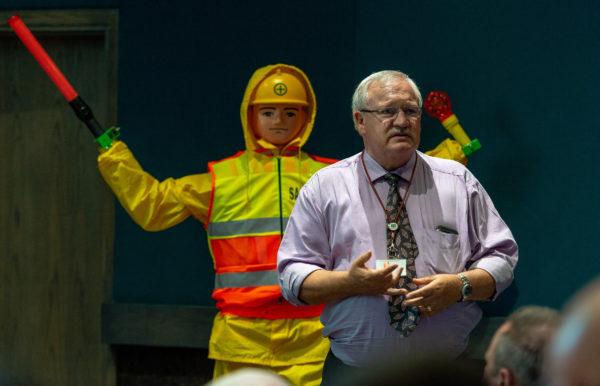
The projects include the use of a robotic flagger at road construction sites, intelligent road studsto provide additional guidance to the road user and the planned use of 3D road markings.
Other presentations include:
video analytics for vehicle inspection and pedestrian detection
drones for engineering applications
floating car data
road sensors
electrical and automated vehicles
alternative materials, i.e. nanotechnologies
augmented / virtual reality
Kobus van der Walt, who heads up SANRAL’s TIH, said: “I cannot overstate the importance and relevance of credible research in the work we do. A clear and direct strategy is needed to ensure economic growth in our industry, and our research can be used to inform this strategy.
“Furthermore, we want to create solutions that speak directly to the needs of the road user. For too long engineers have created transport solutions that they think will serve the needs of the public at large. Our approach is to stay engaged with road users at all levels, and through research and partnerships we aim to create an engaging environment where the road user has a vested interest in getting the best use out of our national road network.”
While advancement in road user technology seems predominantly geared at motorists, it is important to note that pedestrians make up a massive component of road users in South Africa.
Therein lies a major driver of road safety using technology. Engineers with post-graduate studies in research topics relevant to transportation technology advancements, such as automated pedestrian detection and drone applications, play a major role in how we apply technology in saving lives.
The technology already exists and SANRAL is now well positioned to embrace it to the benefit of all road users.
TEA provides mentorship
In addition, the SANRAL Technical Excellence Academy (TEA), which is housed in Port Elizabeth and is also headed up by Van der Walt, provides dedicated mentorship and practical training in road and bridge design for graduate candidate engineers, who are SANRAL bursary students.
“Key to SANRAL’s sustainable future is the development of the next generation of civil engineers, but more specifically, the creation of a leadership reserve. Our history is built on a substantial investment into research and education. We are committed to nurturing a pool of talent through mentoring and training, and to maintaining our plans to attract and retain talent,” concluded van der Walt.
SANRAL remains committed to the development of South Africa’s knowledge economy and will continue to invest in research and education to unlock the potential that lies within the road construction industry as a key driver of economic development in our country.
Her ground-breaking work to transform the way maths and science are taught was made possible in part by the SANRAL Chair at UFS.
Dr Maboya reached a significant milestone in her life when she qualified as the first black female with a doctorate in mathematics education from the University of Free State, which was made possible by funding from the SANRAL Chair.
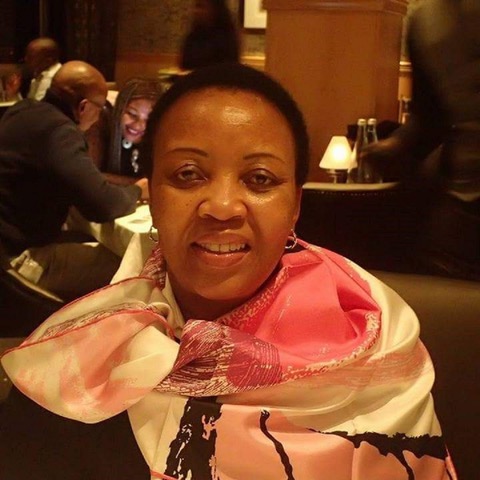
Dr Mantlhake Julia Maboya, deputy director for curriculum management at the Free State Department of Education, aims to make sure every child in the system has access to quality education.
Being highly adventurous and inquisitive, Dr Maboya was motivated to venture into demanding fields, determined to prove that with excellent teachers the difficulty of maths and science subjects for learners and students can be conquered.
“Mathematics and science are vital subjects, as the demands of the fourth Industrial Revolution require our youth to acquire competencies to analyse, design, innovate and solve problems for which the science, technology, engineering and mathematics (STEM) subjects are essential,” she said.
A first made possible by SANRAL
Dr Maboya reached a significant milestone in her life when she qualified as the first black female with a doctorate in mathematics education from the University of Free State, which was made possible by funding from the SANRAL Chair.
Her ground-breaking research was the first to examine the need for and utility of mathematical laboratories at schools.
The theoretical framework that grounded her studies guided her to become self-critical and self-reflective, to listen to teachers’ opinions and to adopt a dialectical approach to interventions that claim to transform teaching practices and empower educators.
Career highlights
Among her career highlights were being awarded a scholarship by the British Council to pursue a Master’s degree in mathematics education in England, and the conceptualization and initiation of a maths laboratory project that promotes hands-on experience in the teaching and learning of mathematics in the Free State.
She has also led the Provincial Strategy on Learner Attainment team that saw the Free State becoming the top-performing province in South Africa, and she directed the South African delegation to the United Kingdom and France on a fact-finding mission on vocational education, publishing a concept paper on vocational education that will change the future landscape of education.
Dr Maboya’s passion and commitment to her work, actively listening to others, taking every experience as an opportunity to learn, taking calculated risks, fostering creativity and driving innovation are among the traits that make her a brilliant resource for curriculum management.
SANRAL is proud to have been involved with helping such an exceptional individual contribute to South Africa’s STEM talent pool.
SANRAL’s responsibility doesn’t stop with road maintenance.
While SANRAL has a vested interest, responsibility for spill containment and treatment, whether hazardous or not, rests with the contractor.
The maintenance of the roads that SANRAL builds and oversees extends beyond structural repairs.
Conservation of the natural environment is prioritised before, during and after construction, and dedicated reaction teams are ready to kick into action when called upon to deal with environmental incidents.
Prime example of such incidents are spillages on South Africa’s road network, which are a regular occurrence in some areas.
The Garden Route (N2) is a popular route for commercial and leisure travel between the Western and Eastern Cape and, on some sections of this road, spillages are common.
Between Riversdale and Wilderness, a diesel, oil or petrol spillage incident happens up to twice a week. Because environmental management is a key component of road infrastructure development, SANRAL has developed an Environmental Management Plan (EMP) as a tool with which to continually improve environmental performance.
This EMP serves as a guide to respond to environmental incidents and mitigate the extent of the damage.
If a spillage occurs, a primary concern is to prevent any hazardous material from entering the water supply system.
It makes provision for the protection of streams, rivers and dams from direct or indirect spillage of contaminants such as refuse, cement, sewage, chemicals, fuels, oils, wash water, organic materials and bituminous products.
While SANRAL has a vested interest, responsibility for spill containment and treatment, whether hazardous or not, rests with the contractor. The implementation of the EMP begins when the individual who either causes or discovers the spill immediately reports it to the engineer.
From there, the situation is assessed and responded to. SANRAL must determine the exact treatment of polluted soil, or, in worse cases, polluted water, which by its very nature is much harder to contain.
How spillages are handled
We spoke with Johan Nel, Route Manager of Qunu Consulting, to understand exactly what happens when a spillage occurs and how the team operates.
“In smaller incidents, with a petrol or diesel leak on the ground, the contractor is the first cog in the wheel,” said Nel.
“Most contractors have their own spill kits on site, which enable them to cover the affected areas with an absorbent material that prevents the road surface from becoming slippery and ultimately dangerous to road users.”
The staff receives basic training on how to use the material and equipment, how and where it should be disposed of, and on how the spill kit is replenished after every use.
Such incidents are nipped in the bud before they become catastrophes. However, there are times when the incident requires specialised expertise to be called in.
“Generally, this would involve the services of a hazardous-waste response company that can provide rapid response to spills and discharges,” said Nel.
“When time is of the essence, the contaminated area has to be secured and cleaned up quickly and safely.”
Although SANRAL is not responsible for managing the incident, emergency communication is channelled through the Road Incident Management System (RIMS) to ensure that all role players, including Traffic Services, Fire and Disaster Risk Management, Department of Water Affairs and so on, are mobilised and that there is a central communication of who has been deployed, real-time status updates on the situation and communication with the media – particularly when information needs to reach road users – in order to reduce or avoid chaos and confusion on the road.
Some would argue that the real work starts once the situation has been contained and cleaned up, and the road is once again opened to traffic.
There is much environmental activity that plays out behind the scenes, especially in the event of water contamination.
Conservation of the fauna and flora in the area is prioritised and ecological monitoring, as well as remedial or rehabilitation treatment is prescribed.
Where necessary, re-vegetation of affected areas will occur, in consultation with the contractor and environmental specialists.
Sampling and testing of the water quality upstream and downstream of the spill is done and only concluded once upstream and downstream results correspond to each other, effectively giving the water a clean bill of health.
“One thing is certain – when a spillage occurs, no stone is left unturned to respond, quickly, effectively and with as little inconvenience to road users as possible,” added Nel.
SANRAL’s commitment stretches way beyond roads and because of this, the agency constantly engages with specialists, stakeholders and other interested parties to refine its response to incidents that threaten the health of the environment.
Most will join the design academy for 21 months, while eight will spend three months at the materials testing laboratory.
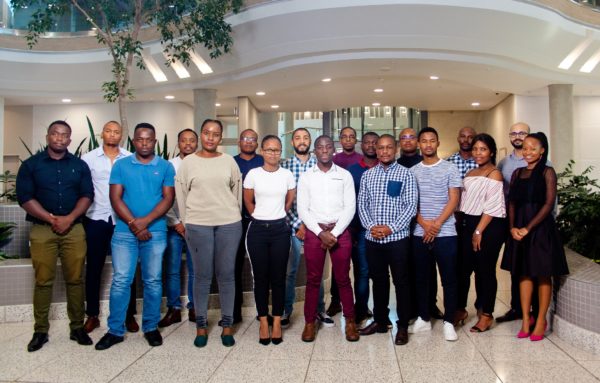
SANRAL welcomed 18 new engineering candidates to its Technical Excellence Academy (TEA) located at its Southern Region office in Port Elizabeth, Eastern Cape.
The South African National Roads Agency (SOC) Limited (SANRAL) has welcomed 18 new engineering candidates to its training academy in the Eastern Cape.
This pushes the number of engineers interned at its Technical Excellence Academy (TEA) in Nelson Mandela Bay to 31, with another 15 expected.
A further intake in July will bring the total close to 50.
SANRAL welcomed the new candidate engineers at an induction held on 6 February 2019 at the academy in Port Elizabeth.
How it works
The candidates from various provinces in South Africa will be split into project design teams.
Most will join the design academy housed at the TEA premises for 21 months, while eight will spend three months at the materials testing laboratory.
The candidates will also gain on-site work experience after their design and laboratory training.
This year there are five female candidates at TEA. Since establishing the Academy in 2014 there have been 13 female candidate engineers and 40 male candidates. In total 50 have finished their training at the academy since 2014.
Kobus van der Walt, Head of Technical Excellence Academy, said: “It is wonderful that the Eastern Cape and KwaZulu Natal Department of Transport have seconded their staff to be part of the academy.
“The Namibia Roads Authority have also seconded people to join the academy and they will start at the TEA in July. We are busy finalising the memorandum of understanding (MOU) between SANRAL and Namibia.”
Candidates want to contribute
Lumanye Filtane from Idutywa in the Eastern Cape graduated from the University of Pretoria. He is the only one in his family who has studied to be a civil engineer.
“I studied civil engineering because I want to contribute to the infrastructure development of the Eastern Cape. My goal is to be a registered engineer with ECSA and I would like to further my studies,” said Filtane.
Nonkanyezi Nxumalo from Nkandla in KwaZulu Natal first wanted to be a teacher, but her former high school principal told her about civil engineering.
Nxumalo said: “My school principal motivated me and told me that he sees a civil engineer in me, so he gave me the SANRAL bursary application. He explained to me what a civil engineer is and that was when I decided that this was the career for me.
“Another motivation is that there is a bridge in Nkandla, where I live, and it is a single-lane bridge, allowing only one car to cross at a time. I want to redesign that bridge and expand it. I am the first one in my family to be a civil engineer.”
She believes with hard work and good grades one can achieve anything and go anywhere.
The overall benefits of attending the TEA are two-fold.
On one hand, engineering graduates enrolled in the Academy are provided with the much-needed training, which means TEA graduates are likely to achieve the training outcomes required by the Engineering Council of South Africa (ECSA) sooner than candidates who are not as privileged to be in such an enabling environment.
On the other hand, SANRAL benefits from the programme by having access to an increasing pool of highly-talented candidate engineers and technologists while establishing themselves in the industry early in their careers.
“During the training we have the solemn obligation to provide the environment required to achieve 11 ECSA outcomes,” said Andrew Van Gruting, senior mentor at the TEA.
What are the ECSA outcomes?
Candidates will have to define, investigate and analyse engineering problems;
Design or develop solutions to engineering problems;
Comprehend and apply knowledge;
Manage part of all of one or more engineering activities;
Communicate clearly with others in the course of his or her engineering activities;
Recognise and address the reasonably foreseeable social, cultural and environmental effects of engineering activities;
Meet all legal and regulatory requirements;
Conduct engineering activities ethically;
Exercise sound judgement;
Be responsible for making decisions on part of all of engineering activities;
Undertake professional development.
What does the training entail?
Geometric design;
Traffic analysis and capacity;
Materials investigation and utilisation;
Pavement evaluations and materials designs;
Storm water drainage including sub-surface drainage; etc.
During the induction the candidate engineers were introduced to other departments within SANRAL to familiarise themselves.
“No job is in isolation. The candidates will learn that all departments at SANRAL are connected. While they are here, they will expand their outlook and learn what their career is about. It is not about formulas and number crunching. There are other aspects to what we do,” said Van Gruting.
“During the next five years we will work with the Engineering Council of South Africa (ECSA) to draft documents that will lead to accreditation of training programmes not just for SANRAL, but for other companies too. One would still have to apply to ECSA to be a registered engineer.
“Our goal is to build a second building in the next five years to accommodate the TEA candidates. There is also a need for professional mentors to join the academy,” van Gruting concluded.
The adjustments are made on an annual basis to keep the toll tariffs aligned with inflation rates.
The effect of inflation means that every rand buys a smaller percentage of a good or service. As the average inflation rate is used to decide the adjustment, this means that there is no increase in real terms.
The South African National Road Agency (SOC) Limited (SANRAL) will be implementing the 2019 national roads Toll Tariff Adjustments in line with the Consumer Price Index (CPI), as determined by the Ministry of Transport.
The adjustment will come into effect on 1 March 2019 for the 2019/20 tax year. This has been gazetted on 1 February 2019.
Adjustments to the tariffs are in accordance with the CPI over the proceeding 12 months which has been calculated as 4,583%.
Affected roads
The newly adjusted tariffs will apply on the N3 toll road between Johannesburg and Durban, on the N4 between the Mozambican border and the Botswana border as on the toll sections of the N1, N2, N17, N12, R30 and R21.
The adjusted toll tariffs will also be applicable to the GFIP toll roads. The CPI adjustments will also affect the monthly caps applicable to the GFIP toll roads.
The monthly toll for compliant users of Class A2 vehicles have been adjusted from R273 per month to R276 per month.
Discounts offered at specific toll plazas for frequent users, as well as qualifying local users still apply. Application for discounts can be made at the toll plaza offices.
The Swartruggens Plaza on the N4 has not been included as it will be addressed separately.
Why adjustments?
The adjustments are made on an annual basis to keep the toll tariffs aligned with inflation rates.
The effect of inflation means that every rand buys a smaller percentage of a good or service. As the average inflation rate is used to decide the adjustment, this means that there is no increase in real terms.
Toll monies are used cautiously, only to maintain and improve toll roads. Toll roads are built at no cost to the fiscus – the concept of toll roads is to apply a user charge only to those who benefit from the use of the road.
The Department of Transport, through SANRAL, uses tolling selectively.
Only 2 952km of the 22 214km network that SANRAL is responsible for constitute toll roads.
Toll roads are a prime example of a public-private partnership which makes capital available up front for important and expensive infrastructure projects. It also allows for the continued maintenance not done at taxpayer’s expense.
Roads that are not regularly maintained will require repairs. The cost of major reconstruction can be up to 18 times higher than it would have been if routine preventative maintenance was undertaken.
The upgrade of the intersections to traffic circles will go a long way to improve the safety and ultimately reduce vehicle accidents.
This project connected scores of SMMEs with economic and developmental opportunities that had a significant impact on the regional economy.
After just over one year of construction, Kimberley boasts a completed road safety upgrade at three major intersections that were upgraded to traffic circles.
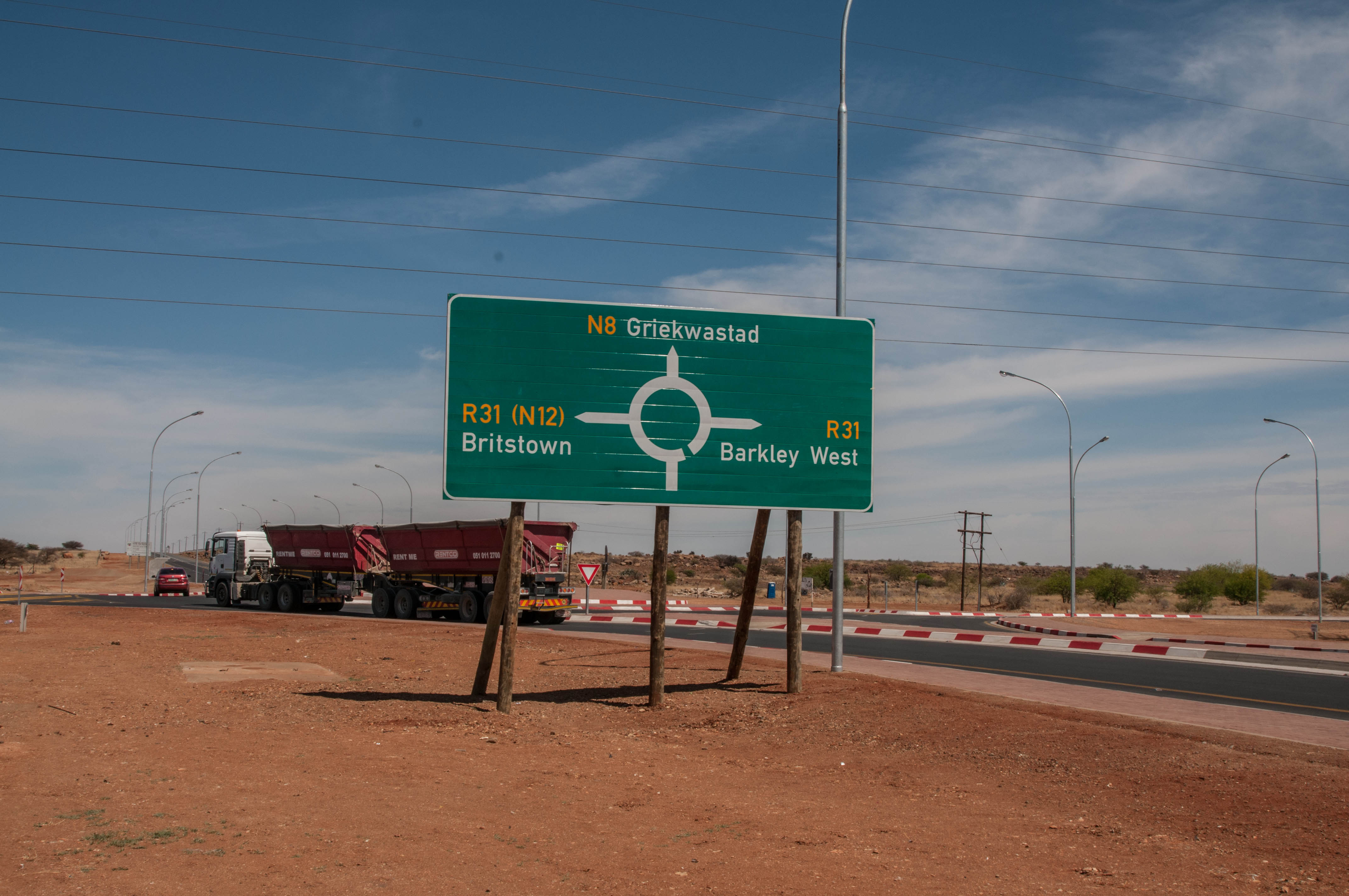
These intersections, which all cross the R31 coming into Kimberley, are the N12 from Hopetown, the N8 from Griekwastad and the R357 from Douglas, and were identified with a view to reduce the number of serious and fatal motor vehicle accidents that have occurred over the years, and ultimately improve the safety for all road users.
The project, which started with construction in August 2017, was completed in October 2018, leaving three new traffic circles with pedestrian facilities and bus shelters.
Petronella Theron, SANRAL Project Manager, said: “Particularly on the R31, vehicles had to come to a complete stop when crossing the N12, which had free-flowing traffic. Often motorists on the R31 mistook the intersection for a four-way crossing, resulting in them turning into oncoming traffic, with serious and sometimes fatal consequences.
“The upgrade of the intersections to traffic circles will go a long way to improve the safety and ultimately reduce motor vehicle accidents.”
According to Assistant Resident Engineer, Joubert Swanepoel, the main objective of a traffic circle is to reduce the incoming approach speed, reduce the angles of conflict between vehicles, and, ultimately, reduce the severity of accidents when they do occur.
SMMEs benefit
The project had a budget of R115-million, of which R33-million was spent on SMME contractor development.
“This project connected scores of SMMEs with economic and developmental opportunities that had a significant impact on the regional economy,” said Pieter Muller of Taupele Construction.
Furthermore, 169 locals and 17 skilled workers from outside the district benefited from work opportunities over the past year since construction has been underway.
Maria Mooketsi, owner of Onkabetse Civils and Mining, is one of the SMMEs on this site.
She expressed huge gratitude for being granted the opportunity to work, learn, grow and develop under the mentorship of Taupele Construction, while providing work opportunities to 10 others.
“We looked at various options for road safety upgrades and, in the end, converting the intersections to traffic circles was the most viable option. Road safety remains a key priority for SANRAL and where we can deliver road transport solutions that aid and improve overall safety we are determined to do so,” concluded Theron.