
Blog

N6 upgrade in Smithfield creates sustainable empowerment

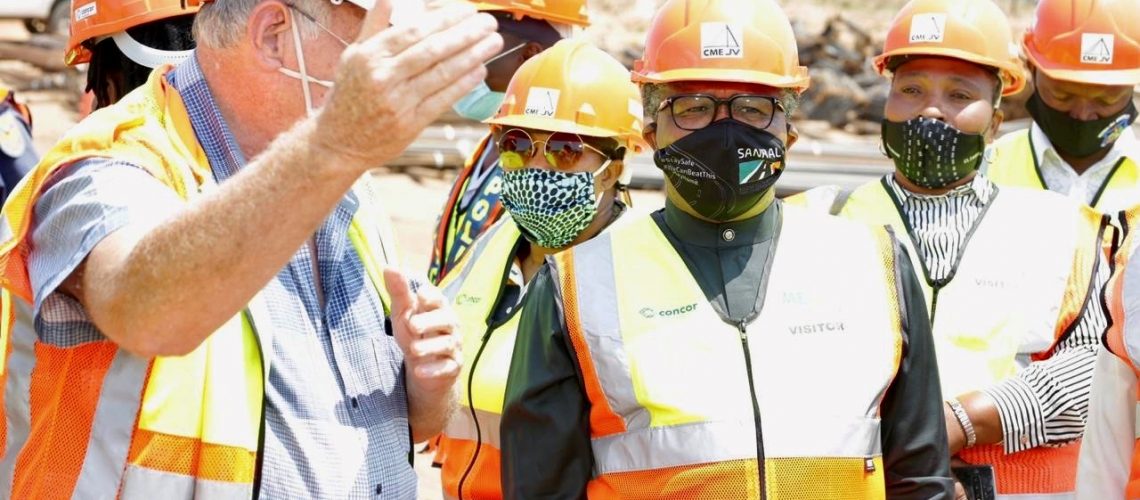
“Thanking SANRAL for excellent service delivery in the road construction sector is like thanking the fish for swimming.” These were the words of Transport Minister Fikile Mbalula when he visited a SANRAL upgrade project on the N6 in Smithfield, Free State and lauded the agency for its engineering excellence.

The N6 provides the gateway to the Eastern Cape and is crucial for the economic development of the province as it links to the Free State. It also provides a vital cog in the commercial transportation of goods and services between Lesotho and Coega.

In accordance with SANRAL’s transformation objectives, the labour force was sourced locally from the Xhariep District Municipality and to date the project has generated 390 jobs to the value of R 28 073 197, given economic opportunities to 30 sub-contractors, at a cost of R 88 501 454 and provided training to all local labour.

“I am highly pleased to see that the people of this district, are in fact the ones who benefited from this project. We should not bring people from Johannesburg to benefit here. Empowerment is for the locals and those who have been empowered, must be seen in the community and should be supported to grow and develop to take on bigger opportunities and create work for others to benefit,” said Mbalula.

This popular route, particularly between Smithfield and Rouxville, has in the past posed significant road safety challenges to the scores of motorists who travel this way every day. In response to these challenges, SANRAL, appointed WBHO to upgrade the 34-kilometre stretch of road.

The upgrade entails widening and partial vertical realignment of the existing road, which fundamentally improves safety aspects.  One of the key results of the vertical realignment will be fewer blind rises on the route and a longer field of vision for motorists.  It will furthermore reduce the number of climbing lanes necessary to accommodate overtaking of slower traffic.  The road is also being widened to 12,4 metres, including a generous shoulder on each side.

“Most of the road is being constructed in half-widths, where the traffic is moved onto a widened shoulder on the one side of the road while work continues on the other side,” explained Jason Lowe, SANRAL Eastern Region Project Manager.

He further explains that the main bridge on the route is over the Caledon River, which was an extremely narrow bridge without shoulders. This has been widened on the left and right to accommodate the new road width.  Closer to the Rouxville side, the smaller bridge over the Eldorado River was totally demolished and rebuilt to larger dimensions.

“Both Rouxville and Smithfield have historic town planning challenges where the majority of the population has been positioned on the opposite side of the road to the town’s amenities, such as schools and shops. As a result, numerous pedestrians cross the N6 daily. In prioritising road safety for all road users, but particularly pedestrians in this case, we are reducing the speed limit, building sidewalks on both sides of the road, creating safe crossing points and installing streetlights. These measures will ensure that motorists are more aware of the pedestrians and will enforce reduced travelling speeds,” said Dumisani Nkabinde, Regional Manager for SANRAL’s Eastern Region.

While the project is not yet fully completed, the minister was pleased with the progress and the overall opportunities that were created for stakeholders to access economic development opportunities.

“This is exactly what President Ramaphosa was referring to when he spoke about infrastructure development as the flywheel that will unlock economic revival in a post COVID-19 South Africa. We are not waiting for that to happen. It has already begun, right on our doorstep with the N6 linking the provinces for increased economic development,” concluded Mbalula.

Nothing will derail Northern Cape Routine Road Maintenance projects

R470 million is allocated for Routine Road Maintenance (RRM) on South African National Roads Agency SOC Limited (SANRAL) projects in the Northern Cape over the next three years. With 15 RRM projects spread across the province, there are massive opportunities for small, medium and micro enterprises (SMMEs) to participate and benefit.

SANRAL recently met with the Northern Cape Progressive Business Forum (NCPBF), South African Network for Women in Transport (SANWIT) and Francis Baard Business Forum (FBBF) to address their concerns regarding barriers to entry, on SANRAL projects.

“They are our stakeholders and we welcomed the invitation to engage their leadership. We listened to their concerns and addressed these in accordance with SANRAL’s transformation policy, giving guidance on how to proceed. It was an amicable engagement and we look forward to working with all our stakeholders in delivering on our infrastructure development mandate. This engagement showed that constructive engagement to resolve conflict is possible when the appropriate platforms are used. Having said that, SANRAL will not progress in its mandate of service delivery if we are in reverse gear every time interest groups are unhappy with conditions related to project participation,” said Randall Cable, SANRAL Western Region Manager.

This echoes the sentiment of Transport Minister, Fikile Mbalula, when he visited SANRAL’s N2 Wild Coast Road project last month, reiterating that while SANRAL is open to engagement and negotiation with all relevant stakeholders, work will not be stopped by entities who have alternate agendas, while the bulk of people welcome infrastructure development projects.

Some of the concerns raised include access for women in construction, complex tender documents, exclusion of SMMEs in economic development opportunities and representation on the project liaison committee (PLC).

SANRAL recently signed a memorandum of understanding (MOU) with the South African Forum of Civil Engineering Contractors (SAFCEC), that prioritises development of SMMEs in the road construction industry.

“That MOU with SAFCEC is specifically geared to enable mentorship, development, capacity building and training of small contractors, giving them the skills and knowledge needed to access economic opportunities and participate profitably in road construction and maintenance projects,” explained Cable.

In response to the concerns raised about access to the PLC, the stakeholders were again given nomination forms and advised to nominate relevant parties that could represent their interests on the PLC, as this is the ultimate structure for oversight and transparency of SANRAL projects in the district. It was also emphasised that the members of the PLC are impartial and can have no stake in any of the road construction or maintenance projects. SANRAL is committed to constitute functional PLCs that serve in the best interest of all stakeholders.

SANRAL’s projects are guided by a commitment to SMME development, a 14-point plan that prioritises community engagement, a transformation policy that seeks to advance black business, and an overall strategy that is aligned to the government’s National Development Plan.

SANRAL pushes for transformation in its projects in Lesedi Local Municipality

Through its Horizon 2030 and transformation strategy, the South African National Roads Agency SOC Limited (SANRAL) commits itself to support black owned businesses and ensure their development and meaningful participation in the construction industry, says SANRAL Board Member Thamsanqa Matosa.

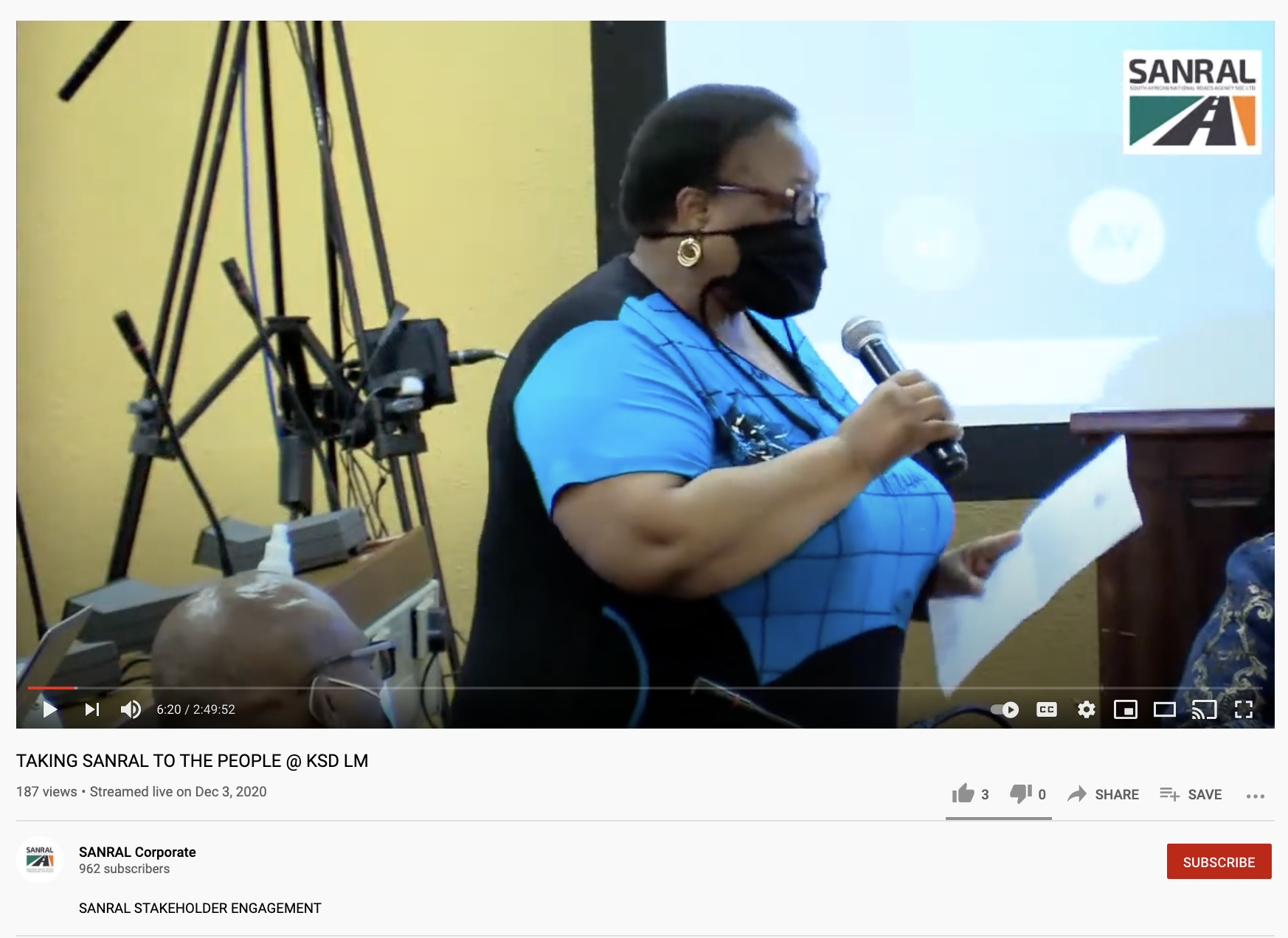
He was speaking at the road agency’s flagship Taking SANRAL to the People programme in the Sedibeng District Municipality in Gauteng. The Taking SANRAL to the People programme is an opportunity for SANRAL to interact with its stakeholders – from government, traditional leaders, business, and community-based organisation – and forge partnerships with them as part of its efforts to improve their area’s socio-economic conditions through its programmes.

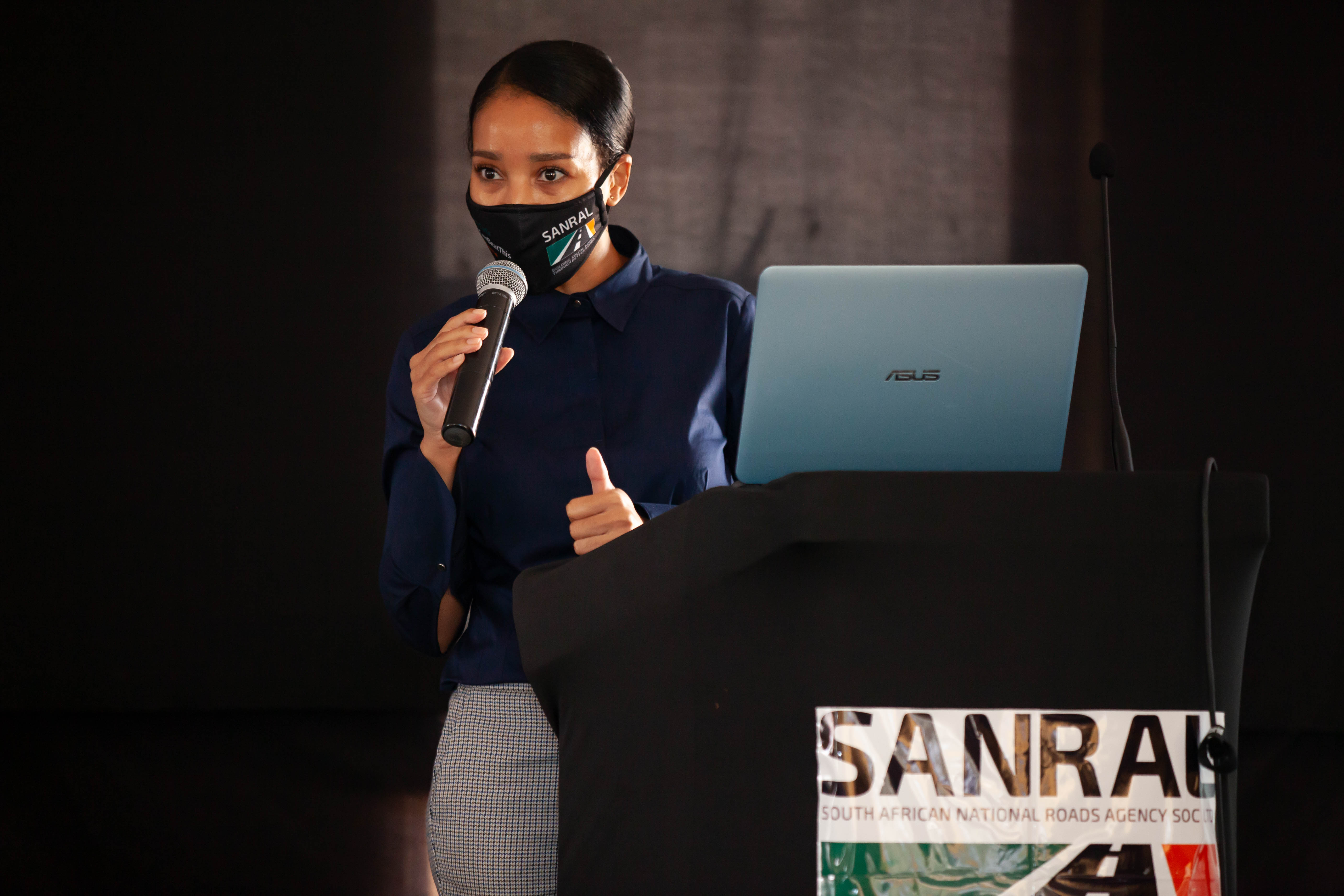
SANRAL’s stakeholder engagement coordinator Jullecsia Saul says that, by engaging on issues of mutual interest with stakeholders, SANRAL continues to share information about its continuing role in infrastructure development, job creation and skills development initiatives.

“The third and coming decade, will see SANRAL focusing on long-term visioning, a review of network growth, a review of its mandate, emphasis on relevance and concerted steps to deal with fair access to opportunities and correct the industry imbalances of the past.

We have embarked on a process of fundamental transformation that opens the path for inclusive, broad-based economic development. For that reason, we ensure that we are consistently transparent, as a state-owned entity, in the process of the upskilling of the local labour source, given that skilled development can reduce jobless, raise income and improve standards of living, she says.

This is all aligned with to SANRAL’s 14 Point Plan, adds Matosa, which is set out to facilitate better project-level liaison with local communities and structures. Establishing project liaison committees (PLCs) is an important function of the 14 Point Plan because these PLCs assist with, among others, setting up databases of local community members, and recruiting them to work on SANRAL projects.

The key priority project for Lesedi Local Municipality will be routine maintenance along national roads N3 and N17 which stretch across 4 main wards within the municipality. Sanral’s Northern Region Project Manager Oakley Van Eyk highlighted that there will be specific work packages allocated to local SMME’s. “There will be a total of four work packages made available for sub-contract along these RRM projects and will include: vegetation control which is made up of mowing and chemical control; general maintenance will be carried out like the construction of drainage systems and erecting of road signage to name a few” according to Van Eyk.

SANRAL hosts stakeholders in the Victor Khanye Local Municipality

The South African National Road Agency (SANRAL) is embarking on its flagship Taking SANRAL to the people stakeholder engagement sessions across South Africa. SANRAL hosted stakeholders in the Victor Khanye Local Municipality on Tuesday, 27 October 2020, to provide a comprehensive view of its operations in the municipality.

This session was held under the theme: Transforming the Victor Khanye Municipality economy, one kilometre at a time. As part of its response to deliver on the long-term vision of a national transport system that delivers a better South Africa for all, SANRAL used this opportunity to foster dialogue with SMMEs, traditional authorities, community members and civil society.

This engagement coincides with the government’s priority to stimulate growth and drive job creation through the implementation of infrastructure development initiatives which are centred around localisation and development of the local small, micro, and medium enterprises (SMMEs). This will happen through programmes that foster the creation of jobs, the strengthening of empowerment, including the participation of vulnerable groups and further strengthening of the role of women, people with disabilities and the youth across the economy.

Taking Sanral to Victor Khanye highlighted upcoming projects that the community and local businesses can take advantage of. “This effort by SANRAL will promote growth, mobilise investment, create jobs, and empower citizens with skills. This speaks to the SANRAL Stakeholder pillar which makes it possible for SANRAL to deliver the business of managing and operating the national road network within the framework of government policy while including local businesses and communities at the same time,” said Madoda Mthembu, SANRAL’s Operations and Maintenance Manager.

Unpacking key projects to SMMEs and local communities SANRAL Project Manager, Fulufhelo Luruli said that there are three main conventional projects and one maintenance project planned for Victor Khanye Local Municipality that the community and local businesses would benefit from. These are:

  1. The repairs of various structures on national route N12 between Gillooly’s Interchange and Delmas Interchange (SANRAL N.012-159-2017/1&2)
  2. The repair and resurfacing of national route N12 section 20 between Delmas and Petroport (SANRAL N.012-200-2019/1)
  3. The repair and resurfacing of national route N12 section 20 between from Petroport to Ogies (SANRAL N.012-200-2019/2)
  4. Routine road maintenance of national route N12, R555, R573 (SANRAL X.002-105-2019/1).

“The first project (SANRAL N.012-159-2017/1&2) includes the repair of 9 bridges. For the second and the third projects, the following scope of work will be covered: asphalt overlay, concrete pavement repair, pre-treatment of the existing road, traffic accommodation, drainage, structures improvements, road furniture (road signs, guardrails), and road markings,” said Fulufhelo.

The project duration is expected to take over a span of 10 to 15 months, the tenders are still under evaluation phase and are projected to start in 2022.

Transport Minister Fikile Mbalula says the N2 Wild Coast Road (N2WCR) project is well underway and will continue to create thousands of new jobs and economic opportunities in line with the new Economic Reconstruction and Recovery Plan.

Genuine concerns raised by local communities would be addressed by the national Department of Transport and the South African National Roads Agency SOC Limited (SANRAL) but government would not allow people with hidden agendas to stop development, said Minister Mbalula.

The N2 Wild Coast Road was one of the massive infrastructure projects to which President Ramaphosa was referring in South Africa’s Economic Reconstruction and Recovery Plan. “Work has begun on this project so when we talk about job creation, when we talk about massive infrastructure build, this is what we are talking about,” he said. “This democratically-elected government is ready to listen to whatever concerns which communities may have but we must differentiate between anarchy and the real demands of the people.”

Minister Mbalula visited SANRAL’s multi-billion-rand N2 Wild Coast Road project to assess progress in the implementation of one of government’s key Strategic Integrated Projects (SIP-3) which will serve as a critical catalyst for economic growth at a national, provincial and regional level.

The project is endorsed by the Presidential Infrastructure Coordinating Commission (PICC) as a catalyst for economic development. It is strategically positioned on the N2, connecting four provinces; Western Cape, Eastern Cape, KwaZulu-Natal and Mpumalanga, traversing the cities and towns of Cape Town, George, Knysna, Port Elizabeth, East London, Mthatha, Durban and Ermelo.

“I started my visit at the Msikaba Mega Bridge construction site, and I was incredibly impressed with the progress being made, the magnitude of the project and the economic development opportunities created for emerging black business and SMMEs on this project,” said Mbalula.

The project is currently in early construction phase and, once completed, the 580m long Msikaba Bridge will be the longest cable-stay bridge in Africa. With a deck height of 194m above the river valley, Msikaba will become the third-highest bridge in Africa and the 133rd highest in the world. Environmental compliance is a core component of all SANRAL operations and as such the cable-stay design will ensure that the construction of the bridge will have no direct impact on the pristine gorge environment almost 200m below.


Mveli Phakathi, a local resident, says he is excited about the fruits that the project will bear for him and the community at large. “This project is a huge opportunity for us to find employment and training opportunities. We will gain valuable skills in building and construction through this project, enabling us to sustain ourselves even when it comes to an end. Those of us who want to build small businesses will benefit greatly, because this project will enable us to provide income for our families,” he says.

The minister also officially opened and handed over two recently completed rural access roads in the communities of Sigidi and Makhwantini in the Alfred Nzo District Municipality of the Eastern Cape province.

In Sigidi, more than 120 locals were involved in the construction of the 10km access gravel road to a surfaced road linking the Sigidi and Mahaha communities in the Amadiba area of Pondoland.  The two-year community development project incorporated a two-year learnership programme, accredited by the South African Qualifications Authority (SAQA), affording community members NQF level 2, 3, and 4 training. SANRAL furthermore prioritised work for 50% women-owned and 70% youth-owned SMMEs.

In Makhwantini, over R28.5 million of the project budget was spent on targeted enterprises including SMMEs and local suppliers. Approximately 10 SMMEs and four local plant hire suppliers participated and benefit-ted from the project, while more than 150 jobs and training opportunities were created for locals.

“While SANRAL has a mandate to fund, build and maintain the national road network, we cannot ignore the importance of rural roads in facilitating economic development access to marginalised communities. Rural roads eventually link up with the national road network, and as we heed the President’s call to use infrastructure development as the flywheel that will kickstart our economy post COVID-19, SANRAL is proud to be widening the net of economic participation opportunities in the road construction sector,” said Mbulelo Peterson, SANRAL’s Southern Region Manager.

These activities form part of the national October Transport Month programme and, in addition to enabling the minister to see first-hand the achievements on the N2 Wild Coast Road, it was also an opportunity to engage with and inform stakeholders of the progress and challenges facing the project.

SANRAL remains committed to prioritising economic inclusion for the affected communities and will, along with the other relevant government entities, continue to engage stakeholders through the various community structures.

Minister Mbalula to visit N2WC Road Project

Transport Minister Fikile Mbalula will tomorrow visit SANRAL’s multi-billion-rand N2 Wild Coast Road Project to assess progress in the implementation of one of the national government’s key Strategic Integrated Projects (SIP-3) which will serve as a critical catalyst for economic growth at a national, provincial and regional level.

The Minister will also hand over two recently completed rural access roads to the communities of Sigidi and Makhwantini in the Alfred Nzo District Municipality of the Eastern Cape province.

In recognition of the training and development opportunities associated with the building of the rural roads, the Minister will hand over certificates to the SMMEs who were trained and capacitated to participate in these projects.

These activities form part of the national October Transport Month programme and, in addition to enabling Minister Mbalula to see first-hand the achievements on the N2 Wild Coast Road Project, will also help to inform local communities and the country at large as to the progress and challenges facing the Project.

SANRAL signs MOU with SAFCEC to prioritise small contractor development

The South African National Roads Agency SOC Limited (SANRAL) is proud to announce a memorandum of understanding (MOU) with the South African Forum of Civil Engineering Contractors (SAFCEC), that prioritises development of SMMEs in the road construction industry.

“In order to achieve meaningful transformation in this sector, we have to look beyond just meeting targets. To this end, our MOU with SAFCEC is geared to explore options and solutions that enables mentorship, development, capacity building and training of small contractors, giving them the skills and knowledge needed to execute road construction and maintenance projects,” explained Ismail Essa, SANRAL’s Transformation Head.

According to the MOU, SAFCEC seeks to improve knowledge and skills of small contractors, deliver on its transformation, incubation and empowerment commitments to its members, create value and forge relationships with small contractors in the construction sector.

SANRAL on the other hand is committed to the mentorship of small contractors to increase the number of participants, particularly Black-owned, across the value and supply chains of the road construction sub-sector of the construction industry. Furthermore, the roads agency seeks to promote fair competition, facilitate access to developmental opportunities and build lasting relationships that sees small contractors benefiting from direct development support.

Essa further explains that the training will be funded through SAFCES’s SETA funds, while SANRAL will provide work sites where interns can be placed after training, to complete the required practical experience.

SAFCEC will provide mentors to guide, develop and prepare small contractors to be able to tender on SANRAL projects, covering technical competence, finance, human resources, contractual matters and legislation.

Successfully completing this programme, will mean that the small contractor understands how to position their entity to attain a competitive edge, is able to submit best scoring, yet profitable tenders, can determine and assess risk and has improved strategic, technical and entrepreneural skills.

“Now, more than ever, we have to get this right. As SANRAL responds to the President’s call for infrastructure development to drive our country’s economic recovery post COVID-19, it is imperative that we widen the net of economic inclusion in the road construction industry. The success of our economic recovery initiatives will depend on capacitating as many contributors as possible to meaningfully participate in building this country’s infrastructure. We are ready and excited about playing our part. Together we will build South Africa, through better roads,” concluded Essa.

SANRAL Routine Road Maintenance project creates opportunities for Koster SMMEs

As part of its pro-active response to deliver on the long-term vision of a national transport system that delivers a better South Africa for all, the South African National Roads Agency SOC Limited (SANRAL) convened its flagship Taking SANRAL to the People stakeholder engagement session in Koster, North West Province, SANRAL uses these sessions to foster dialogue with small, micro, and medium enterprises (SMMEs), community members, and civil society.

Unpacking key  projects to SMMEs and local communities, Gertrude Soko, SANRAL’s project manager for Routine Road Maintenance (RRM) , said that these projects include RRM of national road R24 from Rustenburg to the Gauteng Province border, R52 from Koster to N4 Rustenburg, and the R30 from JB Marks Municipal Border to Olifantsnek.

“The high unemployment in South Africa exerts pressure on SANRAL to maximise the number of jobs created on the projects across its road network, especially for targeted groups that include black women and youth. RRM projects within the Bojanala District Municipality and in the Kgetlengrivier Local Municipality will promote growth, mobilise investment, create jobs, and empower citizens with skills,” says Soko.

“The total construction estimate of SANRAL’s projects in the municipality is R 740 000 000. The execution of the works will start in December 2020; tender advertisement will start on March 2021, and the actual construction will start in September 2021 for 42 months until March 2025”, says Sam Mboshane, SANRAL’s project manager for construction.

The nature of work to be carried out under this contract includes the cleaning of all drainage structures, regular removal of grass and debris from grids, as well as clearing bridge drainage ports and scuppers, pavement layers repairs, repairing damaged road signs.

It is SANRAL’s requirements for its projects to have a fully functional Project Liaison Committee (PLC) before awarding of the contract takes place. Among others, PLCs facilitate constructive community participation on SANRAL projects and ensure transparency in the allocation of SANRAL resources on these projects.

SANRAL is repurposing itself because South Africa has embarked on a process of the fundamental transformation that opens the path for inclusive, ensuring broad-based economic development.

The North West Department of Economic Development, Environment, Conservation and Tourism, the Construction Industry Development Board (CIDB), National Home Builders Registration Council (NHBRC) and the South African Revenue Service (SARS) also supported SANRAL’s programme, sharing information on services that it offers SMMEs.

Gearing up for electric vehicles

Kobus van der Walt, who heads up SANRAL’s Technical Innovation Hub.

The National Department of Transport, guided by the Green Transport Strategy, wants to grow the uptake of electric vehicles in South Africa. Among others, it is looking at offering manufacturing incentives to produce and sell affordable electric vehicles in South Africa for both local and export markets.

SANRAL’S Technical Innovation Hub head Kobus van der Walt agrees that electric vehicles are still very expensive in South Africa; however, he believes that the high cost could be mitigated if they could be manufactured locally.

SANRAL’s Technical Innovation Hub is the scientific playground where current road safety engineering challenges are met head-on with technology and ingenuity. Young cadets at the hub are at the forefront of engineering solutions and are mentored by highly acclaimed and experienced engineers.

The department also plans to work with local research institutions to research EV batteries, and to collaborate with national, provincial and local government departments and authorities, as well as the automobile industry, to set annual targets for uptake of electric vehicles and hybrid electric vehicles in the government fleet.

“We value our stakeholder relations, and have already had engagements with training entities such as uYilo/eNtsa to explore initiatives that will ensure that SANRAL, along with its intergovernmental partners, has both the knowledge and skills to manage electric vehicles on the road network,” adds Van der Walt.

This includes the training of first responders to ensure they are equipped to deal with hybrid vehicles as well as electric vehicles when incidents occur. Training first responders for the Freeway Management System (fire fighters, medical services, police, etc.) – the Road Incident Management Systems programme – is a national joint effort with various stakeholders, which can be used as a platform for sharing knowhow on electric vehicles. ?

While there are still unanswered questions about business models and sustainability, along with the task of preparing the national road network for electric vehicles and rolling them out at scale, one thing is certain – electric vehicles are here to stay.

An example of an electric car’s battery bank.

An electric vehicle’s battery bank needs to be replaced around every 8-10 years due to a reduction in battery capacity. The cost of these batteries is almost a third of the cost of the electric vehicle itself. There are currently no policies on this nor facilities in South Africa to recycle these materials. ?

Fact Box 2

Proposed strategic deployment of electric vehicle charging stations

 Route? No. of public charging stations? Average distance between public charging stations?
N1 – Cape Town to Musina? 12? 185km?
N2 – Somerset West to Piet Retief ? 13? 160km?
N3 – Johannesburg to Pine town? 4? 173km?
N4 – Zeerust to Malelane? 5? 162km?
N10 – Hanover to Port Elizabeth? 2? 182km?
N12 – Victoria West to Potchefstroom ? 5? 179km?
Total? 41? 174km?


Creating opportunities for girls in engineering

Bursary recipient Tess Dube is a 3rd Year Civil Engineering student at Stellenbosch University.

Women deserve acknowledgement and recognition for their exceptional achievements and safe spaces within which to excel. SANRAL advocates for transformation in the construction sector, which calls not only for prioritising gender equity and the promotion of opportunities for women, but promoting access for the girl child to careers in engineering.

The agency has been supporting education in the built environment with its bursary and scholarship programme for more than 10 years, with nearly 130 engineering bursaries awarded to females in the last three years. The scope of support has been expanded beyond Civil Engineering, to accommodate other related disciplines within the public sector infrastructure development space.

“In recognising the changing landscape in our industry and the often overlooked auxiliary pipelines that feed the engineering sector, we have to look beyond a core discipline built on Science, Technology, Engineering and Mathematics (STEM) and to effectively consider the broader scope of Science, Technology, Reading, Engineering, Arts and Mathematics (STREAM),” says SANRAL’s GM for Skills Development Heidi Harper..

Going forward, the SANRAL scholarship programme will take these factors into account. While SANRAL has a vested interest in promoting the importance of Maths and Science at school, the agency equally recognises the value of supporting girls in high school to complete matric, irrespective of their chosen areas of further development.

Bursary recipient Jesse-Leigh Nomdo is a  1st Year Civil Engineering student at UCT.

Not every young girl who enters the school system ends up passing matric. However, that does not signify the end of learning. There is a growing cohort of young people operating in the road construction industry, and SANRAL has been instrumental in creating learnership opportunities that have given thousands of young girls access to skills development, knowledge sharing, gainful employment and even entrepreneurial support. SANRAL’s procurement policies are geared to pave the way for women-owned businesses, and particularly youth-run small, medium and micro enterprises (SMMEs), to benefit from access to conventional construction projects as well as routine road maintenance.

‘Quality Education’ and ‘Gender Equity’ are ranked 4th and 5th among the 17 Sustainable Development Goals of the United Nations for 2030. SANRAL’s Horizon 2030 strategy is closely aligned to these, and the agency seeks to aggressively prioritise a developmental pipeline for the girl child in engineering, for a substantial rise in the uptake of women in the engineering sector and the greater built environment.