
Blog

West Coasters eagerly grab SANRAL’s helping hand during SMME training sessions

MEDIA RELEASE
West Coasters eagerly grab SANRAL’s helping hand during SMME training sessions

Western Cape, 25 October 2022 – Small-business owners in the Western Cape towns of Piketberg and Malmesbury were champing at the bit recently to seize a training offer by the South African National Roads Agency SOC Limited (SANRAL) aimed at helping them access opportunities within the construction industry.
SANRAL held information sessions with small, medium and micro enterprises (SMMEs) in the two towns as part of its national training plan.

The events were well timed – many SMMES in the region are facing a losing battle to stay afloat in an economy decimated by the global COVID- 19 pandemic.

The savage consequences of COVID-19 are often compounded by a lack of business acumen, and many attendees were eager for the chance to engage with the content of the training session.
SANRAL Western Region Transformation Officer, Morné Windvogel, said: “In our previous engagements with business owners we realised that people aren’t fully equipped or compliant for SANRAL projects, specifically. We offer this training for the benefit of such businesses.”

Piketberg businesswoman Mercia Scheepers was first in line: “This is such a huge opportunity. Why would I not grab it with both hands?” She has been running Pison Hawila Construction with her husband for six years.

“During COVID-19 there was absolutely no business and we struggled. Things are a bit better now, but there is room for improvement. Upgrading skills is so important because there are many areas of our business that I just don’t have knowledge about.
“This training will definitely help me expand my business and make me better at my job.”
Not only is this training a boon for those who fit the criteria, it’s also proving to be a good starting point for people who want to venture into construction.

Roslyn Marcus, who runs a vehicle spares shop, said she has long wanted to go into the construction business. “News of this training has made me even more determined to become compliant, and when I have done so, I will make the most of this opportunity,” she said.
In Malmesbury, news of the SMME training was also met with enthusiasm. Nomakhwezi Yedwa has been a project manager at Sodwa Construction for 18 years, but feels she still has lots to learn.

“What SANRAL is offering is a chance for me to improve and equip myself with skills I don’t yet have. It will not only be good for me as an individual, but also for the company.

“If the company is run properly, it will have great benefits for the community at large. We will be able to employ more people if we can secure more work. “That’s why we need to learn things like how to tender properly,” Yedwa said.

The Swartland Local Municipality welcomed SANRAL’s initiative and encouraged those gathered to take full advantage of the opportunity. Said Hilary Balie, Swartland’s Strategic Services Manager: “We see the effects that COVID-19 has had on businesses and people in general. Lots of SMMEs are struggling. Grasp the opportunity you are being given to improve yourselves with both hands.
“I know that this is just the start of an ongoing relationship with SANRAL, so give it a go.”

The initiative is a three-year programme, with the main focus being on educating and bringing out the full potential of businesses.
SANRAL aims to train 48 000 people countrywide and the SMME training will be offered on a first-come-first-served basis.

To qualify for the training, applicants need to meet the following criteria:
• Be a registered company;
• Have a Construction Industry Development Board (CIDB) grading of 1-4CE;
• Be tax compliant;
• Must be 50% black-owned and
• Registered on the central supplier database (CSD)

Trainees will undergo 15 days of intensive tutoring, followed by assessments. They will receive CETA-approved certificates. Business owners will also be able to nominate an employee to attend.

Surface seal works on the N2 between Makhanda and Fish River Pass

TRAFFIC ADVISORY: Immediate

Surface seal works on the N2 between Makhanda and Fish River Pass

Eastern Cape, 24 October 2022: The South African National Roads Agency SOC Limited (SANRAL) wishes to notify travellers that surface seal works will be carried out on Sunday, 30 October 2022, on the N2 from Makhanda (formerly Grahamstown) to Fish River Pass Section 13 from route marker Km 78.7 at Coombs to route marker Km 92.6 at Fraser’s Camp.

The surface seal works will take place where there are currently stop-go controls between Coombs turnoff at km 79.5 to km 85 and at km 88.5 to km 92 at Frasers Camp where works are being carried out on one half of the road.

Motorists travelling westwards between East London or Qonce (formerly King Williams Town) and Gqeberha (formerly Port Elizabeth) may consider using the following alternative route:

  • From East London, follow the R72 to Port Alfred and Kenton on Sea through to Nanaga, and turn left onto the N2 and continue on to Gqeberha.

Motorists travelling eastwards between Gqeberha and Qonce or East London may consider using the following alternative routes:

  • From Gqeberha, follow the N2 to Nanaga and turn right onto the R72 at the junction at Nanaga, and travel on via Alexandria and Port Alfred to East London.
  • From East London, turn left onto the N2 and travel westwards through to Qonce.

“Motorists are requested to plan their trips, accordingly, consider alternative routes and use caution when making use of the roads,” said Mbulelo Peterson, SANRAL Southern Regional Manager.

SANRAL apologises for any inconvenience caused.

SANRAL welcomes appointment of CEO

MEDIA RELEASE

SANRAL welcomes appointment of CEO

Pretoria, 20 October 2022 – The SANRAL Board is pleased to announce that Cabinet has approved – after recommendation of the Board to the Transport Minister, Mr Fikile Mbalula – the appointment of Mr Reginald Lavhelesani Demana as the CEO of the national roads entity. The appointment is subject to standard clearance and verification procedures.

Mr Demana is currently a Divisional Executive at the Industrial Development Corporation of South Africa SOC Limited (IDC), a state-owned development finance institution, where he is responsible for a portfolio that covers mining, metals, infrastructure and energy. Mr Demana is a trained engineer and has more than 20 years’ working experience, including in investment banking which should stand SANRAL in good stead given its participation in the bond market. During this time, he played a leading role in numerous major transformational transactions in the sector.

His scale of expertise includes mergers and acquisitions, structuring of BEE deals, capital raising and general strategic corporate finance. He was previously the CEO of a JSE Main Board listed coal mining and trading company.

Mr Demana began his professional working career as a mining engineering trainee with Anglo American Platinum and then as a mine health and safety inspector with the Department of Mineral Resources and Energy (formerly Department of Minerals and Energy).

He holds a BSc. in Mining Engineering from Wits University and a MSc. in Mining Engineering (with distinction) from Exeter University in the United Kingdom.

The board believes that, given his impressive educational qualifications, experience in senior strategic positions and the lead roles he has played in corporate finance in general, Mr Demana will contribute towards the stabilisation of the roads’ agency finances (particularly the toll portfolio) and that he will continue to implement the company’s mandate to plan, build and maintain the national road network with the excellence associated with SANRAL.

“The Board wishes to thank Ms Lehlohonolo Memeza, the Acting CEO, who has so diligently carried the baton since the departure of the former CEO in 2021. Her efforts to steer the ship on all levels and the support she has received from all her SANRAL colleagues are highly appreciated. She has done us proud as our interim CEO and will continue in her current role until Mr Demana assumes responsibility. As soon as formal communication is received from the Minister of Transport, the Board will finalise all processes relating to the appointment,” the Board Chairperson Mr Themba Mhambi said.

The psychology of road crashes unpacked at SARF Regional Conference

MEDIA RELEASE
The psychology of road crashes unpacked at SARF Regional Conference

Western Cape, 19 October 2022 – Road accidents happen. Iris Winks knows this more than most, seen as how she spends her days trying to understand their psychology in the hope that the brakes can be slammed on South Africa’s deadly road death tolls.

Winks, chair of the SA Roads Federation Western Region and first woman to be an accredited Road Safety Audit Team Leader by the Washington-based International Road Federation (IRF), believes the only way to effectively design roads to decrease accidents is
to understand the particular challenges and the idiosyncratic interaction between roads and the communities that use them.
Addressing the 7th South African Roads Federation (SARF) Regional Conference for Africa, which started in Cape Town on Tuesday, Winks said: “South Africa is an interesting country. It is one of the few where, within one country, every area has its own challenges and
problems.”

She cited the differences between rural and city roads and their respective commuter needs – but went on to say it also meant understanding the differences between provinces: from the Eastern Cape, where the high levels of road use intersect with the poor infrastructure that is a result of the province’s particular political and economic legacy, to the hilly terrain of KwaZulu Natal where roads bear high volumes of trucks from South Africa’s economic powerhouse, Johannesburg, bound for the busy Durban harbour.

One person who can bear testament to this is motorist Khanyisa Mngxekeza, who survived a horror collision with a cow that had strayed into the middle of Buffalo Pass, the treacherous, but scenic route which snakes through the Umtiza Nature Reserve in the Eastern Cape.
Mngxekeza was on her way home after dropping off a friend at the King Phalo Airport when the incident occurred. “It could have been worse but, because I wasn’t speeding, I escaped unharmed.

“However, the car was written off. The worst part was that, after the crash, I had to drive about 10km before I found a safe place to call for help,” she said. Fortunately, Buffalo Pass is set to be refurbished soon as part of Operation Vala Zonke, an ambitious new project initiated by the national Department of Transport to deal with potholes across the country. The initiative is being driven by the South African National Roads Agency SOC Limited (SANRAL), as an agency of the transport department. SANRAL is working closely with provincial and municipal roads departments.

Winks illustrated the importance of designing for particular contexts by using an example from Botswana. A project initiated in 2016 by Maatla Otsogile has helped reduce the fatalities on roads in seven small villages through simple interventions such as the application of illuminating tape on donkey carts and signage on the roads alerting motorists to their presence.

According to Otsogile, donkey carts are a common mode of transport in many villages. “They’re used for transporting students to school, and others use them to reach the farms where they work, and to transport goods and materials,” explained Otsogile.
However, as the number of motor vehicles increased, so had the number of collisions between cars and donkey carts. The latter were neither registered nor regulated, and there was no infrastructure such as separate lanes or roads to support their use.
The carts were also not equipped with brakes, lights and bells to signal their presence.

Otsogile’s own experience of being startled by a cart while driving on a country road one night led to his establishment of the Society for Road Safety Ambassadors, an affiliate of the Global Alliance of Road Safety Ambassadors, which is a member of the UN Road Safety
Association. Through these partnerships the interventions of the Society for Road Safety Ambassadors from rural villages in Botswana has been made available for replication in other parts of the world.

Otsogile pointed out that alcoholism, speeding and the presence of domestic and wild animals on the roads are all dangers on the roads, and while the project is based in small villages, these are intersected by a major road used by trucks transporting goods.
Addressing the challenges require a multi-sectoral approach including infrastructure improvement and education to effect behavioural changes

Potholes in the spotlight at SARF Regional Conference

MEDIA RELEASE
Potholes in the spotlight at SARF Regional Conference

Western Cape, 18 October 2022 – South Africa has a whopping 25 million potholes in its countrywide roads network, compared to 15 million five years ago.

The main reason for this is inadequate maintenance, which results in a vicious cycle that creates even deeper holes in the pockets of the administering authorities. It currently costs between R700 and R1 500 per square metre to fix one pothole, depending on its size. The lack of maintenance increases the repair costs by 18 times if a full rehabilitation of a road is deemed necessary.

These eye-watering facts and figures were revealed at the 7th South African Roads Federation (SARF) Regional Conference for Africa which started in Cape Town on Tuesday. Leading road experts and decision-makers from across the continent and the globe are sharing their knowledge at the gathering, which firmly puts the spotlight on Africa.

In August, the national Department of Transport launched Operation Vala Zonke, a national campaign aimed at eradicating potholes across the country, with the South African National Roads Agency SOC Limited (SANRAL) as the implementing agency.The initiative has reported significant success in most provinces in just 10 weeks. As figures come in, Johannesburg has already fixed and filled an impressive 112 699 potholes, North West Province 28 578, Limpopo Province 25 431 and the Free State has 16 540 fewer potholes, thanks to Operation Vala Zonke.

Former SARF president, Mutshutshu Nxumalo, said while our road network was one of the country’s greatest assets, a mere 5% was allocated to it from the national fiscus. “SANRAL is doing good work, but they can’t do it on their own. There is an imbalance between the understanding of what needs to be achieved and the political will. We have legislation but the wrong leadership,” Nxumalo said.

He said the fallout from inadequate road maintenance was “far-reaching and disastrous” – putting public safety at risk, causing the destruction of transport routes, disrupting movement of goods, negatively impacting tourism and resulting in major claims from the Road Accident Fund.

“Our roads go through their lifespan without maintenance which eventually leads to bigger problems. Our potholes, specifically, are caused by a delay in the response to fixing them timeously,” Nxumalo said.

Professor Philip Paige-Green, of the Tshwane University’s Engineering Department, said there was much more to the issue than just filling potholes. “There was a study released by the CSIR in 2010 that details the approach we should be taking to deal with potholes. But little of what was proposed has been implemented on our provincial, urban and district roads. It’s simple, if they aren’t fixed properly, they won’t last.”

He cited an example of a road on which potholes were fixed for decades, but they kept recurring.

“What no one seemed to notice is that there was lush green grass right next to the road, which meant there was a water source. This is not rocket science, it should be clear to understand that any filling of potholes here wouldn’t work without taking care of the water source,” he said.

The roads conference runs until Thursday.


Partnering to defeat potholes

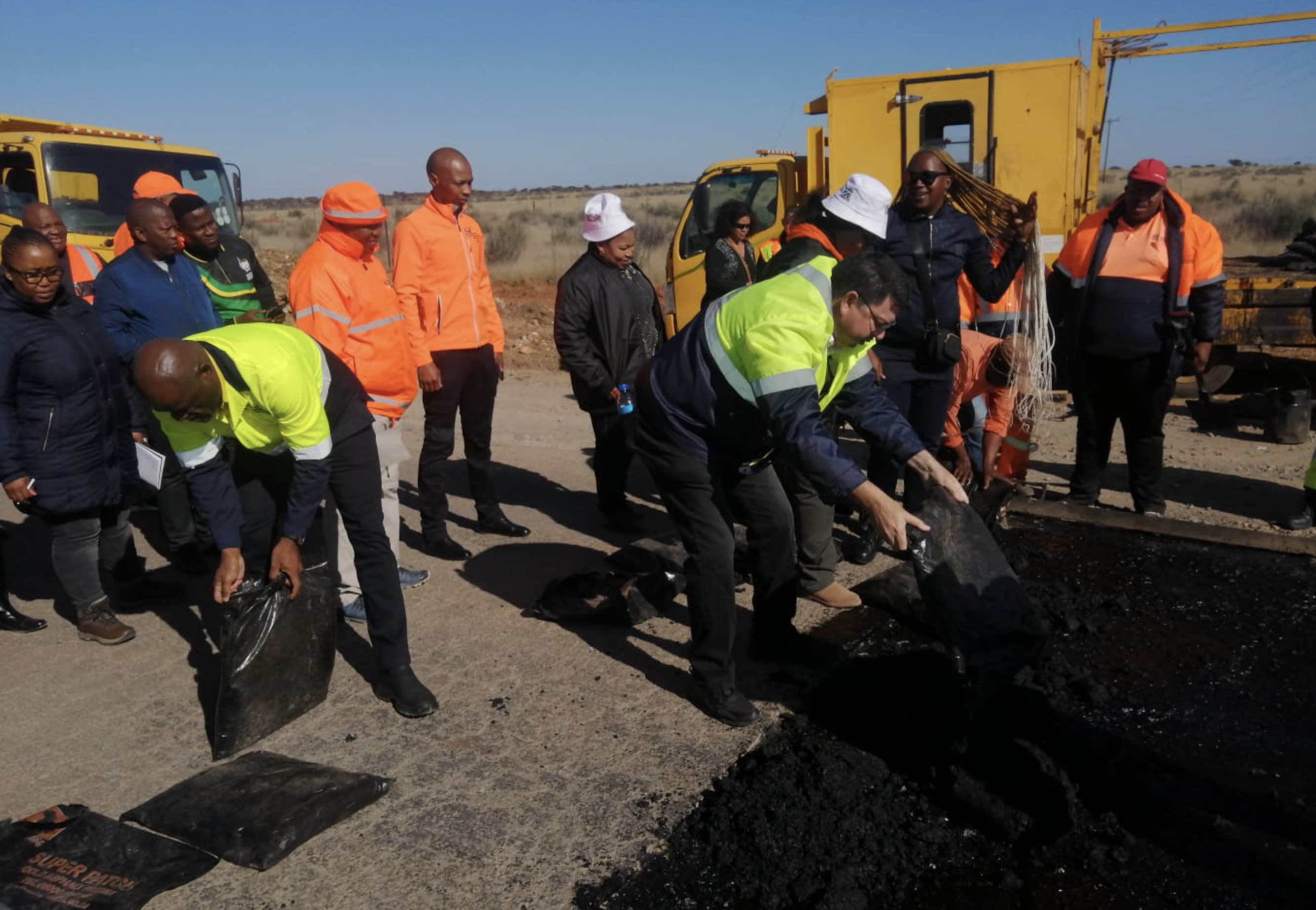
It has been all hands on deck since Transport Minister Fikile Mbalula launched Operation Vala Zonke in August. This 16-month campaign sees SANRAL partnering and working with local and provincial government officials as well as the public to ensure that potholes are repaired speedily.

This campaign will change the face of municipal and provincial roads from pothole-riddled to an acceptable state of repair. It will also create jobs and improve the country’s road infrastructure. The programme extends across the country with premiers and MECs in the lead, and will be closely monitored and assessed over the coming months.

Transport Minister Fikile Mbalula

Minister Mbalula urged the public to play their part by downloading the SANRAL Pothole reporting app, where they can upload pictures and provide a real-time location of the affected road on an interactive map. The app provides status updates using a pothole ticketing system. The information is assigned to the relevant authority, and the maintenance depot responsible for that road attends to fixing the pothole.


Download SANRAL’s Pothole app at the Google Play Store or Apple App Store.

View how many times the Pothole app has been downloaded and how many potholes have been reported at

https://valazonke.co.za


Northern Cape

At the launch in the Northern Cape the MEC of Roads and Public Works, Ms Fufe Makatong, said there are many contributing factors to potholes. “Contrary to public sentiment, potholes are not only a symptom of roads that are not maintained. Like many other roads in the country, the R374, which is the main link between the R31 and the N12, has reached the end of its design life, and the ever-increasing heavy vehicle traffic does not aid matters.”

SANRAL’s Western Region Manager Randall Cable said that “No country in the world is without potholes. How we manage this, repair and then put a long-term maintenance strategy in place will determine the eventual state of our roads. SANRAL is committed to working with the Northern Cape Provincial Government. We commend them for the quantity and quality of the data that the province submits in order for us to accurately assess the state of the roads.”

“Operation Vala Zonke is also geared to address youth unemployment, as we are using students who have completed training in road construction, to work on the pothole repairs, along with our internal resources,” added Ms Makatong.

Eastern Cape

In the Eastern Cape, the MEC of Transport, Safety and Liaison, Ms Weziwe Tikana-Gxothiwe said the province was aligning their work with Operation Vala Zonke, and that the Eastern Cape Department of Transport planned to fix 65,000m² of potholes in the province and had set aside a budget of R49 million.

“SANRAL is taking over five roads in the province, which is great. We have done good work in the Sarah Baartman District Municipality, and we are busy working in Buffalo City Metropolitan Municipality. We will continue to work in Alfred Nzo District Municipality. We try to work with the communities,” she said.

Free State

The Free State, the agricultural stronghold of the country which has long been dogged by bad roads, mainly due to the high volumes of trucks, has already fixed and filled an impressive 16,540 potholes – and plans to do more – as part of Operation Vala Zonke.

Hillary Mophethe, spokesperson for the Free State Department of Police, Roads and Transport (DPRT), disclosed that potholes covering a total area of 8,270m² have so far been repaired by teams from the DPRT, working with external stakeholders.

Free State MEC for Police, Roads and Transport William Bulwane declared that the Free State will be pothole-free in six months. “That being said, we must remember that all of us have a responsibility to make this programme a success. Instead of just complaining, let’s be active participants and change the situation by reporting these potholes. Wherever you come across a pothole, take a photo and upload it on the SANRAL app. The alert will immediately be captured and logged into the SANRAL system and the pothole will be attended to.”


Musina Ring Road now complete

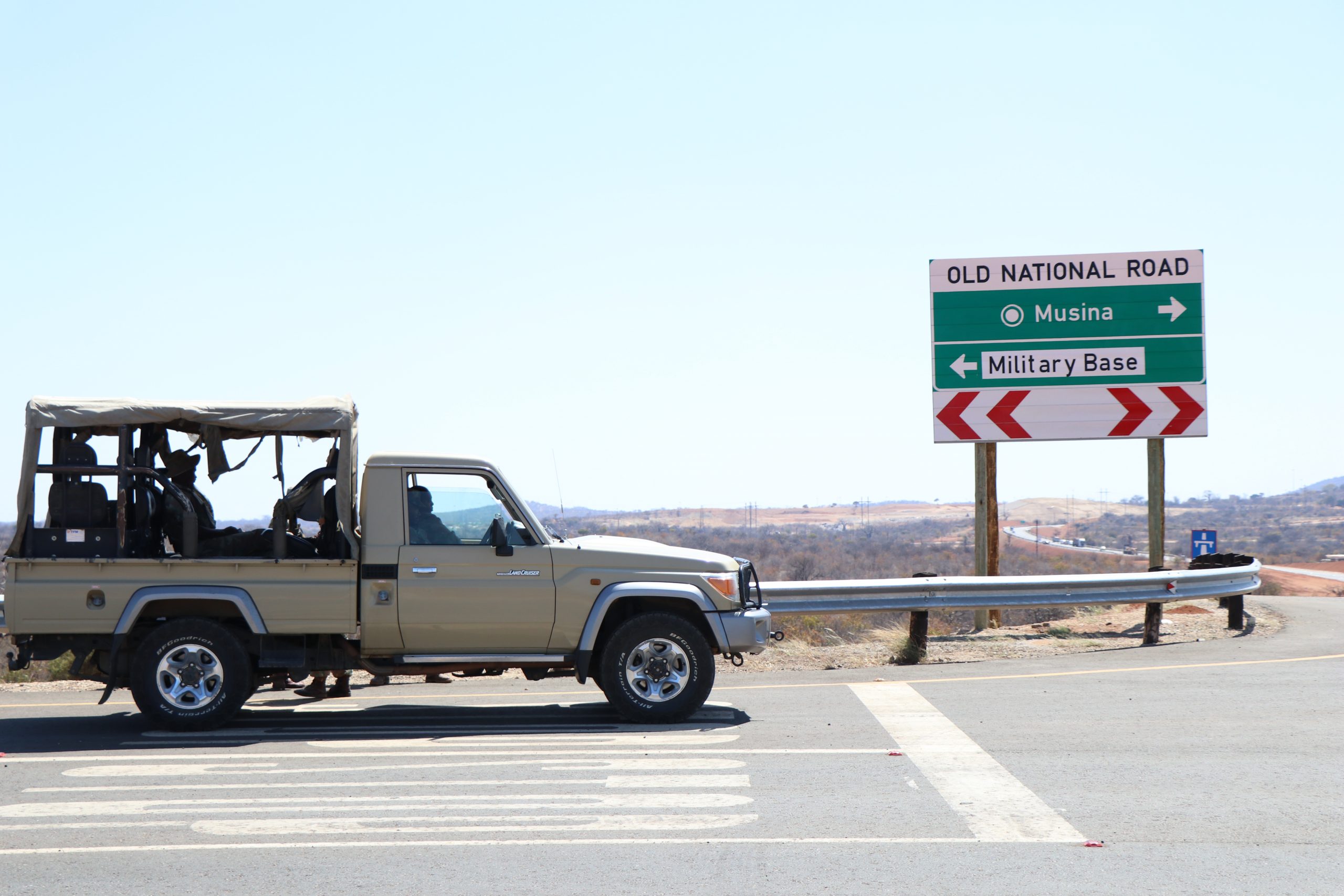
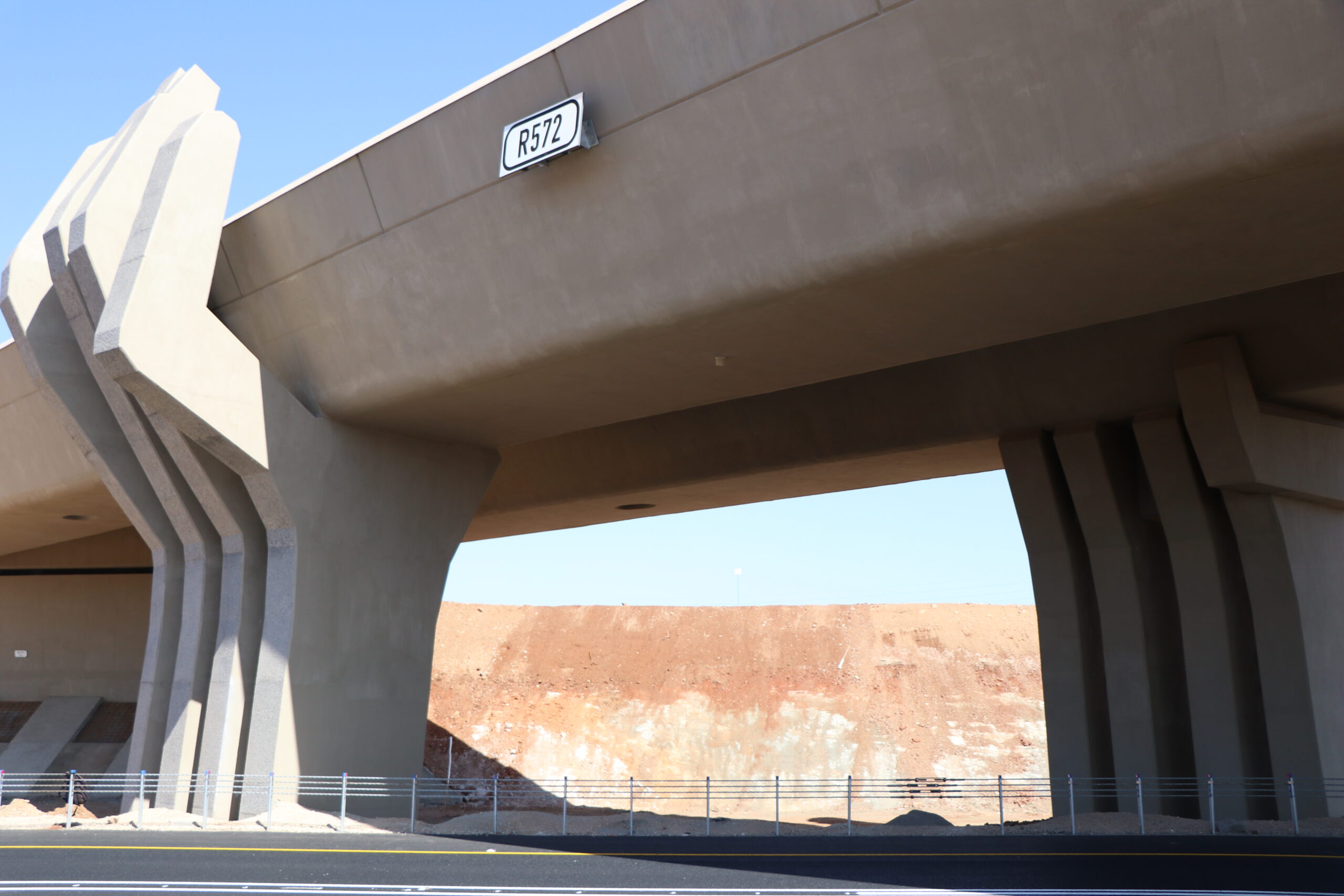
The new Musina Ring Road is now open to traffic. This R640 million SANRAL project is in one of the busiest parts of Limpopo Province, which connects South Africa to the rest of the SADC Region. This new road, which controls traffic into and out of Musina, will facilitate the free flow of traffic to the Beitbridge border with Zimbabwe. It promotes better mobility and the safe movement of goods, services and people in and around Musina, and will be instrumental in facilitating greater economic activity between South Africa and neighbouring countries.

“Over the last three years, the project created 275 full-time jobs at a cost of more than R28 million. The Musina Ring Road Project used accredited training service providers to train SMMEs and local labourers who worked on this project. There was an allocation of R51 million which was spent on local subcontractors.

“We would not have been able to complete the Musina Ring Road project if it was not for a partnership between government, the private sector and local communities,” said Minister of Transport Fikile Mbalula. The Musina Ring Road diverts the N1 traffic around the border town, much to the relief of motorists, business leaders and taxi organisations. Owen Simba, site manager at local business Makali Construction said: “My construction company built the bridges and the culverts at an investment of R114 million. We created jobs for 12 skilled labourers as well as 23 local general workers.

“As the project progressed, we added more people. SANRAL is committed to creating equitable access for small contractors, particularly black-owned enterprises, through its procurement processes.” Project engineer for SANRAL’s Northern Region, Hennie Kotze, said the new road brings relief to roads in the Musina central business district, where trucks travel to and from the Beitbridge border post. Before the Ring Road, more than 1,000 heavy-duty vehicles and trucks used the N1, passing through the Musina CBD daily, causing significant damage to the road infrastructure in the town. Cross-border truck driver Joseph Masinire from Zimbabwe said the new road would ease congestion between Musina and Beitbridge border post, and save travel time. Musina business leader Mosses Matshivha said the new road would reduce dust blown up by traffic, which created health hazards for residents. He said it would also save travel time for road users and reduce vehicle operating costs. “Our businesses will do well because heavy-duty vehicles are no longer sharing the narrow roads with local road users and pedestrians,” said Matshivha.

WIDENING OF THE R22-5 ROAD THROUGH KWANGWANASE TOWN

 MEDIA RELEASE 

WIDENING OF THE R22-5 ROAD THROUGH KWANGWANASE TOWN 

Pietermaritzburg, 14 October 2022 – Construction work is continuing along a section of the National Route 22 (R22), which is due to be completed in September 2023, the South African National Roads Agency SOC Limited (SANRAL) has announced. The project covers a 3km portion of the R22 through the town of Manguzi (KwaNgwanase). 

“The aim of this project is to relieve congestion through the town by providing additional capacity in the form of extra travel lanes through the urban area and upgrading of the approaching sections through rural areas,” said Andrew Ssekayita, SANRAL’s Eastern Region Project Manager. 

“The approaches on both sides of the town have been improved through widening and rehabilitation of the existing road to include surfaced shoulders. Whereas these approaches are complete, work will continue through the town under Stop/Go traffic accommodation to construct stormwater drainage, retaining walls and rehabilitation of the roadway,” he said. 

“As part of the project, and to relieve traffic through town, a 2.8km bypass road was upgraded to surfaced standard. Besides acting as a detour road during construction, this road will also provide improved long-term local access to the community. Surfacing along the bypass road is complete and two-way traffic is being accommodated along this section while kerbing and sidewalks are being constructed. The bypass road is planned for completion in March 2023” said Ssekayita. 

Ssekayita warned that road users must be aware that the work through town will cause significant disruption over the next 12 months, with the safety of both motorists and construction staff being of prime importance. Key constraints include the following: 

• Where possible, temporary bypasses along the R22 will be constructed to accommodate two-way traffic. 

• Stop/Go traffic will be maintained but the road will be open to two-way traffic during the December break. 

• Speed restrictions of 40 km/h along the bypass road. 

• Limited/alternative access to businesses while construction is underway. The project is programmed to minimise the impact on accesses, but at times access may be restricted to allow for road construction. 

In the light of the above, motorists are urged to remain patient, to slow down and to drive defensively. 

“SANRAL wishes to apologise to the motoring public for any inconvenience caused during the road closure. We appeal to road users to plan their trips accordingly. We further appeal to road users to adhere to the road signs and speed limit when approaching and travelling through the construction site,” said Ssekayita. 

SANRAL supports women in engineering and beyond

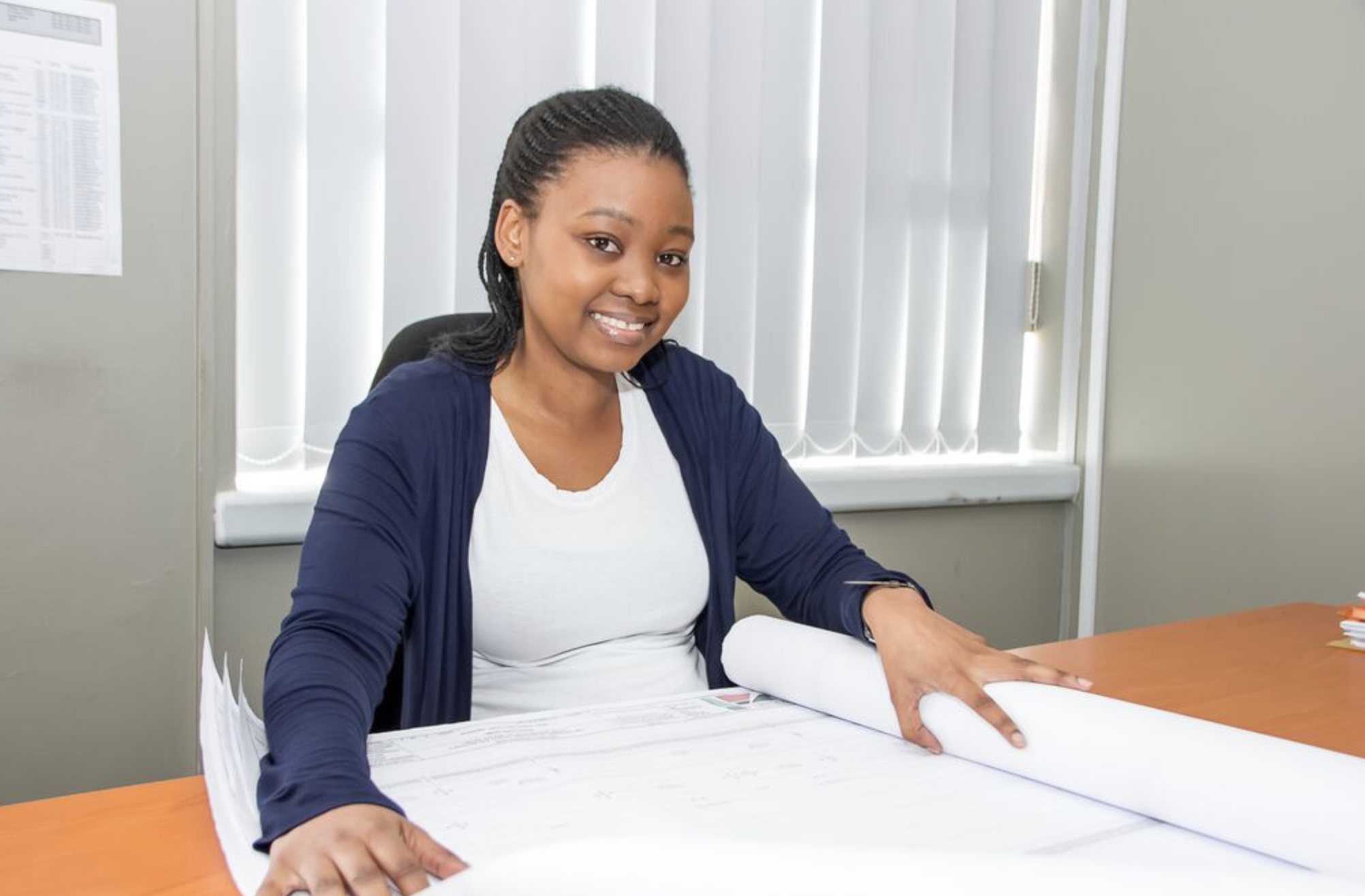
As an employer, partner and social citizen, SANRAL acknowledges the need for further progress in the drive towards gender equality. We believe more women should be taking their place in South Africa’s male-dominated engineering and construction space. Only 13% of Science, Technology, Engineering and Mathematics (STEM) graduates in South Africa are women, while only 1 in 5 engineers in the country are women, making it easy to understand why there is under-representation of female engineers in leadership positions.

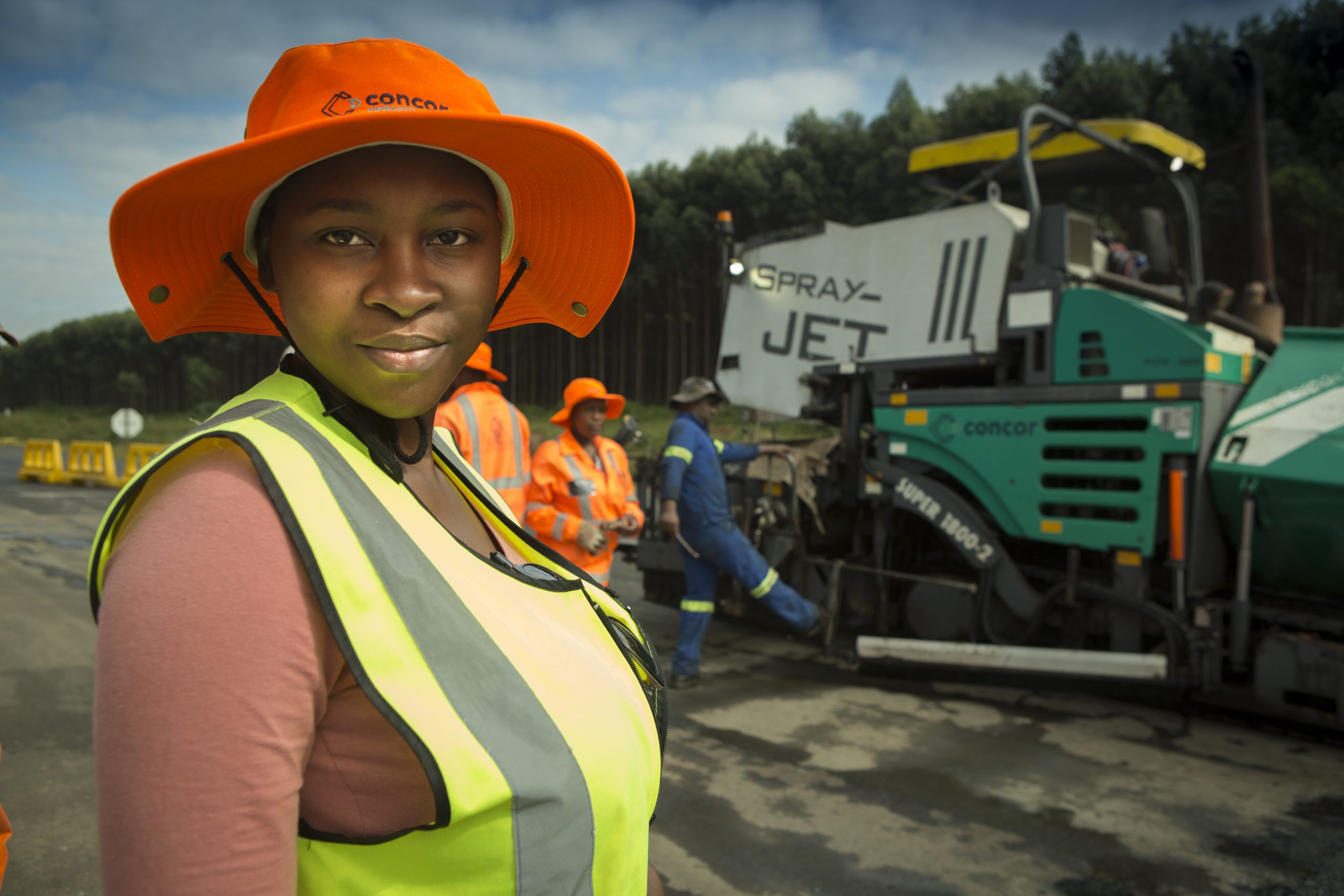
While female engineers are in the minority, many women have become highly successful within SANRAL, among them executive managers, general managers and senior project managers. These women are challenging stereotypes and leading the way as role models who inspire other women to do the same.

While SANRAL is in the business of building roads, we don’t achieve that with bitumen and concrete alone – we achieve it with people. We are an organisation that delivers ‘beyond roads’, and likewise we believe in delivering a workplace that is ‘beyond gender’.

There should be more women designing and constructing bridges, building new roads, maintaining infrastructure and, most importantly, owning and managing their own construction companies. SANRAL plays a role in helping to make this possible, by leveraging road construction and maintenance contracts to help address South Africa’s most pressing social and economic challenges.

Partnerships in action


SANRAL is determined to be part of South Africa’s post-COVID-19 economic recovery through road infrastructure projects that create new jobs, especially for women and the youth. Through deliberate and systematic broad-based black economic empowerment and transformation, we are maximising the participation of black contractors, professionals and suppliers in commissioned projects. Through our procurement processes, we can ensure increased participation of women as contractors, professionals and suppliers.

As an organisation, SANRAL employs fewer than 500 people, but through our projects we create multiple jobs in different sectors and geographic areas of the country – many amidst communities in real need of employment opportunities. Major initiatives, such as upgrading the N2 Wild Coast Road and constructing the spectacular 580m long Msikaba Bridge, have a positive impact from job creation to revitalising distressed construction companies, empowering women and youth through SMME development, and creating substantial black-owned construction firms.

We are committed to ensuring that all main upgrade and local road infrastructure projects have at least 30% of their budget allocated to SMMEs, especially those owned by women and the youth. In the 2020/21 financial year, black women held 12% of all contracts awarded to black-owned companies. This is not enough, but it is a base from which we intend to continue to grow female participation in our projects.

Women and education


In South Africa educational inequality remains a challenge – yet access to education plays an essential role in empowering women to grow into positions of leadership.

We cannot compromise on appropriate professional qualifications for many positions within SANRAL, which is why we are serious about skills development and knowledge transfer. While this is mainly in the field of engineering, others such as the environment, smart technologies, and infrastructure development are included. The agency invests in creating talent pipelines from high school and university to ensure that it has future engineers to build and maintain our national road network.

We seek to grow the ratio of women who benefit from our scholarship and bursary programmes, Technical Excellence Academy, graduate development programme and schools outreach programme, enabling more women to become professionals in fields that are vital to the growth of the country’s vast road infrastructure network.

When it comes to SANRAL’s own people, female employees outnumber males. However, women are under-represented at senior and other management levels. This is linked to the broader question of access to education and gender bias, and we will continue to make every effort to correct it.

SANRAL recommits itself to supporting women in our industry, at every level and in all fields. This means creating safe, non-discriminatory workplaces where women can grow at the same rate as men, where their input and insight is equally valued, and in which we are all able to move beyond inequality.

Not fully optimising the contribution that women have to make is robbing our economies, societies and communities of achieving their full potential.

Going beyond gender just makes sense – because working together, we can build a better South Africa – one that is more equal and better for all.


SANRAL’s the Power of One campaign strikes a chord

With an estimated road traffic death rate of approximately 25 per 100,000 people, there is no question that road safety is an issue that needs to be prioritised in South Africa – and needs to be tackled on a variety of fronts.

SANRAL recognises how important it is that South Africa’s citizens prioritise their personal safety, to make sure they come home at the end of the day. The agency recently launched a new road safety awareness campaign focusing on the power of the individual to take their life and future into their own hands, by doing that ‘one thing’ that could save their life.

The campaign aims to empower the individual. The core message is to remind road users to ‘take care of number one’, so that you can be there for your family, your community and your future.

Don’t have that ‘one for the road’, don’t be distracted ‘for one second’, don’t choose not to buckle up ‘just this once’ – because you only have one life.

This is not aimed solely at motorists, but at all types of road users. For example, when cycling, the one rule is ‘to be seen is to be safe’, especially at night. Wearing a reflective jacket, bright clothes and a helmet can help you to attract the attention of drivers, from the front, rear and sides.

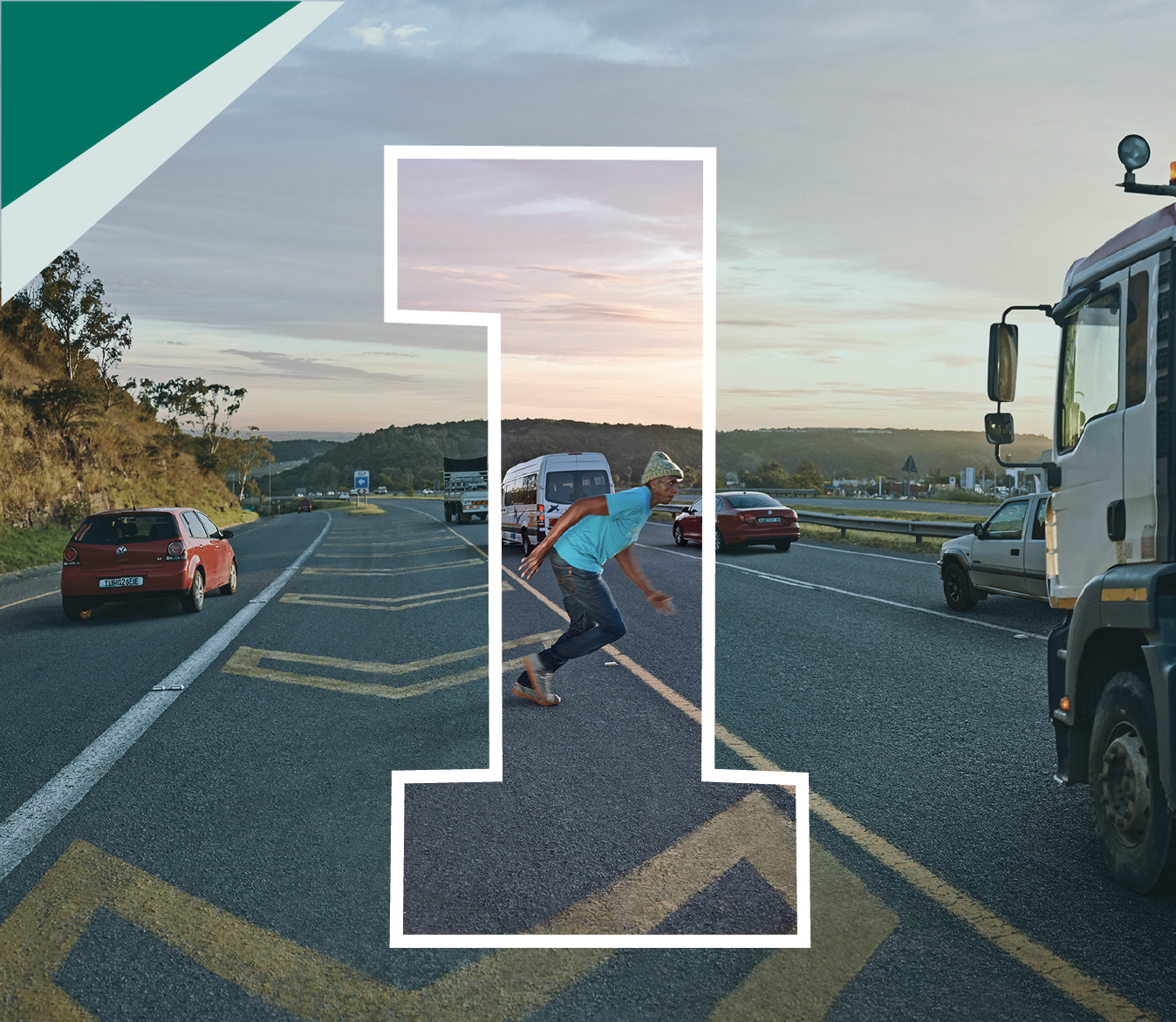
Then there are pedestrians, who make up many of the road fatalities each year. The tagline on the related advert in the campaign is ‘One wrong move can be deadly’.

SANRAL is always erecting vandal-proof fences along vulnerable sections of our highways, in an attempt to stop pedestrians from running across the freeway. Walking to an overhead bridge may take a bit longer, but it could be a decision that makes the difference between life and death

Another single vital decision is to buckle up our seatbelts before we set off in the car: one click can save your life.

Then there is the issue of speed. When driving at higher speed, the driver needs a faster reaction time if anything remiss happens – and this is even more pertinent when the roads are wet. One second slower can avoid a crash.

Mobile devices are never out of the equation, and walking and texting is just as dangerous as texting and driving. Your eyes are glued to the screen, taking your focus away from the traffic around you. One text can change your life forever. Keep your phone in your handbag or pocket until you get to your destination.

Likewise, one call can end it all. SANRAL’s campaign focuses on taxi drivers, urging them not to use a mobile phone while driving, which can result in a range of fatal errors that impact the lives of many. Of course, this applies to all drivers. Turn your mobile off and keep your attention on the road.

Just one good decision on your part can help to make sure that we all get home safe and sound.