Blog

Closure of filling station known as Engen Hayfields, 101 New England Road, Pietermaritzburg

MEDIA RELEASE
Closure of filling station known as Engen Hayfields, 101 New England Road, Pietermaritzburg

13 December 2023 – The South African National Roads Agency SOC Limited (SANRAL) would like to inform motorists, particularly in the KwaZulu-Natal province, about the closure of the fuel station known as Hayfields Engen, situated at 101 New England Road, Pietermaritzburg.

This follows an eviction order granted on 8 December by the Constitutional Court against Archiways Skye (Pty) Ltd (trading as Engen Hayfields Service Station) in favour of SANRAL. SANRAL is the owner of the property and had concluded an agreement of lease with Archiways Skye (Pty) Ltd in terms of which it leased the premises to Archiways. Archiways breached the agreement of lease by failing to pay rental due over an extended period of time.

Motorists are warned to plan their refuelling needs accordingly, specifically taking into consideration that as of Thursday 14 December 2023, Engen Hayfields will no longer be pumping fuel. SANRAL regrets the inconvenience caused to motorists and to the community around Hayfields.

SANRAL intends reopening the fuel station in the near future, once all relevant processes and approvals have been concluded. There are a number of sub-tenants on the premises which had an agreement with Archiways and SANRAL has given these a reprieve to continue operating under new lease agreements directly with the roads agency.

State of the national road network in KZN during the festive season

MEDIA RELEASE
State of the national road network in KZN during the festive season

Durban, 13 December 2023 – The South African National Roads Agency SOC Limited (SANRAL) hereby advises road users of the state of the KZN national road network during this festive season.

SANRAL expects that travel on interprovincial and national roads will peak during the December/January holiday period.
During this period, the road construction industry will shut down operations on 14 December 2023 and resume on 8 January 2024.
The following traffic accommodation should be taken into account when planning holiday travel:

The shoulder on the N3 Southbound (Durban-bound) was closed on 4 December 2023 for the construction of the temporary on-ramp at Cliffdale Road overpass. The road, which is part of the N3 Key Ridge to Hammarsdale upgrade project, will reopen on approximately 30 March 2024, SANRAL has announced.

Furthermore, the traffic lanes on the N3 Northbound (Pietermaritzburg-bound) between the M13 and Hammarsdale interchanges will have long-term reduced lane widths from 10 January 2024 to 29 July 2024, as part of the construction process for the realignment of the N3 between Key Ridge and Hammarsdale.

“Following the placing of the concrete barriers, the left-hand shoulder on the N3 Southbound will remain closed from the Cliffdale Road overpass for a length of 500m from 4 December 2023 to approximately 30 March 2024,” said Dumisani Nkabinde, SANRAL’s Eastern Regional Manager.

The Road Traffic Inspectorate (RTI) and the Municipal Traffic Police, with the assistance of the contractor’s traffic accommodation team, will manage and monitor traffic during the shoulder closure.
The slow, middle and fast lanes of the N3 will still be fully open to traffic during construction of the temporary on-ramp.
Work on the N3 northbound carriageway between the Cato Ridge Interchange and Dardanelles will see southbound traffic being diverted onto the newly constructed carriageway between the Cato Ridge and Camperdown Interchanges thereby enabling the reconstruction of the southbound carriageway.

“The switchover will commence on 7pm on Tuesday,12 December 2023, until 5am on Wednesday, 13 December 2023. The northbound traffic shall not be affected by this traffic switch and motorists and all road users shall continue using the current lanes. Contraflow conditions between Camperdown Interchange and Dardanelles will not be affected by this traffic switch and shall remain in place,” said Nkabinde.

Once the traffic has been diverted off the southbound carriageway between Camperdown and Cato Ridge Interchanges, construction will begin on a new four-lane southbound carriageway. It is expected that contraflow conditions shall prevail until January 2025.
Short-term single lane closures will be in place between the M13/N3 and Hammarsdale Interchanges between 11 December 2023 and 29 February 2024, for the placement of the concrete barriers and for the remarking of traffic lanes. The Road Traffic Inspectorate (RTI) and the Municipal Traffic Police, with the assistance of the contractor’s traffic accommodation team, will manage and monitor traffic during these closures.

There will be lane closures from 9 January 2024 to 9 February 2024 between the hours of 20h00 to 04h30 to facilitate the placing of concrete barriers as part the construction process for the road upgrades from Westville Viaduct to Paradise Valley Interchange.
The lane closure will take place in the East and West bound fast lanes of the N3 between Westville Viaduct (Pavilion Mall) and Paradise Valley Interchange (N3/M13 split). The Road Traffic Inspectorate (RTI) and the Municipal Traffic Police, with the assistance of the contractor’s traffic accommodation team will manage and monitor the diversion of traffic during this period.

“SANRAL wishes road users a safe festive season and we appeal for compliance with all the rules of the road,” said Nkabinde.

SANRAL’s N2/N3 upgrades boost mobility, capacity and opportunity

The upgrades of the N2 and N3 in KwaZulu-Natal form part of National Government’s key Strategic Integrated Projects, SIP2: Durban-Free State-Gauteng Logistics and Industrial Corridor. SIP2 aims to strengthen the logistics and transport corridor between South Africa’s main industrial hubs, improve access to Durban’s export and import facilities and raise efficiency.

The upgrade of the National Route 2 (N2) will focus on a 55km length, from Lovu River on the South Coast to Umdloti on the North Coast. The N3 upgrade will focus on a 79.3km section from Durban to Pietermaritzburg, which incorporates upgrading from EB Cloete (‘spaghetti junction’) in eThekwini Metropolitan Municipality to Mpofana Local Municipality under the uMgungundlovu District Municipality, as well as the N2 from eThekwini to Umdloti.

These upgrades include widening the N2 and N3 carriageways, with four or five lanes in each direction, and reconfiguration of most major interchanges along these route sections.

The greater N2/N3 corridor upgrades are expected to take 8-10 years to complete and will create up to 15,000 job opportunities during this period.

Eleven projects worth approximately R24 billion are currently under construction.

The massive N2/N3 project is divided into many phases, which includes upgrading of the EB Cloete Interchange, one of the most iconic interchanges in the country. Popularly known as ‘spaghetti junction’, it was completed in 1970 and provides a full-system interchange for the N2 and N3 national roads. The network has been under increasing capacity constraints and SANRAL decided to undertake much needed upgrades.

At R5 billion, the EB Cloete Interchange upgrade is the biggest single project value undertaken by SANRAL to date.

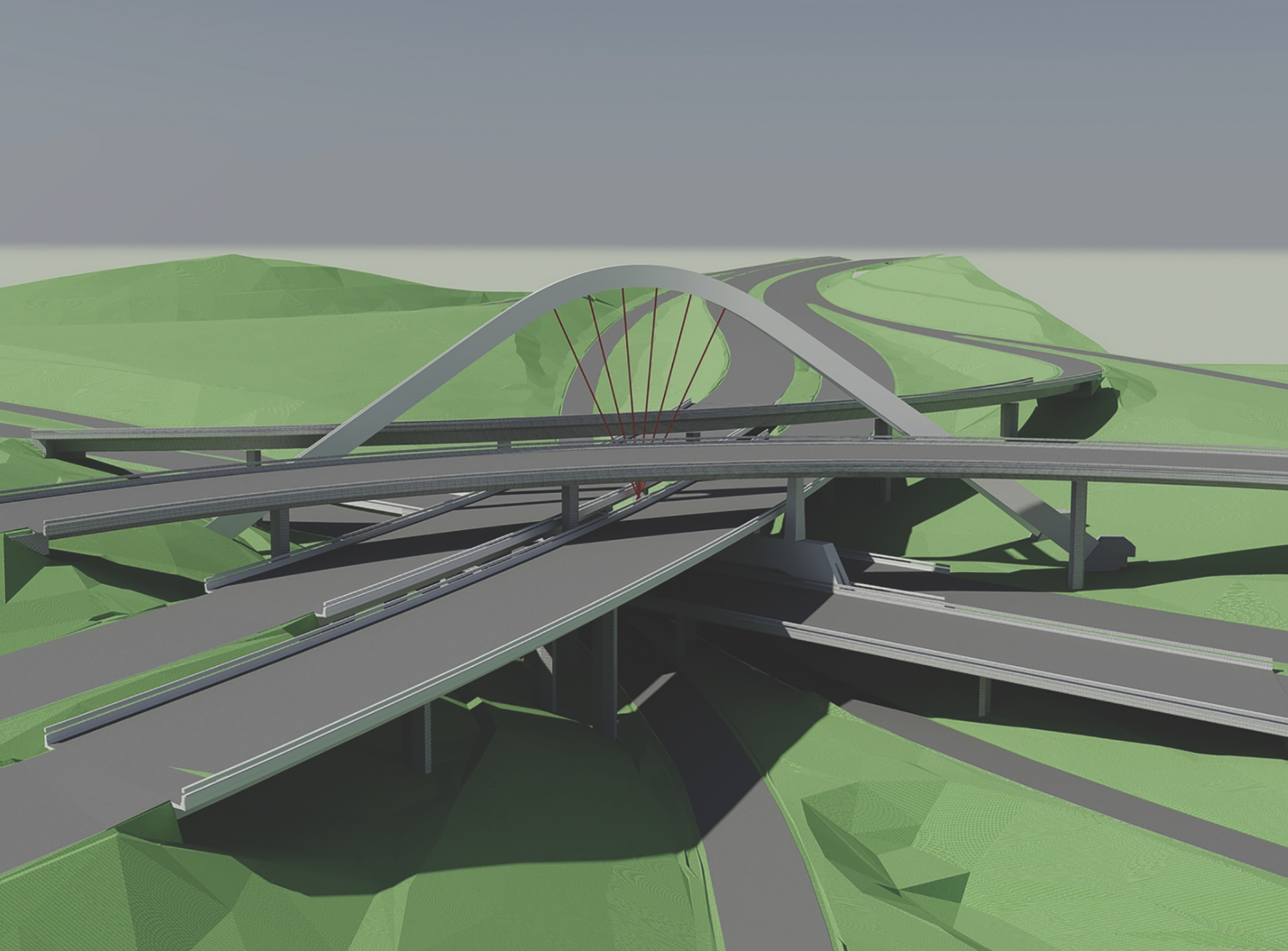
Limited space for expansion of the EB Cloete Interchange will see this project feature a spectacular arch that will support the N3 carriageway as well as the fly-over directional ramps. The arch will resonate with the arch theme of the Moses Mabhida Stadium and will be an iconic landmark as one enters Durban on the N3.

EB Cloete Interchange N2 North and N3 West will have a spectacular arch that will support the N3 carriageway as well as the fly-over directional ramps.

General workers will be sourced from wards within 5km of the project site, which extends about 8.5km up and down the N2 and the N3 on either side of the interchange.  It is expected that about R350 million will be spent on local labour over the contract period.

Completion of the upgrade of this interchange is expected to take place in 2027.

SANRAL readvertises 86 tenders valued at R7.2bn

SANRAL is readvertising 86 road construction tenders, collectively valued at R7.2 billion, that were among those cancelled because of a legal challenge to its new preferential procurement policy (PPP) scoring system.

SANRAL CEO Reginald Demana said that the roads agency’s aim is to fast-track adjudication of the 86 tenders to get these projects back on track as speedily as possible.

“SANRAL has been busy over the past few weeks getting our procurement on track, after a delay caused by legal action taken by some construction companies late this year because they were opposed to a new procurement policy introduced in May 2023.

“The Board withdrew the policy in October 2023 to ensure that SANRAL could get back to awarding tenders and, in the process, hopefully get people back to fixing and improving our national roads.

“We embarked on a consultation process on an interim Preferential Procurement Policy (PPP), which ended towards the end of November. We were then able to put out tenders for 86 construction projects nationally. Those tenders close in the middle of December 2023, and we will be busy processing them over the next few weeks.

“We have made good on our promise to the road construction industry and the South African public that we would move as fast as possible to overcome the legal challenges to our PPP and get the industry back on track.”

This is after SANRAL conducted a series of countrywide public consultation sessions after the withdrawal of its PPP, with many verbal and written submissions made for SANRAL to consider in formulating its new interim PPP.

Roundabouts on N14 in Kathu support industrial development


SANRAL Project Manager Friedl van der Merwe is currently completing a R60 million upgrade project with three intersections on the N14 between Olifantshoek and Kathu, which is essential for improved mobility and road safety.

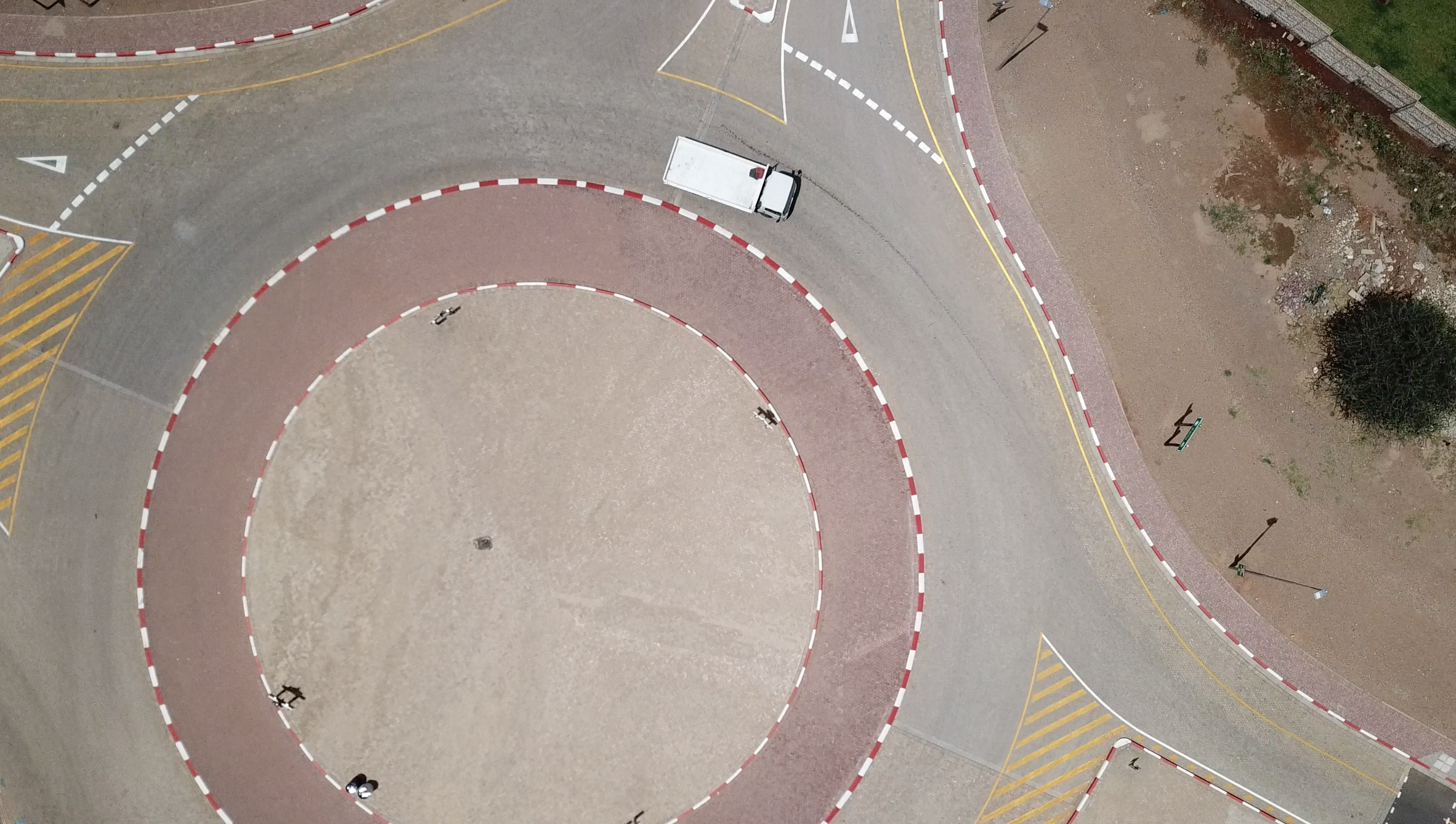
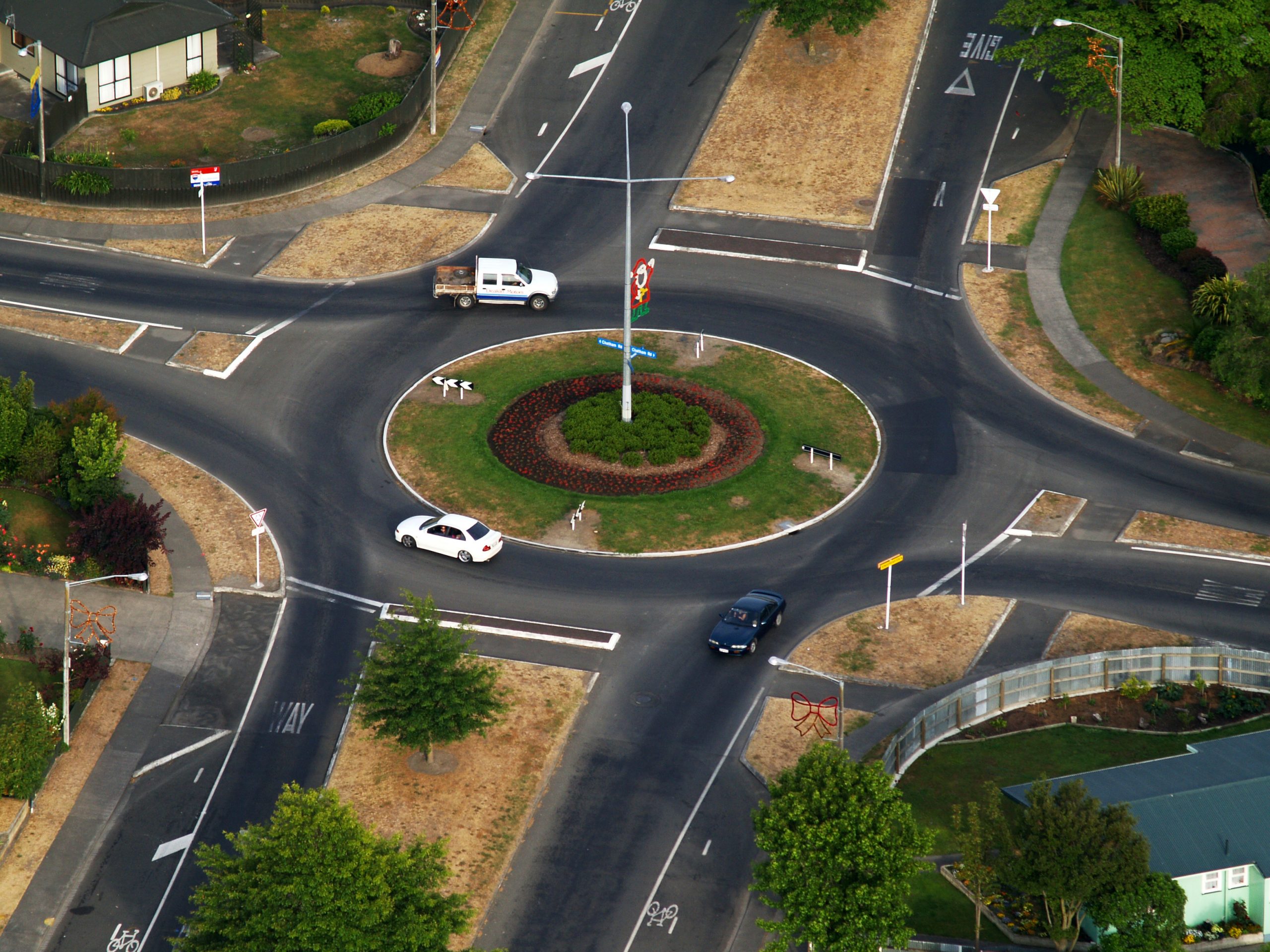
Kathu is a relatively small town, but increased mining activity in the region has significantly increased freight traffic, which has to be integrated with the regular traffic volumes. The use of roundabouts has enhanced mobility and traffic flow in the area.

“At the Kathu south circle there is a growing industrial development, with a significant heavy vehicle fleet going through the roundabout every day. We have increased the size of the roundabout to accommodate abnormal load vehicles, which require a wider turning circle than regular traffic,” Van der Merwe said.

The Northern Cape Growth and Development Plan prioritises the province’s industrial agenda, which also responds to the President’s call for infrastructure development to spearhead economic recovery post-COVID. The N14, also referred to as the Industrial Development Corridor, is a critical artery that serves as a foundation for industrial expansion and development across the Northern Cape, with development of the Kathu Industrial Park being central to this. This and other similar economic zones are key to driving the evolving economic landscape, all geared to support the Northern Cape’s vision of being a modern, growing and successful province.


“These road safety upgrades have also had a major economic impact, and to date have yielded approximately 60 local labour opportunities, where jobs and skills transfer for youth and women have been prioritised,” Van der Merwe added.

Transformation is at the core of SANRAL’s operations, and every effort was made to ensure that subcontractors from targeted enterprises were able to participate meaningfully in the project.

Contract manager at Baseline Contractors, Thomas Moolman, said they were able to incorporate 11 subcontractors and seven suppliers at a cost of just over R13 million. “We also provided training to the subcontractors and all their employees,” he added.

One of the subcontractors and Director at Raseroka Projects, Kenny Raseroka, was appointed to do electrical works on the project. “Our scope of work on this project is mainly on excavation. There is another company that lays the cables and does the electrifying. This project has given my company a major economic push and we are now looking at upgrading from a 1CE to a 2CE or even 3CE. This is really one of those projects that came to our region and unlocked opportunities and growth,” he said.

Raseroka acknowledges that they do not work every day, so they have had to plan carefully for the days when teams must work.  “When we have more work, we can take on more of the local labour force, which really does make a difference within the community.”

The project is earmarked for completion in January 2024.

The plan that drives SANRAL’s transformation and procurement processes

All of SANRAL’s projects are guided by a commitment to small, medium and micro enterprise (SMME) development, a 14-Point Plan that prioritises community engagement, a Transformation Policy that seeks to advance black business, and an overall strategy aligned to the government’s National Development Plan.

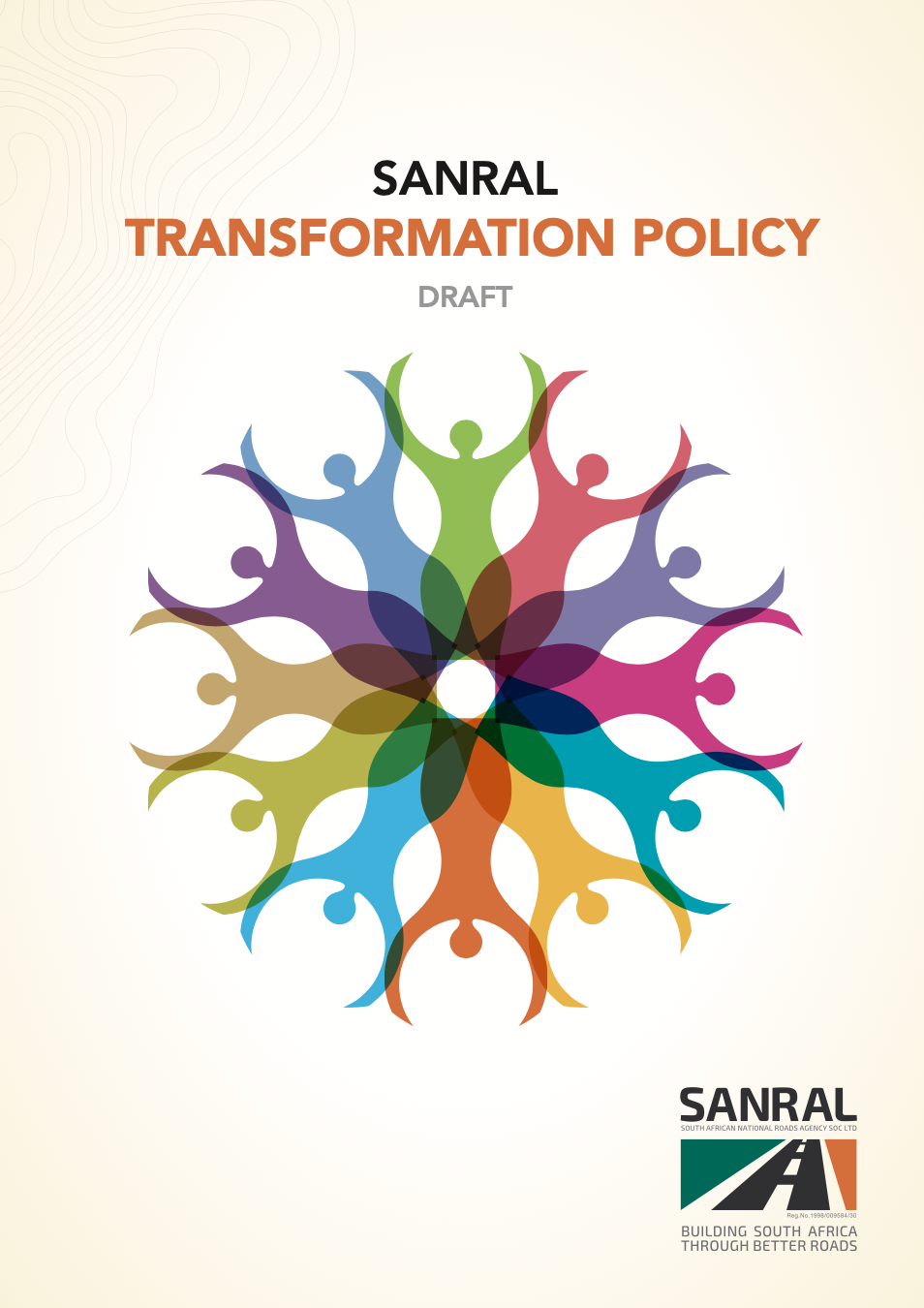
The Transformation Policy sets clearly defined targets for black contractors, professionals, and suppliers to participate in all projects that SANRAL commissions. The aim is to ensure that those previously marginalised sectors including women, young people, people with disabilities and black contractors play a meaningful role and succeed in the construction industry.

SANRAL believes that it is time for black South Africans – African, Indian and Coloured persons – who were previously excluded from benefitting from massive infrastructure projects – to benefit alongside the well-established industry players.

The 14-Point Plan explained

 SANRAL’s 14-Point Plan puts its Transformation Policy into action in the following way:

  1. A Project Liaison Committee (PLC) is established for each project, as a platform for project communication, subcontracting, procurement, and facilitation of employment.
  2. The PLC includes SANRAL, contractors, engineers, community leaders, and other stakeholders, ensuring unbiased representation.
  3. A Project Liaison Officer (PLO), who is supported by the PLC, is appointed to facilitate communication and address project and community matters.
  4. Specific local areas are identified for the project to focus on, in consultation with the PLC.
  5. A database of contractors, subcontractors, consultants and suppliers is developed with the PLC’s input and approval, ensuring compliance with legislation.
  6. A local labour list is created that is agreed on and signed off by the PLC, and fair selection processes are established.
  7. The approved databases are handed over to the contractor to carry out recruitment of subcontractors following an open tender process, and for recruitment of local labour.
  8. Contractors conduct transparent tender processes following government guidelines, with public opening of received bids, announcement of bidders and prices. Bid details are shared in PLC meetings.
  9. Tender process appeals go to SANRAL for independent review by the Transformation Unit.
  10. Contractors and suppliers’ skills are evaluated with PLC input before subcontracting, ensuring quality. Local labour skills are assessed before recruitment.
  11. Training and support is provided for contractors before subcontracting, guided by the PLC.
  12. The PLC identifies deliverable areas of work for local service providers; for areas lacking local capability, opportunities are provided for locals to learn.
  13. Drawing up formal contracts between the main contractor and subcontractors is overseen by the PLC and consultants.
  14. The PLC facilitates transparent communication, managing the expectations of local businesses and communities, and ensuring inclusivity and

We hope that this gives insight into SANRAL’s 14-Point Plan and how SANRAL drives transformation in the construction industry through its procurement policy and practices.  


R573 Moloto Road upgrades forge ahead

Spanning Gauteng, Mpumalanga and Limpopo, the 160km Moloto Road (R573) has a reputation as one of the country’s deadliest. It is used by over 60,000 commuters daily. SANRAL’s planned interventions to promote road safety include widening the current single-lane carriageway into a dual-lane carriageway in each direction, adding a shoulder, and closing off illegal access points. SANRAL has also introduced four traffic circles/roundabouts as speed-calming measures.

Construction has started on record-setting Mtentu Bridge

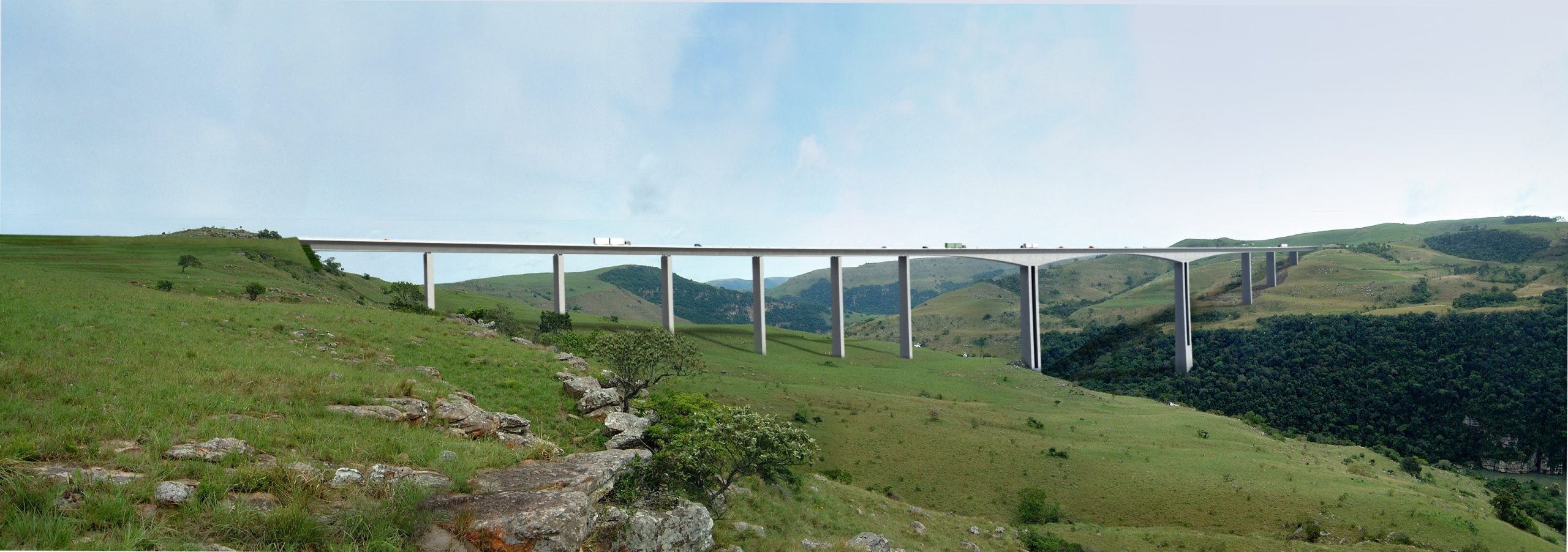
The Mtentu mega-bridge, part of the N2 Wild Coast Road flagship project, is under construction. It includes upgrades to an 18km provincial road to link the future Mkhambati Interchange to the Flagstaff-Holy Cross road, providing a direct link between the future N2 and the town of Flagstaff. The project has a contract participation goal of 4% for local labour. Three community development projects of approximately R50 million apiece will each train and mentor 10 local Grade 1 SMMEs and construct community access roads in/between Makamela, Baleni-Jama and Mdatya-Xolobeni. Over 100 local residents will be employed on each of these.

SANRAL’s Mirriam Mosia appointed President of the South African Road Federation

SANRAL project manager Mirriam Mosia was recently appointed President of the South African Road Federation (SARF). SANRAL is a member of SARF and Mosia will be actively spearheading the roll-out of a training programme that SANRAL developed with SARF, for skills development in the routine road maintenance space. This is the easiest area for accessing the sector, and every effort must be made to upskill emerging contractors coming into this arena.