Blog

Labour and SMMEs to benefit from road infrastructure development in Dr Beyers Naude Municipality

MEDIA RELEASE

Labour and SMMEs to benefit from road infrastructure development in Dr Beyers Naude Municipality

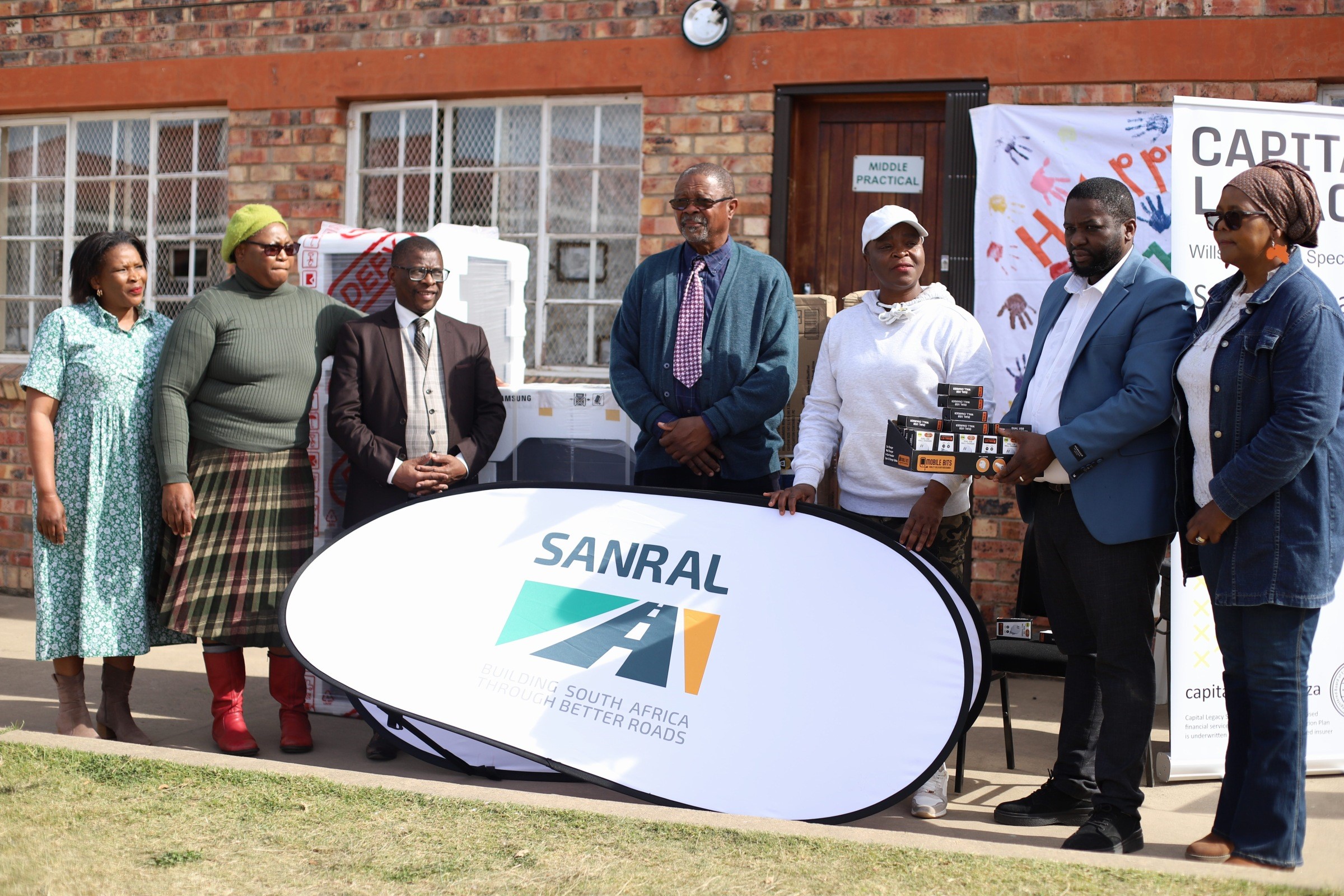
Caption: Stakeholders at the introduction of slope stabilisation project in Graaff-Reinet

Graaff Reinet, 5 July 2024 – The South African National Roads Agency SOC Limited (SANRAL) has announced the introduction of a road infrastructure development project on the R63 outside Graaff-Reinet in the Dr Beyers Naude Local Municipality in the Eastern Cape.

The slope stabilisation project at Ouberg Pass Cutting was introduced during the hosting of a stakeholder engagement session at the Alex Laing Hall in Kroonvale, Graaff-Reinet this week (Wednesday).

The initiative underscores SANRAL’s commitment to enhancing road safety and socio-economic benefits in the form of job opportunities for local labour and subcontracting of targeted enterprises. Stakeholders included small, medium and micro enterprises (SMMEs), women, youth, people with disabilities and military veterans.

The project involves the installation of a rockfall netting secured by rock dowels in a specified arrangement, securing large protruding and smaller unstable boulders and application of shotcrete over layers within the mudstone and dolerite showing evidence of disintegration. Catch fences will also be installed at the slope summit.

The project has a contract period of 24 months, including a three-month mobilisation period. Dr Beyers Naude Municipality Mayor, Willem Safers, called for unity of the people whenever policies are implemented.

“SANRAL has policies and I’m pleading with SANRAL to implement your policies and everyone, whether they are from the municipality or members of an SMME, must comply. If we establish structures for communication or coordination, let’s use them and not deviate because if we do, trouble starts,” said Safers

“Dr Beyers Naude is the third largest municipality in terms of size,” said Safers. “When we talk about it, we are talking about moving from Graaff-Reinet to Willowmore, Baviaans, Nieu Bethesda – tens and hundreds of kilometres, which is mostly gravel roads. Whenever you’re going to employ, take the vastness of this municipality into consideration.”

Contract Engineer, Johan Swanepoel, said the project is highly specialised and a lot of blasting should be expected. “There are not a lot of contractors who specialise in slope stabilisation. We will create a drop zone for rocks falling from the top. The road needs to be open for traffic 24 hours even if it’s only one lane, except during blasting,” said Swanepoel.

A significant portion of the project’s budget is dedicated to empowering local labour and targeted enterprises. Targeted labour which will prioritize women, youth, people with disabilities and military veterans will receive a minimum of 6% of the project. A minimum 30% of the final contract value is earmarked for targeted enterprises, including a minimum of 2% for CIDB 1 and 2 grading and another 2% for CIDB 3 and 4 grading.

SANRAL Stakeholder Relations Coordinator for the Southern Region, Welekazi Ndika, went to great lengths explaining the principles for project liaison and sourcing of labour.

“Your labour should be managed because if you don’t, it eats into your profits. I hear some SMMEs don’t pay their labourers bargaining council rates of R41,75 per hour. If you don’t do that, you’ll be in breach. Don’t rob your labourers, it will come back to bite you.”

The community was cautioned against stalling the project and the financial implications it brings. “Don’t drag SANRAL into your community issues,” said Ndika. “The problems of the previous projects should also not be brought into this one because this is a new project with a new project manager.”

SMMEs were told about the availability of pre-tender training provided by SANRAL. This will enable them to compile tender documents without payment to third parties and manage their projects on site.

//Ends

Full closure to accommodate blasting alongside the N3 near the Hammarsdale Interchange

TRAFFIC ADVISORY

Full closure to accommodate blasting alongside the N3 near the Hammarsdale Interchange


Durban, 4 July 2024 – The N3 will be fully closed on 18 July 2024, between 14h30 and 15h00 to facilitate blasting next to the N3 near to Hammarsdale Interchange, the South African National Roads Agency SOC Limited (SANRAL) has announced.

“The N3 closure will take place between the M13/N3 split and the Hammarsdale Interchange. Closures will also be necessary on Meadway Road at Thousand Hills Street intersection which is in the vicinity of the blasting activities,” said Jason Lowe, SANRAL’s Eastern Region Project Manager.

The traffic accommodation team, with the assistance of the Road Traffic Inspectorate (RTI), will monitor the diversion of traffic during all sessions.

The R103 will be available as an alternative route during the blast. Substantial delays are, however, likely as the R103 is unable to handle the same volume of traffic as the N3.

The closure may need to be adjusted, depending on weather conditions on the day. If that happens, a second notice with information of the new time will be issued.

“We ask motorists to be patient during the closure and to plan and adjust their trips to accommodate the closure while still adhering to speed limits. SANRAL apologises to the motoring public for any inconvenience caused and thanks them for their patience during the ongoing road construction,” said Lowe.

//Ends

Learners test engineering skills through bridge building competition in Gqeberha

MEDIA RELEASE

Learners test engineering skills through bridge building competition in Gqeberha

Caption: Winners of 2024 Bridge Building Competition run by iGEMS in partnership with SANRAL

Gqeberha, 2 July 2024 – The South African National Roads Agency (SOC) Limited (SANRAL) hosted a Bridge Building Competition for learners in Grade 11 and Grade 12 at Labco in Struandale, Gqeberha.

Twenty-seven learners put their heads together in separate teams, drawn from 12 schools in the Nelson Mandela Metropolitan Municipality and one from Paterson in the Sundays River Valley Municipality.

The competition is run through Incubating Great Engineering Minds (iGEMS) and has 35 learners selected from maths and science classes. The idea is to instil a passion for engineering, which would encourage them to become engineers in various fields.

Every year they meet to put calculations and angles together to build a bridge from wooden pieces that is then tested for strength and stability using weights.
Tronél Candiotes-Strydom, a professional Civil Engineering Technologist for GIBB Consulting Engineers, has been a facilitator for the competition since its inception in 2015. The competition was suspended for two years during the Covid-19 period.

‘I’m an external assistant for iGEMS,” said Candiotes-Strydom.“ I get involved with the the civil engineering aspects of the competition because I’m in the industry. What I like about the programme is working with a small group of the kids to expose them to what a future in Civil Engineering could look like. I was so surprised the first time I got involved, that most of them are prefects, headboys and headgirls in their schools. The excitement from SANRAL’s side is getting involved in moulding the future of the leaners and giving back to community.

Tronél enabled the learners to see the fun side of the competition and encouraged them to work as a team. “We give them the basic building material and tell them that we are going to build this bridge together and test it. The main learning outcome is the realisation of what could be created with very little resources”, said Candiotes-Strydom. Operations Coordinator at Unity in Africa Foundation, which runs iGEMS, said, “The key objective of the iGEMS Education-to-Employment Programme is to increase the number of technical and engineering graduates from disadvantaged communities in the Nelson Mandela Metro and then place them in permanent employment. This is critical to both the region and South Africa’s economic development.”

SANRAL’s Marketing and Communications Co-ordinator, Michelle Ah Shene, expressed the roads agency’s excitement at seeing the growth and development of the prgramme since it began nine years ago.

“The scholars have developed in a way that they could use these skills which is science, technology, engineering and maths (STEM) as a foundation for future careers in the STEM field. We are therefore looking forward to the future involvement of SANRAL in this programme,” said Ah Shene.

Then it was time to test the strength of the seven bridges, with some collapsing within seconds. The first prize went to The Forward Thinkers with 68.6 points. Lungile Masimini from Ethembeni Enrichment Centre said that co-operation mattered, in reaching the top spot.

“I didn’t come with the mentality that ‘last year I did this so everybody should listen to me’. I gave my team space to think for themselves and there was dedication amongst us. In the end, teamwork made us the winners,” Masimini said.

Learners were given four hours to build the bridge and for the first time since 2015, no penalties were issued for not following the engineering brief.

Ends//

Going the extra mile

SANRAL is going the extra mile to provide economic opportunities to marginalised groups in South Africa – women, youth and people living with disabilities as well as military veterans.

SANRAL has unveiled economic opportunities running into millions for the vulnerable groups – all part of the agency’s agenda to transform the South African economy and the lives of communities where it builds infrastructure.

The roads agency is going around the country, holding information sessions to make these vulnerable groups aware of the opportunities available to them.

At a session held in Siyathuthuka, Emakhazeni Local Municipality, project manager Kwanele Simelane said it was vital for designated groups to become more involved in projects such as the Moloto Road upgrades.

The Moloto Road is a major arterial road used to transport goods and people between Mpumalanga and Gauteng. The upgrades are one of SANRAL’s flagship projects, and run into billions of rands.

Simelane said: “We’ve committed ourselves to supporting the development and participation of these businesses by making opportunities more accessible. Through implementation of our transformation policy, we’ve made significant progress in reducing the barriers to entry, so that everyone has a fair opportunity to participate in SANRAL projects.”

In the agency’s 2021/22 Integrated Report, Chair of the SANRAL Board Themba Mhambi said that SANRAL was impressed with its own pace of transformation of the construction sector.

He said that during the 2021/22 financial year, SANRAL provided 1,684 SMMEs with work on construction, rehabilitation and maintenance projects. The total amount earned by the SMMEs from these contracts was R2.3 billion.

Mhambi said black-owned SMMEs won 88.05% of the contracts awarded and 89.6% of the value of the work performed.

He added that of the 9,129 jobs created in the reporting period, 6,647 were for men and 2,482 for women. A breakdown based on age revealed that 3,096 young men and 1,339 young women were beneficiaries.

“From a disability perspective, 62 people with disabilities were employed. In terms of SANRAL’s contract participation goals, the aim for targeted enterprises is 30%, which includes women and youth-owned businesses at 5% each, the target for military veterans and people with disabilities being 0.5% for each of those groups.

“On the N3 project in the Eastern Region alone, this meant that R64,304,246.53 went towards youth-owned businesses, with the same amount going towards women-owned businesses. On the same project, women and youth each earned R30,866,038.33 of the total R103 million spent on local labour.”

In Emakhazeni, Vuyani Mpongo, site agent for the main contractor on the Moloto Road upgrades, Rainbow Civils, outlined opportunities for vulnerable groups in the area on RRM projects valued at nearly R3 million scheduled to take place over 22 months. Half of the project value has been earmarked for local SMMEs with a Construction Industry Development Board (CIDB) grading of between 1 and 3.

Women who attended the Emakhazeni session responded positively to the opportunities offered by SANRAL. Among them was Gloria Mahaule of Lugcabho Projects, who called for more information, assistance, and support for female SMME owners.

“As women, we’re quite capable of running successful businesses within the construction and related sectors, but we still need support because many female business owners end up deserting their companies due to a lack of opportunity and guidance,” she said.

Kgothatso Mnisi, director of Amakhosikazi Legacy Company, said she was looking forward to participating in SANRAL’s upcoming opportunities so she could grow her business and provide for her family.

“Everything with SANRAL has been very transparent so far. I now know which documents to prepare so I can place my bid and hopefully get to participate in building a better community,” she said.

Precious Motshwege, of Tshibogo Trading, who has previously participated in an RRM project with SANRAL, said she was willing to help other business owners prepare for opportunities through their recently launched Women in Business forum.

“About four years ago, I had the opportunity to participate by providing road marking services for SANRAL. I gained a lot of experience that I’d love to share with other women. I’m grateful for the support SANRAL has given us, but we also need to support each other so we can all benefit,” she said.

Member of Emakhazeni Mayoral Council, Jackie Mabila, also urged business owners to work together to ensure that poverty and unemployment are alleviated through the development of local businesses.

“SANRAL has simplified how local businesses can benefit through projects and support programmes. It’s something that we really need here in Emakhazeni, and I’d encourage business owners to avail themselves of such initiatives,” he said.

See https://sanralesdd.co.za/ for second-tier tender opportunities and more supplier development information.

Thembalethu Bridge in George bridges the divide

Final touches are being added to the newly upgraded Thembalethu Bridge over the N2 in George. SANRAL, in collaboration with George Municipality, has been working for almost two years to widen the old bridge to create two lanes in each direction, with cycle paths and pedestrian walkways on both sides of the bridge

Former Transport Minister Sindisiwe Chikunga visited the project in April, and said:

“The Thembalethu Bridge is a prime example of the work we are doing to improve road infrastructure on our national road network which is positively impacting communities. In this case it impacts a community in George which, because of apartheid spatial planning, had great difficulty in accessing the main town on the other side of the N2.

“SANRAL is also busy with a number of other projects on the Garden Route which are equally important for tourism. Our national roads are important in connecting communities, towns, cities, provinces and countries. Tourists do not want to visit places where they struggle to travel from one destination to another. Good roads lead to good local economies, which translates into jobs and a better life for all.”

Minister Chikunga said that by addressing traffic congestion and prioritising pedestrian safety, especially for school children, the Thembalethu Bridge project demonstrated SANRAL’s focus on improving infrastructure for the benefit of local communities.

“The work on Thembalethu Bridge is nothing short of engineering excellence. The SANRAL engineers explained to me that a new bridge was built alongside the old bridge, and that the existing bridge is now being lifted to accommodate trucks with a load at a maximum height of 5.2 metres. If you are not an engineer, you can never imagine this happening, but our South African engineers are able to do it, and we are extremely proud of that.”

Project Manager Petronella Theron explained that pedestrians were a priority on this project, as many Thembalethu residents commute on foot. “We have prioritised road safety education, working with Mzoxolo Primary School and the community to ensure pedestrians use the pedestrian walkways in order to navigate their journeys safely,” she said.

The bridge also addresses the challenge of significantly increased vehicular traffic in and out of Thembalethu.

“SANRAL is a state-owned entity, it’s our implementing agency when it comes to national roads in South Africa, and this is but one example of what it is capable of. The Department of Transport, through SANRAL, has demonstrated its commitment to the Western Cape and its economic growth, and aims to commission projects addressing the escalating demands of the growing developments along the Garden Route,” Chikunga added.

Key statistics

  • The project has to date generated 92 full-time equivalent jobs at a cost of R16 million
  • R1 million was spent on training 144 local persons
  • 22 local subcontractors participated in the project, to the tune of R31 million


From SANRAL bursary to Technical Excellence Academy mentor

Shaheil Khoosal presenting to aspirant engineers at the Nelson Mandela University STEM Career Day

SANRAL’s Technical Excellence Academy (TEA) was established a decade ago in 2014. Based at the SANRAL Southern Region offices in the Eastern Cape, over the years the TEA been instrumental in exposing candidate engineers to training and fast-tracking their registration with the Engineering Council of South Africa (ECSA) as professional engineers.

Shaheil???? Khoosal, a mentor, coach and design engineer at the TEA, was a SANRAL bursary recipient for his undergraduate studies and has been with the roads agency for 12 years. “I was fortunate to occupy many roles in the different phases of the project cycle, similar to our current graduate engineers – that is, as site engineer, design engineer and project manager. I was always keen to be a part of the academy, so when the vacancy for a mentor, coach and design engineer was advertised, I jumped at the opportunity and applied,” Khoosal explains.

A Master of Science in Civil Engineering (2021) holder from the University of KwaZulu-Natal and a registered engineer (2018), Khoosal says his role requires him to guide and coach candidates through the requirements set out by ECSA.

“What I enjoy most is seeing the young engineers mature and grow in their respective roles. The learning is mutually beneficial – a lot of the time I find myself learning from our graduate engineers,” he says.

Khoosal says it is a highlight when the candidate engineers eventually apply to ECSA for professional registration. “A big highlight for me over the past year has also been to witness the academy move forward and the traction that the TEA has gained, be it the structured training programme offered to candidate engineers, or the productive discussions and collaborations with other organisations.

Going forward, Khoosal looks forward to contributing and adding value at the TEA by consistently striving for improvement and efficiency. “I would like to see the TEA be a key asset by providing a pool of skilled individuals and leaders to take the organisation forward, as well as being a technical in-house facility to assist regions in the project and planning environment,” he adds.

The TEA programme spans 5 years and is structured so that 11 ECSA outcomes can be achieved:

  • Roughly 2 years are spent on a construction site, where candidates are deployed as part of the consulting engineer’s construction monitoring team.
  • Around another 2 years are spent in a design office, either at the TEA or with part or all of this spent seconded to a consulting engineer’s office where applicable design work is available.
  • A further 3 months is spent in a materials testing laboratory.
  • The remaining time is allocated according to the candidate’s developmental needs to successfully complete the programme and register as a Professional Engineer or Professional Engineering Technologist.


To date, SANRAL’s TEA has provided training to 146 candidate engineers, while it currently has 65 candidate engineers and engineering technologists completing the 5-year programme. To date, the TEA has had 30 alumni register professionally with ECSA.

Msikaba Bridge project enters highly technical phases

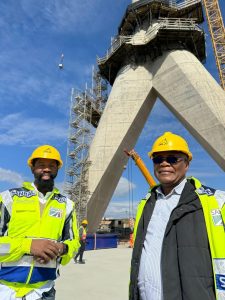
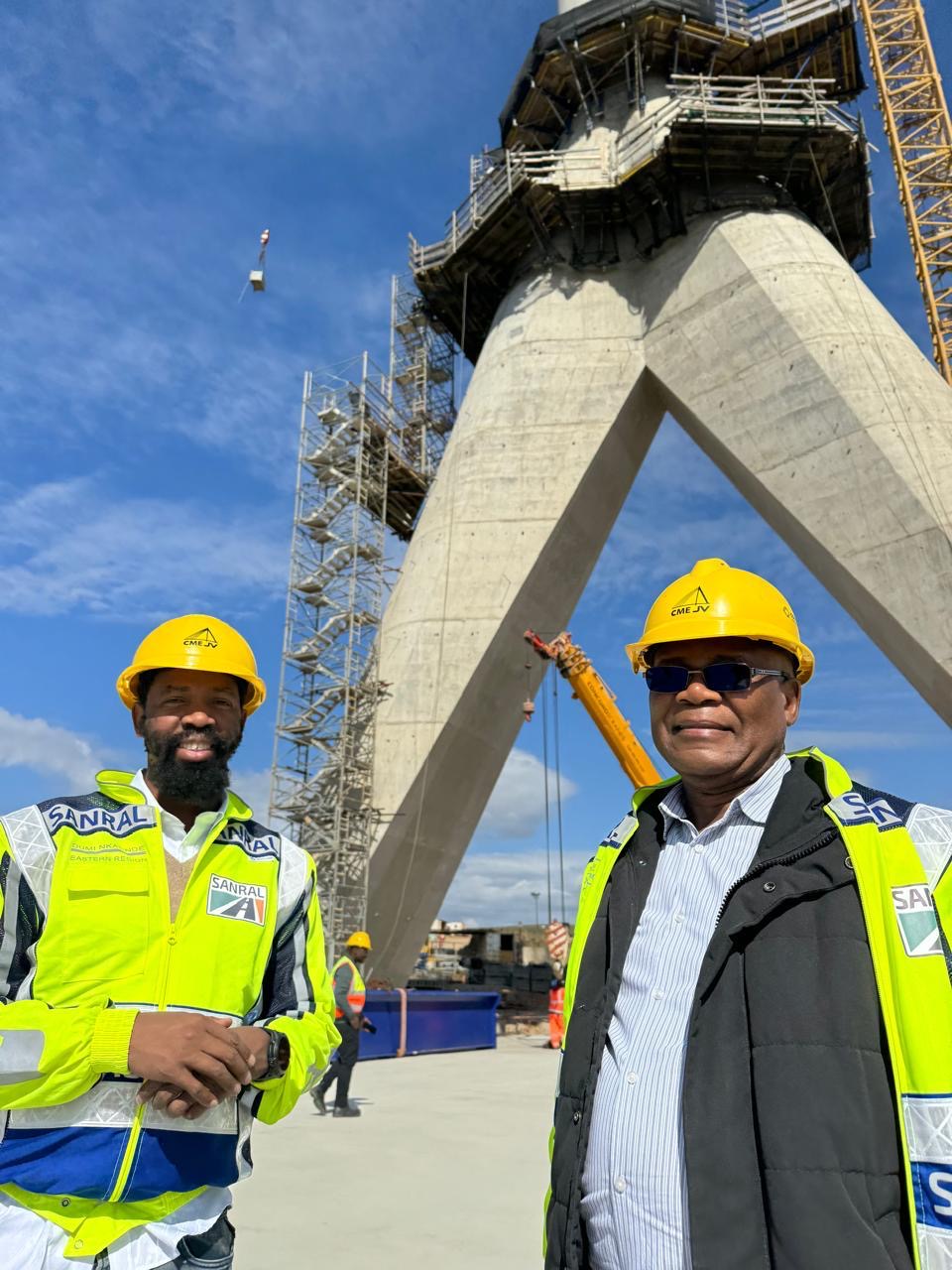
The Msikaba Bridge project in the Eastern Cape is progressing significantly, and now entering technically challenging phases. This bridge forms part of SANRAL’s N2 Wild Coast project. The last two years have been spent completing the four 21,000 ton anchor blocks and progressing with the  bridge pylons on each side of the Msikaba Gorge. What will follow is post-stressing of the anchor blocks, to ensure the transfer of load exerted by the stay cables is well distributed. The post-tensioning strand cables at each of the 17 anchor points in each block are stressed by a specialist company. The process is expected to take two to three weeks for each anchor point.

The next major step will be installing pylon inserts into the pylon’s structure as it rises above the 86-metre mark. Careful planning will allow the deck launching to start after the first five inserts are installed, which is likely to be in the second half of 2024.


Mentorship in focus on sustainable infrastructure development

Mentorship of new entrants and the professionalisation of practitioners will help people in the construction industry to excel and build roads and sustainable infrastructure that will transform the shape of the economy. The National African Federation for the Building Industry (NAFBI) has a mentorship programme in which 120 mentors are mentoring small, medium-sized and microenterprises (SMMEs) on construction sites in partnership with SANRAL, Rand Water and the South African Council for the Project and Construction Management Professions. On SANRAL sites alone, 44 mentors are coaching more than 400 SMMEs. Said SANRAL marketing and communications GM Vusi Mona: “We are trying to make a positive impact through our investments of billions of rands into the construction and maintenance of roads. Through this, we are creating thousands of jobs by developing roads and we are creating opportunities for SMMEs, with a focus on youth, women and people with disabilities,” he said. SANRAL takes deliberate steps to make itself and its role familiar to especially small, black-owned businesses and the communities in which it works. “We aspire to be connected to the people of South Africa because this asset is owned by the people of South Africa,” said Mona.


R364 million for major road upgrades in Mpumalanga

SANRAL has invested over R364 million for developing critical road infrastructure in Gert Sibande District Municipality in Mpumalanga. This includes about R191 million for restoration of the national road N17, section 5 from km 85.0 to Oshoek (km 122.7) near the Oshoek border post, and R173 million towards resurfacing a section near Chrissiesmeer. This is part of the roads agency’s plan to roll out new infrastructure projects worth R9 billion in Gert Sibande District Municipality. In line with SANRAL’s transformation objectives, 30% of the contract value is earmarked for subcontracting to smaller black contractors, in particular those owned by women, youth and persons with disabilities. About 30% (R56 million) has been allocated to targeted enterprises for the Oshoek section and 6% (R10.4 million) for local labour. For Chrissiesmeer around R53 million was allocated for SMMEs and R10 million for labour. With the unemployment rate currently at 32.9%, this investment will boost the local economy through the creation of jobs, and training and development of local small businesses.


N11 corridor upgrades to boost economic growth

Upgrades to the vital N11 corridor will resolve the chronic traffic congestion and reduce road carnage, providing greater mobility, increased safety, and reduced travel time. The N11 corridor is integral to the economic growth of Southern Africa, as it links the Port of Durban (via the N3) with the mining towns of Mpumalanga province and neighbouring countries in the SADC region. Currently the route is a single carriageway, with one lane in each direction. Work on the N11 will include the widening of existing bridges, construction of a new road-over-rail bridge, upgrades to existing intersections and the addition of new lanes. Within Ladysmith the road will also be upgraded. By unbundling the contracts into two phases and multiple work packages, SANRAL endeavours to provide opportunities to multiple companies and to ensure greater participation of established and emerging contractors in the project. The total number of full-time equivalent direct jobs to be created is 850. An estimated R200 million will be spent on local labour wages, while R875 million will be spent on targeted black-owned enterprises (SMMEs) over the next 6 years.