Blog

From SANRAL bursary to Technical Excellence Academy mentor

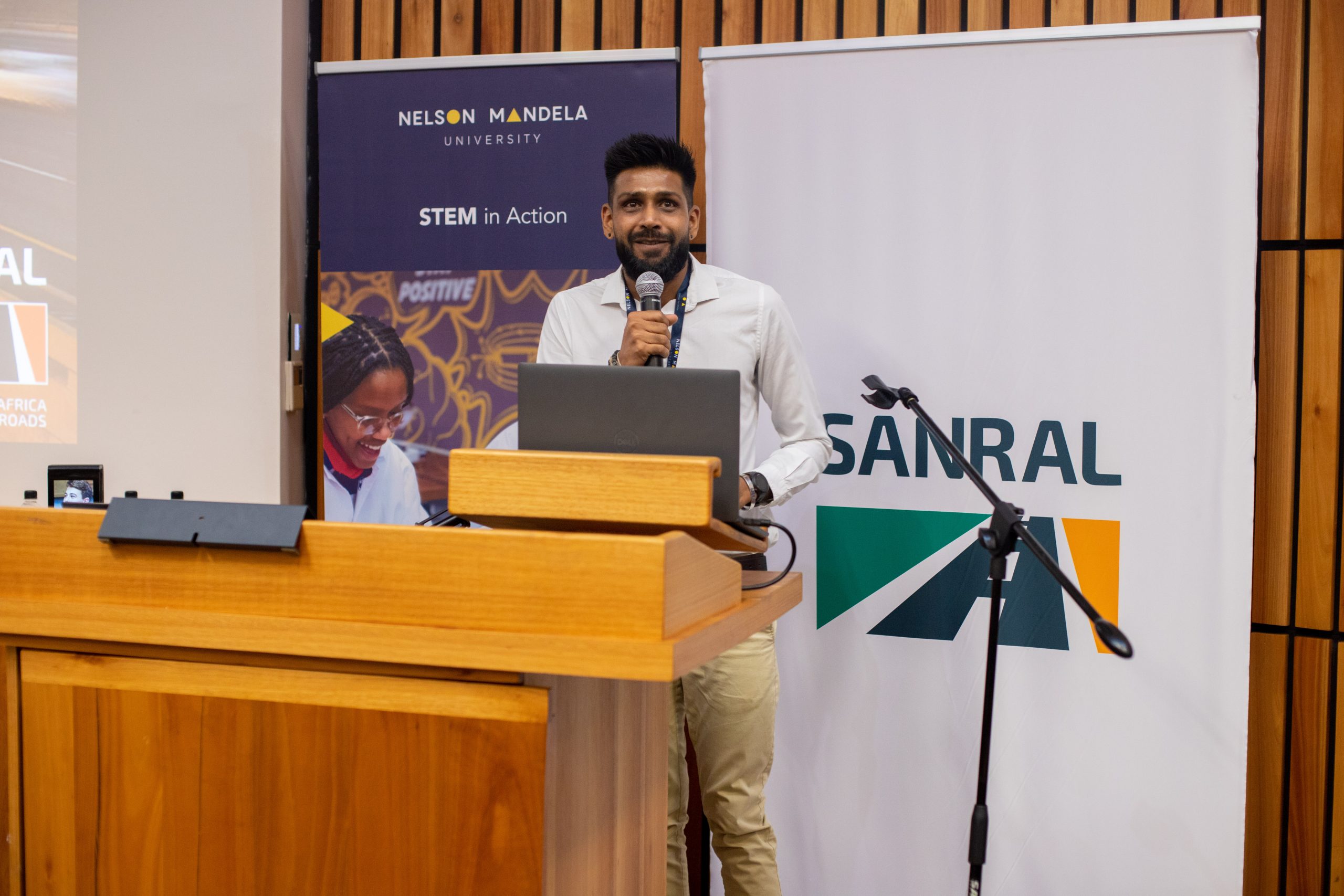
Shaheil Khoosal presenting to aspirant engineers at the Nelson Mandela University STEM Career Day

SANRAL’s Technical Excellence Academy (TEA) was established a decade ago in 2014. Based at the SANRAL Southern Region offices in the Eastern Cape, over the years the TEA been instrumental in exposing candidate engineers to training and fast-tracking their registration with the Engineering Council of South Africa (ECSA) as professional engineers.

Shaheil???? Khoosal, a mentor, coach and design engineer at the TEA, was a SANRAL bursary recipient for his undergraduate studies and has been with the roads agency for 12 years. “I was fortunate to occupy many roles in the different phases of the project cycle, similar to our current graduate engineers – that is, as site engineer, design engineer and project manager. I was always keen to be a part of the academy, so when the vacancy for a mentor, coach and design engineer was advertised, I jumped at the opportunity and applied,” Khoosal explains.

A Master of Science in Civil Engineering (2021) holder from the University of KwaZulu-Natal and a registered engineer (2018), Khoosal says his role requires him to guide and coach candidates through the requirements set out by ECSA.

“What I enjoy most is seeing the young engineers mature and grow in their respective roles. The learning is mutually beneficial – a lot of the time I find myself learning from our graduate engineers,” he says.

Khoosal says it is a highlight when the candidate engineers eventually apply to ECSA for professional registration. “A big highlight for me over the past year has also been to witness the academy move forward and the traction that the TEA has gained, be it the structured training programme offered to candidate engineers, or the productive discussions and collaborations with other organisations.

Going forward, Khoosal looks forward to contributing and adding value at the TEA by consistently striving for improvement and efficiency. “I would like to see the TEA be a key asset by providing a pool of skilled individuals and leaders to take the organisation forward, as well as being a technical in-house facility to assist regions in the project and planning environment,” he adds.

The TEA programme spans 5 years and is structured so that 11 ECSA outcomes can be achieved:

  • Roughly 2 years are spent on a construction site, where candidates are deployed as part of the consulting engineer’s construction monitoring team.
  • Around another 2 years are spent in a design office, either at the TEA or with part or all of this spent seconded to a consulting engineer’s office where applicable design work is available.
  • A further 3 months is spent in a materials testing laboratory.
  • The remaining time is allocated according to the candidate’s developmental needs to successfully complete the programme and register as a Professional Engineer or Professional Engineering Technologist.


To date, SANRAL’s TEA has provided training to 146 candidate engineers, while it currently has 65 candidate engineers and engineering technologists completing the 5-year programme. To date, the TEA has had 30 alumni register professionally with ECSA.

Msikaba Bridge project enters highly technical phases

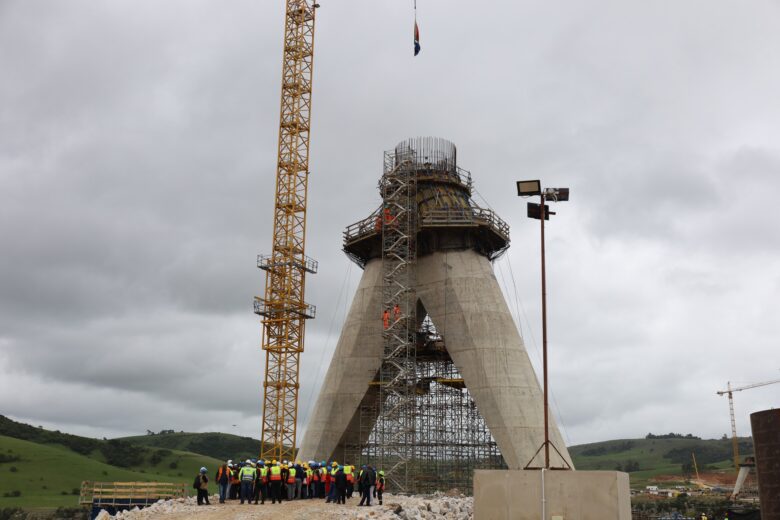
The Msikaba Bridge project in the Eastern Cape is progressing significantly, and now entering technically challenging phases. This bridge forms part of SANRAL’s N2 Wild Coast project. The last two years have been spent completing the four 21,000 ton anchor blocks and progressing with the  bridge pylons on each side of the Msikaba Gorge. What will follow is post-stressing of the anchor blocks, to ensure the transfer of load exerted by the stay cables is well distributed. The post-tensioning strand cables at each of the 17 anchor points in each block are stressed by a specialist company. The process is expected to take two to three weeks for each anchor point.

The next major step will be installing pylon inserts into the pylon’s structure as it rises above the 86-metre mark. Careful planning will allow the deck launching to start after the first five inserts are installed, which is likely to be in the second half of 2024.


Mentorship in focus on sustainable infrastructure development

Mentorship of new entrants and the professionalisation of practitioners will help people in the construction industry to excel and build roads and sustainable infrastructure that will transform the shape of the economy. The National African Federation for the Building Industry (NAFBI) has a mentorship programme in which 120 mentors are mentoring small, medium-sized and microenterprises (SMMEs) on construction sites in partnership with SANRAL, Rand Water and the South African Council for the Project and Construction Management Professions. On SANRAL sites alone, 44 mentors are coaching more than 400 SMMEs. Said SANRAL marketing and communications GM Vusi Mona: “We are trying to make a positive impact through our investments of billions of rands into the construction and maintenance of roads. Through this, we are creating thousands of jobs by developing roads and we are creating opportunities for SMMEs, with a focus on youth, women and people with disabilities,” he said. SANRAL takes deliberate steps to make itself and its role familiar to especially small, black-owned businesses and the communities in which it works. “We aspire to be connected to the people of South Africa because this asset is owned by the people of South Africa,” said Mona.


R364 million for major road upgrades in Mpumalanga

SANRAL has invested over R364 million for developing critical road infrastructure in Gert Sibande District Municipality in Mpumalanga. This includes about R191 million for restoration of the national road N17, section 5 from km 85.0 to Oshoek (km 122.7) near the Oshoek border post, and R173 million towards resurfacing a section near Chrissiesmeer. This is part of the roads agency’s plan to roll out new infrastructure projects worth R9 billion in Gert Sibande District Municipality. In line with SANRAL’s transformation objectives, 30% of the contract value is earmarked for subcontracting to smaller black contractors, in particular those owned by women, youth and persons with disabilities. About 30% (R56 million) has been allocated to targeted enterprises for the Oshoek section and 6% (R10.4 million) for local labour. For Chrissiesmeer around R53 million was allocated for SMMEs and R10 million for labour. With the unemployment rate currently at 32.9%, this investment will boost the local economy through the creation of jobs, and training and development of local small businesses.


N11 corridor upgrades to boost economic growth

Upgrades to the vital N11 corridor will resolve the chronic traffic congestion and reduce road carnage, providing greater mobility, increased safety, and reduced travel time. The N11 corridor is integral to the economic growth of Southern Africa, as it links the Port of Durban (via the N3) with the mining towns of Mpumalanga province and neighbouring countries in the SADC region. Currently the route is a single carriageway, with one lane in each direction. Work on the N11 will include the widening of existing bridges, construction of a new road-over-rail bridge, upgrades to existing intersections and the addition of new lanes. Within Ladysmith the road will also be upgraded. By unbundling the contracts into two phases and multiple work packages, SANRAL endeavours to provide opportunities to multiple companies and to ensure greater participation of established and emerging contractors in the project. The total number of full-time equivalent direct jobs to be created is 850. An estimated R200 million will be spent on local labour wages, while R875 million will be spent on targeted black-owned enterprises (SMMEs) over the next 6 years.


SANRAL e-tags still the smartest way to navigate toll plazas

MEDIA RELEASE

SANRAL e-tags still the smartest way to navigate toll plazas

Pretoria, 30 June 2024 – The use of e-tags at toll plazas across the country, remains the smartest payment method for road users, the South African National Roads Agency SOC Limited (SANRAL) has announced.

“Following a recent article in which toll plazas were linked to card cloning and skimming as well as other credit card fraud, we want to reiterate that these acts do not happen at our toll plazas. Instead, stolen or cloned cards are sometimes presented for payment. Most toll transactions are below R500, so one does not need online transaction verification,” said Vusi Mona, SANRAL’s General Manager for Communications and Marketing.

At the height of the COVID-19 pandemic, SANRAL advocated for cashless payment, promoting the uptake of e-tags in the interest of hygiene and personal safety, given that human contact was eliminated from this process. The roads agency continues to promote the use of e-tags as they also aid mobility, with the availability of Shesha Lanes at most toll plazas.

“Instead of bringing one’s vehicle to a complete stop and engaging with the operator, Shesha Lanes allow road users to slow down while the system reads the e-tag, opens the boom and the road user experiences seamless travel,” said Mona.

The interoperability of e-tags at all SANRAL toll plazas across the country, is just another way to ensure hassle-free travel and uninterrupted mobility.

The e-tag can be loaded and topped up in any of the following ways:

  • At selected mainline toll plazas across South Africa (during office hours)
  • At Self-Service Terminal devices
  • Electronic Funds Transfer
  • At participating retailers, including Pick ’n Pay and Checkers
  • At any Advanced FNB ATM which has a note accepting facility

SANRAL cautions the public to be vigilant when it comes to financial safety and to take every precaution to limit their exposure to scams and fraud.

//Ends

Full closure to accommodate blasting alongside the N3 near the Hammarsdale Interchange

TRAFFIC ADVISORY

Full closure to accommodate blasting alongside the N3 near the Hammarsdale Interchange

Durban, 28 June 2024 – The N3 will be fully closed on 10 July 2024, between 14h30 and 15h00, to facilitate blasting next to the N3 close to the Hammarsdale Interchange, the South African National Roads Agency SOC Limited (SANRAL) has announced.

The N3 closure will take place between the M13/N3 split and the Hammarsdale Interchange. Closures will also be necessary on the Meadway Road at Thousand Hills Street intersection, in the vicinity of the blasting activities.

“Our traffic accommodation team with the assistance of the Road Traffic Inspectorate (RTI) will monitor the diversion of traffic during all sessions,” said Jason Lowe, SANRAL’s Eastern Region Project Manager.

The R103 will be available as an alternative route during the blast. Substantial delays are, however, likely as the R103 is unable to handle the same volume of traffic as the N3.

The closure may need to be adjusted, depending on weather conditions on the day. If that happens, a second notice with information of the new time will be issued.

“We ask road users to be patient during the closure and to plan and adjust their trips accordingly, while still adhering to speed limits. SANRAL apologises to the motoring public for any

inconvenience caused and thanks them for their patience during road construction,” said Lowe.

//Ends

Temporary lane closure on N2 eNseleni in KwaZulu Natal

TRAFFIC ADVISORY

Temporary lane closure on N2 eNseleni in KwaZulu Natal

Empangeni, 27 June 2024 – Jacking of the bridge deck, including bearing refurbishment work, will take place on the N2 on the Nseleni River Bridge (B2020) as part of ongoing infrastructure maintenance, the South African National Road Agency SOC Limited (SANRAL) has announced.

“As part of the deck jacking process, temporary lane closures with stop-and-go control measures will be implemented,” said Serisha Sukraj, SANRAL’s Eastern Region Project Manager.

The dates for the closures are stated below:

July 2, 2024 (Southbound) from 09:00 to 14:00
July 3, 2024 (Northbound) from 09:00 to 14:00
July 4, 2024 (Southbound) from 09:00 to 14:00”

Motorists are advised to plan their routes accordingly and allow for extra travel time, especially when accessing travel hubs such as airports.

“We further appeal to road users to adhere to the road signs and speed limit when approaching and travelling through the construction site. SANRAL apologises for any inconvenience this may cause and ask for your understanding as we work to maintain our infrastructure assets,” said Serisha Sukraj.

-ENDS-

Two new RRM contracts in JTG District, Northern Cape, will create opportunities for five years

MEDIA RELEASE

Two new RRM contracts in JTG District, Northern Cape, will create opportunities for five years

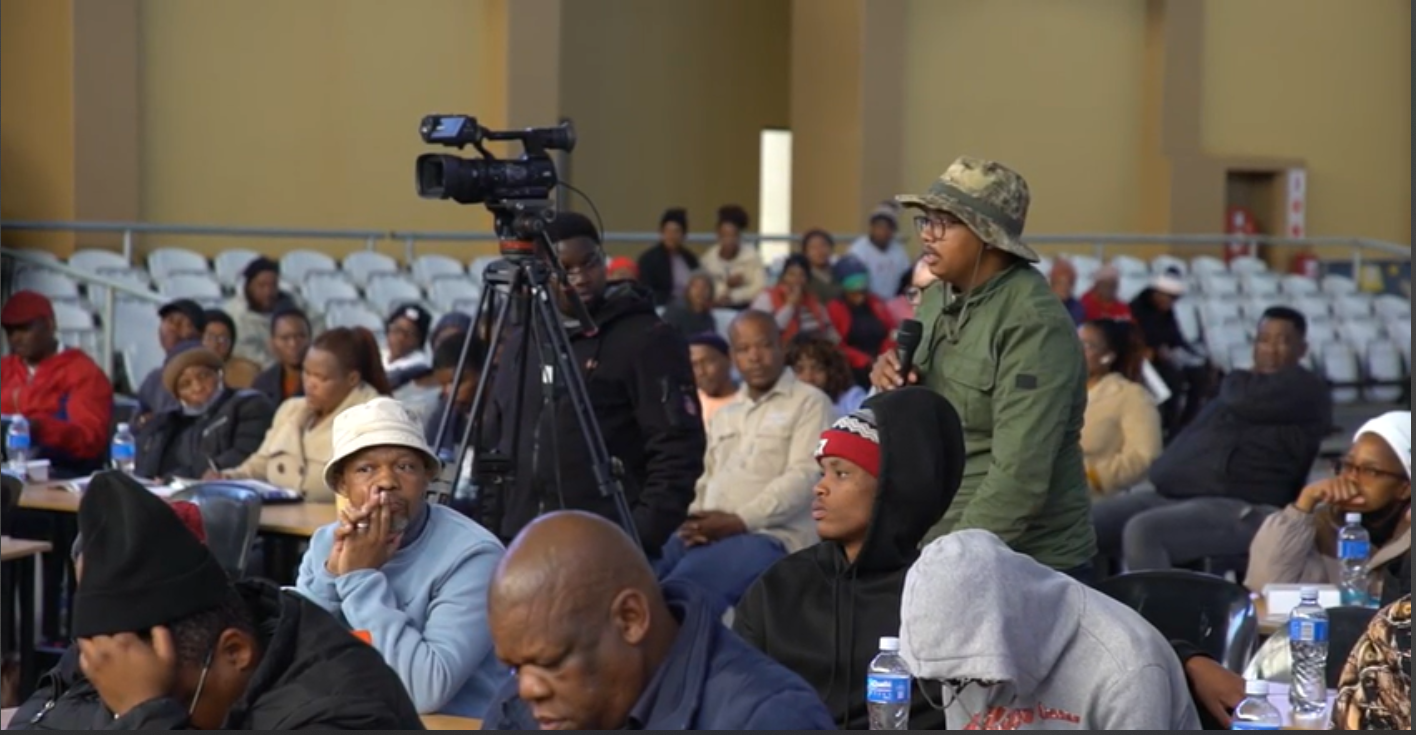
Caption: Thumisang Pampoen (27), a small business owner was keen to understand what opportunities would be

available for youth-owned businesses and young people seeking employment.

Northern Cape, 23 June 2024 – Two new Routine Road Maintenance (RRM) contracts in the John Taolo Gaetsewe (JTG) District of the Northern Cape will create scores of opportunities for subcontracting and local labour over a period of five years, the South African National Roads Agency SOC Limited (SANRAL) has announced.

SANRAL is currently evaluating tenders received for these contracts and hopes to appoint contractors later this year.

Speaking at a recent stakeholder engagement session with small business owners in Mothibistad, just outside Kuruman, SANRAL Project Manager Rudi Joubert unpacked the significant opportunities for project participation, job creation, skills development, training and enterprise development that come with projects of this magnitude.

“The work will focus on maintenance of the N14 and will include grass cutting, removal of alien vegetation, cleaning of culverts (a tunnel carrying a stream or open drain under a roadway), clearing of litter at rest areas and keeping the road reserve and the fences clean,” Joubert said.

“Maintenance of the N14 will be done on an ongoing basis and small, medium and micro enterprises (SMMEs) should prepare to take advantage of the opportunities for subcontracting, he said.

The first of the two projects runs between Olifantshoek and the North West border and spans about 250km. The second project starts between Danielskuil and Kuruman, through Kuruman, past Hotazel, continuing to the Botswana border.

“Both projects will be solely focused on RRM, so they do not deteriorate over time. If there is a pothole, it will be fixed and if there are cracks, they will be sealed,” Joubert explained.

Western Region Transformation Officer, Morné Windvogel, also attended the information session and assured small contractors that SANRAL was committed to supporting them to grow, develop and prosper.

“We don’t just want you to have access to tenders. We are available to do pre-tender training that capacitates you to submit compliant, competitive and profitable tenders. We also, through our various partnerships with industry players, assist with access to finance, registration, skills development and business development,” said Windvogel.

In line with the agency’s transformation agenda, SANRAL wants to ultimately see small contractors become big contractors and put them on a pathway to wealth creation.

Small business owners attending the session said it was informative and were pleased that SANRAL had taken the time to communicate with them.

Tumisang Pampoen, 27, who owns Ladotech Engineering, said he was glad there are possible opportunities for youth-owned businesses on the two projects, following the Project Manager’s presentation that showed how subcontracting opportunities for youth-owned businesses would be prioritised.

“My experience as a young business owner is that the youth are at times sidelined from business opportunities as some contractors want to only employ established companies who have experience,” he said.

Happy Diseko, owner of Diseko Business Enterprises was pleased to hear that training on how to tender and manage a business was a priority for SANRAL.

“The most important part of the training, I think, is financial management and how to fill in your own tender document, without sourcing any person to assist you, because it come with a lot of costs,” said Diseko.

//Ends

A short video of the engagement, with comment from stakeholders can be found here.

SA public transport situation needs support, broader participation of all

MEDIA RELEASE

SA public transport situation needs support, broader participation of all

Pretoria, 21 June 2024 – Just over 30 years into the democratic era, South Africa’s dreams of efficient, affordable and integrated public transportation systems remain deferred.

The need for mass overhaul and reform in the public transportation sector of South Africa will be crucial for the country’s future growth and continued development, according to outgoing Transport Minister Sindisiwe Chikunga.

Meanwhile, with public transit in South Africa predominantly made up of three major modes of transportation – buses, trains and minibus taxis – forming an integral part of the country’s social framework, the Department of Transport has the daunting task of finding an affordable and efficient means of public transport that serves its people and increases opportunities to better their lives.

Chikunga briefed the media on the state of public transport in South Africa at SANRAL’s Central Operations Centre in Centurion on Tuesday, a day before President Cyril Ramaphosa’s inauguration which signalled the end of term for ministers until Ramaphosa appoints his new Cabinet.

“These improvements can only be achieved through collaboration with the private sector – which brings resources, expertise and efficiencies – along with civil society providing checks and balances and, most importantly, with the users and/or commuters for whom public transport is a vital link to opportunity,” Chikunga said.

She said although the country had made progress in improving the public transport system, it was still impacted by apartheid’s spatial segregation.

“Truth is, the historic denial of an efficient and integrated public transport system which characterised the apartheid regime still has a ripple effect, even after 30 years of democracy, as historic challenges of spatial segregation characterised by historical neglect and under-investment still undermine the efforts and level of investments committed over the 30 years,” she added.

Chikunga said it was important to note that government had continued to provide new or improved existing public transport infrastructure within
integrated public transport networks. In the process, she added, the sixth administration created approximately 20 000 jobs.

She lambasted the apartheid policies that moved the poor away from job opportunities and amenities, imposing enormous burdens on working people and other passengers, such as learners, who had to travel long distances at great cost. South Africans were denied a say in transport and were exposed to insecure modes of travel.

“The historical legacy and urban sprawl encouraged exclusionary transport modes, inefficient settlement patterns and the growth of informal settlements on the outskirts of metropolitan areas where land is cheaper,” she said.

“Since the emergence of our democracy, it has thus been critical to enhance accessibility to all fundamental rights and services, including public transport. Enhanced access to public transport and mobility is considered a fundamental human right. Improved equality requires everyone to gain access to cost affordable, easily accessible, secure, and safe public transport services,” the transport minister told the media.

Chikunga said a public transport network needed to be planned, designed and managed as an integrated system, even with different operators, rather than as isolated modes of transport or segregated operators.

“An integrated network makes it easier to align subsidies (where appropriate) to the network’s objectives and to better serve the citizens of South Africa,” she said.
Government had introduced a number of policy and legislative reforms too.

Chikunga explained, “In 1996, the national government published the White Paper on National Transport Policy, revised in 2021. The White Paper articulated a mission that promoted the use of public transport over private transport through a strongly customer-based, affordable, integrated, safe and effective system in both urban and rural areas. This system would be designed in such a way as to improve levels of accessibility for all.”

The 2007 Public Transport Strategy and Action Plan proposed the move from basic supply-oriented commuter operations towards demand-based services with the introduction of new services, modal upgrades and transformative vehicle revitalisation for the development of Integrated Public Transport Networks (IPTNs).

The 2009 National Land Transport Act (NLTA) introduced a shift to the development of Integrated Public Transport Networks to support the Public Transport Strategy. It established municipalities as transport planning and contracting authorities.

The second major introduction of the NLTA were the new institutional arrangements in the form of the National Public Transport Regulator (NPTR), Provincial Regulatory Entities (PREs), Municipal Regulatory Entities (MREs), Planning Authorities and Intermodal Planning Committees.

“The recently assented National Land Transport Amendment Act 23 of 2023 which was passed last week (11 June 2024) into law by His Excellency the President, have additionally introduced the regulation of e-hailing services, which will move away from the interim usage of charter permits to operating licences, like any other public transport operator,” Chikunga said.

The draft regulations provided details on contracting for public transport services, provision of e-hailing services regulation, conversion of permits and indefinite-period operating licences to operating licences required by the act, and moratorium on operating licences for minibus taxi-type services.

The department was also developing a National Public Transport Subsidy Policy to address the funding requirements for subsidising public transport, including equitable allocation. The policy would do away with dispensing a public transport subsidy on a historical level and enable the government to fund public transport at the right level.

Chikunga said in line with the revised White Paper on National Transport Policy of 2021 – which recommended that “a public transport subsidy guideline should be developed which establishes the objectives of such a policy, appropriate models of its implementation and a costing methodology,” – the Department tabled the Draft National Public Transport Subsidy Policy at Cabinet in October 2023.

Its basic principles are that it is user-targeted, equitable and sustainable in the medium- to long-term.

“We have, irrespective of our challenges and constraints, managed to realise major milestones in the area of public transport almost as much as we have progressed with improvements in the implementation of other mandates and these have positively affected the lives of ordinary South Africans,” Chikunga said.

She added that their aims involve continued support for tourism that includes, among others, the efficient processing of operating licences, on which a large part of this industry depends for operational growth.

“We have established the National Public Transport Regulator (NPTR) and continuously institutionalise the NPTR Committee. We must also mention that eight provinces have established Provincial Regulatory Entities (PREs), except for the Free State province, which will soon finalise its processes,” she said.

“PREs provide proper regulation and issuance and management of the operating licence regime for road-based public transport while the NPTR monitors and oversees public transport in the country in general and processes the issuance of operating licences for tour operators.”

She added that the processing of backlog applications for operating licenses was being addressed and the main challenge has remained the upliftment of processed and approved applications.

“On the other hand, the Transport Appeals Tribunal (TAT) is continuously institutionalised by reviewing the appointment of new members every three years. It provides an independent dispute resolution mechanism for aggrieved parties in road-based public transport.”

The transport department has also implemented the National Learner Transport Programme in 4 204 schools across South Africa with the aim of providing safe transport to educational centres and improved school attendance and academic performance. It is fully funded and provides a free service to pupils with a budget allocation of R4.7 billion.

For pupils who do not fit the criteria for scholar transport, the department distributed 32 307 bicycles under the sixth administration.

//Ends